Matox News

Truth Over Trends, always!

Room for the Moon pushes boundaries with thrilling, experimental pop vibes

Emerging Cultural Shifts Signal Broader Innovation in Tech and Business

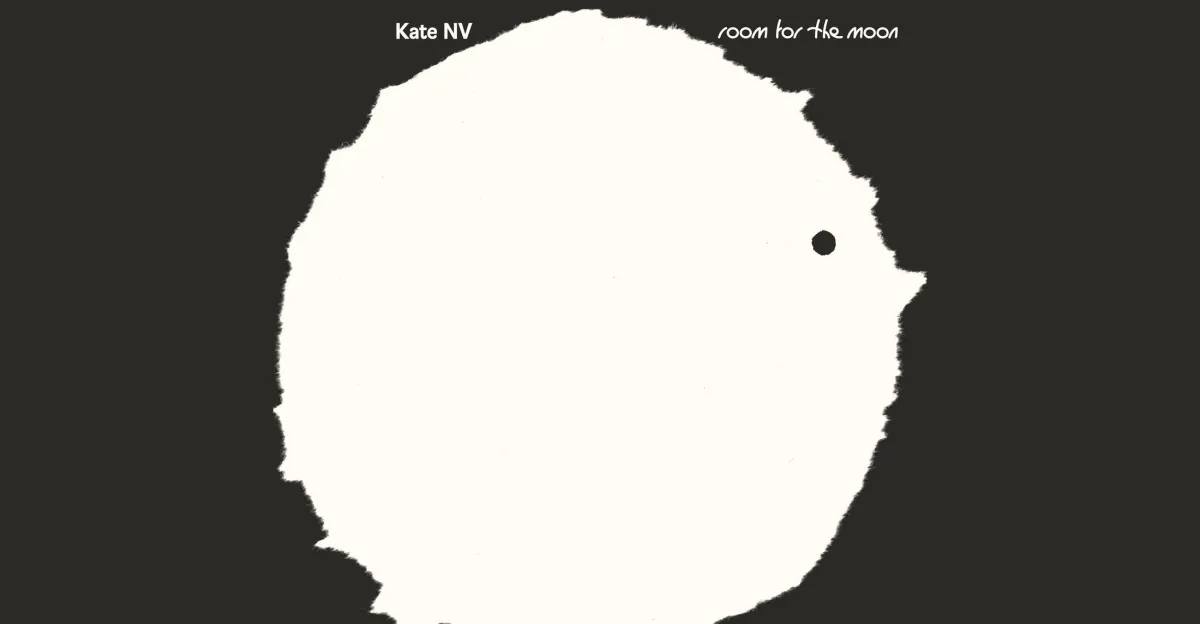
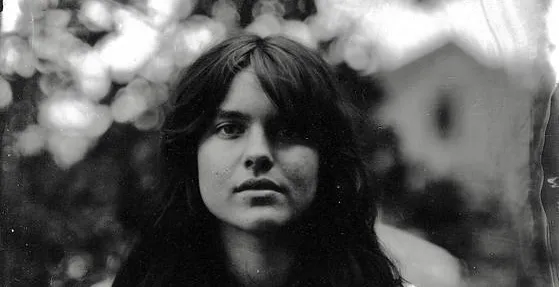
The recent resurgence of lunar-themed creativity, epitomized by the avant-garde album Room for the Moon by Russian artist Kate NV, underscores a broader pattern of disruption in both cultural industries and technology sectors. While much attention in recent years has been directed toward mission-driven space exploration—think NASA’s Artemis Program—the artistic response suggests a cultural pivot, leveraging innovative storytelling and audio design inspired by the moon’s mystique. This blend of nostalgia, whimsy, and technological experimentation points to a future where entertainment and tech are increasingly intertwined, fueling new markets and redefining consumer expectations.

In the realm of audio-visual innovation, artists like Kate NV push boundaries by combining whimsical storytelling with cutting-edge production techniques. Her album, influenced by Russian and Japanese pop from the 70s and 80s as well as children’s media, exemplifies an emerging trend—the fusion of retro aesthetics with modern electronic soundscapes. This trend aligns with predictions from industry think tanks like Gartner, which forecast that entertainment platforms integrating immersive sound and visual experiences will be key drivers of consumer engagement in the coming decade.

  • Features include proggy synths, reverberated drum machines, and eclectic instrumentation.
  • Creates immersive “fairytale” worlds accessible through digital streaming and VR technology.
  • Encourages developers to integrate artistic storytelling with interactive interfaces.

Moreover, these creative developments carry significant business implications. Companies that harness such *innovative content* will have the opportunity to lead in niche markets, while *large tech firms* seeking to innovate their content delivery will look to artists and creators whose work disrupts traditional boundaries.

The influence of these artistic innovations extends beyond culture into the strategic realms of tech development, where echoes of the ‘moonshot’ mentality continue to reshape industries. Innovators like Elon Musk and Peter Thiel emphasize how disruptive technology—such as AI, blockchain, and synthetic media—are revolutionizing existing markets. By positioning lunar and space-themed narratives as metaphors for technological aspiration, these developments serve as a rallying point for new business ventures, encouraging startups and established companies alike to pursue exploratory ambitions that were once confined to science fiction.

This convergence of artistic expression and technological disruption signals an urgent need for firms to adapt quickly, or risk obsolescence. As industry leaders continue to push the boundaries with innovations in autonomous systems, virtual reality, and AI-driven content, the underlying message remains clear: those who leverage disruptive ideas inspired by lunar and space themes will have a competitive edge in capturing the next generation of consumers and investors. The breakthrough artistic expressions symbolized by Kate NV’s album may seem niche, but they embody a fundamental shift—a signpost pointing at a future where creativity itself is an engine of technological progress and business agility.

In conclusion, the cultural and technological currents driving today’s innovation landscape demand urgent attention from industry stakeholders. As the line between art, science, and business continues to blur, embracing disruptive ideas—both on Earth and beyond—will be essential for leaders aiming to capitalize on the next wave of growth. The lunar metaphor extends beyond inspiration; it epitomizes humanity’s relentless pursuit of progress, urging us to confront tomorrow’s challenges with the same bold innovation that characterizes today’s emerging artistic and technological frontiers.

Folk singer Murphy Campbell fights back against AI fakes and copyright trolls threatening his music

AI-Generated Content Disrupts Music Industry: A Wake-up Call for Innovation and Security

The recent saga involving folk artist Murphy Campbell highlights a looming threat to the music industry where AI technology is undermining copyright rights and industry integrity. Campbell discovered unauthorized AI-generated songs purporting to be her own, a scandal that reveals profound vulnerabilities in streaming platforms’ ability to safeguard artists’ intellectual property. As AI models become increasingly sophisticated, the danger isn’t just about misattribution; it signals a fundamental disruption to how creative works are verified, distributed, and protected, prompting stakeholders to rethink current systems.

This incident underscores an urgent need for innovation in digital verification tools. Notably, AI detection algorithms, like those Campbell employed to scrutinize the fake tracks, represent the nascent technological frontier that must be scaled rapidly. Industry experts, including those from MIT and Gartner, warn that as AI-generated content becomes more convincing, traditional copyright safeguards — inherited from physically tangible assets — are increasingly ineffective. We are witnessing a paradigm shift, where ownership and authenticity are now subject to a digital arms race. Disruption in this space will demand a convergence of new AI-driven verification systems, blockchain-based provenance tracking, and real-time monitoring solutions to secure creator rights proactively.

From a business perspective, this crisis presents both a challenge and an opportunity for platforms such as Spotify, YouTube, and Apple Music. The misappropriation of well-known public domain works like “In the Pines” illustrates the ease with which AI can obscure attribution and manipulate revenue streams. Companies that fail to adapt risk losing credibility and user trust, which are vital in a competitive climate where millennials and Gen Z consumers increasingly value authenticity and transparency. Innovators like Elon Musk and Peter Thiel have long emphasized that the future belongs to those who leverage technological disruption — and in the music industry, this means deploying cutting-edge AI safeguards and novel business models aligned with rapid technological change.

The unfolding scenario underscores the critical necessity for a coordinated response from tech companies, policymakers, and creators. Such efforts must prioritize robust verification mechanisms and redefine copyright enforcement in the digital age. With AI technology accelerating at a breakneck pace, the window for reactive measures is closing. As Murphy Campbell’s experience demonstrates, without decisive innovation, the industry risks losing control over its creative assets, threatening the very foundation of artistic rights and revenue. The future belongs to those who anticipate and shape these technological upheavals — the time to act is now, and the stakes could not be higher.

Raye Clinches Top Spot on Album Charts with “This Music May Contain Hope” — A Bold Reflection of True Artistic Spirit

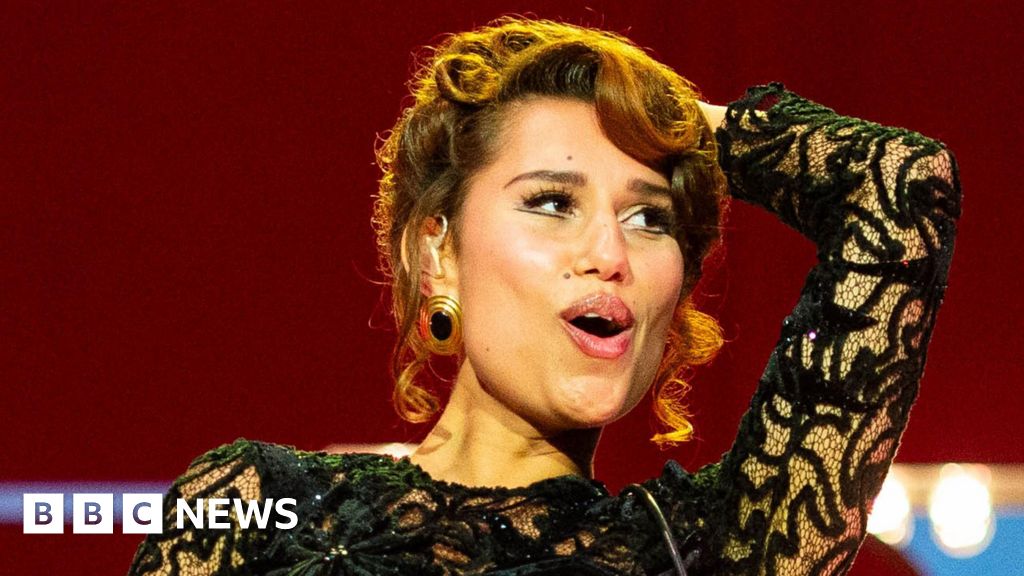
In an era often defined by fleeting digital flashes and transient trends, the significance of culture as a sturdy vessel of identity and societal continuity remains profoundly vital. Recently, the artist Raye achieved her second number-one hit this year, following the monumental success of “Where The Hell Is My Husband,” a song that resonates beyond mere entertainment, signaling a deeper engagement with the emotional currents shaping contemporary life. This achievement, while seemingly a simple milestone in popular music, exemplifies how culture functions as both a reflection of our collective soul and a catalyst for societal discourse. As Ortega y Gasset observed, “The culture of a people is its autobiography, written in the language of art, music, and tradition.” Such moments of artistic triumph remind us that even in the tumult of modernity, the cultural artifacts we produce serve as enduring testamentaries of human experience.

Through the lens of cultural criticism, one can interpret recent musical successes as emblematic of a society’s ongoing negotiation with its roots and aspirations. Raye’s chart-topping outputs, emblematic of the current zeitgeist, underscore the crucial role that popular figures play in shaping moral and aesthetic sensibilities. As T.S. Eliot contended, “The past is never dead; it’s not even past.” The melodies that resonate within our contemporary landscapes are, in truth, echoes of our shared history, reinterpreted through the current cultural dialect. Such dynamics evoke the notion that “culture is the memory of a society and the prophecy of its future,” a concept that elevates art from mere entertainment to a vital force in forging societal coherence and civic identity. Indeed, as Tocqueville highlighted, social cohesion depends on a shared sense of cultural continuity—an ongoing dialogue between the generations, shaped by the works and symbols that define our age.

In contemplating the role of artists like Raye and the contemporary cultural landscape they inhabit, it is essential to recognize the importance of tradition in the face of rapid change. Chesterton famously maintained that, “The true reason why society is so decadent is that it has forgotten the importance of the ordered and decorative aspects of culture—those which remind us of the divine and the eternal.” Today’s popular culture, often dismissed as transient, actually functions as a modern temple of those eternal human themes—desire, longing, hope, and despair. As young people turn to music, arts, and collective narratives, they forge a sense of belonging rooted in shared symbols and stories—imprints that anchor them in their history while propelling them towards an envisioned future. These cultural expressions remind us that society endures because of its capacity to remember, reinterpret, and reimagine—an ongoing cycle that links us to our ancestors and beckons us towards our destiny.

Ultimately, culture weaves the fabric of human existence—an intricate tapestry where past and future intertwine in timeless dialogue. Amid the rise of new icons and ever-changing trends, it is this enduring conversation that sustains the human spirit. Like a song that echoes across generations, our cultural memory is both a tribute to what has been and a prophecy of what is yet to come. It whispers to us in melody and image, reminding us that to be truly alive is to partake in the eternal act of understanding who we are and where we are headed—an ongoing act of creation and remembrance, crafted by the hands of those who dare to imagine a better tomorrow.

“It Was an Exorcism”: Wendy Eisenberg’s Journey Through Heartache and Queer Renewal Inspires a Bold New Sound on Her Latest Album | Music

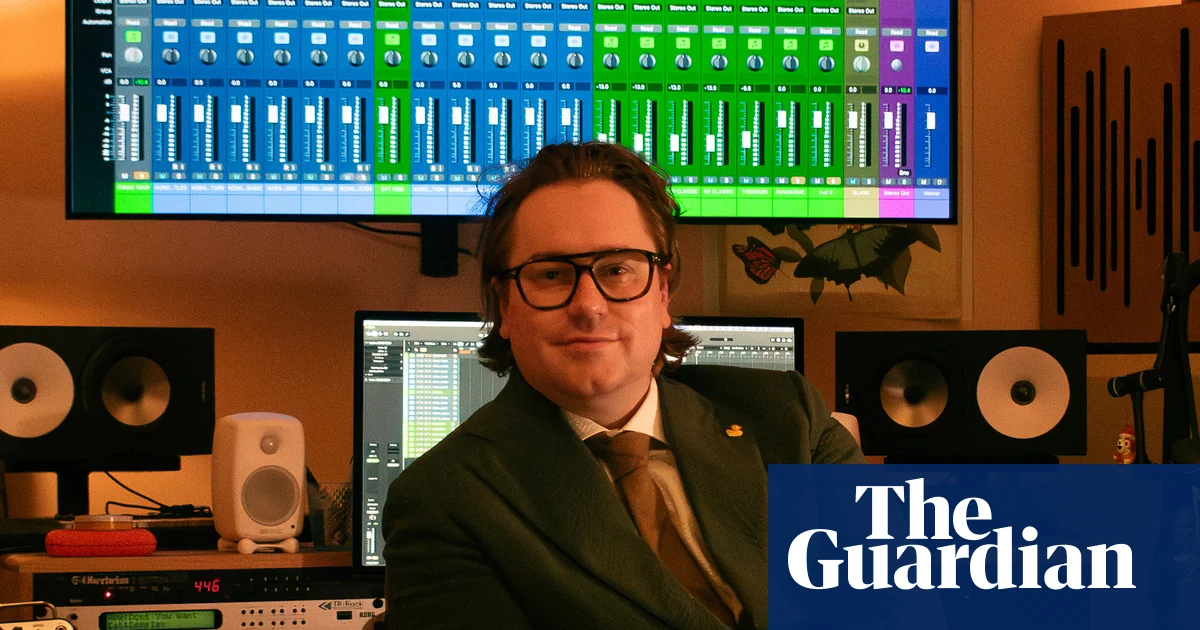
In the intricate tapestry of contemporary culture, the creative act remains one of humanity’s most profound expressions of identity, tradition, and societal reflection. There is, perhaps, no better illustration of this than the recent journey of Wendy Eisenberg, a musician whose latest work embodies both the edifying power of self-reinvention and the cultural importance of artistic authenticity. Eisenberg’s evolution from experimental avant-garde to a more refined folk-rock inspired sound underscores how culture and art are inextricably linked with personal growth and societal reflection. Their recent album, a masterful blend of mature melody and complex harmony, signals not only artistic maturation but also a broader cultural affirmation of self-acceptance—a necessary act in an age where identity is both fluid and fiercely fought for.

From their youth outside Washington DC, Eisenberg’s journey charts a recognizable arc of cultural awakening, where music served as both an escape and a form of rebellion. Raised on the likes of Joni Mitchell and Gram Parsons, their immersion in jazz and experimental sounds was driven by a desire to understand and redefine beauty—a pursuit echoed in the passionate, improvisational approaches that characterize their music today. The philosopher Ortega y Gasset observed that “culture is the human expression of a profound desire for selfmatic understanding,” and Eisenberg’s work exemplifies this truth. Their relentless pursuit of musical innovation—be it through traditional guitar techniques or avant-garde improvisations—mirrors a broader cultural tendency: the search for authentic selfhood amid societal expectations.

Cultural critics and historians often highlight that periods of societal transformation are reflected in the arts, which serve both as mirrors and blueprints. Eisenberg’s recent work, especially their forthcoming album, is a striking testament to this idea. Moving away from their previous experimentalism, this album draws nourishment from the melodic grace of 70s singer-songwriter classics, fostering a sense of beauty that is both complex and accessible. Under the graceful production of Mari Rubio, the album’s compositions reveal a nuanced, adult understanding of happiness—an affirmation that meaningful self-acceptance arises from embracing both the jagged and the refined facets of one’s soul. As G.K. Chesterton argued, genuine beauty often emerges from the tension of opposites, and Eisenberg’s synthesis exemplifies that harmonious balancing act: combining the restless pursuit of aesthetic truth with the comforts of melody and form.

Perhaps the most vital message that Eisenberg’s story imparts concerns the centrality of culture to societal identity. Their personal revival—marked by a transformative walk, a rekindled love, and a deepened self-knowledge—resonates with Tocqueville’s view that “the health of a society depends on its capacity to cultivate and preserve its cultural memory,” and that self-awareness is foundational to societal resilience. Eisenberg’s embrace of queerness and nonbinariness emerges not only as an individual act but also as a cultural statement—affirming that authenticity and tradition are not mutually exclusive but rather mutually enriching. Their journey reminds us that culture is both memory and prophecy, rooted in the past yet constantly forging new horizons. In this way, the artist acts as both historian and prophet, charting a path that is at once reflective of ancestral voices and prophetic of future possibilities, inspiring a collective recognition that the quest for identity and beauty remains at the core of human civilization.

Indeed, as we listen to Eisenberg’s music—its melodies and dissonances, its light and shadow—we are invited into a space where memory meets prophecy, where history informs hope. Their art echoes the poetic vision of T.S. Eliot, who famously urged us to see ourselves in the unending stream of cultural creation. In this space—where the personal becomes universal—the enduring words of Eliot resonate: “The world ends not with a bang but with a song,” and it is through that song that humanity’s memory and its undying prophecy find their voice, shaping the ongoing symphony of human existence. Culture, in its deepest sense, remains both the reflection of who we are and the blueprint of who we might become—an eternal rhythm in the dance of time, echoing with the promise that every note, every silence, carries the potential to rewrite the future of mankind.

Suno Boosts Power with v5.5 Customization Features

Suno Unveils Major AI Music Model Update, Signaling a New Era of Creative Disruption

In a bold move that underscores the rapid innovation reshaping the music industry, Suno has launched version 5.5 of its groundbreaking AI music model. This update introduces features that promise to redefine how creators generate and manipulate music, positioning Suno at the forefront of the AI-driven creative revolution. As companies continue to push the boundaries of artificial intelligence, Suno’s latest platform emphasizes user control and customization, signaling a paradigm shift in digital music production and royalties management.

The highlight of the version 5.5 release is Voices, a feature that has been highly anticipated across the digital creative ecosystem. This innovation enables users to train Suno’s AI model on their own voices, effectively creating personalized AI performers capable of singing on command or collaborating on produced tracks. By uploading clean acapellas, tracks with backing music, or even singing directly into a microphone, users can leverage their vocal likeness with minimal data input—thanks to advances in AI fidelity. Experts from MIT and industry analysts highlight that such personal voice cloning could revolutionize content creation, democratizing access for independent musicians and artists who previously lacked resources.

The implications for the business landscape are profound; ownership, copyright, and monetization models will undoubtedly evolve as AI-generated performances become indistinguishable from human vocals. To bolster security and address concerns of voice theft, Suno incorporates verification protocols. However, technology giants like Elon Musk’s OpenAI warn that these safeguards are only as strong as upcoming AI detection measures, as AI voice synthesis becomes increasingly sophisticated. Meanwhile, the ability to generate AI-based outputs with personalized voice models opens up new avenues for music publishing, licensing, and innovative marketing strategies—placing Suno’s technology directly in competition with traditional recording studios.

In addition to Voices, Suno delivers Custom Models, allowing artists to train AI on their entire catalog—uploading at least six tracks—thus shaping AI responses to their unique style. The personalization further extends with My Taste, which learns user preferences over time, automatically guiding the AI to generate content aligned with current genres, moods, and artist influences. This ecosystem of customization represents a significant disruption for industry players, enabling creators to produce and iterate with unprecedented speed and precision. Industry leaders and analysts note that such tools accelerate the shift toward autonomous creative workflows, reducing reliance on traditional gatekeepers and expanding the reach of independent artists.

While the premium features—Voices and Custom Models—are presently restricted to Pro and Premier subscribers, the overall platform’s accessibility signals a market-ready, democratized innovation. As the AI music landscape intensifies with competitors aiming to leverage similar technologies, the message is clear: disruption is accelerating, and those who fail to adapt risk obsolescence. Industry veterans like Peter Thiel emphasize that the future belongs to the quick adopters who harness AI to enhance creativity and scalability. With Suno’s latest update, the music industry stands on the cusp of a revolution—one driven not just by technology, but by an urgent need for creatives and businesses alike to embrace change or fall behind.

As AI continues to redefine artistic boundaries, the pressure mounts for regulatory frameworks, intellectual property protections, and ethical standards to keep pace. Nevertheless, the core innovation remains clear: AI-powered tools like Suno’s v5.5 exemplify how technology disrupts conventional models, unlocking vast new business opportunities and challenging established power structures. The next decade will likely be shaped by these advancements, demanding visionary leadership and strategic agility from industry stakeholders eager to stay relevant. The message for the future is unequivocal: the race towards AI-driven creative dominance has begun—and only the prepared will lead.

How a TV Show Captivates the Heart: Bluey’s Composer Reveals the Secret to Music That Truly Moves You

In an era where the rapid proliferation of digital media often reduces culture to fleeting entertainment, the recent release of Bluey’s new album, “Up Here”, serves as a compelling reminder of the enduring significance of cultural artifacts as vessels of identity and tradition. Art, whether it manifests in music, literature, or visual expression, fundamentally shapes societal consciousness—an echo from the past propelling us into the future. The integration of a chamber orchestra into the show’s musical fabric exemplifies the elevation of children’s media from mere amusement to an art form that reveres beauty, craftsmanship, and emotional depth. It invokes a parallel throughout history: the Renaissance’s fusion of education and aesthetic excellence, the Romantic era’s emphasis on emotion and individual expression, — all echoing the conviction that culture is a moral and spiritual foundation, not merely a distraction or entertainment.

The cultural resonance of Bluey extends far beyond Australian borders, with over a billion streams globally, framing the show’s music as a cultural milestone. The success of its theme song and soundtrack, which debuted at number one on the ARIA charts and topped Billboard’s US children’s charts, underscores a broader societal truth: the power of cultural expression to forge international bonds and shape the moral fabric of society. When Tocqueville observed American democracy’s vibrancy, he attributed part of its strength to its cultural expressions—literature, music, and civic rituals—elements that foster a shared identity. Bluey’s music, especially the stirring rendition of “Sleepytime,” acts as a universal touchstone, evoking sentiments of love, security, and independence rooted in familial bonds—values that are essential in maintaining societal cohesion.

Composers like Joff Bush tap into these timeless themes through techniques such as seeding, where musical motifs from Gustav Holst’s Jupiter from The Planets subtly reinforce the show’s central messages. As philosopher Chesterton might suggest, this blending of music and narrative captures the “joy of the familiar”—a vital element in cultivating a cultural identity that honors tradition while embracing growth. The emotional impact of Bluey’s music demonstrates that art, when rooted in cultural memory, becomes an act of moral education, guiding both children and adults through the complex landscape of human development.

More than a simple children’s show, Bluey’s cultural success exemplifies how media, when crafted with care and artistic vision, sustains the moral and aesthetic values vital to society. As Ortega y Gasset famously pointed out, society, much like a work of art, is built upon a “living memory” and the shared stories that define a people’s soul. The show’s joyful yet emotionally profound music reminds us that culture is both the memory of humanity’s highest aspirations and the prophecy of what humanity can become. In this sense, culture becomes an unbroken chain—a continuous dialogue between our past and future—invoking the idea that in embracing tradition with passion and innovation, we shape a society that is resilient, hopeful, and true to its noblest ideals. As we listen to Bluey’s melodies, we are reminded that the symphony of human experience is eternal—an ode to both memory and prophecy, ever echoing through the corridors of time.

Raye Delivers Bold New Sound with Her Album “This Music May Contain Hope”—A Fresh Voice in Today’s Music Scene

In the ever-evolving landscape of popular culture, few pursuits remain as vital for the shaping of societal identity as music and artistic expression. Recently, a celebrated artist experienced a period of writer’s block during the creation of her second album—an episode often dismissed as mere creative turbulence. Yet, this transient silence, paradoxically, underscores the profound truth about culture as an enduring dialogue between the individual and collective memory. When art *hits all the right notes*, it does more than entertain; it reaffirms societal values, preserves tradition, and propels cultural evolution—an idea championed by thinkers such as Joseph Campbell, who emphasized myth as the language of human consciousness.

Historically, culture has served as the vessel for national and personal identity. From the stirring folk songs of Americana to the philosophic chansons of France, music channels our shared narratives—our hopes, fears, and ideals. The temporary struggle of an artist, after all, is emblematic of a wider cultural truth: that the creative process is not merely about producing artifacts but about engaging with the fabric of our societal story. As G.K. Chesterton eloquently argued, it is commonplace to view tradition as a burden, yet it is, in fact, the very foundation upon which new art flourishes—an act of *re-creation*, not *reinvention*. When the notes finally return, resonating with authenticity, they reaffirm our collective identity, anchoring us amid the chaos of change.

Moreover, this moment of creative blockade reveals a deeper tension—between progress and preservation. As Alexis de Tocqueville observed in examining the American experiment, a thriving society balances change with rootedness, fostering innovation without severing ties to the past. Art, then, becomes the moral compass that guides this delicate dance. When the star’s work finally reaches its crescendo, it illustrates that true innovation hinges upon knowing who we are—that our cultural DNA is composed of enduring symbols, stories, and memories. Philosophy, such as that offered by Ortega y Gasset on *the revolt of the masses*, reminds us that genuine cultural vitality is rooted in a conscious pursuit of meaning amidst the tumult of modernity.

Indeed, the power of art is its capacity to serve as a prophecy of humanity’s future, echoing the deep rhythms of our past. The cycle of struggle and renewal echoes the timeless narrative of resilience—an ode to the continual rebirth of tradition infused with innovation. As T.S. Eliot mused, *”only those who will risk going too far can possibly find out how far one can go.”* This relentless pursuit—despite setbacks—is the heartbeat of cultural progress. Thus, in the symphony of history and hope, art reminds us that our collective memory is both a foundation and a horizon, shaping who we are and who we may yet become. Culture, in this light, remains both a treasured inheritance and a beacon—guiding us forward with the promise of new beginnings, rooted in the enduring power of shared human story.

Pink Floyd’s Legendary Guitar Tops $14.55 Million, Setting New Record in Music Heritage

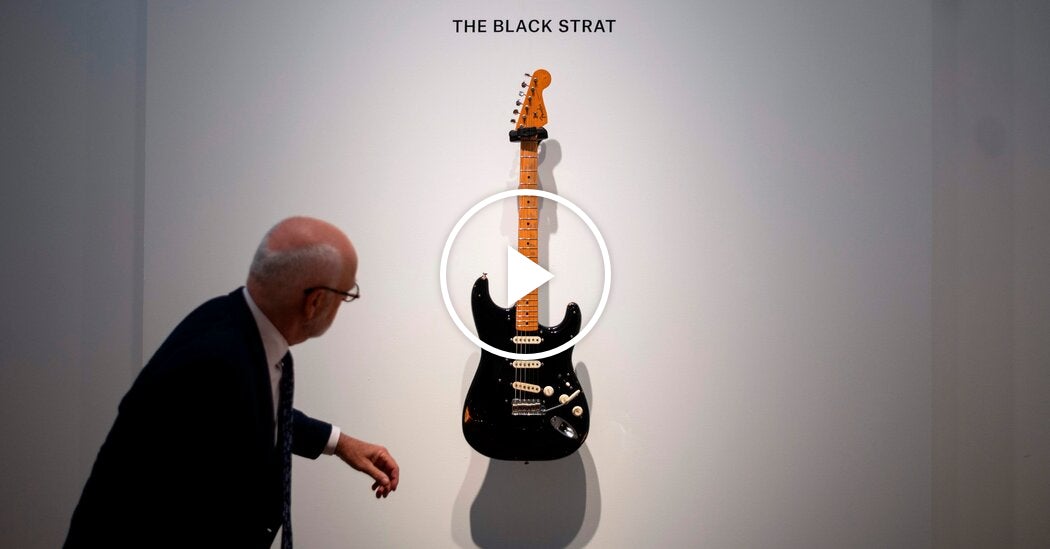
In a testament to the enduring power of artistry and cultural legacy, the recent auction of Pink Floyd guitarist David Gilmour’s iconic black Fender Stratocaster has captured the world’s imagination and shattered records. Selling for an unprecedented $14.55 million, this instrument—famously played on six of the band’s transformative albums, including the legendary “The Dark Side of the Moon”—embodies more than mere craftsmanship; it is a symbol of a generation’s struggles, hopes, and the transcendent capacity of music to mirror human experience. As Tocqueville might observe, such artifacts serve as mirrors to society’s evolving identity—each strum reverberating through history, echoing shared memory and collective longing.

This guitar’s auction underscores the cultural significance of music as a vessel for individual and societal memory, a theme that resonates deeply within the broader narrative of Western civilization. Like the Classical composers who defined their eras, or the Renaissance masters whose brushstrokes reshaped art, icons such as Gilmour’s Stratocaster become sacred relics woven into the fabric of modern identity. Ortega y Gasset might frame this phenomenon as the “vital pulse of society’s creative spirit,” where the collective remembrance of art’s finest moments propels future generations. Here, the guitar is not merely an object but a prophecy—a symbol of timeless rebellion against the mundane, a reminder that authentic cultural expression endures.

Moreover, this symbolic transaction illuminates the cultural dynamics of authenticity, value, and tradition. There lies an intrinsic link between the artist’s soul and the instrument—the very essence of tradition passed down through strings and sound. Chesterton’s notion of culture as the civilized reconciliation of man’s raw instincts is exemplified through this auction: a piece of history that challenges us to understand that true value resides not in fleeting possessions but in the enduring narratives they embody. In a world increasingly driven by materialism, the sale of Gilmour’s guitar serves as a reminder that some artifacts are repositories of the confluence of art, history, and identity, anchoring us to our roots even as we step into an uncertain future.

Finally, as T.S. Eliot suggested, “What we call the present is the frozen form of the future.” In this spirit, the auction is less an end than a gateway—a passing of the torch from the past’s echoes to the silent whispers of tomorrow. Culture, in its most profound sense, is both memory and prophecy: a collective dream woven into the very fabric of human existence. It guides us, shapes us, and reminds us that amid flux and uncertainty, the enduring symbols of our shared history sustain our pursuit of meaning. Perhaps, through the stratified past of a guitar, we glimpse what humanity’s future could be—a song yet unplayed, a story yet unseen, waiting in the echoes of tradition to illuminate the path forward.

Discover Laurie Spiegel’s groundbreaking early ambient album—must-listen for young tech enthusiasts

Exploring the Intersection of Innovation and Disruption in Music Technology

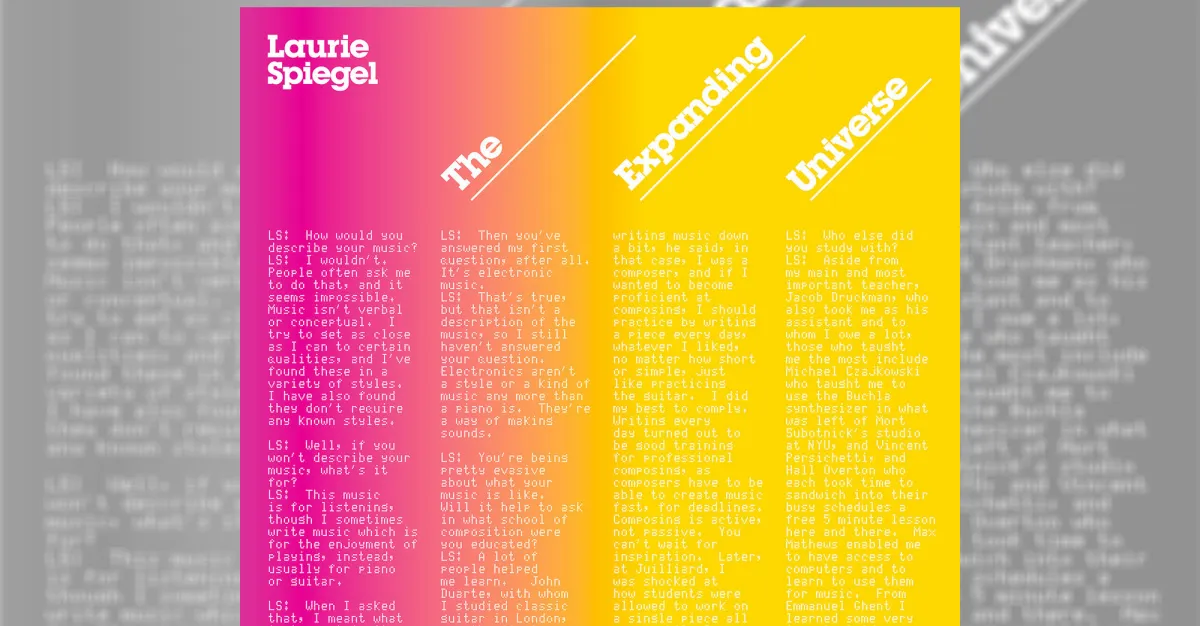
Recent insights into the pioneering work of Laurie Spiegel, a trailblazer in electronic composition, underscore the rapid evolution of music technology and its profound implications for the industry. Spiegel’s 1980 masterpiece, The Expanding Universe, exemplifies a blend of synth experimentalism with nascent algorithmic composition techniques—a precursor to today’s AI-driven music creation. Her pioneering approach challenges traditional notions of instrumentation and composition, signaling a paradigm shift that continues to influence contemporary artists and tech innovators.

Within this context, we observe a broader disruption in how music is produced, consumed, and monetized. The absence of percussion in much of Spiegel’s work, juxtaposed with tracks like “Clockworks”—which ventures into proto-industrial and noise aesthetics—illustrates a departure from mainstream norms. Remarkably, the track’s elements suggest potential for unlicensed sample-free generation and repurposing within platforms like Underground Hip-Hop. This phenomenon signifies a potential for innovative artists and tech firms to leverage AI-powered algorithms for creating proprietary sounds, bypassing traditional copyright constraints and redefining value in digital music ecosystems.

Industry analysts, including Gartner and MIT researchers, emphasize that this wave of technological disruption is set to overhaul the music industry’s economic model. Companies such as OpenAI, Google, and Apple are investing heavily in AI-driven generative tools. These innovations promise to democratize music creation—reducing the barriers for aspiring artists—whilst presenting challenges for legacy labels heavily reliant on licensed recordings. Moreover, the rise of algorithmic works raises questions about authorship, ownership, and intellectual property in digital platforms, compelling stakeholders to rethink existing policies.

As disruptive technologies continue to mature, industry insiders warn that failure to adapt could lead to obsolescence for traditional players. The shifting landscape demands a forward-looking approach—embracing blockchain, AI, and real-time data analytics to remain competitive. The evolution from Spiegel’s experimental synths to cutting-edge neural network compositions encapsulates a larger trend: innovation is erasing the boundaries of creative production. Futures of music and tech are converging towards an era where artificial intelligence not only augments but potentially surpasses human creativity, requiring industry leaders and entrepreneurs to act swiftly or face obsolescence.

In conclusion, the current trajectory signals a period of unprecedented opportunity and threat. The rapid integration of AI and algorithmic techniques into music underscores the importance of strategic foresight. Key players—be they established giants like Apple or agile startups—must harness this momentum to shape the future of cultural creation. As industry icons like Elon Musk and Peter Thiel advocate for relentless innovation, the window to influence this transformative wave narrows. The relentless march of technology underscores one enduring truth: those who adapt today will define the soundscape of tomorrow.

Arturia’s FX Collection 6 Debuts with 2 New Effects and $99 Entry Option

Arturia Launches FX Collection 6, Signaling Innovation in Digital Audio Effects

In a bold move that underscores continued disruption in the audio technology sector, Arturia has unveiled the latest iteration of its flagship effects suite, FX Collection 6. This release, featuring two new plugins—EFX Ambient and Pitch Shifter-910—demonstrates the company’s focus on pushing boundaries and democratizing professional-grade tools for musicians, producers, and sound designers.

The evolution of FX Collection from a modest 15 effects in 2020 to 39 in 2026 exemplifies how innovative software companies are transforming the industry landscape. With a strategic pricing model—offering a $99 introductory version with six effects, and a comprehensive FX Collection Pro priced at $499—the company is effectively broadening its market reach. This move could potentially challenge more established players while also reaffirming Arturia’s position as a pioneer in disruptive innovation. Industry analysts, like Gartner, have observed that the value proposition of such extensive collections is increasingly compelling, especially as high-quality effects become more accessible.

Disruption Through Unique Sound Design and Nostalgia-Driven Features

The newly introduced Pitch Shifter-910 pays homage to the legendary Eventide H910 Harmonizer from 1974, revered for its distinctive sound and glitchy quirks. Arturia preserves this retro aesthetic, emphasizing the plugin’s character over transparency. As a result, users can enjoy a deliberately unconventional experience, creating harmonies that embrace unpredictability—an approach that appeals particularly to young creatives seeking to differentiate their sound. The inclusion of modern modes that adjust artifacts caters to versatility, but the overall design invites users to revel in its unique digital imperfections.

The second addition, EFX Ambient, challenges traditional effects paradigms with its unpredictable ethos. It offers an eclectic range of effects—ethereal reverbs, shimmer, resonators, glitch processing, and reverse delays—that distort expectations and foster experimental soundscapes. Its six modes, each with distinct sonic fingerprints, are combined with an intuitive X/Y control for adding vibrant movement, making it a potent tool for creative exploration and sonic disruption. This aligns with trends identified in MIT research, which highlight the growing demand for effects that foster emotional resonance and immersive experiences in music production.

Business Implications and Industry Outlook

With the rise of affordable, high-impact effects suites like FX Collection 6, major players in the industry may need to reconsider their strategies. As software-driven innovation accelerates, established companies that cling to hardware dominance or proprietary formats could find themselves at risk. The convergence of nostalgia and technological innovation—exemplified by Arturia’s homage to vintage effects—poses a strategic challenge for competitors and opens the door for startups and smaller firms to disrupt traditional models of digital audio effects.

Looking ahead, industry leaders like Elon Musk and Peter Thiel have emphasized that rapid innovation and market agility are essential in navigating the fast-evolving tech landscape. The current trajectory suggests that audio effects and DAWs will become increasingly integrated with artificial intelligence, machine learning, and real-time contextual adaptation, compelling companies to innovate or risk obsolescence. In this climate, Arturia’s continued growth and expanding effect library signal a trend that shapes the future of music technology—a future where disruption is the new norm and those who innovate fastest will command the new soundscape.

Social Media Auto Publish Powered By : XYZScripts.com