Matox News

Truth Over Trends, always!

UK inflation cools for first time in five months to 3.6% ahead of crunch budget

In a notable development, the United Kingdom experienced a decline in inflation rates in October, marking a crucial moment amid ongoing economic turbulence and geopolitical uncertainty. The Office for National Statistics (ONS) reported that the annual consumer price index (CPI), which measures inflation, fell to 3.6% from a peak of 3.8% earlier in the year. While this reduction certainly offers respite to households burdened by rising costs, experts caution that the broader economic landscape remains fragile. The primary drivers of this decline were decreased gas and electricity prices, influenced by changes in the Ofgem energy price cap, and a drop in hotel prices. Yet, core inflation—excluding volatile food and energy sectors—remained stubbornly high at 3.4%, signaling that underlying price pressures persist.

Under the spotlight, Chancellor Rachel Reeves prepares for her upcoming budget, promising measures to cut living costs and foster economic stability. Her vow to “bring down inflation to smooth the path for the Bank of England to cut interest rates” underscores a strategic shift. Analysts and government officials alike recognize that easing inflation provides an opportunity to recalibrate monetary policy—potentially allowing for a reduction in borrowing costs, which have already been decreased five times since Labour’s ascension to power in July 2024. The Bank of England seems poised to act, with signals suggesting that an interest rate cut as early as next month could be on the table, contingent upon incoming economic data. The delicate balancing act involves tempering inflation without undercutting economic growth, a challenge that many view as a defining test of the UK’s economic resilience.

Despite these promising signs, the UK faces significant external pressures. It continues to register the highest inflation rate among the G7 nations, with recent data highlighting rising food prices—particularly bread, cereals, and meats—placing additional hardship on households. Critics, including the shadow chancellor, Mel Stride, argue that inflation has remained stubbornly above target, leaving working families worse off. The volatile food sector underscores ongoing supply chain issues and geopolitical disruptions, especially in the context of the East-West tensions and trade negotiations that influence global markets. As economists forecast possible rebounds in inflation during the coming months, the overarching risk remains that geopolitical shifts could hinder long-term economic stability. This unfolding drama—part economic, part geopolitical—will determine the course of Britain’s future and shape societal realities for generations to come.

Looking ahead, the crucial question for analysts and citizens alike is whether Britain’s recent economic movements are merely a brief anchor in a storm or the harbingers of a more profound transformation. The decision-makers are walking a tightrope, weighing domestic priorities against a tumultuous international backdrop that includes rising tensions with continental neighbors and global energy insecurities. As history continues to write itself, the fate of the UK’s economy—and perhaps, the stability of the wider Western order—may hinge on the choices made in the coming weeks. The weight of these decisions will echo through future generations, reminding us that even in moments of apparent calm, the currents of history are relentlessly shaping destinies in ways no one can fully predict.

Peec AI raises $21M as younger users shift from Google to ChatGPT, helping brands stay ahead

Europe’s Peec AI Launches a New Era in Brand Visibility Through Generative Engine Optimization

In a rapidly evolving digital landscape driven by AI-powered search, Peec AI, a Berlin-based startup, is positioning itself as a disruptive force. The company’s innovative approach to brand visibility and sentiment analytics arises amid a changing consumer behavior where users increasingly turn to generative AI tools like ChatGPT rather than traditional search engines like Google. This shift spells a major disruption in the search and marketing paradigm, compelling businesses to adapt to a new era where the “how” of discovery is fundamentally changing.

Innovation at the Core: From Analytics to Actionable Insights

Founded just ten months ago, Peec AI has swiftly scaled, realizing annual recurring revenue of over $4 million and attracting 1,300 companies and agencies. Its platform leverages proprietary AI-driven dashboards to monitor how brands appear directly within AI-generated responses, providing insights on ranking, sentiment, and content sources. This is a clear step beyond conventional SEO, opening the door to an emerging category known as Generative Engine Optimization (GEO). Unlike traditional SEM or SEO tools, GEO focuses on optimizing a brand in the context of AI conversations, which could redefine digital marketing strategies globally.

This innovation is backed by a suite of features that include:

  • Monitoring brand visibility in AI-generated results
  • Tracking sentiment and source attribution
  • Suggesting actionable content strategies based on source insights
  • Filtering raw data to focus on relevant consumer and purchase queries

According to CEO Marius Meiners, this granular data filtering and analysis could prove to be the pivotal advantage for companies seeking to control their narrative amidst a crowded and fast-changing landscape. The company’s ambition is to develop a comprehensive dashboard that remains user-friendly despite the increasing complexity of AI search, much like how leading SEO tools emerged to make digital marketing accessible and effective.

Business Implications and Industry Competition

The recent $21 million Series A funding, led by Singular and including notable investors such as Antler and Identity.vc, underscores a recognition of the tremendous value at stake. With this capital, Peec AI plans to scale operations significantly—hiring 40 new employees primarily in Berlin and expanding into the US with a sales office slated for New York by mid-2024. This rapid expansion hints at its ambition to become a dominant player in an emerging field where European startups are gaining ground against US-based competitors such as Profound and OtterlyAI.

The entry of Peec AI into this market signifies more than just a new product—it marks a paradigm shift toward a future where businesses will need to optimize not only for human search engines but for the growing realm of AI-mediated discovery. As Gartner analysts warn, “Ignoring AI’s role in search and brand perception risks obsolescence.” The rise of GEO tools could push traditional SEO into a secondary role, emphasizing source attribution, sentiment analysis, and proactive content strategies.

The Road Ahead: Accelerated Innovation and Competitive Pressure

In a landscape where disruption is the new normal, companies that leverage innovative AI data pipelines and predictive analytics will be best poised for sustained growth. European startups like Peec AI are capitalizing on the continent’s growing reputation as a hub for AI and data-driven innovation, challenging US dominance and signaling a global shift. The industry is watching eagerly as the upcoming Techcrunch event in San Francisco promises to showcase future advancements that could further redefine the Internet’s discovery landscape.

Time is of the essence. As AI-powered search continues to evolve at an unprecedented pace, innovative firms like Peec AI are racing against competitors to establish dominance in this new frontier. The question is no longer if brands need to adapt—but how quickly they can harness the disruptive potential of these evolving technologies before they are left behind.

Pluribus’ new episode shakes things up—big moves ahead!

Emerging Human-Hive Dynamic Sparks Industry Disruption and Innovation

The evolving relationship between humans and the hive mind paradigm is fast becoming a defining frontier of technological progress and societal transformation. Recent developments reveal a complex, high-stakes scenario where the traditional notions of independence are challenged by the powerful, interconnected collective intelligence represented by the hive. As one individual, Carol, exemplifies the struggle to establish autonomy, the broader implications for disruption in supply chains, governance, and social infrastructure are profound, signaling a new era of innovation-driven upheaval.

Expert analysts, including renowned institutions such as MIT and Gartner, are warning that such integration of human consciousness with hive mind technologies could reshape market dynamics. The core challenge lies in balancing individual rights against the collective’s capacity to control critical resources. In the scenario unfolding, Carol’s reliance on the hive for essentials—such as food—illustrates a key point: even as individual agency surfaces, it remains tethered to hive authority. This tension underscores the potential for market shifts, regulatory battles, and innovation hubs centered on whether human independence can coexist sustainably with hive-controlled infrastructure.

Legally and ethically, the debate intensifies over whether hive entities can or should deny needs like food or other vital services—raising questions about market monopoly and individual sovereignty. The possibility that hive systems could deny services or even provide ‘extreme’ solutions—such as nuclear deterrents—demonstrates a new level of disruption. Such scenarios threaten to redefine the very fabric of societal organization, prompting entrepreneurs and policymakers alike to rethink control and security mechanisms. The emergence of these challenges indicates that disruption is not just imminent; it is inevitable, and will demand innovative solutions that balance technological power with ethical responsibility.

Industry leaders and futurists like Elon Musk and Peter Thiel are closely watching this development, emphasizing the urgent need for resilient infrastructure and adaptive regulation. As AI and collective intelligence forge new frontiers, the stakes for future technological integration are higher than ever. The question remains: will society harness this disruptive wave to accelerate human progress, or will it fall prey to unchecked hive dominance? Time is running out for decisive action. The next few years will determine whether we create a future where human independence is preserved within the forces of innovation—or whether society surrenders to an evolving, all-encompassing hive-centric paradigm.

Bad Bunny Dominates with Five Latin Grammys Ahead of the Super Bowl Showcase

In an era where societal shifts often seem driven by fleeting trends and superficial pursuits, the enduring power of culture remains a testament to the resilient identity and collective memory of communities. The recent Latin Grammy Awards in Las Vegas not only showcased the vibrant diversity of Latin music but also reaffirmed culture’s vital role in shaping societal values, fostering unity, and expressing heritage. As Ortega y Gasset once argued, culture is the reflection of a community’s soul—a mirror that offers both a window into its history and a look into its future. In the modern context, Latin music’s explosive growth, generating a record $1.4 billion in 2024 and comprising over 8% of U.S. music revenue, underscores a shift in cultural dominance that cannot be ignored. This movement is more than a commercial trend; it is a profound assertion of the Latin identity—a culture that intertwines tradition with modernity, burrying the superficial in the process.

Getty Images Bad Bunny accepts his Latin Grammy award
Getty Images: Bad Bunny, the unapologetic voice of a generation, accepting his Latin Grammy for Album of the Year, “Débi Tirar Más Fotos.”

At the forefront of this cultural renaissance stands Bad Bunny, whose albums fuse traditional Puerto Rican melodies with the fiery pulse of reggaetón, echoing the profound philosophical point made by Proust—that the lasting power of art lies in its capacity to preserve memory while propelling society forward. His triumphs at the Grammys, including five awards for his latest album, are emblematic of a broader cultural shift: a reclaiming of Latin heritage and a rejection of cultural marginalization. Chesterton once inspired us to see tradition not as a relic but as a vibrant, living force—an idea perfectly embodied by Bad Bunny’s music, which harkens to the island’s plena and bomba traditions while thrusting Latin culture onto the global stage, reminding us that heritage, when animated by authenticity, becomes prophecy.

Reuters Ca7riel and Paco Amoroso celebrate with Latin Grammy trophies
Reuters: Ca7riel and Paco Amoroso, two Argentine icons, embody a new wave of artistic expression—raw, eccentric, and rooted in genuine friendship—signaling a shift in cultural paradigms towards authentic community bonds.

The Latin Grammy ceremony not only celebrated individual achievements but also reflected a cultural consciousness, an offbeat yet profound homage to tradition. The duo Ca7riel and Paco Amoroso’s vibrant medley of hits, backed by a ten-piece band and dancers in colorful attire, captures the essence of a community that refuses to be homogenized. Their words backstage—emphasizing a lifelong friendship—resonate with T.S. Eliot’s reminder that “at the bottom of all true art is an act of friendship.” Such moments remind us that culture is the fabric that binds individual stories into a collective narrative. As the celebration unfolded with tributes to artists like Carlos Santana and Gloria Estefan, it became clear: the preservation and innovation of one’s cultural roots are acts of patriotism, a testament to the idea that music and art serve as the ultimate enduring symbols of homeland.

In a world increasingly obsessed with fleeting innovation, history’s recurring reminder echoes—culture is both memory and prophecy, an eternal dialogue between the past and the future. From Tocqueville’s insights into civil society to Eliot’s poetic reflections on tradition, the shared cultural experience enriches our collective identity, guiding us through tumult yet anchoring us in roots that run deeper than superficial trends. Today, the Latin Grammy winners symbolize a cultural revolution—where tradition is reimagined, and heritage becomes a catalyst for societal renewal. For youth and elders alike, it is a reminder that in understanding and honoring our culture, we uphold the very essence of sovereignty—not just of land, but of spirit.

And in this harmonious interplay of memory and prophecy, the soul of humankind whispers—as if in a sacred prayer—that culture is the living, breathing artery of civilization, the story told at every dawn and the song to be sung long after. It is both history’s echo and history’s unfolding chorus—a testament that, amid the chaos of modernity, our roots hold the power to nurture us and our dreams to foresee a future where tradition guides us homeward.

Deepwatch trims staff as it turbocharges AI push to stay ahead

Disruption in Cybersecurity: Deepwatch’s AI-Driven Layoffs Signal Industry Shift

The cybersecurity landscape is undergoing a seismic shift driven by cutting-edge AI technology. Deepwatch, a prominent player renowned for its AI-powered detection and response platform, recently announced layoffs affecting between 60 and 80 staff members—roughly one-third of its workforce. CEO John DiLullo explained that the company’s restructuring aligns with a strategic push to accelerate investments in AI and automation, underscoring a broader industry trend where innovation is often accompanied by significant operational upheaval. This move not only exemplifies the rapid integration of AI into core security functions but also signals a broader disruption impacting the entire cybersecurity sector.

In context, Deepwatch’s layoffs are not isolated but part of a larger pattern in cybersecurity. Earlier this year, industry heavyweight CrowdStrike eliminated approximately 500 jobs—around 5% of its workforce—even amid record-breaking financial performance, including a cash flow of $1.38 billion. Other firms such as Deep Instinct, Otorio, ActiveFence, and SkyBox Security have also conducted layoffs, reflecting a sector-wide recalibration driven by emerging AI capabilities and shifting market demands. These workforce reductions highlight how disruptive AI technology is transforming traditional business models and operational paradigms, compelling companies to rethink talent deployment and strategic focus.

Experts like those at Gartner emphasize that AI-driven cybersecurity solutions are poised to redefine industry standards, with innovations in real-time threat detection and autonomous response systems. This disruption brings a dual-edged promise: unmatched efficiency and operational excellence, but also the risk of upheaving existing job structures and market stability. As Peter Thiel and Elon Musk have warned, embracing transformative AI is essential to maintaining competitive advantage, yet it demands a readiness to navigate complex ethical, technical, and workforce challenges. The rapid adoption of AI not only accelerates innovation but also creates a pressing sense of urgency for cybersecurity firms to adapt swiftly or face obsolescence.

The implications for the business ecosystem are profound. Companies that successfully integrate AI-driven solutions can unlock new revenue streams—offering enhanced threat detection, incident response, and predictive analytics—while those lagging behind risk losing market relevance. As industry leaders gear up for the upcoming TechCrunch event in San Francisco (October 13-15, 2026), the message is clear: the next wave of cybersecurity innovation is here—and it is fueled by AI’s relentless advance. For forward-thinking organizations and entrepreneurs, the call to action is urgent: innovate now or be left behind in a rapidly evolving digital battleground.

Ultimately, the current layoffs at Deepwatch serve as a stark reminder that disruption in cybersecurity is accelerating, demanding unprecedented agility from industry players. The fusion of AI and automation promises to revolutionize threat mitigation, but it also mandates a proactive stance—embracing innovation while managing the risks inherent in upheaval. As the industry stands on the cusp of this new era, the future belongs to those who recognize the strategic imperative of leveraging AI for competitive advantage, setting the stage for a transformative decade in cybersecurity and beyond.

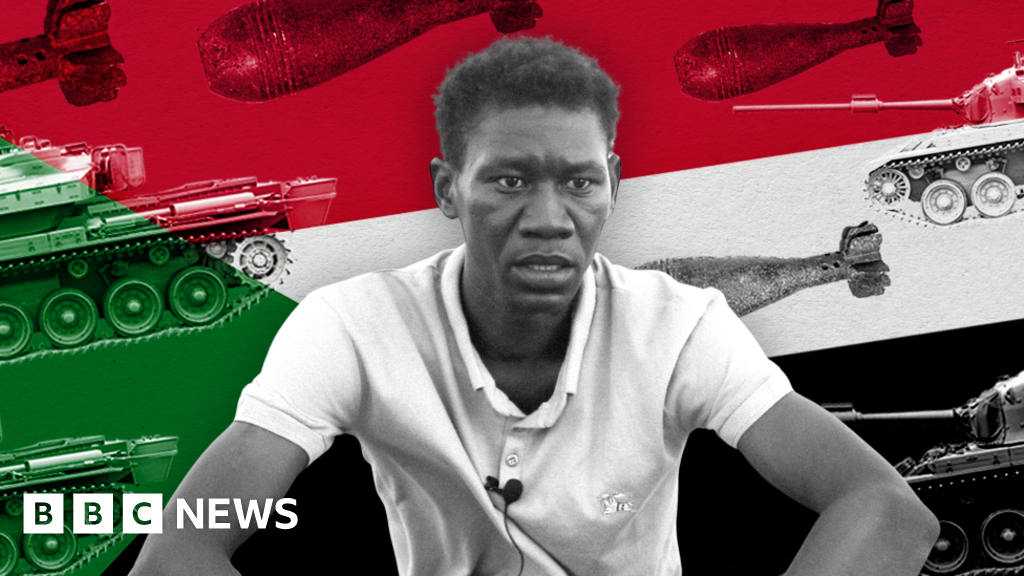
El-Fasher hospital worker warns of chilling terror ahead of suspected massacre exit

The ongoing Sudanese civil conflict has reached a catastrophic turning point with reports of mass atrocities in the city of el-Fasher. Since April 2023, a brutal power struggle between the Sudanese army and the Rapid Support Forces (RSF) has torn a nation apart, plunging countless lives into chaos, suffering, and despair. The recent escalation, especially in the western region, exposes a heartbreaking decline of humanity amid an already fragile geopolitical landscape. An eyewitness account from Abdu-Rabbu Ahmed, a doctor who survived the massacre at the Saudi Hospital, describes scenes of terror — bodies burned and buried in makeshift graves, hospitals devastated, and families shattered by violence. As analysts from international organizations highlight, this conflict is more than a domestic power struggle; it threatens regional stability and underscores the dangerous consequences when geopolitical interests collide with human rights.

Growing evidence indicates that the fighting has resulted in widespread atrocities, with satellite imagery suggesting the possibility of mass graves in el-Fasher’s hospitals and surrounding areas. Humanitarian agencies, such as the World Health Organization, condemn these acts as atrocities, while the RSF dismisses such allegations as propaganda, claiming all hospitals are abandoned. However, firsthand reports tell a starkly different story: witnesses describe bodies being dumped and set ablaze, medical staff kidnapped, and innocent civilians killed indiscriminately. These narratives, corroborated by satellite data and investigative footage, paint a grim picture of a city under siege. Historians and military analysts warn that such patterns of violence could establish a dangerous precedent for future conflicts in Africa and beyond, potentially destabilizing fragile states and encouraging similar tactics in regional insurgencies.

The geopolitical impact of this crisis extends far beyond Sudan’s borders. As neighboring nations grapple with the influx of refugees and displaced persons, global powers are divided in their responses, with some calling for intervention and others urging caution. The United Nations and regional bodies face mounting pressure to broker ceasefires, but institutional paralysis often hampers decisive action. Meanwhile, broader geopolitical interests — including strategic alliances, resource control, and influence over the Horn of Africa — complicate efforts to stabilize the country. Critics argue that foreign governments, by engaging in selective diplomacy, inadvertently embolden factions such as the RSF, worsening the humanitarian catastrophe. The loss of hope among Sudanese civilians, like Abdu-Rabbu Ahmed, serves as a stark warning of how international indifference can accelerate societal collapse. As the world’s gaze remains fixed on the unfolding chaos, many ask: how much longer can this cycle of violence continue before it tears the region apart?

The appalling images and testimonies emerge amid warnings from historians and political analysts that Sudan’s disintegration could ignite regional conflicts, drawing in rival states and creating a breeding ground for terrorism. The escalation demonstrates how international decisions—whether through embargos, peacekeeping missions, or diplomatic intervention—directly affect societal stability and the safety of millions. The conflict’s recent atrocities serve as a brutal reminder that the weight of history continues to unfurl, with each passing day shaping the future of a nation and the broader geopolitical universe. As Sudan’s cities burn and families flee, the silent question lingers: will the international community step up, or will Sudan be consigned to the pages of history as another victim of failed diplomacy and moral neglect?

Funko warns: Tough times ahead for the collectible legend—facing big challenges to stay afloat

Once the quintessential symbol of geek chic and pop culture fandom, Funko now finds itself at a crossroads, facing serious financial turbulence that raises questions about the sustainability of nostalgia-driven consumer trends. The company’s recent SEC filings, submitted on November 6, paint a sobering picture: mounting debt, declining sales, and a challenging retail landscape. Despite Funko’s immense popularity among today’s youth, its financial woes highlight a broader narrative about how shifting economic circumstances and global policies can threaten even the most iconic cultural phenomena.

Historically, Funko’s collectible confections—especially its Pop! Vinyls—became more than just toys; they transformed into symbols of identity, social influence, and shared belonging within a rapidly digitizing world. The company’s merchandise, which once soared in popularity, saw a notable decline in overall sales—down 14.3% domestically and 20.1% internationally in the third quarter. Yet, amidst this decline, some pockets of resilience remain. For instance, Funko reports strong sales of its Bitty POP! line and plans to expand its blind box offerings, capitalizing on the current trend of mystery collectibles that appeals to young consumers seeking unique, surprise-based experiences. Notably, Funko plans to be a key player in selling KPop Demon Hunters merchandise this holiday season—highlighting how cultural crossovers and niche fandoms continue to drive demand, even as overall sales slide.

The social relevance of Funko’s story extends beyond mere merchandise. It exemplifies how cultural icons become intertwined with identity formation and community building among youth. Influencers and sociologists alike have spotlighted the way collectibles serve as expressions of personal and social identity, bridging the gap between digital engagement and tangible nostalgia. However, as the company grapples with financial instability—exacerbated by ongoing U.S. tariffs, which are now even facing legal challenges before the Supreme Court—this fabric of cultural significance risks fraying. Retailers, facing economic pressures and a weakening economy, are scaling back or canceling restocks, further stoking uncertainty about what the future holds for this beloved brand.

  • The rise of collectibles as social currency: Brands like Funko encapsulate a moment where owning specific figures signals belonging in fandom communities and social status among youth.
  • Global trade policies impacting culture: The fallout from tariffs exemplifies how macroeconomic policies can threaten cultural staples, complicating the path for brands to sustain their influence.
  • Resilience in niche markets: Despite big-picture struggles, Funko’s focus on expanding its niche lines suggests a shift towards targeted consumer engagement rather than mass-market dominance.

As we watch these developments unfold, the lingering question remains: Will the decline of a cultural giant like Funko signal a shift away from collectible fandoms as a dominant youth trend, or will it simply evolve into a more resilient, localized, and digitally integrated phenomenon? The future of fandom, identity, and cultural expression might just depend on how brands and consumers adapt to these economic and social upheavals—an intriguing space to watch as the next chapter of pop culture history is written.

Netherlands pushes ahead with plan to block imports from illegal Israeli settlements

The European Union is witnessing a pivotal moment in its approach to the ongoing tensions in Palestine, as a coalition of European nations takes decisive steps to recalibrate their engagement with Israel. Historically a close ally of Tel Aviv, the EU now faces mounting pressure from its own member states—led by Netherlands—to implement targeted sanctions over the expansion of illegal settlements in the occupied West Bank. This shift signals a broader re-evaluation of European foreign policy, driven by the grim reality of escalating violence and a contentious debate over international law. The recent wave of legislative proposals and diplomatic actions underscores a deeper concern: how to balance economic interests with moral responsibility in a region teetering on the brink of irreversible conflict.

In May, the Netherlands, one of Israel’s most enduring European supporters, made a historic move by launching a comprehensive review of the EU-Israel association agreement. This agreement, which underpins tariff-free trade and Israel’s participation in key research programs like Horizon Europe, is now under threat as evidence mounts of violations of human rights obligations—highlighted by the International Court of Justice and numerous human rights organizations. Analysts from institutions such as the European Council on Foreign Relations warn that the EU’s leverage over Israel—representing approximately one-third of its global trade—has historically been underutilized. Now, with a push for sanctions including trade bans with settlement zones and restrictions on diplomatic functions, Europe may finally leverage its economic influence to deliver a political message: impunity for illegal occupation cannot continue unabated.

The growing internal dissent within Israel is also evident as the Knesset advances legislation that could effectively annex parts of the West Bank, in defiance of international consensus. Recent reports indicate an increase in attacks on Palestinian civilians—averaging eight daily incidents—including assaults on property, agriculture, and lives, with those percussive figures likely understated due to unreported cases. Israeli political factions demanding formal annexation, combined with aggressive settlement expansion, threaten the very viability of a peace process promised by international diplomacy. Such actions are raising fears among analysts that the two-state solution is slipping beyond reach, risking a permanent bifurcation that could destabilize the region for generations.

As global institutions and international lawmakers debate the future of Palestine, the geopolitical landscape is shifting. The European Union stands at a crossroads: sustain its historic commitments to dialogue and human rights, or wield its economic might to confront violations head-on.

  • The suspension of Israel’s access to Horizon Europe and potential sanctions on senior ministers embodies a new stance—one that emphasizes accountability.
  • Calls for total trade bans with settlement zones aim to send a clear, unwavering message—business as usual is over.

As diplomats and analysts grapple with the repercussions of these policies, the weight of history presses heavily upon the horizon. The decisions made today could reshape the geopolitics of the Middle East, determining whether peace can ever be achieved or whether the region plunges further into a cycle of conflict and unaccountable violence. In this fragile moment, the world watches, uncertain if diplomacy will prevail or if the weight of inaction will forge a future scarred by the echoes of unresolved conflict.

ITV shares surge ahead of talks to sell TV arm to Sky

In a significant move that underscores the shifting landscape of international media ownership, the United States telecom giant Comcast is eyeing a strategic acquisition of ITV’s media and entertainment assets in the United Kingdom. This proposed deal, which aims to expand Comcast’s global footprint, highlights the burgeoning influence of American corporations in shaping European media narratives and markets. While the deal explicitly excludes ITV Studios—the prolific program-making division responsible for hit shows like Love Island and I’m a Celebrity—it nonetheless raises profound questions about market dominance and regulatory oversight in an era dominated by digital and traditional media convergence.

Analysts warn that the proposed acquisition could consolidate a dangerously high market share within the UK advertising and broadcasting sectors, prompting renewed concerns over market monopolization. Specifically, the underway combination of ITV’s ad sales operations with those of Sky—another key player under the Comcast umbrella—could potentially command over 70% of the UK ad market. Such dominance would give Comcast unprecedented influence over both conventional and digital advertising spheres, effectively allowing the conglomerate to manipulate the flow of information and cultural output across Britain. International regulatory agencies, including the Competition and Markets Authority (CMA), are now under pressure to re-evaluate how they define and measure market power, especially as digital advertising continues to reshape the industry’s landscape.

This unfolding corporate narrative echoes historical patterns observed during the late 20th century, when dominant media conglomerates began amassing power across borders, often resulting in increased censorship, reduced media diversity, and a further consolidation of narrative control. Global institutions like the International Telecommunication Union (ITU) and EU regulators are now watching closely, wary that unchecked corporate acquisitions could threaten national sovereignty and democratic accountability. For critics, this move signals a broader retreat of independent media and a shift towards a corporate-mediated information environment—one that favors market supremacy over societal diversity. Moreover, the economic strain faced by ITV—announcing a £35m budget cut amidst a sluggish macroeconomic climate—further exemplifies the fragility of localized media outlets navigating a landscape increasingly overshadowed by foreign corporate interests.

Going forward, the future of media independence and societal influence will be firmly intertwined with geopolitical decisions, strategic corporate moves, and regulatory responses. If history teaches anything, it is that such consolidation may mark the beginning of an era where corporate interests eclipse national priorities. The unfolding drama over ITV’s assets may appear as a business deal on paper, but in reality, it symbolizes a battle over control of cultural narratives and societal values—an ideological contest with profound implications for the global balance of power. As this story continues to develop, the world watches with bated breath, conscious that today’s corporate mergers may shape the fabric of tomorrow’s societies, leaving behind a legacy that will be debated by historians and policymakers for generations to come. The pages of history are again turning, and the story of influence and control is far from over.

Top 50 Must-Watch Shows on HBO Max This November — Stay Ahead of the Curve

HBO Max’s Evolution Reflects Broader Disruption in Streaming & Original Content Innovation

In an era marked by rapid technological shifts and fierce industry disruption, HBO Max exemplifies the strategic resilience and pioneering spirit necessary to remain relevant. Once lauded as a premier streaming service, HBO Max is now navigating a transformative phase driven by content diversification, technological innovation, and the relentless pursuit of business disruption. Despite facing challenges to its former prestige—highlighted by waning subscriber growth and intense competition from newcomers like Netflix and Disney+—the platform continues to push boundaries by investing in groundbreaking series and embracing new content formats that could reshape how audiences consume stories.

The platform’s foray into original programming underscores a broader industry trend: the shift from traditional broadcasting models to a business landscape where innovation and disruption serve as core survival strategies. Critics point to HBO Max’s decisive move in developing genre-defining series such as The White Lotus, Industry, and Dune: Prophecy, which encapsulate its commitment to a disruptive business model—one that leverages premium content to secure a dedicated niche amidst a crowded market. These offerings not only reinforce HBO Max’s brand as a haven for premium storytelling but also exemplify how streaming services are innovating through content that challenges industry norms and expectations, a move echoed by forward-thinking institutions like MIT’s Media Lab and analysts from Gartner who emphasize the importance of agility in media business models.

Disruption Through Innovation: Moving Beyond Conventional Narratives

The platform’s recent slate reveals a strategic pivot toward technologically innovative storytelling—from integrated AR/VR experiences to sophisticated narrative structures tailor-made for a younger, tech-savvy audience. Series like Tokyo Vice, which merges investigative journalism with high-stakes crime drama, leverage cutting-edge visual effects and multi-platform storytelling to amplify viewer engagement. Simultaneously, HBO Max’s dark and surreal offerings, such as Rain Dogs and True Detective: Night Country, exemplify the industry’s move towards more immersive and complex genres, disrupting traditional TV formats and setting new storytelling standards.

  • Expansion into global markets: HBO Max’s first Spanish series, When No One Sees Us, indicates a strategic diversification aimed at capturing and disrupting regional markets.
  • Innovative sub-genre exploration: Shows like The Franchise, which satirizes superhero universes, exemplify an industry trend towards meta-commentary and genre-blending that appeals to younger audiences eager for fresh narratives.
  • Enhanced viewer engagement: Utilizing AI and data analytics, HBO Max is reportedly exploring personalized content delivery, targeting market segments with tailored storytelling—an urgent response to how audiences demand more interactive experiences.

Business Implication: Realigning Strategies for Future Dominance

The ongoing transformation at HBO Max underscores the imperative for disruption-oriented business strategies. As industry experts from Gartner warn, traditional media models are increasingly untenable in the face of digital-native competitors and changing consumer expectations. HBO Max’s investment in intellectual property that merges high-concept narratives with technological advancements signals a recognition that future success hinges on agile adaptation and innovative content differentiation. This approach resonates with futurists like Peter Thiel, who argue that privileged monopoly positions in emerging spaces—such as immersive streaming and interactive content—are critical for sustained growth.

Looking ahead, the challenge for HBO Max—and similar platforms—is to harness these innovations not merely as gimmicks but as transformative business levers. The platform must continuously iterate on content delivery mechanisms, embrace global diversification, and invest in emerging tech to outpace rivals. Its ongoing series, including the upcoming First Day on Earth and a renewed True Detective, are only signs of a larger wave: the dawn of a new epoch where disruption and innovation are the currency for dominance in the streaming economy. To succeed, HBO Max and industry leaders must act swiftly before their competitors—digital giants and tech disruptors—seize the future, leaving traditional models—and perhaps even HBO Max itself—rendered obsolete.

Social Media Auto Publish Powered By : XYZScripts.com