Matox News

Truth Over Trends, always!

SpaceX Eyes $60B Deal to Acquire Cursor, Signals Big Tech Moves

SpaceX and Cursor Collab Signals a New Era in AI Innovation and Industry Disruption

The alliance between SpaceX and Cursor marks a monumental shift in the landscape of artificial intelligence development, with significant implications for both technological progress and competitive advantage. This strategic partnership aims to combine Cursor’s cutting-edge knowledge work AI, renowned for its precision and efficiency among expert software engineers, with SpaceX’s formidable computational backbone—specifically its Colossus supercomputer, equipped with a million H100 equivalents. Such a synergy is set to revolutionize the creation of highly optimized AI models, positioning the collaboration at the forefront of innovation.

According to industry experts, including analysts at Gartner and MIT technology researchers, the use of vast computational resources—particularly H100 GPU clusters—will drastically accelerate the training of advanced AI models, pushing the boundaries of what is currently feasible. The partnership underscores a trend toward disruptive innovation—harnessing industry-scale supercomputing power for rapid deployment of AI that can dominate knowledge-based tasks, from coding to problem-solving. This level of integration exemplifies a new paradigm where the convergence of space-grade computing and AI expertise could set a blueprint for future tech dominance, compelling rivals to evaluate their own resource strategies.

Business Strategy and Industry Impact

The collaboration’s financial architecture is equally noteworthy. Cursor has granted SpaceX the right to acquire the AI firm later this year for $60 billion, or alternatively, SpaceX can choose to pay $10 billion for their collaborative developments. This dual pathway underscores an aggressive confidence in the commercial viability of the joint development efforts, signaling a strategic gamble that could reshape the AI market by consolidating innovation within a single tech giant. Such moves are reminiscent of divergence strategies seen in Elon Musk’s other ventures, with a focus on dominance and rapid scaling.

  • Innovation: Deployment of millions of GPU cores for AI training, radically reducing development timelines.
  • Disruption: Challenging traditional cloud-based AI models by leveraging space-grade supercomputing infrastructure.
  • Business implications: Potential market consolidation, setting new valuation benchmarks for AI startups, and redefining enterprise AI usage.

As the AI arms race intensifies, industry insiders warn that this partnership could accelerate global shifts toward autonomous systems, intelligent coding assistants, and knowledge synthesis tools, supplanting many conventional software development paradigms. Given SpaceX’s track record of pushing technological frontiers—think Starship and Falcon programs—its foray into AI via Cursor elevates the urgency for competitors to innovate or face obsolescence. The partnership not only exemplifies how industry titans are deploying unprecedented resources but also foreshadows a future where AI becomes fundamentally intertwined with space-grade hardware.

Future Outlook: The Next Phase of Tech Disruption

With the collaboration underway, the industry must brace for a phase of rapid displacement and evolution. As Gartner analysts predict, the integration of supercomputing with knowledge work AI will unlock capabilities previously considered science fiction—transforming sectors like software development, scientific research, and even complex decision-making systems. The critical question for industry leaders remains: who will adapt quickly enough in this new landscape? The clock is ticking, and in the race for technological supremacy, those who leverage innovation and massive computational resources now will dictate the future’s winners and losers.

In conclusion, the SpaceX-Cursor partnership exemplifies a pivotal turning point in tech history—disrupting existing industry norms while setting a blistering pace for future breakthroughs. As this alliance advances, it will be imperative for stakeholders to stay vigilant, innovate relentlessly, and harness the potential of this disruptive wave before it reshapes the entire technological ecosystem.

Yelp’s AI Chatbot Gets a Major Upgrade for a Smarter, Better Experience

Yelp’s Major AI Upgrade: Transforming Consumer Engagement and Industry Dynamics

In a bold move emblematic of current industry trends, Yelp has unveiled a comprehensive upgrade to its chatbot assistant, elevating the platform toward a next-generation digital concierge. This initiative exemplifies how disruption is reshaping local business discovery and customer service, aligning with broader AI-driven shifts observed across multiple sectors. By integrating advanced conversational AI, Yelp aims to turn user data into a powerful competitive advantage, echoing strategies championed by industry pioneers such as Elon Musk and Peter Thiel.

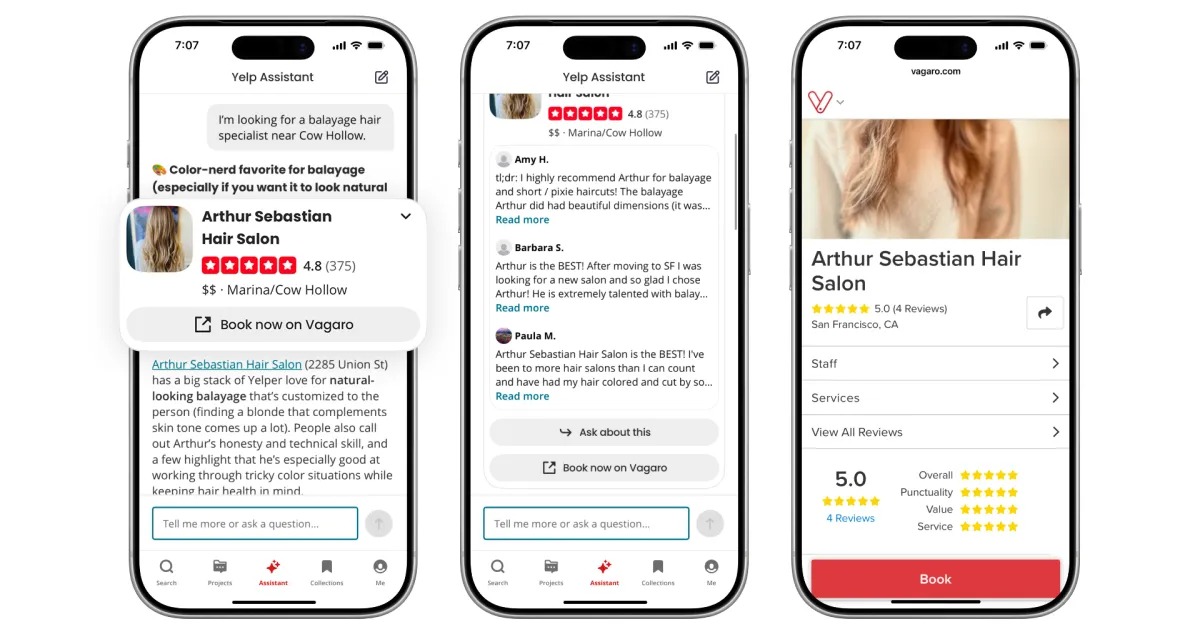
At the core of this transformation is the deployment of a revamped Yelp Assistant chatbot, now embedded centrally within the app’s interface through a dedicated “Assistant” tab. This technology extension positions the bot as more than a mere search helper—it’s now a personal digital assistant capable of answering questions, making recommendations, and facilitating bookings within a seamless, conversational environment. This evolution represents a paradigm shift in how consumers interact with local service providers, emphasizing conversational commerce and personalized service experiences. According to Yelp’s chief product officer, Craig Saldanha, this marks the company’s “most significant AI product evolution yet,” underscoring the strategic emphasis on AI-driven engagement.

  • Intelligent assistance that simplifies user workflows
  • Unified interface consolidating multiple service functions
  • Enhanced data analytics capabilities derived from user interactions
  • Strategic positioning against competitors leveraging AI for local discovery

This move is not happening in isolation; rather, it is part of a wider industry trend towards integrating AI to disrupt traditional search and booking paradigms. Companies like Google and Facebook are leveling up their AI offerings, but Yelp’s focus on a personalized, action-oriented experience marks a distinctive approach. The initiative also signals how large-scale user-generated data is being leveraged to refine algorithmic recommendations, fostering a more engaging and sticky user experience—an element emphasized by Gartner analysts as vital for future differentiation in local commerce platforms.

The implications extend beyond consumer convenience. For local businesses, this innovation could dramatically impact market dynamics, offering new avenues for exposure and customer acquisition. As Yelp’s AI becomes more sophisticated, there’s a growing potential for automated bookings and personalized marketing, potentially reducing friction in the customer journey and amplifying revenue streams. This aligns with a broader shift where AI-driven personalization can generate a market advantage—a trend closely monitored by industry veterans and investors alike, eager to identify the next wave of disruption. The strategic emphasis on continuous AI evolution suggests that competitors who lag behind risk obsolescence in a market increasingly driven by digital-first interactions.

Looking ahead, industry experts such as those at MIT and AI think tanks warn that the rapid proliferation of conversational agents introduces new challenges—privacy concerns, data integrity, and the need for robust AI governance. Yet, the opportunity for business innovation and disruption remains immense. As technological advances accelerate, the companies that invest early in AI-driven platforms—like Yelp—are positioning themselves at the forefront of a revolution in local commerce. The future belongs to those willing to harness the power of AI to create more intuitive, responsive, and integrated consumer experiences. The question remains: who will lead this charge, and how fast can they adapt? For now, Yelp’s bold step signals a clear message: in the race for digital dominance, agility and innovation are paramount.

OpenAI’s New SDK Boosts Enterprise Agents for Safer, Smarter Tech

OpenAI Launches Enhanced SDK, Paving the Way for Safer, More Disruptive AI Agents

In a strategic move poised to reshape the landscape of autonomous AI systems, OpenAI has unveiled a significant upgrade to its Agents SDK. This latest iteration introduces advanced sandboxing capabilities, enabling developers to deploy AI agents within tightly controlled environments. This innovation addresses longstanding concerns about the unpredictability of autonomous agents when run without supervision, a risk frequently discussed in industry circles among leading researchers and futurists. By isolating agents in secure, siloed workspaces, OpenAI is setting new standards for reliability and security, ensuring that cutting-edge AI tools can operate safely in real-world applications.

Fundamentally, this upgrade signals a departure from traditional, monolithic AI deployment. The SDK now allows integrations with frontier models, which are regarded as the most powerful and versatile AI models available today, according to analysts at Gartner and MIT. These models operate within an in-distribution harness, thereby enabling real-time processing and testing within user environments. The provision of such capabilities opens the door for long-horizon AI tasks, complex multi-step operations that were previously challenging or impossible to manage effectively. Innovators and startups focusing on automation, robotics, and intelligent systems now have the tools to disrupt their respective industries more aggressively, leveraging frontier models without compromising security.

Image Credits:OpenAI

Karan Sharma from OpenAI’s product team explained, “This launch is about compatibility—making our SDK adaptable across various sandbox providers, so developers can build with the infrastructure they prefer.” The integration aims to empower enterprise-level innovation, enabling companies to deploy AI agents that can consider unfolding scenarios over extended periods, thus ushering in a new paradigm of disruptive automation and decision-making. With these technological strides, businesses can now develop AI solutions that perform multi-layered tasks—ranging from advanced analytics to autonomous operations—more efficiently and securely than ever before.

The significance for industry is profound: disruption on a global scale is imminent as startups and tech giants race to leverage these capabilities for competitive advantage. The new features will be accessible via API with standard pricing, ensuring broad adoption among the developer community and enterprise clients alike. This democratization of sophisticated AI tools accelerates the timeline for industry transformation, compelling traditional companies to innovate or risk obsolescence. Experts like Peter Thiel emphasize the importance of such technological breakthroughs, warning that those who fail to adapt to these disruptive trends could be left behind in an increasingly AI-driven economy.

Looking ahead, the deployment of sandboxed, frontier AI agents marks a critical juncture in the evolution of autonomous systems. As the capabilities expand, we can expect a wave of innovative applications—ranging from autonomous vehicles to personalized AI assistants—that will redefine productivity and operational efficiency. But with this acceleration comes urgency: stakeholders must not only embrace innovation but also proactively manage ethical and safety considerations. The industry stands at a crossroads where the next decade could see AI transitioning from disruptive niche technology to integral infrastructure—making the race for mastery not just strategic but existential.

ChatGPT launches $100/month Pro plan—powering the next-gen user experience

OpenAI Introduces Enhanced $100 ChatGPT Pro Tier Amidst Industry Disruption

In a significant development that underscores the rapid evolution of the AI landscape, OpenAI has announced a revamped version of its ChatGPT Pro subscription priced at $100 per month. This move not only signifies a strategic effort to harness increased revenue but also signals innovation in user experience and enterprise-level offerings. The new tier provides 5x more usage of its Codex coding tool compared to the previous $20/month Plus plan, catering to developers and professional users demanding higher throughput for complex coding tasks. OpenAI states that this tier is optimized for “longer, high-effort Codex sessions,” thus addressing an emerging segment of power users whose productivity hinges on robust AI tools.

Disrupting Industry Norms: Competition and Market Shifts

This strategic upgrade comes amidst intensifying competition from players like Anthropic with their Claude Code tool, which has gained popularity for its impressive performance. OpenAI’s move to scale up its offerings with a more capable Pro tier indicates an aggressive push to retain market dominance in the AI coding space. The $100 Pro tier is positioned as a middle ground, bridging the gap between the baseline $20 ChatGPT Plus and the premium $200 Pro option. Such tier segmentation reflects a broader industry trend toward flexible, tiered SaaS models—designed to attract a wider customer base ranging from casual users to enterprise clients.

Business Implications and Industry Impact

The introduction of *two distinct Pro tiers* underscores OpenAI’s recognition of diverse user needs. While the standard Pro still offers all features, the more expensive version incorporates higher usage limits, positioning OpenAI as the platform of choice not just for casual, but heavy-duty users. These enhancements could disrupt traditional coding and AI development workflows, necessitating a reevaluation of how businesses integrate AI into their core operations. As noted by industry analysts from Gartner and MIT, the proliferation of accessible yet powerful AI tools is poised to drastically alter enterprise productivity and innovation cycles.

Looking Ahead: Urgency for Innovation

This strategic expansion by OpenAI emphasizes a broader industry acceleration, where disruption is accelerating via innovation. With competitors like Anthropic advancing rapidly and other tech giants investing heavily in AI, the market is on the cusp of a new era of hyper-competitiveness. Technologies such as Codex and Claude are just precursors to a future where AI-driven coding and automation will become integral to business success. Stakeholders and developers must remain vigilant; those who harness these innovations early will secure competitive advantage in an increasingly AI-centric economy.

In summary, OpenAI’s strategic move to escalate its subscription offerings exemplifies a dynamic shift towards higher performance, flexibility, and enterprise readiness. As AI continues to disrupt traditional sectors, the race to develop more powerful, accessible, and versatile tools will define the next wave of technological revolution. Industry participants and investors alike should prepare for an era where agility, innovation, and disruption are imperative to thrive in the rapidly evolving AI universe.

OpenAI’s economic ideas spark debate in D.C.—what young innovators need to know

In the rapidly evolving landscape of artificial intelligence, OpenAI has recently taken a notable stance with the release of a comprehensive 13-page policy paper outlining its vision for AI’s impact on the American workforce. Touted as a blueprint for responsible progress, OpenAI proposes a series of disruptive innovations designed to reshape the economic framework and accelerate the integration of AI into society. Among the proposed initiatives are a public wealth fund, a four-day workweek financed through “efficiency dividends,” and government-led transitional programs focused on shifting human labor into “human-centered” domains. These measures, theoretically, aim to harness the abundance brought by AI, fostering a future of prosperity and resilience. However, industry insiders and critics alike question whether such proposals are actionable or merely aspirational—highlighting the vital importance of innovation that disrupts traditional business models while aligning with a pragmatic regulatory landscape.

The timing and credibility of OpenAI’s policy initiatives, however, are under scrutiny. The very day the document was published, a meticulous New Yorker investigative report exposed a pattern of deception by Sam Altman and his leadership team, casting doubt on their sincerity in promoting responsible AI governance. The article details how Altman’s public advocacy for federal oversight has often clashed with hidden efforts to suppress legislation that would impose necessary safety standards. Critics point to a history of clandestine lobbying and legal tactics aimed at diluting regulatory efforts—further fueling fears of business-driven disingenuousness.

  • While the policy paper features forward-thinking ideas—such as reliance on AI-generated abundance and government-supported worker transition programs—its viability remains uncertain amidst past corporate behaviors.
  • Experts like Malo Bourgon of MIRI warn that visionary statements risk becoming “just a piece of paper” unless actual political and corporate influence aligns with these promises.
  • Additional skepticism stems from OpenAI’s complex history with regulatory engagement—initial advocacy for oversight contrasted by clandestine efforts to weaken legislation once political winds shifted.

The broader implications for business disruption are immense. Industry giants and startups alike are racing to harness AI’s potential, but regulatory mooring is more critical than ever. The disruption of established work paradigms—from automation to universal income ideas—demands entrepreneurs to move swiftly. As renowned analysts from Gartner and MIT emphasize, the next decade will be crucial for deploying AI ethically and effectively, lest global markets become destabilized by a lack of coordinated governance. Underpinning this urgency is a field characterized by relentless innovation, where firms like OpenAI threaten to redefine sector boundaries, yet are often hindered by political treachery and corporate greed.

Looking ahead, the trajectory of AI regulation and business integration will define the coming era. The window of opportunity to harness AI’s disruptive power — without succumbing to unchecked corporate or political machinations — is narrowing. For visionary entrepreneurs and resilient policymakers, the challenge remains to translate aspirational policy into tangible results amid the chaos of conflicting interests. Accelerating innovation, demanding transparency, and fighting for pragmatic regulation will be pivotal. The tech world stands at a crossroads: the decision made today will echo through the decades, determining whether AI becomes America’s ultimate toolkit for prosperity or its most potent source of instability. Time is of the essence, and urgency is essential — the future belongs to those who act decisively to seize AI’s disruptive promise while safeguarding societal integrity.

ProPublica Staff Strike Over AI, Layoffs, and Pay—Youth in Tech Push Back

ProPublica Union’s Digital Strike Sparks Debate on AI and Workplace Protections

In a bold move that underscores the seismic shifts underway in the media industry, ProPublica‘s unionized staff has announced a 24-hour strike, demanding greater oversight and transparency regarding the use of generative AI. The approximately 150-member ProPublica Guild, which unionized in 2023, is calling for protections around AI deployment, layoffs, and employee rights—signaling a broader industry reckoning with the disruptive power of artificial intelligence. As this vanguard of digital journalism stands at the frontline of technological evolution, their protests highlight an urgent need for innovation that balances automation advancements with workers’ rights.

The core issue fueling this labor unrest centers on the recent introduction of ProPublica’s AI policy. Members allege the policy was implemented unilaterally, without sufficient consultation or transparency, particularly concerning how AI tools will influence newsroom processes and storytelling. This mirrors a larger industry trend: at institutions like The New York Times, AI has been leveraged to parse complex documents, aiding investigative journalism, while other outlets like Fortune have automated content creation—churning out hundreds of stories through AI algorithms. These examples exemplify how AI is rewriting the foundational landscape of media production, creating a clash between technological innovation and ethical labor practices.

Analysts such as Gartner and industry insider voices emphasize that this era of AI-driven automation demands robust governance frameworks and disclosure standards. The industry is witnessing a trend where AI tools can significantly boost productivity, but at the potential expense of transparency and job security—so much so that unions are now frequently negotiating AI language directly into employment contracts for the first time. The union’s stance advocates for

  • Protection against layoffs due to AI redundancy
  • Inclusion of workers in decision-making processes involving AI deployment
  • Mandatory public disclosures when AI is used to generate content

These demands reflect a broader industry imperative: to harness AI for disruption and innovation without sacrificing the core values of journalism or jeopardizing employment.

The business implications of this debate are profound. Tech giants and media companies alike face a dual challenge: fueling innovation with AI while managing social and labor concerns. As Elon Musk and Peter Thiel have warned, unchecked AI deployment risks not only ethical compromises but also operational instability, potentially undermining investor confidence and public trust. The current protest at ProPublica indicates a pivotal inflection point. If companies continue to push AI integration without establishing transparent, worker-inclusive policies, they risk alienating their most valuable asset—human talent—and incurring reputational damage. Conversely, firms that proactively develop clear standards and foster accountability may set new industry benchmarks—disrupting traditional media models and establishing themselves as ethically responsible innovators.

Looking ahead, the conflict at ProPublica illustrates the urgent need for an industry-wide shift. As AI continues its rapid evolution, stakeholders—including media outlets, tech developers, and regulatory bodies—must collaboratively forge pathways that prioritize fairness, transparency, and technological advancement. The pressure firms face to adapt quickly is only intensifying; those who fail to do so risk falling behind in a landscape where innovation is the key to survival. The stakes are high: the next decade will determine how AI reshapes journalism, employment, and the societal trust in digital media. As the industry stands on this precipice, one thing is clear—embracing innovation must go hand-in-hand with ethical responsibility, or risk being left behind in a rapidly changing technological frontier.

Folk singer Murphy Campbell fights back against AI fakes and copyright trolls threatening his music

AI-Generated Content Disrupts Music Industry: A Wake-up Call for Innovation and Security

The recent saga involving folk artist Murphy Campbell highlights a looming threat to the music industry where AI technology is undermining copyright rights and industry integrity. Campbell discovered unauthorized AI-generated songs purporting to be her own, a scandal that reveals profound vulnerabilities in streaming platforms’ ability to safeguard artists’ intellectual property. As AI models become increasingly sophisticated, the danger isn’t just about misattribution; it signals a fundamental disruption to how creative works are verified, distributed, and protected, prompting stakeholders to rethink current systems.

This incident underscores an urgent need for innovation in digital verification tools. Notably, AI detection algorithms, like those Campbell employed to scrutinize the fake tracks, represent the nascent technological frontier that must be scaled rapidly. Industry experts, including those from MIT and Gartner, warn that as AI-generated content becomes more convincing, traditional copyright safeguards — inherited from physically tangible assets — are increasingly ineffective. We are witnessing a paradigm shift, where ownership and authenticity are now subject to a digital arms race. Disruption in this space will demand a convergence of new AI-driven verification systems, blockchain-based provenance tracking, and real-time monitoring solutions to secure creator rights proactively.

From a business perspective, this crisis presents both a challenge and an opportunity for platforms such as Spotify, YouTube, and Apple Music. The misappropriation of well-known public domain works like “In the Pines” illustrates the ease with which AI can obscure attribution and manipulate revenue streams. Companies that fail to adapt risk losing credibility and user trust, which are vital in a competitive climate where millennials and Gen Z consumers increasingly value authenticity and transparency. Innovators like Elon Musk and Peter Thiel have long emphasized that the future belongs to those who leverage technological disruption — and in the music industry, this means deploying cutting-edge AI safeguards and novel business models aligned with rapid technological change.

The unfolding scenario underscores the critical necessity for a coordinated response from tech companies, policymakers, and creators. Such efforts must prioritize robust verification mechanisms and redefine copyright enforcement in the digital age. With AI technology accelerating at a breakneck pace, the window for reactive measures is closing. As Murphy Campbell’s experience demonstrates, without decisive innovation, the industry risks losing control over its creative assets, threatening the very foundation of artistic rights and revenue. The future belongs to those who anticipate and shape these technological upheavals — the time to act is now, and the stakes could not be higher.

Suno Boosts Power with v5.5 Customization Features

Suno Unveils Major AI Music Model Update, Signaling a New Era of Creative Disruption

In a bold move that underscores the rapid innovation reshaping the music industry, Suno has launched version 5.5 of its groundbreaking AI music model. This update introduces features that promise to redefine how creators generate and manipulate music, positioning Suno at the forefront of the AI-driven creative revolution. As companies continue to push the boundaries of artificial intelligence, Suno’s latest platform emphasizes user control and customization, signaling a paradigm shift in digital music production and royalties management.

The highlight of the version 5.5 release is Voices, a feature that has been highly anticipated across the digital creative ecosystem. This innovation enables users to train Suno’s AI model on their own voices, effectively creating personalized AI performers capable of singing on command or collaborating on produced tracks. By uploading clean acapellas, tracks with backing music, or even singing directly into a microphone, users can leverage their vocal likeness with minimal data input—thanks to advances in AI fidelity. Experts from MIT and industry analysts highlight that such personal voice cloning could revolutionize content creation, democratizing access for independent musicians and artists who previously lacked resources.

The implications for the business landscape are profound; ownership, copyright, and monetization models will undoubtedly evolve as AI-generated performances become indistinguishable from human vocals. To bolster security and address concerns of voice theft, Suno incorporates verification protocols. However, technology giants like Elon Musk’s OpenAI warn that these safeguards are only as strong as upcoming AI detection measures, as AI voice synthesis becomes increasingly sophisticated. Meanwhile, the ability to generate AI-based outputs with personalized voice models opens up new avenues for music publishing, licensing, and innovative marketing strategies—placing Suno’s technology directly in competition with traditional recording studios.

In addition to Voices, Suno delivers Custom Models, allowing artists to train AI on their entire catalog—uploading at least six tracks—thus shaping AI responses to their unique style. The personalization further extends with My Taste, which learns user preferences over time, automatically guiding the AI to generate content aligned with current genres, moods, and artist influences. This ecosystem of customization represents a significant disruption for industry players, enabling creators to produce and iterate with unprecedented speed and precision. Industry leaders and analysts note that such tools accelerate the shift toward autonomous creative workflows, reducing reliance on traditional gatekeepers and expanding the reach of independent artists.

While the premium features—Voices and Custom Models—are presently restricted to Pro and Premier subscribers, the overall platform’s accessibility signals a market-ready, democratized innovation. As the AI music landscape intensifies with competitors aiming to leverage similar technologies, the message is clear: disruption is accelerating, and those who fail to adapt risk obsolescence. Industry veterans like Peter Thiel emphasize that the future belongs to the quick adopters who harness AI to enhance creativity and scalability. With Suno’s latest update, the music industry stands on the cusp of a revolution—one driven not just by technology, but by an urgent need for creatives and businesses alike to embrace change or fall behind.

As AI continues to redefine artistic boundaries, the pressure mounts for regulatory frameworks, intellectual property protections, and ethical standards to keep pace. Nevertheless, the core innovation remains clear: AI-powered tools like Suno’s v5.5 exemplify how technology disrupts conventional models, unlocking vast new business opportunities and challenging established power structures. The next decade will likely be shaped by these advancements, demanding visionary leadership and strategic agility from industry stakeholders eager to stay relevant. The message for the future is unequivocal: the race towards AI-driven creative dominance has begun—and only the prepared will lead.

Google simplifies AI memory transfer, boosting Gemini’s smarts for the next-gen user

Google Rolls Out Innovative Gemini Features to Cement AI Market Leadership

In a strategic move poised to reshape the landscape of artificial intelligence (AI) interaction, Google announced the launch of two groundbreaking tools within its Gemini platform: “Import Memory” and “Import Chat History”. These features are designed to drastically enhance user onboarding and retention, offering a sophisticated method for users to seamlessly transition from other AI chatbots without the tedious process of retraining or rebuilding their AI context from scratch. This move underscores Google’s commitment to maintaining its competitive edge against giants like OpenAI and emerging startups, while also accelerating the integration of AI into mainstream consumer behavior.

The core innovation here is the facilitation of rapid knowledge transfer—an essential evolution in AI user experience. The “Import Memory” utility enables users to port over their preferences and historical interactions by using a simple pre-scripted prompt, effectively copying the AI’s “mental” state. Coupled with “Import Chat History”, which allows users to upload comprehensive chat logs usually compressed in .zip files, these features make it possible to pick up conversations exactly where they left off, thus reducing friction and fostering long-term engagement. Such capabilities are not just about user convenience; they signify a fundamental disruption in how AI assistants are adopted for personal and professional use, especially as consumers seek more personalized and persistent AI companions.

Business Implications and Industry Disruption

The rollout of these features indicates a clear strategic intent by Google to capture significant share in an increasingly competitive AI ecosystem. By enabling seamless migration, Google is positioning Gemini not merely as another AI chatbot, but as a platform that prioritizes user loyalty and data portability—traits that are vital for enterprise adoption and consumer trust. While the features currently exclude business, enterprise, and under-18 accounts, their future integration could radically transform the enterprise AI landscape, forcing competitors to innovate further or risk obsolescence.

Industry analysts from Gartner and thought leaders like Elon Musk and Peter Thiel have long debated the importance of disruption in AI user experience. Google’s new tools exemplify this shift, emphasizing not just raw power but also seamless integration, persistence, and user control. These innovations could well serve as a benchmark for future AI design, fostering a more cohesive, user-centric model that could lock users into ecosystems before competitors even catch up.

Looking Ahead: An Urgent Call to Innovate

As AI continues to penetrate daily life, the pressure mounts on companies to innovate faster and deliver more disruptive solutions. The “Import Memory” and “Import Chat History” features signify only the beginning of what could evolve into an era of highly personalized AI assistants that learn and adapt instantly with minimal user effort. Industry insiders warn that delay in adopting similar capabilities may result in losing competitive ground, especially as younger demographics demand smarter, more intuitive AI solutions.

The future is imminent: AI platforms that prioritize disruption, innovation, and user empowerment will define the next generation of digital ecosystems. Companies ignoring this tidal wave of change risk being swept aside by more agile, forward-thinking tech giants who understand that AI’s true power lies not just in algorithms, but in the seamless integration of user data and experience. The coming months will be critical as Google and others push forward with their strategies—marking a pivotal moment in the evolution of human-machine interaction.

AI influencer awards season kicks off—who’s leading the future?

Changing the Game: AI Influencers Take Center Stage in Digital Economy

The emergence of the AI influencer economy has transitioned from a niche curiosity to a disruptive force reshaping the digital landscape. Recently, the industry has announced its latest milestone: the inaugural AI Personality of the Year contest, created through a strategic alliance between OpenArt, a leading generative AI studio, and the innovative Fanvue platform. Backed by AI voice pioneer ElevenLabs, this competition symbolizes a significant evolution—highlighting how disruption in virtual influence is now mainstream.

The contest aims to recognize the creative talent behind AI-driven personas, emphasizing the commercial and cultural influence these virtual characters now wield. With a total prize pool of $20,000, contestants are competing across categories like fitness, lifestyle, comedy, and even fictional fantasy personalities. The organizers are positioning the event as the “‘Oscars’ for AI personalities,” signaling the industry’s blowout push into mainstream recognition and prestige. Such initiatives are indicative of a broader trend: AI influencers are transforming from quirky experimental projects into valuable assets that can redefine branding, advertising, and entertainment industries at their core.

This development raises crucial business implications. Tech giants and startups alike are investing heavily in AI-powered virtual personas that not only generate revenue but also deepen consumer engagement. The growing reliance on AI influencers introduces new dynamics in marketing, allowing brands to target highly curated virtual ambassadors who can operate 24/7, adapt in real-time, and foster authentic-seeming connections. However, this also raises critical issues concerning transparency and accountability. Despite the contest’s claim to celebrate creativity anonymously, critics warn of potential misuse. The space already faces challenges from false personas and fabricated stories—examples include the controversial AI rapper Danny Bones and MAGA-aligned AI characters, which undermine trust in digital content and pose ethical quandaries about authenticity in a synthetic age.

Industry Disruption and Future Outlook

As industry analysts from Gartner and MIT observe, the rapid evolution of AI-driven personas signals a paradigm shift in digital entertainment, marketing, and even political influence. The ability to craft believable, engaging virtual characters at scale unlocks unprecedented opportunities, but also calls for stricter regulation and industry standards. The fact that creators can remain anonymous may seem like a protective measure but complicates accountability when AI personas are exploited for grifts or manipulative agendas.

Looking ahead, the implications are clear: the virtual influence economy is only in its infancy. Key players like OpenArt and Fanvue are establishing infrastructure that could dominate the next wave of digital engagement—one where AI personalities become central to branding, entertainment, and even political campaigns. The deployment of such technology by major corporations and entrepreneurs signals a future where virtual personas are not just supplementary but essential components of the business ecosystem. As the industry accelerates, those who harness AI’s disruptive potential with innovation and strategic foresight will lead the charge into a new digital frontier—one where authenticity is redefined in the age of synthetic competitors.

Social Media Auto Publish Powered By : XYZScripts.com