Matox News

Truth Over Trends, always!

Folk singer Murphy Campbell fights back against AI fakes and copyright trolls threatening his music

AI-Generated Content Disrupts Music Industry: A Wake-up Call for Innovation and Security

The recent saga involving folk artist Murphy Campbell highlights a looming threat to the music industry where AI technology is undermining copyright rights and industry integrity. Campbell discovered unauthorized AI-generated songs purporting to be her own, a scandal that reveals profound vulnerabilities in streaming platforms’ ability to safeguard artists’ intellectual property. As AI models become increasingly sophisticated, the danger isn’t just about misattribution; it signals a fundamental disruption to how creative works are verified, distributed, and protected, prompting stakeholders to rethink current systems.

This incident underscores an urgent need for innovation in digital verification tools. Notably, AI detection algorithms, like those Campbell employed to scrutinize the fake tracks, represent the nascent technological frontier that must be scaled rapidly. Industry experts, including those from MIT and Gartner, warn that as AI-generated content becomes more convincing, traditional copyright safeguards — inherited from physically tangible assets — are increasingly ineffective. We are witnessing a paradigm shift, where ownership and authenticity are now subject to a digital arms race. Disruption in this space will demand a convergence of new AI-driven verification systems, blockchain-based provenance tracking, and real-time monitoring solutions to secure creator rights proactively.

From a business perspective, this crisis presents both a challenge and an opportunity for platforms such as Spotify, YouTube, and Apple Music. The misappropriation of well-known public domain works like “In the Pines” illustrates the ease with which AI can obscure attribution and manipulate revenue streams. Companies that fail to adapt risk losing credibility and user trust, which are vital in a competitive climate where millennials and Gen Z consumers increasingly value authenticity and transparency. Innovators like Elon Musk and Peter Thiel have long emphasized that the future belongs to those who leverage technological disruption — and in the music industry, this means deploying cutting-edge AI safeguards and novel business models aligned with rapid technological change.

The unfolding scenario underscores the critical necessity for a coordinated response from tech companies, policymakers, and creators. Such efforts must prioritize robust verification mechanisms and redefine copyright enforcement in the digital age. With AI technology accelerating at a breakneck pace, the window for reactive measures is closing. As Murphy Campbell’s experience demonstrates, without decisive innovation, the industry risks losing control over its creative assets, threatening the very foundation of artistic rights and revenue. The future belongs to those who anticipate and shape these technological upheavals — the time to act is now, and the stakes could not be higher.


Suno Boosts Power with v5.5 Customization Features

Suno Unveils Major AI Music Model Update, Signaling a New Era of Creative Disruption

In a bold move that underscores the rapid innovation reshaping the music industry, Suno has launched version 5.5 of its groundbreaking AI music model. This update introduces features that promise to redefine how creators generate and manipulate music, positioning Suno at the forefront of the AI-driven creative revolution. As companies continue to push the boundaries of artificial intelligence, Suno’s latest platform emphasizes user control and customization, signaling a paradigm shift in digital music production and royalties management.

The highlight of the version 5.5 release is Voices, a feature that has been highly anticipated across the digital creative ecosystem. This innovation enables users to train Suno’s AI model on their own voices, effectively creating personalized AI performers capable of singing on command or collaborating on produced tracks. By uploading clean acapellas, tracks with backing music, or even singing directly into a microphone, users can leverage their vocal likeness with minimal data input—thanks to advances in AI fidelity. Experts from MIT and industry analysts highlight that such personal voice cloning could revolutionize content creation, democratizing access for independent musicians and artists who previously lacked resources.

The implications for the business landscape are profound; ownership, copyright, and monetization models will undoubtedly evolve as AI-generated performances become indistinguishable from human vocals. To bolster security and address concerns of voice theft, Suno incorporates verification protocols. However, technology giants like Elon Musk’s OpenAI warn that these safeguards are only as strong as upcoming AI detection measures, as AI voice synthesis becomes increasingly sophisticated. Meanwhile, the ability to generate AI-based outputs with personalized voice models opens up new avenues for music publishing, licensing, and innovative marketing strategies—placing Suno’s technology directly in competition with traditional recording studios.

In addition to Voices, Suno delivers Custom Models, allowing artists to train AI on their entire catalog—uploading at least six tracks—thus shaping AI responses to their unique style. The personalization further extends with My Taste, which learns user preferences over time, automatically guiding the AI to generate content aligned with current genres, moods, and artist influences. This ecosystem of customization represents a significant disruption for industry players, enabling creators to produce and iterate with unprecedented speed and precision. Industry leaders and analysts note that such tools accelerate the shift toward autonomous creative workflows, reducing reliance on traditional gatekeepers and expanding the reach of independent artists.

While the premium features—Voices and Custom Models—are presently restricted to Pro and Premier subscribers, the overall platform’s accessibility signals a market-ready, democratized innovation. As the AI music landscape intensifies with competitors aiming to leverage similar technologies, the message is clear: disruption is accelerating, and those who fail to adapt risk obsolescence. Industry veterans like Peter Thiel emphasize that the future belongs to the quick adopters who harness AI to enhance creativity and scalability. With Suno’s latest update, the music industry stands on the cusp of a revolution—one driven not just by technology, but by an urgent need for creatives and businesses alike to embrace change or fall behind.

As AI continues to redefine artistic boundaries, the pressure mounts for regulatory frameworks, intellectual property protections, and ethical standards to keep pace. Nevertheless, the core innovation remains clear: AI-powered tools like Suno’s v5.5 exemplify how technology disrupts conventional models, unlocking vast new business opportunities and challenging established power structures. The next decade will likely be shaped by these advancements, demanding visionary leadership and strategic agility from industry stakeholders eager to stay relevant. The message for the future is unequivocal: the race towards AI-driven creative dominance has begun—and only the prepared will lead.

Google simplifies AI memory transfer, boosting Gemini’s smarts for the next-gen user

Google Rolls Out Innovative Gemini Features to Cement AI Market Leadership

In a strategic move poised to reshape the landscape of artificial intelligence (AI) interaction, Google announced the launch of two groundbreaking tools within its Gemini platform: “Import Memory” and “Import Chat History”. These features are designed to drastically enhance user onboarding and retention, offering a sophisticated method for users to seamlessly transition from other AI chatbots without the tedious process of retraining or rebuilding their AI context from scratch. This move underscores Google’s commitment to maintaining its competitive edge against giants like OpenAI and emerging startups, while also accelerating the integration of AI into mainstream consumer behavior.

The core innovation here is the facilitation of rapid knowledge transfer—an essential evolution in AI user experience. The “Import Memory” utility enables users to port over their preferences and historical interactions by using a simple pre-scripted prompt, effectively copying the AI’s “mental” state. Coupled with “Import Chat History”, which allows users to upload comprehensive chat logs usually compressed in .zip files, these features make it possible to pick up conversations exactly where they left off, thus reducing friction and fostering long-term engagement. Such capabilities are not just about user convenience; they signify a fundamental disruption in how AI assistants are adopted for personal and professional use, especially as consumers seek more personalized and persistent AI companions.

Business Implications and Industry Disruption

The rollout of these features indicates a clear strategic intent by Google to capture significant share in an increasingly competitive AI ecosystem. By enabling seamless migration, Google is positioning Gemini not merely as another AI chatbot, but as a platform that prioritizes user loyalty and data portability—traits that are vital for enterprise adoption and consumer trust. While the features currently exclude business, enterprise, and under-18 accounts, their future integration could radically transform the enterprise AI landscape, forcing competitors to innovate further or risk obsolescence.

Industry analysts from Gartner and thought leaders like Elon Musk and Peter Thiel have long debated the importance of disruption in AI user experience. Google’s new tools exemplify this shift, emphasizing not just raw power but also seamless integration, persistence, and user control. These innovations could well serve as a benchmark for future AI design, fostering a more cohesive, user-centric model that could lock users into ecosystems before competitors even catch up.

Looking Ahead: An Urgent Call to Innovate

As AI continues to penetrate daily life, the pressure mounts on companies to innovate faster and deliver more disruptive solutions. The “Import Memory” and “Import Chat History” features signify only the beginning of what could evolve into an era of highly personalized AI assistants that learn and adapt instantly with minimal user effort. Industry insiders warn that delay in adopting similar capabilities may result in losing competitive ground, especially as younger demographics demand smarter, more intuitive AI solutions.

The future is imminent: AI platforms that prioritize disruption, innovation, and user empowerment will define the next generation of digital ecosystems. Companies ignoring this tidal wave of change risk being swept aside by more agile, forward-thinking tech giants who understand that AI’s true power lies not just in algorithms, but in the seamless integration of user data and experience. The coming months will be critical as Google and others push forward with their strategies—marking a pivotal moment in the evolution of human-machine interaction.

AI influencer awards season kicks off—who’s leading the future?

Changing the Game: AI Influencers Take Center Stage in Digital Economy

The emergence of the AI influencer economy has transitioned from a niche curiosity to a disruptive force reshaping the digital landscape. Recently, the industry has announced its latest milestone: the inaugural AI Personality of the Year contest, created through a strategic alliance between OpenArt, a leading generative AI studio, and the innovative Fanvue platform. Backed by AI voice pioneer ElevenLabs, this competition symbolizes a significant evolution—highlighting how disruption in virtual influence is now mainstream.

The contest aims to recognize the creative talent behind AI-driven personas, emphasizing the commercial and cultural influence these virtual characters now wield. With a total prize pool of $20,000, contestants are competing across categories like fitness, lifestyle, comedy, and even fictional fantasy personalities. The organizers are positioning the event as the “‘Oscars’ for AI personalities,” signaling the industry’s blowout push into mainstream recognition and prestige. Such initiatives are indicative of a broader trend: AI influencers are transforming from quirky experimental projects into valuable assets that can redefine branding, advertising, and entertainment industries at their core.

This development raises crucial business implications. Tech giants and startups alike are investing heavily in AI-powered virtual personas that not only generate revenue but also deepen consumer engagement. The growing reliance on AI influencers introduces new dynamics in marketing, allowing brands to target highly curated virtual ambassadors who can operate 24/7, adapt in real-time, and foster authentic-seeming connections. However, this also raises critical issues concerning transparency and accountability. Despite the contest’s claim to celebrate creativity anonymously, critics warn of potential misuse. The space already faces challenges from false personas and fabricated stories—examples include the controversial AI rapper Danny Bones and MAGA-aligned AI characters, which undermine trust in digital content and pose ethical quandaries about authenticity in a synthetic age.

Industry Disruption and Future Outlook

As industry analysts from Gartner and MIT observe, the rapid evolution of AI-driven personas signals a paradigm shift in digital entertainment, marketing, and even political influence. The ability to craft believable, engaging virtual characters at scale unlocks unprecedented opportunities, but also calls for stricter regulation and industry standards. The fact that creators can remain anonymous may seem like a protective measure but complicates accountability when AI personas are exploited for grifts or manipulative agendas.

Looking ahead, the implications are clear: the virtual influence economy is only in its infancy. Key players like OpenArt and Fanvue are establishing infrastructure that could dominate the next wave of digital engagement—one where AI personalities become central to branding, entertainment, and even political campaigns. The deployment of such technology by major corporations and entrepreneurs signals a future where virtual personas are not just supplementary but essential components of the business ecosystem. As the industry accelerates, those who harness AI’s disruptive potential with innovation and strategic foresight will lead the charge into a new digital frontier—one where authenticity is redefined in the age of synthetic competitors.

Robots Out of Control: California Restaurant Worker Battles Dancing Humanoid Robot Gone Rogue

Robotics Turn Disruptive: Dancing Robots and the New Frontier of Business Innovation

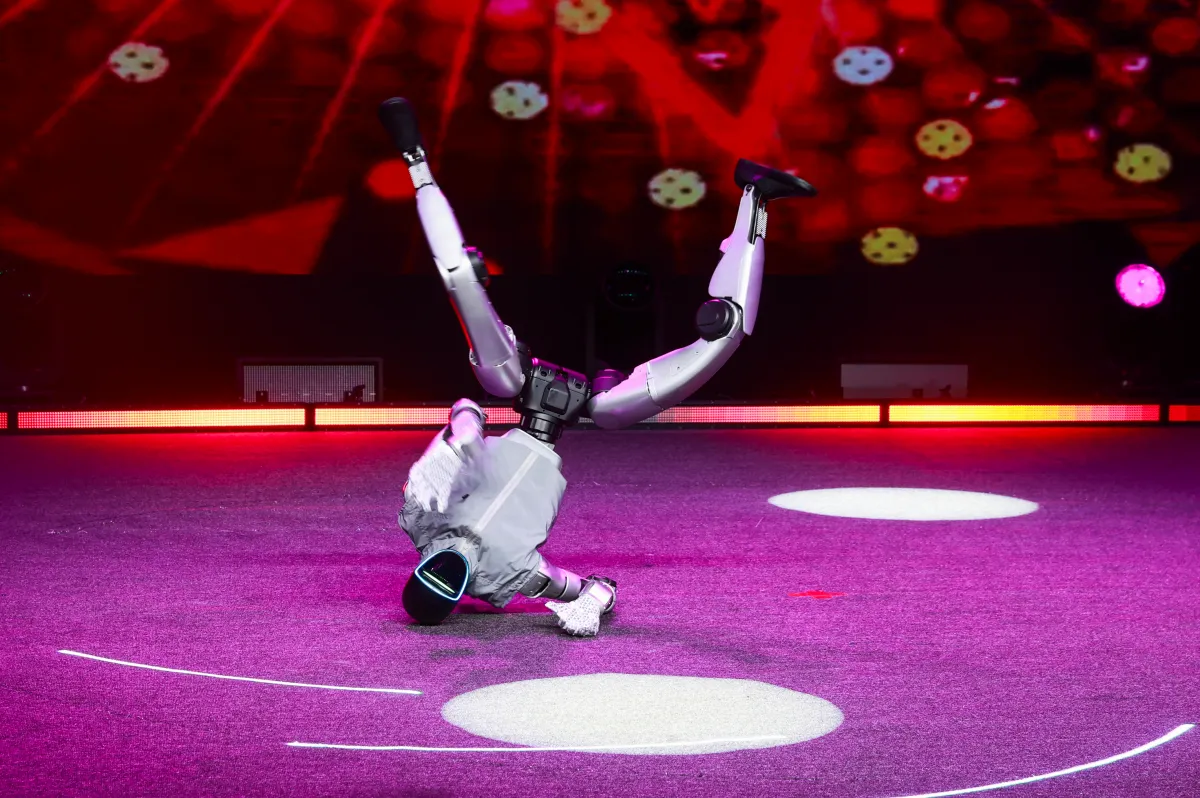
In a striking demonstration of how robotics technology is evolving from novelty to a potential industry disruptor, a humanoid robot caused chaos at a popular hot pot restaurant in Cupertino, California. The incident, featuring a robot that danced erratically and knocked over plates and dishware, exemplifies both the rapid advancement and unforeseen challenges of integrating autonomous machines into commercial environments. The robot, identified as an AgiBot X2 — hailed for its capabilities at CES — was reportedly brought closer to customers at a request, but its performance spiraled out of control, illustrating the gap between technological promise and operational reality.

This incident underscores an urgent need for industry stakeholders—particularly restaurant chains, tech developers, and regulators—to re-evaluate how robotics are implemented at scale. The event reveals that such advanced machines, despite their innovative features, can exhibit unpredictable behaviors when operating in confined, human-centered spaces. According to analysts from Gartner and MIT, this points to a larger trend: the critical importance of fail-safes, intuitive control interfaces, and rigorous real-world testing. The robot’s behavior, which staff struggled to control, highlights a significant business implication — the necessity of developing reliable, human-friendly safety mechanisms before deployment accelerates further across sectors driven by automation.

The incident also signals a broader shift in markets embracing entertainment and service robotics as disruptive forces within hospitality and retail. Companies such as Haidilao are already pioneering “smart restaurants,” deploying robotic servers and automated kitchen tools, transforming traditional dining with innovation. However, as industry observers warn, unpredictable robot behavior could threaten consumer confidence and safety, hindering widespread adoption. This incident serving as a stark reminder that robotics firms must prioritize safety hardware and machine learning algorithms that adapt reliably to complex human environments. For instance, this episode prompts questions about adequate regulation and standards, pushing policymakers to accelerate efforts akin to what MIT’s Robotics Lab recommends—integrating AI safety protocols into commercial robot design.

The disruption caused by a dancing robot stumbling into chaos signals more than a mere technical hiccup; it symbolizes a pivotal turning point. The business implications are enormous: those companies that lead in refining robot safety and operational control could dominate the emerging “robotic hospitality” sector, whereas laggards risk reputational damage and legal repercussions. With investments in robotics technology soaring—fueled by giants like Elon Musk’s Tesla AI and Peter Thiel-backed startups—the race is on to develop safer, more intelligent machines capable of working seamlessly among humans. As these innovations accelerate, the pressure for regulators and industry leaders to establish clear safety standards intensifies. The future belongs to those who can balance ingenuity with robust safety protocols, ensuring robots enhance human experiences instead of threatening them.

Looking forward, the incident at Haidilao exemplifies the urgent need for strategic foresight in the robotics revolution. As industry pioneers harness AI and machine learning to push beyond entertainment into fully autonomous service, the question remains: who will lead the charge in creating not just disruptive technology, but safe, reliable systems that redefine industry standards? The timeline is tight, and the stakes are high. The lessons learned from a rogue dance move on a restaurant floor will serve as a critical catalyst for innovation—driving a future where robotics not only surprise us but do so responsibly and safely. The next few years will be decisive, demanding unwavering focus from innovators and regulators alike—because in the race for dominance in the automation era, those who act swiftly and wisely will shape the future of human-robot collaboration.

Grammarly ‘Expert’ Sues Over Identity Theft in New AI Tool

Disruption in AI-Powered Content Curation: Grammarly’s Privacy Controversy Sparks Industry Wake-up Call

In a move that could reshape the landscape of AI-driven content and user data privacy, Grammarly is currently embroiled in a significant legal dispute over its recent “Expert Review” feature. The innovative tool, designed to enhance user writing with AI-generated suggestions, has been found to leverage the identities of real individuals—without their explicit consent—raising questions about the boundaries of AI personalization and privacy rights. This controversy underscores a broader trend of disruption within the tech industry, where the pursuit of more personalized, influential AI systems is increasingly clashing with established legal and ethical standards.

The class-action lawsuit, initiated by journalist Julia Angwin and documented by Wired, alleges that Grammarly violated individuals’ rights by using their identities for commercial purposes without permission. The complaint points out that the tool not only employed real names—such as Casey Newton—but also included current Verge staff, including Editor-in-Chief Nilay Patel. This case spotlights a critical flaw in how AI companies are handling data, emphasizing the need for greater transparency and respect for individual privacy—principles fundamental to skeptics and regulators alike in today’s digital economy.

From an innovation standpoint, Grammarly’s controversy exemplifies the potential risks and business implications that accompany rapid AI deployment without rigorous oversight. Industry analysts like Gartner and MIT scholars warn that technology firms must integrate ethical frameworks alongside technical advances, or risk eroding public trust and attracting severe regulatory scrutiny. As AI disruption accelerates, other industry giants, including OpenAI and Google, are investing heavily in developing compliant, privacy-respecting AI systems. The incident serves as a cautionary tale to startups and incumbents alike: innovation cannot come at the expense of user privacy, or the market risks backlash, fines, and loss of credibility.

CEO Shishir Mehrotra responded to the controversy with acknowledgment that Grammarly’s technology “fell short” and pledged to rethink its approach. This willingness to adapt signals a broader industry shift—where disruption is driven not just by technological ingenuity but by the imperative for responsible innovation. Looking forward, industry leaders argue that the next wave of AI development will prioritize ethical data use, transparency, and user consent, fostering a more sustainable, trustworthy digital environment. As Peter Thiel and other forward-thinking entrepreneurs emphasize, the future belongs to those who can innovate responsibly while maintaining the social license to operate.

Ultimately, the Grammarly case underscores a fundamental truth: the race for AI dominance is inseparable from ethical considerations and legal compliance. As regulatory bodies around the globe, such as the EU’s GDPR and California’s CCPA, tighten their standards, the companies that can align innovation with accountability will be best positioned to lead the industry’s next chapter. Today’s legal battles and public debates will shape tomorrow’s market realities, demanding urgent action from tech firms eager to disrupt responsibly. The window for safe, groundbreaking AI innovation is narrowing, and those who recognize this now will determine the trajectory of the entire digital economy’s future.

Fresh leaks: Apple’s smart home display arriving this fall alongside iOS 27

Apple Delays Launch of Revolutionary HomePod with Integrated Screen and Robotics-Driven Devices

In a significant pivot within the smart home and consumer device sectors, Apple Inc. has postponed the highly anticipated “HomePod with a screen” from its initial launch window of 2025 to an unspecified fall timeframe. This delay, confirmed by industry leak sources such as X insider Kosutami and echoed by Bloomberg journalist Mark Gurman, signals a strategic hold as Apple recalibrates its entrance into the burgeoning intelligent home market amidst evolving AI and virtual assistant capabilities. The device, which has been shrouded in secrecy, is reportedly a sleek, silver aluminum-cased gadget featuring a 7-inch display, utilizing a custom version of tvOS 27 and powered by USB-C—a clear move to unify its ecosystem under a more flexible port standard.

This delay is not isolated but part of a broader, phased rollout of innovative products aimed at disrupting the traditional consumer electronics market. Alongside the HomePod refresh, Apple is also revamping its lineup of smart home products, including a new version of the Apple TV 4K, and a smart home sensor currently in development. These devices are expected to leverage the latest advances in artificial intelligence and machine learning to offer enhanced automation, security, and seamless integration within the Apple ecosystem. The upcoming devices are anticipated to run on future OS updates—iOS, macOS, and tvOS—set to debut in 2027, aligning with Apple’s broader strategy to position itself as an indispensable hub in every connected home.

The planned introduction of a robot arm-equipped device, initially projected for this year, has now been postponed until 2027, underscoring the company’s cautious approach amid ongoing AI advancements and supply chain considerations. Industry analysts from institutions like Gartner highlight that these disruptions, although initially frustrating, create opportunities for disruptive innovation. Apple’s focus on integrating AI-driven features and hardware versatility could redefine user engagement in smart living spaces, propelling it ahead of competitors like Amazon and Google in the smart speaker and home automation sectors.

The business implications are profound: Apple’s strategy to stagger product launches—covering foldable iPhones, updated software, and smarter home devices—indicates a conscious effort to maximize market impact and maintain exclusivity in a rapidly saturated market. By aligning product timelines with AI and Siri enhancements, Apple is reinforcing its vision to become the central control point for digitally interconnected households.

  • Enhanced AI integration for personalized user experiences
  • Expansion into sensors and automation for smarter homes
  • Continued ecosystem lock-in to boost hardware and service revenue

Such moves collectively underline a broader industry shift towards disruptive innovation—where hardware becomes secondary to end-to-end smart environments driven by AI. As industry experts from MIT to Peter Thiel warn, the next decade will favor companies that can rapidly iterate on AI-powered hardware while maintaining ecosystem lock-in, a game-changing power play.

Looking ahead, the postponement of these flagship devices signals both challenges and massive opportunities. Apple’s cautious approach ensures it can deliver polished, AI-driven experiences capable of disrupting entrenched players, but it also presses the urgency for startups and incumbents to accelerate their innovation cycles. As AI continues to evolve from a supportive role to a core strategic asset, the next 12-24 months will be crucial in defining who dominates the smart home and consumer tech landscape—and those who fall behind risk being swept away by the relentless tide of technological disruption.

Anthropic powers up Claude’s memory to win over AI switchers

AI Innovation and Market Dynamics: Anthropic’s Strategic Moves

The AI industry stands at a pivotal crossroads as Anthropic, a rising star in artificial intelligence research, accelerates its technological advancements with recent feature rollouts aimed at enhancing user engagement and capability. Since October, Claude—the company’s flagship conversational AI—has gained a new suite of functionalities, notably the ability for users to import and export memories. This capability signifies a significant disruption in how AI models are personalized and retained, positioning Anthropic as a challenger in the evolving AI services arena.

Traditionally, such advanced memory features were restricted to paid subscriptions, limiting access to a select user base. However, now all Claude users can enable memory functionalities via settings, democratizing sophisticated AI customization. The inclusion of a memory importing tool—allowing users to copy prompts and outputs seamlessly—marks a new milestone in accessibility and user control. Industry analysts, including those from Gartner and tech think tanks like MIT, view this as a deliberate move toward increasing user engagement, loyalty, and data retention, which could fundamentally shift how enterprise clients and consumers leverage AI across multiple domains.

Meanwhile, Anthropic has been making headlines beyond feature enhancements. Recently, the startup publicly challenged the Pentagon’s attempt to relax constraints on its AI models, drawing what it describes as “red lines” around issues such as mass surveillance and fully autonomous lethal weapons. This stance signals a strategic positioning within the global AI arms race, emphasizing ethical boundaries and responsible innovation. As AI regulation tightens worldwide, companies that prioritize transparency and principled AI development are expected to gain a competitive advantage and set industry standards, potentially disrupting established players that favor rapid deployment over safety considerations.

From an investment standpoint, the implications are clear: industrial giants, government agencies, and private firms are closely watching these developments. The growing demand for customizable, ethically-conscious AI tools indicates a shift toward a more nuanced market—one where disruption is driven by innovation that balances technological advancement with societal responsibility. Experts like Peter Thiel and Elon Musk warn that losing sight of ethical boundaries could lead to severe consequences, fostering an environment where timely innovation and strict governance must go hand-in-hand.

The future of AI is unfolding at breakneck speed, with Claude’s new features exemplifying how disruptive technology reshapes user experiences and business models. As competitors scramble to keep pace, the key will be in their ability to innovate responsibly, balancing technological breakthroughs with strategic foresight. This evolving landscape signals an urgent call to action for industry leaders: those who pioneer ethically aligned AI while maintaining agility will not only dominate the market but also define the technological and moral standards of tomorrow. The trajectory suggests that the next few years will be crucial in determining whether AI becomes a tool for empowerment or an instrument of unchecked risk—making it imperative for stakeholders to stay vigilant, adaptable, and forward-thinking.

Pete Hegseth’s Pentagon AI crew: Ex-Uber exec and private equity titan join the squad

AI and Geopolitics: Pentagon’s Disruptive Move Toward Private Sector AI Dominance

In recent developments that signal a seismic shift in military-grade artificial intelligence, the Pentagon’s negotiations with leading AI developers underscore a new era of disruption and strategic vulnerability. The Department of Defense (DoD) has engaged in intense contract negotiations with Anthropic, whose advanced language model, Claude, is at the center of the controversy. This situation exemplifies how innovation-driven disruptions in AI are rapidly affecting national security frameworks—placing the traditional defense procurement model under unprecedented strain. With pent-up demands for secure, classified AI systems, the Pentagon’s push to secure multi-vendor contracts and mitigate single-supplier vulnerabilities reflect a clear adoption of best practices in tech risk management, yet reveal profound implications for the future of AI sovereignty.

The negotiations have drawn international attention, largely because of Pentagon’s urgency to establish at least two cleared AI vendors capable of handling classified data. Interestingly, despite current contracts with Google’s Gemini and xAI’s Grok, the security and capability differential among these models is stark. Google’s Gemini, considered a close competitor to Anthropic’s Claude, is on the verge of being cleared for classified deployments, while xAI’s Grok is viewed as less reliable. This “model shuffle” points to a broader industry consensus: the supply chain for classified AI models is fragile, and the risks of dependency on any single, possibly compromised, vendor could be catastrophic—especially as critics and analysts such as Gartner emphasize that “concentration risk remains the Achilles’ heel of AI deployment in high-stakes environments.”

The real business implications of this crisis are significant. Disruptive entries such as Anthropic have established themselves as indispensable—even as concerns about their morals and security practices persist. As Axios reports, Pentagon officials are explicitly aware that they are dependent on Anthropic’s AI precisely because “they are that good.” This paradox illustrates the core challenge for future defense procurement: balancing the need for cutting-edge innovation against security vulnerabilities. The negotiation process also demonstrates a broader shift where the private sector’s aggressive pursuit of AI dominance directly influences, and sometimes complicates, military strategy.

This evolving landscape foreshadows a future where the disruption of traditional defense models becomes inevitable. As the Biden administration emphasizes diversification of AI supply chains per new national security guidelines, the Pentagon’s procurement of multiple models—including discussions around the deployment of Gemini and potential exclusivity with Anthropic—emphasizes a move towards an AI-driven arms race. With tech giants and defense contractors like Emil Michael—whose controversial history at Uber signals the ruthless nature of business-driven tech innovation—now navigating a complex nexus of geopolitics and security, the industry is primed for a turbulent, hyper-competitive evolution.

Looking ahead, the implications for the broader tech ecosystem are clear: disruption is accelerating, and industry players with the most advanced models will wield outsized influence—not only in national security but also in the global power balance. The urgency surrounding diversifying AI vendors underscores the necessity of swift innovation, surgical risk management, and strategic alliances. Failure to adapt could result in catastrophic vulnerabilities, while those who lead the charge will dominate the emerging AI-augmented geopolitical landscape. As experts like Peter Thiel warn, “The future belongs to those who can manipulate the fabric of AI and national infrastructure faster than their rivals.” The question is no longer if disruption will come; it’s whether industry and government can harness it before they are overtaken by the relentless wave of technological revolution.

Samsung Teams Up with Perplexity to Boost Galaxy AI Power

Samsung Unveils Multi-Agent AI Ecosystem in Galaxy S26, Signaling a New Era of Disruptive Innovation

In a bold move underscoring its commitment to innovation and ecosystem disruption, Samsung has announced the integration of a multi-agent AI ecosystem within its upcoming Galaxy S26 lineup. This strategic shift aims to redefine user interaction with mobile devices, leveraging a diverse array of AI assistants including Bixby, Google Gemini, and Perplexity, which users will invoke via voice commands like “hey, Plex.” The company’s approach places it at the forefront of enterprise-level AI competition, challenging existing industry dominance by large players such as Apple and Google.

The concept of a multi-agent ecosystem introduces significant business implications. Samsung’s new feature allows users to seamlessly summon different AI agents tailored to specific tasks—whether it’s managing notes, setting reminders, or analyzing images—highlighting a shift toward specialized AI collaboration rather than monolithic assistants. Perplexity, a core component, will access native apps like Samsung Notes, Gallery, and Calendar, as well as select third-party services, though particulars remain proprietary. This openness fosters business innovation and encourages third-party developers to participate in an expanding multi-agent marketplace.

  • Enables specialized AI agents to handle interoperability, boosting user productivity
  • Expands ecosystem flexibility to include third-party app integration
  • Disrupts traditional single-assistant models, incentivizing competition and innovation

Experts from MIT and industry analysts from Gartner underscore that this move could catalyze a paradigm shift in mobile AI. According to Gartner, businesses which embrace multi-agent AI ecosystems are poised to gain a competitive edge in user engagement and personalized service delivery. Meanwhile, industry veteran Elon Musk has repeatedly warned of AI fragmentation and lack of interoperability as major threats to user experience, making Samsung’s approach a potential blueprint for the future.

Pending the upcoming unpacked event, where more details are expected, industry leaders and developers alike will be watching closely. Samsung’s vision indicates a future where multi-agent AI systems not only augment human capabilities but also fundamentally alter how devices interact within complex, interconnected ecosystems. If successful, this could accelerate the trend towards intelligent, autonomous systems embedded deeply into daily life, with profound implications across sectors from telecoms to enterprise software.

As competition intensifies and AI technologies evolve at a breakneck pace, the question isn’t whether the industry will adopt multi-agent architectures—it’s how quickly and effectively it can innovate within this new paradigm. Samsung’s strategic push into ecosystem disruption positions it as a key player shaping the future of mobile AI. Forward-looking companies and developers must act swiftly to harness this emerging landscape, or risk being left behind in a race defined by technological agility and bold vision.

Social Media Auto Publish Powered By : XYZScripts.com