Matox News

Truth Over Trends, always!

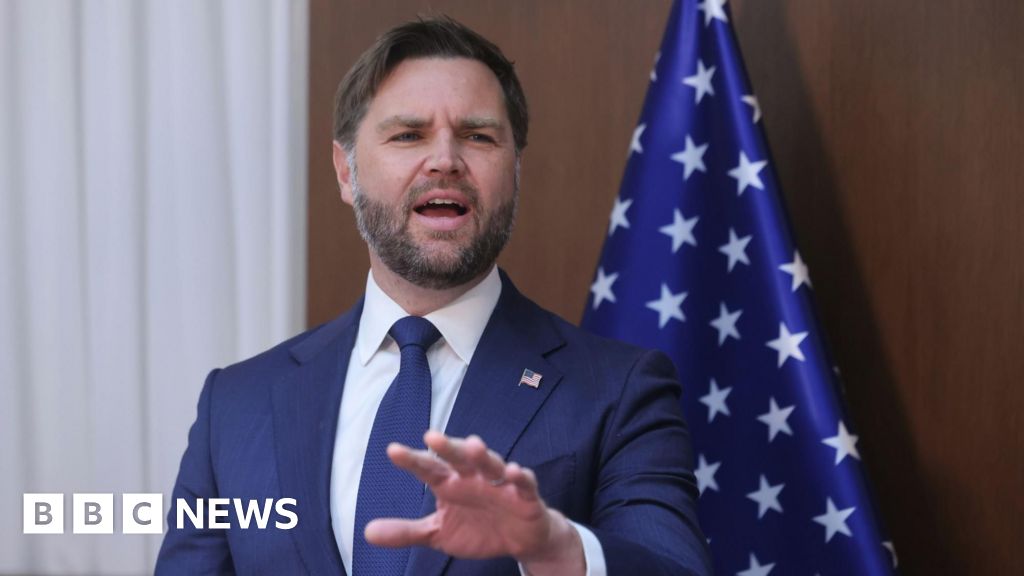
Vance and Rubio Slam Israeli Parliament’s West Bank Annexation Vote

The recent actions within Israel’s parliament have ignited a new wave of diplomatic tension that could reshape the Middle East’s fragile landscape. On Wednesday, far-right factions in the Knesset advanced a bill that grants preliminary approval for applying Israeli law in the occupied West Bank. This territory, captured during the 1967 Six-Day War, is home to approximately 700,000 Jewish settlers amidst a Palestinian population of roughly 3.3 million. International law, supported by an advisory opinion from the International Court of Justice last year, deem settlements illegal—yet Israel continues to bolster its presence, constructing about 160 settlements to date. The bill’s passage, with a narrow 25–24 vote, signals a potential shift in the longstanding policy of maintaining the status quo, a move that critics warn could ignite renewed regional instability.

Global reaction has been swift and unequivocal, especially from the United States. Vice President JD Vance dismissed the bill as a “very stupid political stunt,” underscoring that the move undermines prospects for peace. Secretary of State Marco Rubio also cautioned that annexation could jeopardize President Donald Trump’s efforts to broker peace in Gaza, aligning with the broader U.S. stance against unilateral territorial changes in the West Bank. The U.S. role, perceived by many as Israel’s most vital diplomatic shield, remains pivotal. It highlights how American influence continues to shape the geopolitical balance—where every decision by Israel carries the potential to destabilize or bolster regional security. The stark warnings from Washington reflect the understanding that a shift in control over the West Bank would ripple across borders, potentially reigniting conflicts that have simmered for decades.

Meanwhile, Israel’s Prime Minister Benjamin Netanyahu characterized the bill as a “deliberate political provocation,” emphasizing that his government does not support immediate annexation, citing existing U.S. policy that opposes such measures. Despite ultra-nationalist factions within the coalition pushing for outright annexation, Netanyahu’s cautious stance reveals an attempt to balance domestic factions with international diplomacy. However, the move has drawn sharp criticism from the Palestinian Foreign Ministry, which condemned the bill as a violation of their aspirations for sovereignty. The geopolitical consequences of this maneuver could punctuate the ongoing conflict, possibly pushing the prospects for a comprehensive resolution further out of reach, while intensifying the rhetoric surrounding Israeli-Palestinian tensions.

As the international community watches uneasily, the echoes of history resound—reminding us that bold moves often precipitate deeper chaos. The Middle East remains at a critical juncture, where every decision not only shapes the future of millions but also influences the global balance of power. With the United Nations and other international watchdogs sounding alarms, the possibility of longstanding peace slipping into further disorder underscores a sobering truth: as history unfolds in the corridors of power, the world teeters on the precipice of change that will define generations to come. The question remains—how much longer can the ticking clock of diplomacy hold against the drums of conflict?
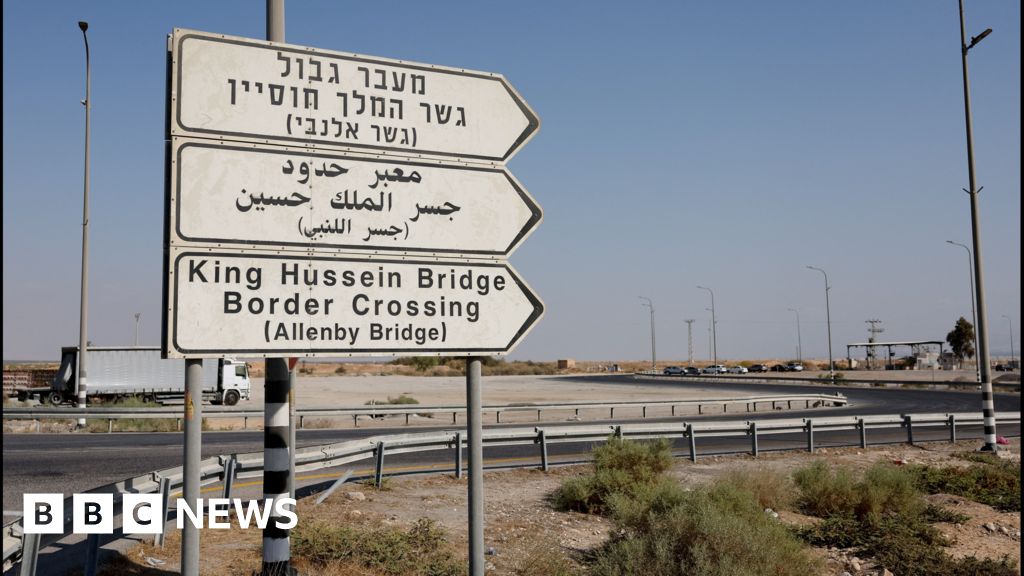
West Bank Teens Blocked: Israel Closes Main Border, Leaving Palestinians Stuck

The Middle East continues to navigate the tumultuous aftermath of recent events, as Israel has uniquely shut down the only crossing between the Israeli-occupied West Bank and neighboring Jordan. This strategic move effectively cuts off access for more than two million Palestinians, severing a vital lifeline in a region where mobility and access are already heavily restricted. The closure, announced by the Israeli airports authority and carried out “at the direction of the political leadership,” has left many Palestinians stranded, unable to travel abroad or reunite with family members across borders. Prominent Palestinian voices, such as Mustafa Barghouti, have condemned this act as “dangerous,” emphasizing that it essentially imprisons the Palestinian population inside the West Bank, intensifying existing hardships.

This move comes amid a backdrop of escalating violence and international tension. Just days prior, two Israeli soldiers were shot dead near the Allenby Bridge by a Jordanian gunman—an incident that briefly shut down the crossing but was later reopened. The King Hussein Bridge, as it’s historically known, represents more than just a border crossing; it is a critical corridor for commerce, humanitarian aid, and the movement of people—especially for those Palestinians who cannot use Israeli-controlled airports. As historians and analysts note, such closures are not merely tactical but carry profound geopolitical impact, damaging the fragile relationships and perspectives that hold regional stability at bay. The decision impacts everyday lives—medical students like Maxim Giacaman, whose plans for medical electives in Germany have been dashed, exemplify how such actions extend beyond politics into personal futures, disrupting generations of aspirations.

In parallel, international responses have been polarized and fraught with tension. The recent moves by countries such as the UK, France, Australia, and Canada to recognize the State of Palestine have been met with fierce condemnation from Israel, which branded these efforts a “reward for terrorism.” Ultranationalist ministers within Israel have called for even more drastic actions, including the blatant prospect of outright annexation of the West Bank—an act that would irreparably reshape the territorial landscape and escalate the risk of outright conflict. Since the Hamas-led attack that resulted in the deaths of around 1,200 Israelis and the taking of 251 hostages, Israel has intensified its security apparatus—erecting hundreds of checkpoints, accelerating settlement expansion, and engaging in broader military operations aimed at Palestinian resistance groups. Such measures have been internationally scrutinized, with many accusing Israel of transforming the West Bank into an open-air prison while the international community struggles to curb its expansive policies.

This crisis underscores a fundamental question of sovereignty, resistance, and the international order’s capacity to uphold justice in an unstable region. As the United Nations and veteran analysts observe, Israel’s recent actions — especially the indefinite closure of key border crossings — exemplify a pattern of escalating repression. The decisive militarization and expansion threaten to write a new chapter of conflict, with history warning that such policies often engender long-term cycles of violence and despair. The weight of this unfolding chapter in history challenges whether global institutions and nations will succeed in their efforts to foster peace or merely watch as the fabric of an already fractured society unravels further. As the world’s eyes remain fixed on the Middle East, the true impact of these decisions will echo through generations—ultimately defining whether this region is destined for continued chaos or a chance at stability, however distant that hope may seem. The pages of history are turning, and the story of Palestinians and Israelis is far from finished—yet each stroke writes them deeper into the annals of a conflict that has endured far too long, a testament to human resilience and failure in equal measure.

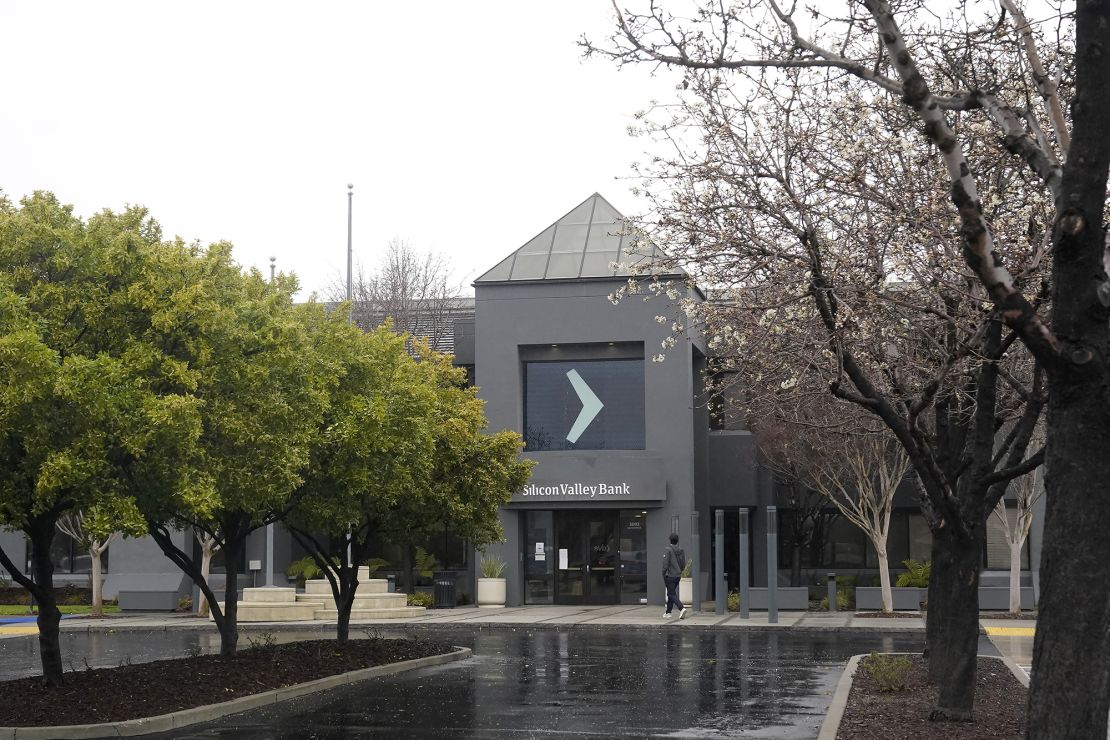
Silicon Valley Bank Collapse Sparks Urgency to Fix Barriers for Entrepreneurs of Color

Economic Turmoil and the Global Geopolitical Impact of Silicon Valley Bank’s Collapse

The recent collapse of Silicon Valley Bank (SVB), once a powerhouse in the American financial sector and a pillar supporting minority entrepreneurs, stands as a stark reminder of the fragile interconnectedness of global markets. Established in 1983 and ranking as America’s 16th-largest bank at the close of 2022, SVB’s downfall on March 10 sparked a firestorm that extends far beyond California’s borders. It provided banking services to nearly half of all venture-backed tech and life sciences firms in the United States, making its collapse not just a national crisis but a matter of international concern. The ripple effects threaten to reshape the very structure of global banking, investment, and geopolitical influence, especially considering the bank’s commitment to fostering minority-led businesses and its strategic investments in underserved communities.

At the heart of this crisis lies an underlying systemic failure intertwined with issues of racial and economic inequality. Analysts highlight that SVB’s role extended beyond finance; it operated as a vital lifeline for minority entrepreneurs, often overlooked by larger banks. Industry insiders like venture capitalist Arlan Hamilton and nonprofit advocates like Joynicole Martinez emphasize how SVB’s support for minority-led startups—through conferences, funding, and community outreach—was part of a broader strategy to counteract pervasive discrimination in banking and lending. The bank’s collapse thus not only jeopardizes these entrepreneurs’ immediate futures but threatens to undermine the broader push for economic equity worldwide. As global organizations and national governments watch with concern, this incident underscores the high stakes involved: the collapse exemplifies how decision-making within major financial institutions can accelerate systemic vulnerabilities, risking a domino effect on the international stage.

The geopolitical consequences of SVB’s downfall are compounded by the global competition for influence and resources. Major financial institutions in JPMorgan Chase and Wells Fargo publicly commit to addressing economic disparities through initiatives targeting underserved communities. Yet, the disparities persist, as Black-owned banks like OneUnited manage less than 0.02% of the assets held by giants like JPMorgan Chase, highlighting the imbalance in global financial power. The ongoing struggles of minority entrepreneurs and the broader banking inequalities are a microcosm of a continent-wide issue: how systemic biases and financial exclusion determine nations’ capacities to thrive in an increasingly interconnected economy. Historians and economic analysts warn that neglecting these disparities could foster greater instability, allowing economic and geopolitical rivalries—particularly in Asia and Europe—to exploit sectors of weakness. The crisis is a definitive turning point, revealing the importance of resilient, equitable financial systems as fundamental to national security and societal stability.

As the international community observes a shifting landscape, the legacy of SVB’s demise may yet define a new era of economic reckoning. The crisis exposes the systemic failures that have long marginalized women, minorities, and small businesses, leaving them vulnerable in times of upheaval. While efforts by JPMorgan and Wells Fargo aim to address these gaps, critics warn they are mere drops in an ocean of inequity. Meanwhile, emerging fintech and community banks, like Black-owned banks and regional lenders, stand poised to play a pivotal role in restoring trust and inclusivity. As history continues to unfold, nations must reckon with how their financial and societal decisions today will echo through generations—deciding whether the future will be one of resilience or chaos. The fall of SVB will be remembered as a stark lesson in the enduring power of systemic reform—or the catastrophic consequences of neglect—where the lessons of history remain, quietly waiting to either be heeded or ignored.

Social Media Auto Publish Powered By : XYZScripts.com



