Matox News

Truth Over Trends, always!

Nigerian President’s Opponents Score Big Win as Top Politician Joins Their Side

In a move that signals a significant shift in Nigeria’s complex political landscape, Rabiu Kwankwaso, a prominent figure in Nigerian politics and former governor of Kano State, has formally joined the African Democratic Congress (ADC). This decision aligns him with a coalition that aims to challenge the current administration of President Tinubu in the upcoming 2027 elections. As Nigeria’s political divides deepen amidst economic challenges and regional tensions, Kwankwaso’s move underscores a strategic effort to redefine the balance of power and influence within West Africa’s largest nation.

Heralded by analysts as a deliberate attempt to forge a formidable opposition front, Kwankwaso’s entry into the ADC is viewed as a bid to capitalize on widespread public sentiment demanding change. The coalition expects to galvanize support across Nigeria’s diverse ethnic and regional groups, leveraging Kwankwaso’s popularity in the North and his track record on infrastructure development. Such a consolidation of opposition figures and parties could have a *pivotal* impact on Nigeria’s electoral landscape. According to international political observers, this shift could trigger a recalibration of regional alliances, particularly as ethnic loyalties continue to color political alignments in Nigeria.

The geopolitical impact extends beyond Nigeria’s borders, with neighboring countries closely monitoring the unfolding power dynamics. Analysts from the African Union and global institutions warn about the broader implications of a fractured Nigerian political scene, emphasizing that instability in Abuja could ripple across West Africa, further destabilizing already fragile regional economies. Historically, Nigerian elections have served as a barometer for regional stability, given the country’s role as West Africa’s economic and political powerhouse. The new alliance signals a potential shift that could challenge President Tinubu’s plans to cement his legacy, while also reshaping alliances within Nigeria’s complex electoral arithmetic.

As the nation braces for a contentious electoral cycle, many experts highlight the importance of sound political governance and the influence of diaspora communities in shaping the outcome. The decision by Kwankwaso to abandon previous political alignments and join forces with the ADC underscores an *urgent* desire among opposition factions to unify against entrenched incumbency. Historians note that Nigeria’s history is replete with moments where opposition coalitions—though initially fractured—have ultimately reshaped the country’s trajectory. The current juncture appears poised to be another critical chapter in Nigeria’s ongoing saga of political contestation, with power balances delicately shifting with each campaign promise and geopolitical maneuvering.

Ultimately, the unfolding contest for Nigeria’s future remains a dramatic testament to the enduring fragility and resilience of its democracy. As voters prepare for what may be one of the most pivotal elections in recent history, the world watches with bated breath. In the corridors of power and across the bustling streets of Lagos and Kano alike, the echoes of history are stirring anew. The question remains: will Nigeria’s next chapter be one of renewed unity or enduring division? The answer lies in the choices made today, shaping a legacy that will define generations to come.

Save Big on Acer: 40% Off Bundle Deals for Young Tech Enthusiasts!

Revolutionizing Gaming and PC Hardware Markets: Acer’s Strategic Discount Initiatives

Leading PC manufacturer Acer is demonstrating a clear trajectory towards innovation and disruption within the gaming and consumer electronics sectors. Through dynamic weekly deals on high-performance gaming laptops and monitors, Acer is not only expanding access but also redefining pricing strategies traditionally dominated by premium brands. For example, the Acer Nitro V 16 series, equipped with up to Nvidia RTX 5060 graphics, showcases how aggressive pricing—$100 off for a top-tier gaming laptop—can upend market expectations. Industry analysts observe that such move signifies a broader shift toward democratizing high-quality gaming hardware, making cutting-edge performance accessible to younger audiences and tech enthusiasts eager for budget-friendly innovation.

By offering rotating discounts—up to 44% off select monitors like the 27-inch Acer Nitro XV2—Acer taps into a disruptive business model, emphasizing product turnover and customer engagement. The company’s ability to update deals weekly fosters a sense of urgency, compelling consumers to stay engaged and react quickly to market shifts. This approach mirrors the tactics Elon Musk employs with Tesla’s flash sales, leveraging scarcity to accelerate purchase decisions and drive brand loyalty among the youth demographic, a key driver of future market dominance.

Moreover, Acer’s expansion into strategic discount programs for students, healthcare professionals, and military personnel—offering up to 15% savings—further solidifies its position as a market challenger. By aligning discounts with identifiable community sectors, Acer is building an ecosystem that champions accessibility without compromising profit margins—an approach that could inspire competitors like Dell and ASUS to rethink traditional retail strategies. Industry insiders highlight that such inclusive pricing models coupled with high-spec devices exemplify a trend towards building brand loyalty through social responsiveness, a critical factor in capturing the attention of tech-savvy youth consumers.

From a broader perspective, these initiatives reflect a tangible disruption within the technology hardware landscape, emphasizing affordability combined with rapid innovation. Research from institutions like Gartner underscores a shift: consumers favor performance-per-dollar ratios more than ever, a trend that giants like Acer are quickly capitalizing on. As gaming and high-performance computing move from niche markets to mainstream adoption, the implications are significant—initiating a race among competitors to lower costs and amplify innovation cycles. It’s a pivotal moment akin to the early days of Silicon Valley disruption, where speed, agility, and strategic pricing determine market leaders.

Looking ahead, industry experts caution that the pace of innovation driven by such aggressive discount strategies signals a reckoning for established premium brands. The combination of technological advancements, combined with more accessible pricing and consumer engagement tactics, positions companies like Acer at the forefront of what promises to be a fiercely competitive landscape. As young consumers demand high performance at accessible prices, the acceleration of disruption and innovation within this space will likely redefine industry standards and consumer expectations over the coming years. Stakeholders prepared to adapt swiftly—embracing rapid product cycles, strategic pricing, and community-focused initiatives—will be best positioned to lead in the next chapter of tech evolution.

Gear Up for the Big Spring Sale: Top Blu-ray, CD, and Vinyl Deals to Elevate Your Collection

Pop Culture’s Physical Media Revival: The Bold Resurgence of Vinyl and Blu-ray

In a digital era dominated by endless streaming and instant gratification, a surprising shift in societal behavior is quietly gaining momentum among trend-setting youth: the renaissance of physical media. From vinyl records to Blu-ray collections, the current trend signals a deliberate move away from ephemeral digital files toward tangible, collectible artifacts of pop culture. As streaming giants like Netflix and Spotify offer convenience, they also foster a certain fleetingness—movies and music vanish into the cloud, rarely providing the sense of ownership that physical copies do. This cultural shift is underscored by a new generation of consumers, led by influencers such as Olivia Rodrigo and Billie Eilish, who pride themselves on curating personal spaces filled with vinyls, box sets, and vintage collectibles—an act that redefines how youth express identity nowadays.

Stores and online marketplaces are responding to this surge. Amazon’s Big Spring Sale, with discounts on Blu-ray, 4K Ultra HD, CDs, and vinyl, not only fuels the consumer frenzy but also highlights a social relevance: owning physical copies has become a statement of authenticity. Whether it’s Taylor Swift’s ‘The Art of Loving’ vinyl or collector’s editions of classics like Star Wars: The Phantom Menace, these tangible items symbolize more than just entertainment—they evoke nostalgia, prestige, and a sense of permanence. Analysts like sociologist Dr. Sarah Peterson argue that this trend taps into a collective desire to carve out meaningful experiences in a saturated digital landscape, making physical media products a form of rebellion against the fleeting nature of modern consumption.

What’s truly fascinating is how this revival extends beyond the nostalgia trip; it’s shaping lifestyle aesthetics and social behaviors. Youth influencers are showcasing their vinyl and DVD collections on platforms like TikTok and Instagram, turning them into symbols of authenticity and cultural literacy. Exclusive releases, such as M3GAN Steelbooks and Beyoncé Vinyls, are becoming coveted collectibles—opportunities to diversify personal expression and reassert ownership in a time of digital fragility. Industry analysts predict that this physical media renaissance will continue, especially as limited-edition releases and aesthetic packaging energize consumers who want to visually and tangibly connect with their favorite artists and films. This phenomenon marks a kind of countercultural movement: a tech-savvy youth reclaiming the tactile, appreciating the craftsmanship and history embedded in vinyl grooves and DVD cases.

But the next big question looms large: does this trend point toward a long-term return, or is it just a fleeting fashion? As consumer habits evolve and environmental concerns rise—given the durability of physical media—this movement could signal a profound cultural realignment where tangible ownership becomes a tool for identity and social status. Influencers and sociologists want to ask: Will the physical media revival fundamentally alter how future generations engage with popular culture, or is it merely a nostalgic anomaly riding on the coattails of fleeting trends? This quandary opens the door for further exploration—because if the trend persists, it challenges the very foundation of digital consumables and questions whether our personal digital libraries can ever replace the visceral satisfaction of holding a vinyl or DVD in hand. The ultimate mystery remains: what will the physical media culture look like in ten years—a vintage relic or the cornerstone of youth identity?

Score Big: Apple’s Top Gear Gets Cheaper During Amazon’s Spring Sale!

Apple Sets New Benchmark with the Launch of the 11-inch iPad Air Powered by M4 Chip

In a significant stride toward innovation and disruption in the mobile computing sector, Apple has announced its latest release: the 11-inch iPad Air equipped with the revolutionary M4 chip. Building on its legacy of blending power with portability, Apple aims to redefine user expectations and industry standards. The new device isn’t just an incremental update; it signals a strategic pivot towards integrating the most advanced hardware with ultra-fast wireless connectivity, positioning Apple at the forefront of the tablet market amidst fierce competition from firms like Samsung and Huawei.

At the heart of this release is the M4 chip, which marks a substantial leap in processing power and efficiency, particularly appealing to power users, creatives, and enterprise customers. The upgrade from 8GB to 12GB of RAM underscores Apple’s intent to push the envelope in multitasking and high-performance applications. Complementing this, the inclusion of Apple’s new N1 wireless chip introduces support for Bluetooth 6, Wi-Fi 7, and Thread, enabling faster, more reliable connections with wireless accessories and the burgeoning universe of smart home devices. This convergence of hardware innovation and connectivity capabilities hints at a broader trend: the seamless integration of devices into the smart ecosystem that is increasingly shaping the future of digital living.

Industry analysts, including firms like Gartner and MIT’s Media Lab, recognize this release as a pivotal moment that exemplifies disruption in mobile computing. The enhancements are poised to challenge legacy paradigms, where the focus was primarily on raw processing power, shifting instead toward wireless interoperability and AI-optimized performance. The move toward supporting Wi-Fi 7 and Bluetooth 6 particularly signifies Apple’s acknowledgment of a rapidly evolving wireless landscape, and its commitment to maintaining dominance by offering users an ecosystem that’s faster, more responsive, and more connected than ever before. For the broader market, this signals a strategic emphasis on disrupting traditional hardware cycles, and pressing the boundaries of what a portable device can achieve.

From a business implications perspective, Apple’s latest innovation underscores the escalating arms race among global tech giants to integrate hardware mastery with cutting-edge connectivity. As Elon Musk and Peter Thiel have often highlighted, technology’s true power lies in network effects, and Apple’s ecosystem-centric approach—through devices like the iPad Air—aims to dominate this space. The advancements not only bolster Apple’s competitive edge but also create new opportunities for app developers, enterprise solutions, and smart device manufacturers to leverage this robust platform. Furthermore, the launch accelerates industry-wide movement towards more intelligent, interconnected devices, transforming traditional workflows and consumer behaviors.

Looking ahead, this release invites industry watchers to consider the implications of such technological convergence. As the capabilities of consumer devices rapidly escalate, the demand for innovative ecosystems, secure wireless protocols, and AI-driven experiences will intensify. Companies that fail to adapt risk obsolescence, while those who harness these breakthroughs—like Apple—are poised to shape the digital future. The evolution of the iPad Air with M4 and Wi-Fi 7 heralds an era where the boundary between computing and connectivity dissolves, creating a landscape that promises smarter, faster, and more integrated technology solutions. In this climate of relentless innovation, the race for dominance is more urgent than ever, with tomorrow’s breakthroughs already on the horizon.

Local Team Scores Big in Championship Showdown: Fans Celebrate Historic Victory!

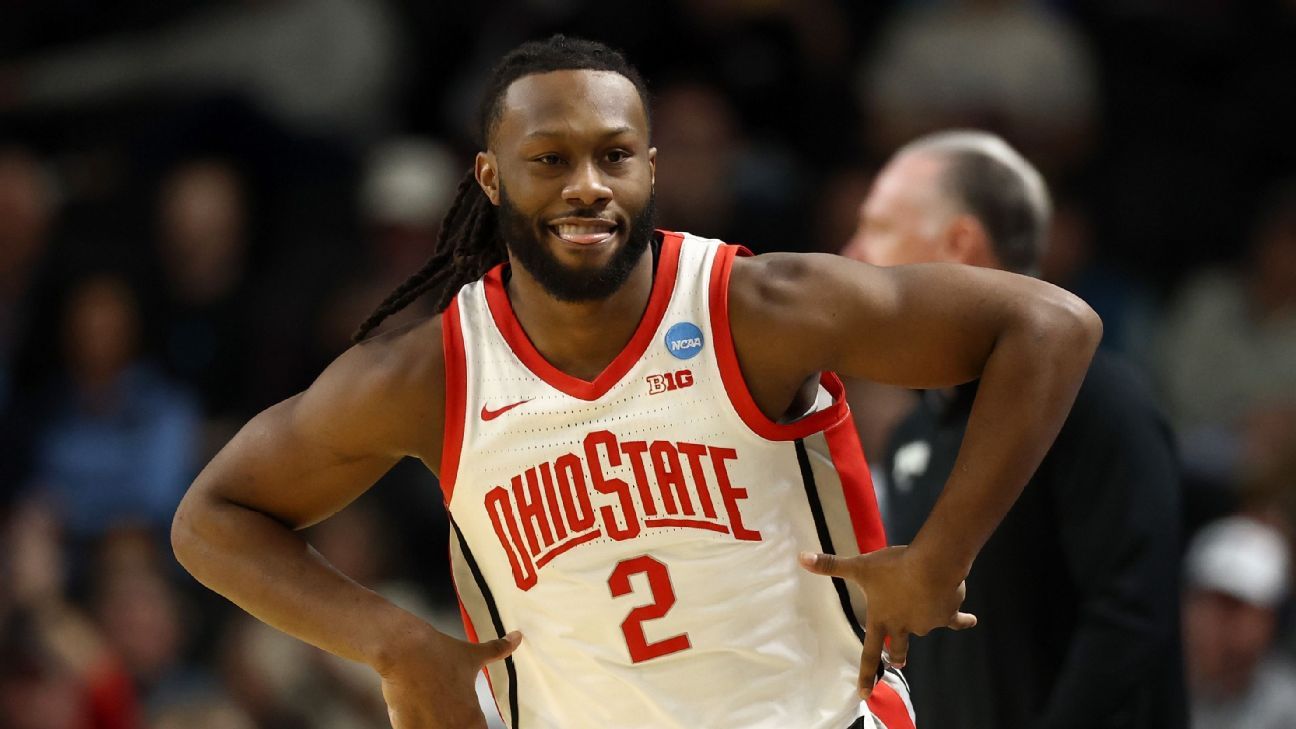
Excitement Builds as 2026 NCAA Tournament Unfolds

The 2026 NCAA tournament is officially in full swing, capturing the attention of fans nationwide with thrilling matchups and unexpected upsets. As teams battle it out on the hardwood, ESPN reporters are providing real-time updates from venues across the country, intensifying the excitement. From the early rounds, it is evident that this year’s tournament will deliver a high level of competition and nail-biting moments.

Among the early standouts, University of Alabama continued to show dominance, displaying both tactical prowess and athleticism. Under the direction of Coach Nate Oats, they secured a remarkable victory against Gonzaga with a final score of 85-72. Coach Oats commented on the performance, stating, “Our guys have been working hard all season, and this win is a testament to their dedication.” This victory comes after an intense second half where key player Brandon Miller scored 20 points, delivering a performance that will be remembered long after the tournament concludes.

Another noteworthy contender is the Duke Blue Devils, who demonstrated their resilience in a closely contested matchup against Michigan State, edging them out with a score of 78-75. Coach Jon Scheyer highlighted the importance of teamwork: “Every player stepped up when it mattered the most. It’s a team effort.” A last-second three-pointer from rookie sensation Dereck Lively II not only sealed the game but has also sparked discussions about his potential future in the NBA.

  • University of Alabama defeats Gonzaga, 85-72.
  • Duke Blue Devils overcome Michigan State with a thrilling 78-75 finish.
  • Standout performances from Brandon Miller and Dereck Lively II.

As the tournament progresses, fans anticipate more dramatic moments and historic performances. Each game is a reminder of the passion and unity that sports can foster among diverse groups of people. Though records will be broken and champions will be crowned, the true essence of the NCAA tournament lies in its ability to bring together communities, celebrating athleticism and the pursuit of excellence. The road to the championship may be a fierce competition, but it is also an enduring legacy of camaraderie and shared aspirations.

Source link

Val Kilmer poised for inspiring comeback as AI brings him back to the big screen

In an era where technology and culture converge at an unprecedented pace, the boundaries of artistry and humanity are being reshaped by artificial intelligence. Val Kilmer, a revered name in Hollywood for his compelling performances and magnetic presence, is poised to be the latest cultural icon resurrected not by traditional means but through thepower of AI. This resurrection isn’t just about technological marvel; it embodies a profound reflection on the enduring power of culture as a vessel of memory and the prophecy of our collective future.

The film As Deep As the Grave exemplifies this merging of art, heritage, and innovation. Kilmer’s role as Father Fintan, a Native American spiritualist and Catholic priest, is steeped in symbolism—an echo of the historic interplay between indigenous heritage and spiritual vocation. As director Coerte Voorhees affirms, Kilmer’s casting was inspired not only by his personal advocacy for Native American rights but also by the cultural significance of the role itself. Here, the tech-driven recreation of Kilmer through AI is more than cinematic spectacle; it’s a dialogue with history, reaffirming that culture is both a mirror and a torch that illuminates the path forward. As Ortega y Gasset argued, culture is a ‘circumstances’ that shapes our identity—an intricate weave of memory, tradition, and societal consciousness.

Yet, this technological resurrection awakens complex debates—are we treading a new frontier or breaching a sacred boundary? The project’s support from Kilmer’s family underscores a respect for the actor’s own wishes, aligning with Chesterton’s notion that “art is the most beautiful of lies,” suggesting that even simulated life carries a fragment of truth rooted in human longing and memory. The endeavor also prompts us to reflect on Tocqueville’s insights into society’s relationship with innovation: progress is inevitable, but it must serve the preservation of core cultural values rather than erode them. In this context, AI’s role becomes a custodian of heritage, not its destroyer. It ensures that, amid rapid change, the flame of tradition persists, vibrant and unextinguished.

As we witness this bold fusion of past and future, it is clear that the current cultural moment is not merely about entertainment but about asserting a sense of belonging in a rapidly transforming world. The film’s basis—the true story of archaeologists working with the Navajo—serves as a poignant reminder that history is a collective inheritance. Just as T.S. Eliot saw tradition as “the memory of mankind,” our cultural institutions—whether art, film, or philosophy—are the scaffolding that grounds us amid the shifting sands of innovation. In a time when AI can craft the visage of a beloved icon, we are faced with a vital question: will this technological miracle ennoble the human spirit or dilute its authentic essence? The answer, perhaps, lies in our capacity to view culture as both a living heritage and a prophetic voice whispering the future into the present.

In the end, culture is both a melody of memory and a song of prophecy, weaving an eternal narrative that surpasses individual lives and speaks to the divine in us all. As Kilmer’s AI-recreated visage prepares for the world stage, it reminds us profoundly: our shared cultural memory is not static, but living—an ongoing conversation between what was, what is, and what may yet come. This is humanity’s enduring legacy, and in its reflection, we find both our roots and our horizons—stardust and future, memory and dream intertwined in the tapestry of existence.

Republican farm bill accused of favoritism, catering to pesticides and big agribusiness | US news

The Societal Clash Over the Future of Agriculture, Safety, and Community Resilience

In the midst of ongoing debates surrounding the newly proposed Republican-led farm bill, a disturbing pattern emerges that threatens the very fabric of families, communities, and the integrity of education. Critics warn that the legislation, often described as a “pesticide industry wishlist”, prioritizes corporate profits over the health and safety of everyday Americans—especially vulnerable populations such as farm workers, children, and rural communities. As sociologists like Sarah Shulman have pointed out, legislation shaping our food system extends beyond economics; it directly influences societal well-being, environmental health, and intergenerational stability.

The bill’s provisions aim to dramatically weaken existing pesticide regulations by delaying safety reviews, granting industry a significant role in shaping environmental protections, and stripping legal accountability from chemical manufacturers. Notably, it would empower the US Department of Agriculture to veto safeguards established by the EPA, which could jeopardize measures designed to protect children from harmful exposures and preserve the health of farm workers. Advocates argue that such moves effectively bow to industry interests, risking a future where the silent spring—a decline in biodiversity and ecological stability—becomes inevitable. Historically, sociologists like Rachel Carson have warned of the devastating consequences when economic considerations override ecological and social responsibilities, a warning that now echoes with renewed urgency.

This legislative development also threatens to erode community resilience by shielding pesticide companies from legal accountability. The inclusion of provisions that grant immunity from state lawsuits for failure to warn about health risks effectively shifts the burden onto families and local communities, placing the costs of industrial neglect squarely on rural families and farm workers. As Angela Huffman of Farm Action notes, such immunity undermines the fundamental human right to safety and fosters a culture where corporate failure is absolved at the expense of public health. It underscores a troubling societal trend where institutions meant to serve the people instead serve corporate interests—an erosion of trust that weakens the very fabric of social cohesion.

As the nation faces a pivotal Supreme Court case on EPA labeling pre-emption, the stakes could not be higher. Delaying comprehensive safety reviews for pesticides—a process designed to adapt to new scientific knowledge—further endangers the health of generations to come. The dissonance between the desire for transparency and accountability versus an industry-backed effort to prolong the status quo illustrates a society at a crossroads. How communities confront these challenges—whether through activism, legislative resistance, or increased awareness—will determine the trajectory of public health, environmental stewardship, and the moral integrity of our society. In this landscape of complex social issues, the hope for a just future lies in recommitting to the principles of accountability, safety, and the protection of our shared environment—a legacy worth fighting for, for ourselves and generations yet unborn.

Score Big: Up to 75% Off L.L.Bean Outdoor Gear with the Latest Deals

Emerging Retail Strategies Signal Broader Disruption in Consumer Markets

In a landscape increasingly shaped by innovation and disruption, traditional retail models are being redefined through data-driven and digitally integrated strategies. L.L. Bean, a stalwart outdoor gear retailer, exemplifies this shift with hyper-focused marketing techniques leveraging digital coupons, strategic sales, and customer loyalty incentives. These tactics are not only enhancing their competitive edge but also signaling a broader industry trend of integrating seamless online experiences with personalized deals, an approach endorsed by institutions like Gartner which emphasize the importance of data-centric retail transformation.

Market shifts are underlining the importance of disruption in conventional retail dynamics. L.L. Bean’s phased flash sales, where new deals are announced twice daily at precise hours, mirror a strategy that leverages scarcity and urgency—tactics that challenge the static nature of traditional Black Friday sales. This approach offers consumers deep discounts, often comparable to major holiday deals, but within a continuously evolving, digital-first sales window. As analysis by MIT’s Sloan School reveals, such strategies are disrupting standard inventory management and consumer purchase cycles, emphasizing rapid engagement and instant gratification.

Business implications of this shift extend beyond mere sales figures. Companies adopting targeted campaigns—such as exclusive discounts for medical workers, first responders, teachers, and students—are carving out niche loyalty segments, enhancing brand affinity while simultaneously fostering goodwill in critical societal sectors. This nuanced approach to marketing not only reinforces corporate social responsibility but also establishes a new paradigm where customer engagement is intertwined with social validation. Moreover, the rollout of incentive offers like store-branded credit cards providing substantial benefits (up to 20% off and free shipping) reflects an evolving landscape where financial products are becoming integral to retail ecosystems, a trend predicted by industry analysts as a future growth driver.

Implications for Broader Industries and Future Disruption

As the retail sector embraces these innovative strategies, the implications extend into the fabric of the global economy and its digitalization trajectory. Emerging technologies such as AI-driven personalized marketing, dynamic pricing algorithms, and omnichannel engagement are set to accelerate this revolution. The recent surge in fast-paced, data-rich campaigns underscores the urgency for established players to adapt or risk obsolescence. Pioneers like Elon Musk and Peter Thiel have long championed the disruptive potential of technology, foreseeing a future where agility and innovation will determine market leaders. The challenge now lies in harnessing these advances to create seamless, customer-centric experiences that outpace competitors.

Forward-looking experts warn that organizations lacking agility and strategic foresight may fall behind, as the lines between retail, finance, and social engagement continue to blur. The next era of technological disruption is not merely about automation but about crafting integrated ecosystems that deliver value in real time—whether through customized discounts, instant rewards, or social impact initiatives. The brands that recognize and capitalize on these signals, investing in innovation today, will shape the economic landscape of tomorrow and define the future of commerce itself.

Score Big Savings on the Lego Icons Lord of the Rings Balrog Book Nook — Over $20 Off at Amazon!

The Rise of Collector Culture and the New Generation of Toy Enthusiasts

In recent years, a cultural shift has emerged among today’s youth—one that intertwines nostalgia, creativity, and social identity through sophisticated fandoms and meticulously curated collections. The latest example? The skyrocketing popularity of LEGO sets that are not just child’s play anymore but are considered collector’s items with *cultural relevance*. Take, for instance, the LEGO Icons The Lord of The Rings: Balrog Book Nook. Priced at just $108.99 on Amazon after a significant discount, this set encapsulates a renaissance of nostalgic engagement that blurs the line between childhood entertainment and adult collector obsession. With 1,201 pieces and a display that caters to both aesthetics and storytelling, it’s evident that such collectibles are more than simple toys—they’re symbols of a broader social movement embracing craftsmanship, fandom, and identity assertion.

This evolution has been driven by influential voices from social media, where platforms like Instagram and TikTok are saturated with young collectors sharing their latest acquisitions and customizations. Influencers such as Alex the Toy Maven and BrickMaster showcase the latest LEGO drops and dissect the cultural impact of these sets, which often feature iconic scenes from beloved franchises. Sociologists like Dr. Helen Carothers argue that these engaging hobbies foster a sense of community, providing a social space for discourse and shared passion—yet, beneath this camaraderie lies a deeper message: a desire for control and self-expression in a turbulent digital age. In a world increasingly defined by chaos, building a scene from Lord of The Rings or assembling a vintage-inspired toy becomes an act of agency and cultural currency among youth.

Furthermore, this collector fervor signifies a wider societal trend: the redefinition of what it means to engage with popular culture. No longer are children the exclusive audience of LEGO or similar collectibles. Instead, these sets are embraced by a demographic that values quality, storytelling, and exclusivity. The recent price drop on the Balrog Book Nook is not only a sale but a statement—an indication that these objects have moved from niche to mainstream, becoming valued commodities that reflect societal values around craftsmanship, nostalgia, and social belonging. Top consumer trends reveal that

  • Limited editions and collaborations with major franchises are a hot commodity
  • Online marketplaces and social media drive the secondary resale market
  • Young adults are increasingly investing in collectibles as a form of social capital

As this culture continues to grow, a compelling question arises: what’s the next frontier for this movement? Will virtual and augmented reality integrations redefine the collectible experience, or will these tangible tokens hold their value amidst a digital universe? Sociologists and trend analysts gaze into their crystal balls, contemplating whether the future lies with hyper-customized, immersive fandoms that extend beyond physical objects—yet, one thing is clear: the social relevance of these collectibles is only intensifying. For young enthusiasts today, building and displaying these intricate scenes aren’t just hobbies—they’re declarations of identity, community, and cultural literacy. As we watch this trend evolve, the real question might be: Will future generations view these meticulously assembled worlds as relics of a bygone era, or will they serve as the blueprint for a new form of social engagement and cultural expression?

Next-Gen Wins Big at Baftas 2026: One Battle After Another, I Swear’s Robert Aramayo Takes Best Actor—Hamnet and Sinners Fall Short

In a year marked by tumultuous geopolitical shifts and societal upheavals, the global landscape continues to evolve at a rapid pace, reflecting the profound influence of decisions made by world leaders and institutions. Recent events underscore a potent narrative: the interplay between cultural expression and political realities. Hollywood’s film awards season, for instance, offers more than entertainment; it acts as a mirror to our times. As the BAFTA awards celebrate a diverse array of films and performances, they also subtly signal an underlying conversation about the state of freedom, expression, and societal values. In an era where global tensions simmer and societal divisions deepen, these cultural moments serve as a warning of the influence that ideology, politics, and history wield over perceptions and narratives.

Historian and international analysts point to the ripple effects of geopolitical decisions that shape cultural exports and storytelling. The prominence of films addressing conflict, racial themes, and erasure—such as Ryan Coogler’s Sinners and Chloé Zhao’s Hamnet—carries a dual message. They are both artistic triumphs and indictments of ongoing societal struggles that originate from, or are exacerbated by, international policies and conflicts. The United States, as a dominant cultural power, continues to grapple with its own contradictions over freedom of speech and racial justice, while countries like Nigeria and Norway are making distinctive marks on the global cultural stage. These narratives, reinforced by insights from international organizations like the UN and cultural critics, emphasize that societal unity and progress hinge on confronting uncomfortable truths.

The geopolitical impact of these cultural shifts extends into diplomatic spheres as well. Recent victories and upsets at these awards—such as Robert Aramayo’s unexpected win and Coogler’s historic screenplay accolade—highlight a world increasingly attentive to stories of resilience and identity. In particular, Coogler’s recognition as the first Black recipient of the best original screenplay honors represents a step toward more inclusive narratives, yet it also reflects the ongoing debates about representation and influence. Analysts warn that such progress must be accompanied by systemic change, lest these cinematic victories become hollow symbols amid external geopolitical conflicts. The ongoing tensions in regions like the Middle East and Eastern Europe serve as stark reminders that cultural diplomacy remains crucial—what is celebrated on the screen often echoes larger struggles for sovereignty, human rights, and national self-determination.

As history inscribes each chapter of this unfolding story, the decisions of today’s leaders will sculpt the future of societies worldwide. Warnings from scholars like Samuel P. Huntington and contemporary geopolitical strategists remind us that cultural narratives have the power to either bridge divides or deepen them. The world stands at a crossroads, where echoes of past conflicts resonate with the new digital age’s challenge to truth and unity. With society’s collective gaze fixed on both the silver screen and the shifting global order, the realization looms: the stories we tell and the choices we make in this moment will define the course of history for generations to come. And in this relentless march of time, the weight of history presses ever stronger, reminding us that we are all custodians of an uncertain future, still being written in the shadows and light surrounding us.

Social Media Auto Publish Powered By : XYZScripts.com