Matox News

Truth Over Trends, always!

U.S. to Bring Back Survivors of Strike on Drug-Running Submarine, Trump Confirms

A New Chapter in the Geopolitical Conflict Over Drug Trafficking and Sovereignty

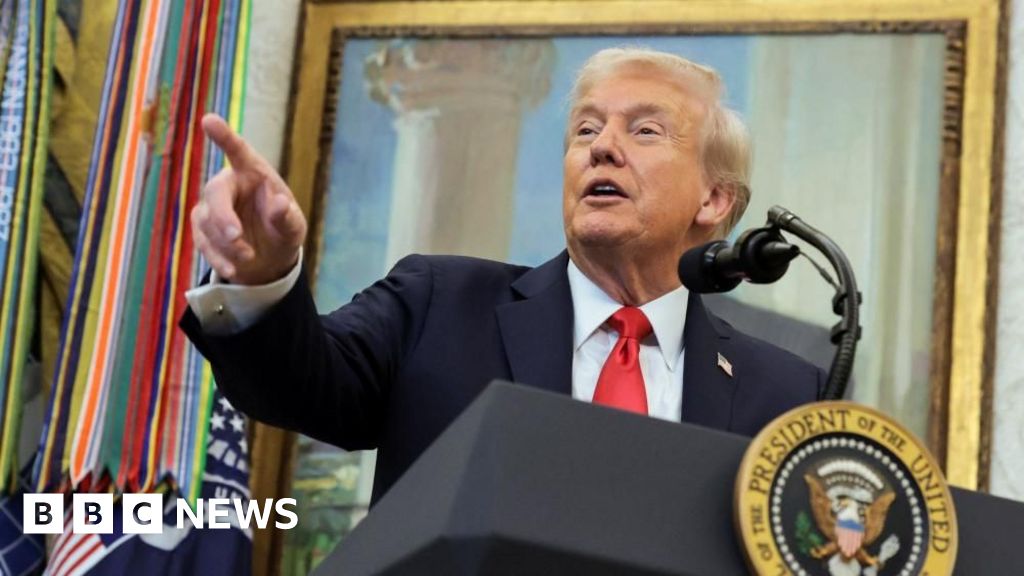
In a series of aggressive military actions taking place in the Caribbean Sea, the United States has reportedly targeted what President Donald Trump describes as a drug-carrying submarine. The strike, which resulted in at least two survivors being rescued and returned to Colombia and Ecuador, marks a significant escalation in Washington’s clandestine campaign against narcotrafficking routes. Over recent weeks, at least six such strikes have been recorded, with the latest incident raising serious diplomatic concerns, especially from Colombia, whose President Gustavo Petro condemned the attack as a violation of sovereignty and, he claimed, an act of murder.

This latest intervention underscores a complex and contentious effort by the US to combat a thriving network of illicit narcotics flowing from Latin America into North America. ^This approach reflects a broader shift toward unilateral military actions against suspected drug trafficking vessels, often classified as narco-subs—homemade, fibreglass vessels capable of avoiding detection and sinking after delivering their deadly cargo. Such operations, while justified publicly as anti-drug efforts, have attracted harsh criticism from human rights monitors and international law specialists. The UN-appointed human rights experts have described the strikes as “extrajudicial executions,” pointing to the profound legal and moral questions surrounding targeted killings without due process.

The Geopolitical Impact of US Naval Interventions

Historians and international analysts warn that these actions could deepen regional instability and foster distrust between the United States and Latin American nations. How decisions made in Washington ripple across the region is critical for understanding future security dynamics. Venezuela, under the leadership of President Nicolás Maduro, has vehemently accused the US of trying to make the nation a colony through covert operations, including the targeting of alleged drug traffickers. Maduro’s accusations echo a long-standing US suspicion that Latin American governments are either complicit in or vulnerable to US influence campaigns.

Moreover, the implications extend beyond immediate military actions. The US‘ stance—emphasizing that these vessels are primarily used for drug smuggling—aligns with a tough-on-crime posture that many analysts see as part of a broader geopolitical strategy to exert power in the hemisphere. Critics argue that this approach risks stoking anti-American sentiment and encourages closer ties among countries like Venezuela and Colombia to evade US efforts or resist its influence. The sanctions and covert military efforts risk transforming local conflicts into proxy struggles, further destabilizing already fragile states.

How International Communities Are Responding

International organizations and scholars are scrutinizing the legality and morality of these targeted operations. UN human rights experts have condemned the strikes, asserting that they violate international law by bypassing judicial processes. Meanwhile, some policy analysts argue that such unilateral actions set dangerous precedents, potentially opening the door to more extrajudicial killings under the guise of the war on drugs. The tension between sovereignty and security remains unresolved, and the global community watches anxiously as the US continues its campaign, which appears to be aimed at curbing the flow of narcotics but at the cost of international norms and trust.

As history unfolds in the turbulent waters of Latin America, the weight of these choices hangs heavy. The narrative of intervention—justified or not—serves as a stark reminder of how fragile peace and sovereignty are in a region where the echoes of history’s conflicts continue to shape the present. Today’s actions reverberate into tomorrow, setting the stage for a new chapter of conflict—one that the world must confront with clarity, caution, and unwavering commitment to justice.

Sinclair and Nexstar Bring Back Kimmel on ABC Stations Amid Conservative Pushback

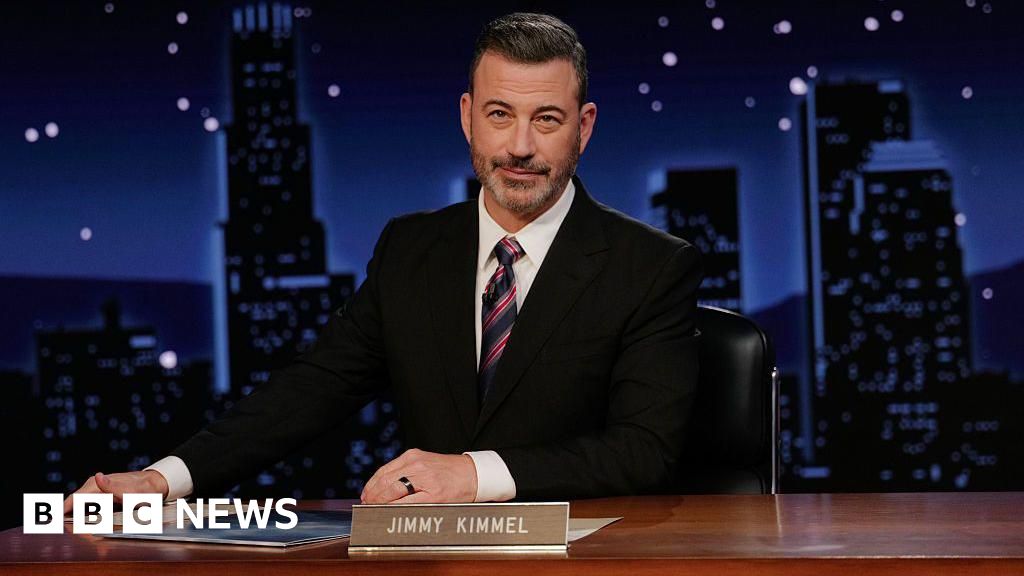
International politics is increasingly shaped by cultural conflicts and the struggle over free speech—a terrain that, in recent weeks, has erupted into a highly visible clash involving U.S. media giants, government agencies, and public figures. The controversy centers around Jimmy Kimmel’s return to ABC, after a brief suspension and removal from several affiliated stations, amid accusations of censorship and political suppression. This incident underscores a broader, global debate on how societies manage free expression in the era of digital activism and political polarization.

It began when Kimmel made controversial comments on his show about the death of Charlie Kirk, a prominent conservative figure. His remarks, which some interpreted as crossing boundaries of political decency, provoked a chain reaction that saw Sinclair Broadcast Group and Nexstar Media Group, major U.S. media conglomerates, pull his show from hundreds of local ABC affiliates. The move was justified by the companies as responses to public and advertiser feedback. However, critics, including conservative commentators and international analysts, argued that this was a clear case of cancel culture suppressing dissent and undermining First Amendment rights. The ensuing debate has rapidly spread beyond national borders, fueling protests over the erosion of media independence and free speech as the political weaponization of broadcast platforms intensifies, in line with historian Samuel Huntington’s warnings about “clash of civilizations” extending into cultural and media spheres.

The reinstatement of Kimmel’s show on all ABC channels signals an ongoing tension within the United States’ media landscape. Disney’s decision to allow Kimmel back on air, despite ongoing opposition from Sinclair and Nexstar, represents a nuanced shift—an internal conflict between corporate free expression and local broadcasters’ political sensitivities. According to international observers and global press watchdogs, such as Reporters Without Borders, these events highlight a concerning trend: how political and corporate interests influence what gets broadcast, often disproportionate to public debate’s true scope and importance.

Looking beyond America, the episode serves as a case study in the geopolitical impact of media governance. Countries worldwide grapple with similar issues—balancing state-controlled narratives against international standards of free speech. The episode hints at a shift where narrative control is shifting from traditional state censorship towards corporate censorship, which can be equally stifling, especially when media moguls align with political agendas. As analysts warn, the ongoing power struggle over media content is shaping the global information environment, influencing societal perceptions and, ultimately, international diplomacy. Just as the Cold War defined the ideological contours of the last era, it appears the battle over narrative control is becoming a defining feature of the current geopolitical order, where media outlets act as battlegrounds for ideological dominance and societal control.

The conflict remains unresolved, with history yet to be written. As nations and societies continue to navigate these turbulent waters, the outcome will determine whether free expression remains a cornerstone of democracy or becomes a casualty of political expediency. The unfolding drama surrounding Kimmel, ABC, and the broader dispute over speech censorship exemplifies a pivotal moment—an epoch where the world watches whether the ideals of free discourse can survive the relentless march of political interests, or if a new, more controlled era of information will take hold. The future of free speech, and with it the very essence of open societies, hangs precariously in the balance, as history’s next chapter begins to unfold amidst the echoes of a global struggle for truth and transparency.

Fox News is gearing up to bring real talk to the No Spin Zone—no more fluff!

The Dominion Voting Lawsuit: A Turning Point in Media Accountability and Global Power Dynamics

In Wilmington, Delaware, a judicial spectacle is unfolding that transcends the courtroom, hinting at a seismic shift in the intersection of media influence, legal accountability, and geopolitical leverage. The upcoming trial of Fox News—a media titan with global reach—charges the network with defamation over false claims about the 2020 US presidential election. The staggering $1.6 billion lawsuit filed by Dominion Voting Systems signals an unprecedented challenge to the narrative control wielded by major media outlets, especially those aligned with right-wing political factions seeking to maintain their influence amidst growing scrutiny.

Historically, Fox News has survived institutional crises by deploying a blend of legal maneuvering and strategic ambiguity. Yet, this time, the case threatens to expose a pattern of misinformation that has shaped public opinion for years. Legal analysts and media scholars warn of a watershed moment in how truth and accountability are conceptualized in the digital age, recognizing that global political stability depends increasingly on media honesty. As this high-profile trial approaches, the international community watches closely, aware that any verdict favoring Dominion could set a legal precedent with far-reaching implications, potentially curbing the unchecked power of sympathetic networks to distort facts, undermine democracy, and influence geopolitical stability.

The trial also underscores a broader shift in geopolitical power dynamics. U.S. domestic politics, often seen as a microcosm of global tensions, are now intertwined with international interests. Countries that are allies of the Western bloc are increasingly concerned about the spread of disinformation that emanates from influential American media, capable of destabilizing democracies worldwide. Critics, including international organizations such as the United Nations, warn that unchecked misinformation can accelerate conflicts and erode the fabric of international law. Conversely, nations challenging the dominant narratives—like Russia and China—see these legal proceedings as a symbolic battleground for ideological confrontation, testing the resilience of free societies against authoritarian influence.

For historians and geopolitical analysts, the current moment is reminiscent of critical junctures that define eras—when legal bodies serve as arenas for larger ideological conflicts. The future of American media, and by extension the stability of the Western world, hinges on the trial’s outcome. As legal proceedings unfold amid mounting political tensions, the world stands at a crossroads—where truth and justice are being redefined, and where the weight of history is silently sifting through the cracks of a fractured narrative.

In the end, the trajectory of this case—whether it results in accountability or further impunity—will shape the legacy of our times. The courtroom in Wilmington might seem a local dispute, but the ripples it generates extend far beyond national borders, echoing through the corridors of power and shaping the stories that societies tell themselves. As history waits in the shadows, the question remains: will this be a turning point that restores the dignity of truth in journalism, or merely another chapter in the ongoing saga of global disinformation—a story still being written, with the weight of the future hanging delicately in the balance?

Social Media Auto Publish Powered By : XYZScripts.com