
Matox News

Truth Over Trends, always!

Tesla faces second lawsuit over deadly California Cybertruck crash

In a striking development that underscores the mounting challenges facing Tesla and the global push towards electric vehicle dominance, the company is now embroiled in a series of legal battles over safety issues linked to its Cybertruck. The latest suits, filed by the grieving parents of two young victims, illuminate not only profound safety flaws but also raise questions about corporate transparency and regulatory oversight. These incidents highlight how decisions made within corporate corridors can ripple across international geopolitics, influencing trade, regulatory standards, and national security, as major players continue to compete for global auto market supremacy.

On the legal front, California-based Tesla faces accusations that its design flaws—specifically in their electric doors and overall vehicle safety—turned what could have been survivable crashes into deadly catastrophes. The families of Jack Nelson and Krysta Tsukahara accuse Tesla of neglecting known issues, including a concealed manual release system that proved ineffective during fires. The complainants argue that the automaker’s safety features, meant to enhance user experience and sleekness, instead jeopardized lives, with the victims trapped inside the flames due to locked doors and hidden mechanisms. The lawsuit states, “This case arises from catastrophic design defects in the Tesla Cybertruck that turned a survivable crash into a fatal fire.”

The geopolitical impact of these allegations extends beyond mere consumer safety concerns. As Tesla operates globally, with manufacturing and sales networks spanning continents, such safety controversies threaten to undermine its ambitions for international expansion. Governments worldwide, especially in the European Union and Asia, increasingly scrutinize vehicle standards, and these crises could prompt tighter regulations, affecting Tesla’s market access. The wake of these lawsuits comes as the National Highway Traffic Safety Administration (NHTSA) is investigating Tesla’s electric door handles, emphasizing how safety flaws rooted in design choices reverberate through policy and diplomatic channels. Moreover, international critics warn that Tesla’s rapid global expansion may be driven more by technological optimism than rigorous safety testing—prompting calls for a reassessment of how innovation is balanced with consumer protection across nations.

Leading analysts and historians have observed that in the>*era of emerging superpowers like China and the United States, technology firms are increasingly becoming geopolitical battlegrounds*. As Elon Musk seeks to position Tesla as a symbol of the future economy, these safety issues threaten to diminish its diplomatic clout, especially as competitors leverage such vulnerabilities for strategic gains. The unfolding saga foreshadows a time where the decisions of a single corporate behemoth could influence international relations and even economic alignments. As one senior analyst notes, “Tesla’s safety failures are not just about consumer protection—they reflect a broader struggle for technological dominance, where each accident can become a diplomatic incident, and each new regulation can reshape alliances.”

As history continues to unfold, the tragic fates of Jack Nelson, Krysta Tsukahara, and others serve as stark reminders of how technological progress can sometimes outpace safety and accountability. With governments, regulators, and international watchdogs watching closely, the weight of history now hangs in the balance. The path Tesla charts—whether towards safety, innovation, or further controversy—will indelibly influence the legacy of the new century’s enterprise, shaping a world where the collision of ambition and caution is played out on a global stage.
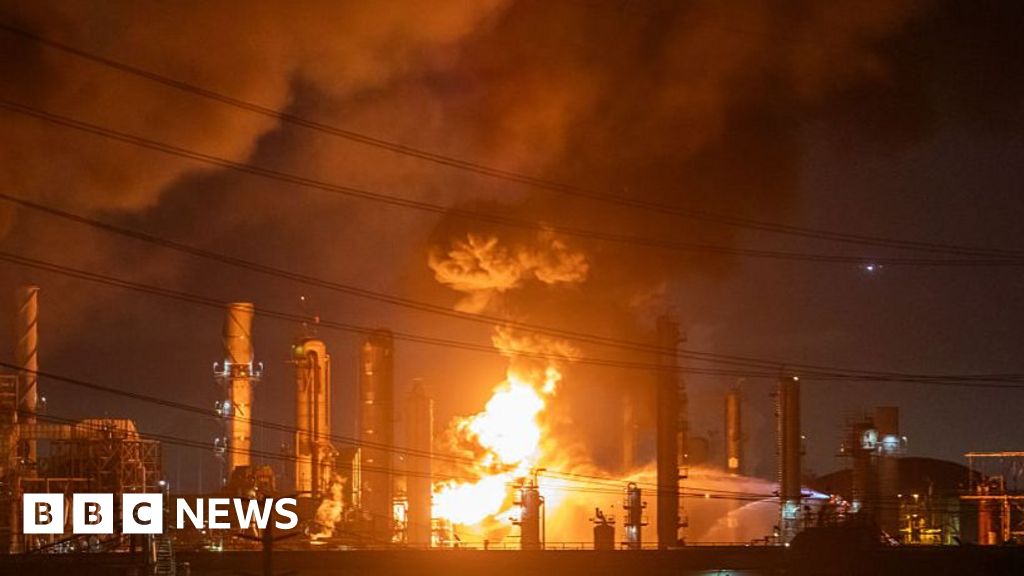

Chevron refinery fire in California contained—safety rallying point for responsible energy leadership

The recent fire at Chevron’s El Segundo refinery near Los Angeles has sent shockwaves through national and international energy sectors. The blaze, which broke out overnight, underscores the fragile nature of critical infrastructure in a global energy landscape fraught with uncertainty. While local authorities reported no immediate threat or evacuation orders, the incident highlights broader vulnerabilities within America’s refining capacity and draws attention to the potential for domestic crises to escalate into larger geopolitical concerns.

This refinery, built in 1911 and ranking as Chevron’s second-largest in the country, supplies roughly one-fifth of motor vehicle fuels and a staggering 40% of jet fuel in southern California. Its strategic importance cannot be overstated, especially given how tightly intertwined energy resource management is with national security and economic stability. With the fire contained but the damage still under investigation, analysts warn that such disruptions could influence gasoline prices, air travel, and regional stability. In an era where energy independence is highly contested, the incident raises questions about America’s resilience in the face of unforeseen disasters.

International organizations and security analysts have long warned that disruptions in the American energy infrastructure could have cascading effects on global markets. The International Energy Agency (IEA) has repeatedly underscored the importance of diversifying energy sources to mitigate risks from such localized but potent incidents. Meanwhile, geopolitical tensions between major powers continue to influence global energy supplies, and the possibility of targeted attacks or sabotage—particularly amidst rising geopolitical rivalries—cannot be dismissed. As historians point out, last decade’s energy crises were often precipitated by seemingly isolated incidents yet had ripple effects that reshaped alliances and economic policies worldwide.

The fire’s symbolic significance extends beyond the immediate damage. It serves as a stark reminder that how nations respond to such crises can shape their future trajectories. Cities like Los Angeles are vital nodes in the global energy web, and local disruptions may be exploited as leverage by hostile actors in an increasingly multipolar geopolitical arena. Experts warn that if these vulnerabilities are left unaddressed, they could fuel narratives of decline and dependency that are already fueling populist movements in the West. The incident also raises the threat of environmental contamination, which local officials are monitoring closely, but the broader consequences for energy security remain a pressing concern for policymakers.

As the world watches this unfolding crisis, with flames still smoldering and the specter of potential repercussions looming, history reminds us that such incidents often serve as turning points—either as catalysts for reform or as moments of vulnerability exploited by rivals. The decision of nations and corporations to fortify or neglect their critical infrastructure will define future geopolitics. With each passing day, the weight of history continues to mount, and the question remains: when calamity strikes, will the world have prepared sufficiently to withstand its toll?

Louisiana issues warrant for California doctor over mailing abortion pills—state’s crackdown on reproductive rights heats up

Society at a Crossroads: The Impact of Restrictive Abortion Laws on Families and Communities

The ongoing legal battles surrounding abortion access in the United States have revealed deeply rooted societal tensions that extend far beyond the courtroom. Recently, Louisiana has issued a warrant for a California-based doctor accused of mailing abortion pills to residents in a state where virtually all abortions are banned. This development highlights the crumbling boundaries of state authority and underscores how social issues intersect with family life, education, and community stability. The case of Louisiana and other states enforcing strict anti-abortion measures illustrates a broader cultural shift that threatens to fracture the social fabric that holds families and communities together.

At the center of this legal and moral tug-of-war is the question of individual rights versus state restrictions. Sociologists such as Charles Murray have emphasized that when a society imposes rigid controls on personal choices—particularly those as morally charged as reproductive decisions—it risks alienating and stigmatizing families. The recent case of Rosalie Markezich, who decided to keep her pregnancy despite being pressured by her former partner to take abortive drugs, exemplifies how stringent laws and inaccessible healthcare create dangerous situations. Markezich’s account reveals that when women are denied moral agency and access to proper medical consultations, their health and autonomy suffer. Her story resonates as a moral reminder that society’s obligation extends to protecting the rights and safety of individuals, especially vulnerable women caught amid ideological conflicts.

Legal experts and social commentators warn that the escalation of these legal conflicts, with states like Texas and Louisiana actively pursuing or indicting doctors such as Dr. Remy Coeytaux and Dr. Margaret Carpenter, may lead to a fracture in federalism. These ongoing battles threaten to jeopardize the social stability of communities and challenge the moral foundations of American society. On one side, advocates argue that states have the right to define moral boundaries; on the other, defenders contend that the rights of individuals—families and women included—must be safeguarded against state encroachment. The potential for these disputes to reach the Supreme Court signifies a pivotal moment where societal values collide with constitutional principles. What hangs in the balance is not only access to medical care but also the future of community cohesion and the moral health of our society.

As these societal divisions deepen, the question remains: can society reconcile conflicting values while fostering environments where families thrive and communities remain resilient? Many sociologists, like Robert Putnam, warn that social trust erodes when communities are polarized by issues rooted in morality and individual rights. Nonetheless, hope exists in the form of moral resilience and societal reform. The history of social progress demonstrates that through open dialogue, respect for diverse perspectives, and the safeguarding of fundamental rights, communities can forge pathways toward justice, healing, and renewal. Society’s greatest challenge is not the legislation alone but our collective commitment to uphold the dignity of every human life and the moral integrity of the communities we cherish. As society stands at this crossroads, the future hinges on our ability to choose pathways rooted in compassion, respect, and unwavering hope for a society where families are empowered and communities are united by shared moral purpose.

Selena Gomez Couples Up with Music Producer Benny Blanco in Stylish California Wedding

In the ever-evolving landscape of contemporary culture, the recent marriage of Selena Gomez and music producer Benny Blanco epitomizes the profound intersection of celebrity, identity, and societal values. Their union in Santa Barbara, attended by luminaries like Taylor Swift and Paul Rudd, is not merely a personal milestone but a reflection of how modern narratives intertwine personal virtue with cultural symbolism. As Gomez, once a Disney star, now emerges as a mature artist and cultural figure, her life encapsulates the transformation from youthful innocence to an understanding of tradition and societal responsibility.

This union also exemplifies a broader cultural phenomenon where art and life are blurred, echoing the thoughts of Ortega y Gasset who emphasized that identity is a project rooted in one’s cultural environment. Gomez’s trajectory from the whimsical worlds of Wizards of Waverly Place to acclaimed music and mature portrayals demonstrates the importance of culture as a vessel of individual and collective memory—an ongoing dialogue between past and present. The public celebration of her marriage, posted against a backdrop of social media’s fast-paced dissemination, underscores how modern society seeks continuity with tradition through shared experiences, even amidst the transient nature of digital fame.

  • Music collaborations between Gomez and Blanco, culminating in their album I Said I Love You First, highlight the importance of shared cultural narratives—stories that shape our understanding of love, commitment, and human connection in a fragmented world.
  • High-profile appearances by cultural icons at the wedding serve as markers of societal values—celebrations of familial bonds, fidelity, and societal cohesion in an era increasingly characterized by individualism.

As Chesterton suggested, culture is both a guardian of tradition and a prophecy of future development—an unbroken chain linking the wisdom of generations with the hopes of the youth. Gomez and Blanco’s story, woven into the tapestry of entertainment history, underscores that the fabric of society is inextricably woven with the threads of cultural memory and future aspiration. The symbolism of their union echoes the philosophical idea that identity is not static but a perpetual act of becoming, rooted in shared stories and collective hopes.

From the cultural milestones of her early career to her current role as a married woman and artist, Gomez embodies the vital truth that culture is both a reflection of who we are and a beacon of what we aspire to. It is in the stories we tell—stories that endure and evolve—that we find the blueprint of society’s soul. Like a lyrical refrain that echoes through the corridors of time, culture remains both the memory of humanity and the prophecy of its future—fostering a landscape where tradition sustains hope, and hope reforms tradition into a living, breathing testament to our shared humanity.

Social Media Auto Publish Powered By : XYZScripts.com