Matox News

Truth Over Trends, always!

Breaking Barriers: How Blind and Visually Impaired Adventurers Conquer the World

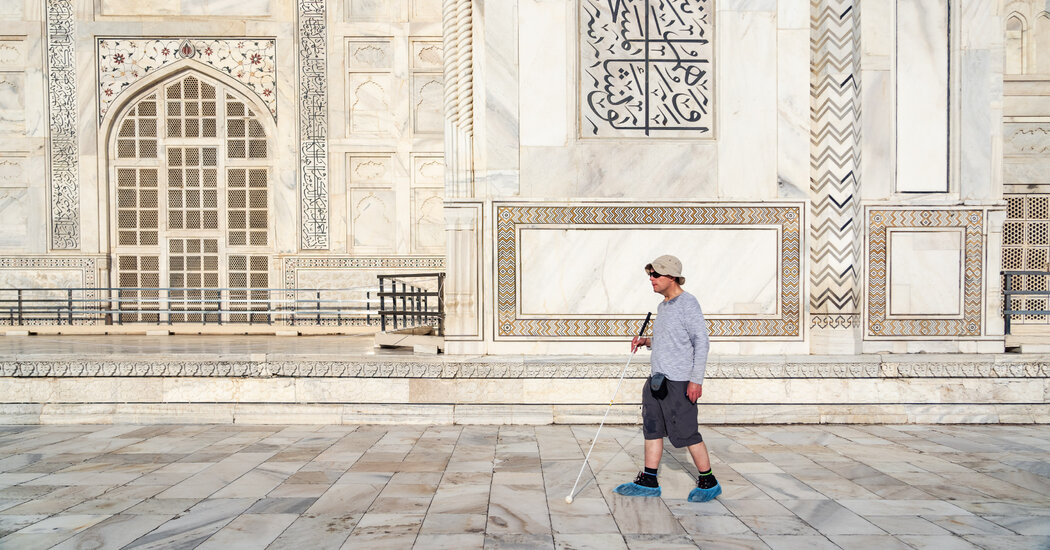
In the dawn of history, culture has been the vessel through which societies preserve their identity, remnants of tradition, and visions for the future. The contemplative journey of experiencing unfamiliar places—whether through sight or other senses—reminds us that culture is not merely a collection of artifacts or landscapes, but a living, breathing narration of human life across generations. Consider the story from the Taj Mahal’s grounds, where even the silence, the scent of perfumed air, or the echo of recited prayers, becomes a part of this grand narrative—an inner dialogue with eternity that transcends visual spectacle alone.

An Immersive Reflection on Perception and Humanity

The extraordinary narrative of a journey with Traveleyes reveals that perception is the bridge that connects the senses to our understanding of society. The founder Amar Latif, a British entrepreneur who lost most of his sight due to hereditary retinal disease, exemplifies how culture’s core lies in multisensory engagement. His company’s ingenious model—pairing blind and sighted travelers as equals—embodies a profound truth: the fullness of human experience is not confined to sight but flourishes through touch, smell, sound, and imagination. This approach reflects Ortega y Gasset’s philosophy that society’s authentic fabric is woven through shared perceptions, where empathy becomes the key to unlocking cultural depth.

The Heritage of Tradition and the Power of Imagination

As travelers of different backgrounds navigate the streets of Jaipur or Delhi, the stories they gather through tactile interaction, sensory descriptions, and emotional resonance reaffirm the belief that culture is a living memory that also prophesies the future. Chesterton’s idea that tradition is the democracy of the dead seems fitting here. These encounters remind us that cultural symbols—whether the carvings in an ancient temple or the bustling markets—are not static relics but part of a continuum that shapes identity and societal character. When Candie, who views the world through the lens of touch and scent, describes her experiences, it demonstrates that the essence of a society’s soul can be experienced beyond the visual, deepening our appreciation of its true character.

Culture Today: A Reflection and a Warning

In this age of digital spectacle, where images often dominate, the narrative of multisensory travel and shared human understanding is a timely reminder. Societies that forsake their cultural memory risk becoming nothing more than fleeting impressions, like film snippets rather than novels—engaging only the surface. Tocqueville, who explored the delicate balance between individual liberty and societal tradition, would warn against allowing the vivid and transient visual culture to drown out the subtler, enduring stories told by our customs and collective memories. Our youth, especially, must recognize that culture embodies the continuity of tradition and the prophetic voice of future generations, and that allowing it to decline is akin to losing the script of human history itself.

The Eternal Tapestry of Humanity

Ultimately, if we listen closely and look with more than just our eyes, we realize that culture is the long and lyrical story of humanity—its memory, its hopes, its prophetic visions of what humanity can become. Through the visceral experiences of sensory travelers, we find that the human spirit’s true voyage is inward as much as outward. As T.S. Eliot noted, “The only tradition that matters is the one alive in our ears and hearts today.” In this ongoing symphony of human history, we are both the custodians of a precious inheritance and the architects of a luminous future—dreamed into being through the persistent power of culture’s memory and prophecy.

Jessie Buckley credits acting with helping her conquer teenage eating disorder, inspiring resilience and self-acceptance among young people

In the heart of contemporary discourse surrounding artistry and human expression, recent remarks by the Oscar-front runner have reignited an enduring conversation about the profound relevance of culture to identity, tradition, and society. When she describes acting as “like water to me,” she encapsulates a broader truth: that art, in all its forms, is not merely a pursuit of entertainment but a vital sustenance that sustains the soul of a civilization. In times of turbulence, such expressions of devotion remind us that culture functions as both mirror and messenger, reflecting our innermost selves and transmitting the values that unify a community. As the philosopher Ortega y Gasset posited, humanity’s vital need for meaning is fulfilled through the culturally rooted narratives that shape our worldview, allowing individuals to see themselves within a collective tapestry.

Historically, society has shown a remarkable tendency to regard its cultural icons and arts as pillars upon which collective identity stands. The comment from the actress resonates with the insights of thinkers such as Tocqueville, who observed that the habits of the heart—those intangible bonds forged through shared tradition—are essential for maintaining social cohesion. Today, with a cultural landscape that often feels fragmented and transient, the emphasis on art as a source of mental health and stability becomes even more salient. It is as if the act of engaging with great works—be it the plays of Shakespeare, the music of Bach, or the films of past generations—reinforces a sense of continuity that counters the chaos of modern existence. The artist’s declaration reminds us that our cultural practices are not arbitrary but are woven into the very fabric of who we are and who we hope to be.

Beyond personal well-being, the arts serve as a cultural reservoir that preserves our historical memory and nurtures our collective soul. As Gilbert K. Chesterton once observed, the true artist is a guardian of tradition—not a destroyer but a steward who translates timeless truths into new forms. In this light, culture becomes a living testament to generations past, anchoring the present and forecasting the moral and aesthetic horizons of the future. For youth today, this connection to tradition may seem historical, yet it is precisely through this continuity that a society remains resilient and true to its roots. The arts, therefore, do not merely entertain but elevate, giving voice to the silent stories that define us, and in doing so, inspire us to forge ahead with purpose and hope.

In the final analysis, culture emerges as both memory and prophecy: a reservoir of collective history from which we draw strength, and a beacon illuminating the path forward. As the poet T.S. Eliot mused, “We shall not cease from exploration, and the end of all our exploring will be to arrive where we started and know the place for the first time.” It is within this cyclic dance of past and future that we discover that, ultimately, the arts are not mere decoration but the very essence of human striving—a poetic symphony that sustains the spirit of civilization, echoing through eternity as a testament to who we are and who we aspire to become.

Social Media Auto Publish Powered By : XYZScripts.com