
Matox News

Truth Over Trends, always!

Here’s how to catch NASA’s Artemis II splashdown—back to Earth, live!

NASA’s Artemis II Mission Sets Stage for Lunar Innovation and Industry Disruption

In a historic milestone for space exploration, NASA’s Artemis II crew has successfully completed their 10-day journey beyond low Earth orbit, venturing further around the Moon than any humans have before. Comprising four astronauts from the United States and Canada—Reid Wiseman, Victor Glover, Christina Koch, and Jeremy Hansen—the mission epitomizes a new era of deep space innovation and offers profound implications for the commercial space industry. As they prepare for re-entry, the mission’s outcomes are poised to accelerate the disruption of the traditional aerospace paradigm, heralding a future where private sector entities are integral to lunar and extraterrestrial endeavors.

Central to this mission was the deployment of the Orion spacecraft, a marvel of disruptive aerospace engineering. The capsule traveled more than 250,000 miles from Earth—approximately 100 times the distance between New York City and Los Angeles—demonstrating the capabilities of modern propulsion and life-support systems. Key features of Orion include cutting-edge

  • thermal protection systems
  • communications integration
  • trajectory control

milestones that will influence future lunar landing architectures. Experts from MIT and Gartner note that this mission’s success is pivotal, as it validates core technologies for the upcoming Artemis landings and deep-space exploration, paving the way for commercial lunar modules and private supply chains.

Beyond pure exploration, Artemis II sharply highlights the commercial sector’s role in *disrupting* traditional government-dominated space programs. The materials used, particularly the heat shield composed of Avocoat, faced unexpected damage in Artemis I—a reminder that innovative material sciences and testing are critical for safe human spaceflight. As NASA works to refine these systems, the emergence of private companies developing next-gen heat shields and crew modules signals a seismic shift. Industry pundits are tracking a meteoric rise in private investments, with companies like SpaceX and Blue Origin taking cues from NASA’s challenges, aiming to reduce costs and accelerate timelines for lunar infrastructure.

Furthermore, the mission’s scientific outputs, such as new lunar crater names and spectacular space phenomena—like the crew witnessing a total solar eclipse from their unique vantage point—serve as a showcase of the broader disruptive potential of space as a commercial frontier. The technological feat of communication, navigation, and life support systems testing — broadcasted via live streams and multimedia—points to an increasingly accessible and interconnected space industry. This trend signifies an evolution where *innovation becomes central* to both governmental and private actors aiming to establish lunar bases and resource extraction operations, thereby influencing global economic and strategic landscapes.

Looking ahead, the upcoming splashdown off San Diego underscores NASA’s commitment to safety and reliability—a vital requirement as the sector shifts from experimental missions to commercialized space habitats. With the Memoranda of Understanding already in place for lunar mining and future Artemis landings, **industry leaders like Elon Musk and Peter Thiel** recognize the urgency of capitalizing on these breakthroughs. They see a future where *disruption is the new normal*, with private entrants helping to drive down costs, increase access, and catalyze humanity’s permanent presence on the Moon and beyond.

As the global race to pioneer space accelerates, the Artemis II mission embodies the essence of modern technological innovation—a harbinger of transformation that demands agility, boldness, and relentless pursuit of breakthrough solutions. The next chapter in space exploration is unfolding rapidly, positioning humanity at the cusp of a new industrial age that could redefine our economic and strategic future. The imperative for stakeholders—public and private alike—is clear: innovate or fall behind in this new space-driven economy.
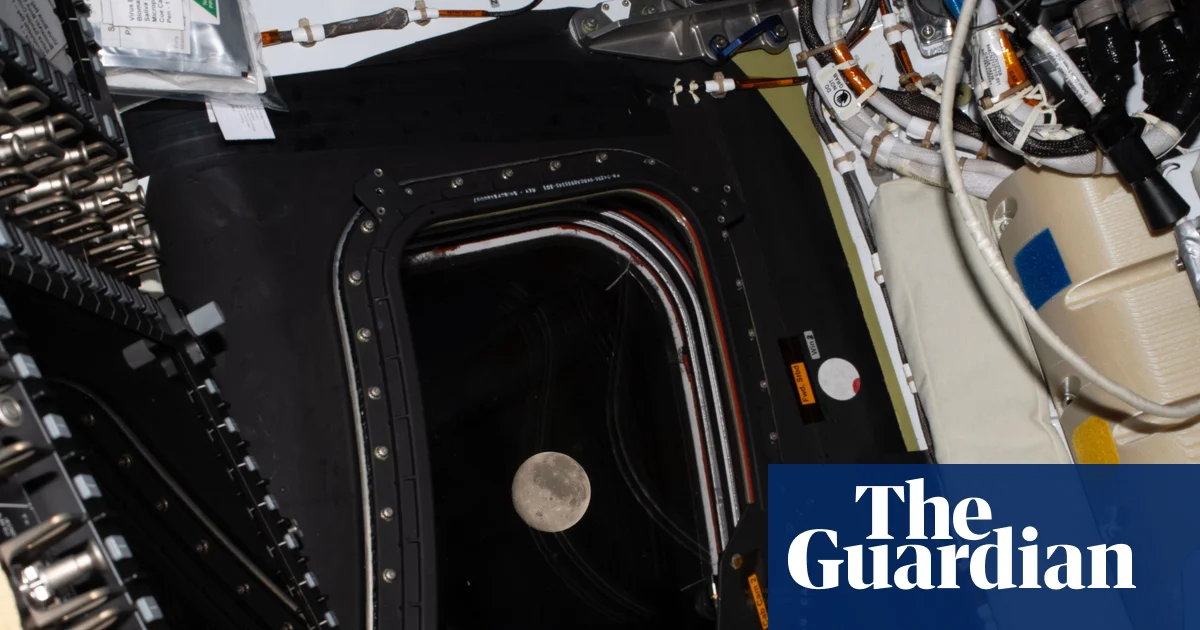
Artemis II Breaks Records: Astronauts Travel Farthest from Earth in History

In an extraordinary milestone for global space exploration, the crew of Artemis II has broken the longstanding distance record set by Apollo 13 over 50 years ago. At precisely 1:57 p.m. Eastern time on Monday, astronauts Jeremy Hansen of the Canadian Space Agency, and NASA astronauts Reid Wiseman, Victor Glover, and Christina Koch, soared beyond the lunar orbit, reaching a point approximately 5,000 miles (8,000 km) farther from Earth than any humans previously had. This historic feat underscores the renewed vigor and strategic importance of the U.S. and its allies’ space programs, particularly as competition with China and Russia heating up in the arena of lunar and planetary exploration.

This milestone isn’t just about reaching new distances; it carries palpable geopolitical impact that stretches across international borders. As analysts from the International Institute of Space Policy and historians point out, projects like Artemis serve as a powerful reminder of national prestige and technological prowess. With recent geopolitical tensions escalating, especially in regions like the South China Sea and Eastern Europe, the race to establish dominance in space is increasingly seen as a proxy battleground for future influence. The Artemis program, rooted in a renewed sense of American patriotism and global leadership, signals that the United States aims not only to explore but to concretely stake a claim in the new space frontier.

Experts warn that such advancements could reshape global alliances and economic partnerships. The deployment of advanced lunar science missions, such as surveying hypothetical landing zones and photographing celestial bodies, is underpinned by a broader strategy—reasserting technological supremacy and securing future resource access. The United Nations and NASA officials have continually emphasized the importance of international cooperation; however, many influential voices, including renowned historian Dr. Mark Whitaker, caution that the current momentum favors a bifurcated space arena—where dominant powers carve out spheres of influence. Such divisions could ultimately set the stage for a new Cold War in space, with implications for global peace and security.

Meanwhile, the symbolic act of capturing the ‘Earthrise’ image aims to unite humanity under a shared identity—an inspiring reminder that even amid geopolitical rivalries, the planet remains a fragile oasis of life and hope. Despite the scientific and geopolitical triumphs, astronauts like Glover reflect on the deeper meaning, emphasizing our collective responsibility to “get through this together.” As the Artemis II mission prepares to transit through illuminated shadows cast by the moon and face communication blackouts out of contact with Earth, it is a sobering testament to how our ascent into space navigates both technological achievement and profound geopolitical currents. In a moment that echoes the pioneering spirit of the Apollo era, humanity is once again at the crossroads of history—where our choices could define the future of civilization or lead us into unforeseen conflicts. The story of Artemis II remains unwritten, but its unfolding narrative will forever shape the course of human destiny on this tiny blue dot floating in the vast universe.

North Korea’s ‘paradise on Earth’ nightmare resurfaces in Japan

More than six decades after Japan and North Korea became entangled in a story marked by deception and suffering, a landmark legal victory underscores the persistent imperfections of international justice and the ongoing repercussions of authoritarian regimes. The case involves survivors of a North Korean program that lured ethnic Koreans from Japan with false promises of prosperity and protection. Many, like Eiko Kawasaki, endured forced labor, denied basic rights, and faced family separation—reminiscent of the brutal history of colonial exploitation and modern state-sponsored human rights abuses. The recent court order in Tokyo for North Korea to compensate four escapees with a combined sum of at least 80 million yen (roughly £375,000) signals a rare assertion of sovereignty and accountability in a geopolitical landscape marred by silence and impunity.

This ruling is a significant, if symbolic, crack in the wall of North Korea’s international isolation and a warning of the shifting balances of power. Assessments by international organizations, including Human Rights Watch and renowned analysts, suggest that despite Pyongyang’s declared ambitions for a “socialist paradise,” the regime’s true operation is rooted in exploitation and survival through repression. It is noteworthy that the Japanese government, along with nongovernmental entities like the Red Cross, distanced themselves from the lawsuit’s financial demands, hinting at the complex diplomatic dance that often shields regimes from full accountability. Yet, the court’s decision, hailed as a historic exercise of sovereignty, firmly places North Korea on the international stage as culpable for practices akin to a form of corporate kidnapping—an echo of its once colonial past and a reminder of the regime’s ongoing brutality against its own people.

Historical context reveals that hundreds of thousands of Koreans—both in Japan and in North Korea—have endured similar hardships rooted in geopolitical manipulation. The regime’s incentivization strategies, backed by the now-defunct Japanese government, aimed to attract ethnic Koreans for labor purposes, often under the guise of providing a better life. The deception unraveled rapidly for Kawasaki, who after decades of forced servitude, defected in 2003, only to be haunted by the fate of her remaining family behind the sealed borders of North Korea. This real-life saga embodies broader concerns about how decisions made in distant capitals ripple through societies and histories, shaping destinies and deepening the cycle of suffering.

This development signals a broader geopolitical impact that resonates far beyond Japan and North Korea. It signifies a shift towards greater legal accountability and international scrutiny of North Korea’s human rights abuses, potentially inspiring other victims to seek justice. Meanwhile, critics warn that Pyongyang’s regime may ignore the court’s rulings altogether, continuing its practices of secrecy and repression. As analysts like Atsushi Shiraki and international bodies observe, this case hints at the evolving landscape of international law and the limits—and possibilities—of holding authoritarian regimes accountable in an increasingly interconnected world. One can only wonder: as history’s pen records these turning points, what future stories of resistance and justice might yet unfold in the shadows of Pyongyang’s cold steel gates?

Social Media Auto Publish Powered By : XYZScripts.com