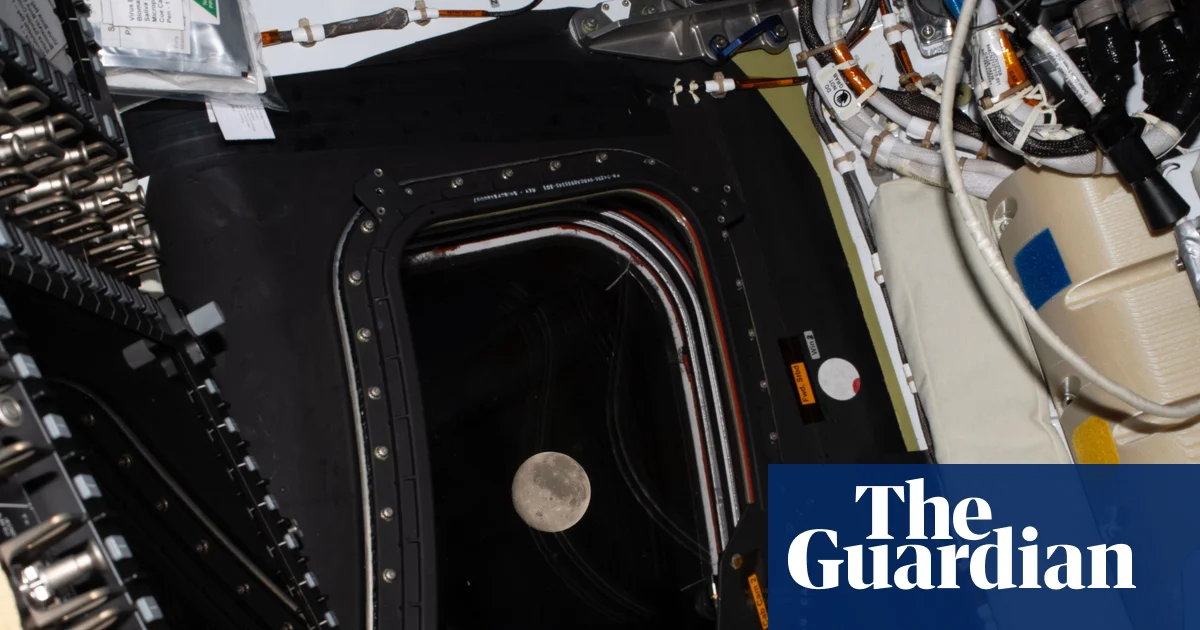
In an extraordinary milestone for global space exploration, the crew of Artemis II has broken the longstanding distance record set by Apollo 13 over 50 years ago. At precisely 1:57 p.m. Eastern time on Monday, astronauts Jeremy Hansen of the Canadian Space Agency, and NASA astronauts Reid Wiseman, Victor Glover, and Christina Koch, soared beyond the lunar orbit, reaching a point approximately 5,000 miles (8,000 km) farther from Earth than any humans previously had. This historic feat underscores the renewed vigor and strategic importance of the U.S. and its allies’ space programs, particularly as competition with China and Russia heating up in the arena of lunar and planetary exploration.
This milestone isn’t just about reaching new distances; it carries palpable geopolitical impact that stretches across international borders. As analysts from the International Institute of Space Policy and historians point out, projects like Artemis serve as a powerful reminder of national prestige and technological prowess. With recent geopolitical tensions escalating, especially in regions like the South China Sea and Eastern Europe, the race to establish dominance in space is increasingly seen as a proxy battleground for future influence. The Artemis program, rooted in a renewed sense of American patriotism and global leadership, signals that the United States aims not only to explore but to concretely stake a claim in the new space frontier.
Experts warn that such advancements could reshape global alliances and economic partnerships. The deployment of advanced lunar science missions, such as surveying hypothetical landing zones and photographing celestial bodies, is underpinned by a broader strategy—reasserting technological supremacy and securing future resource access. The United Nations and NASA officials have continually emphasized the importance of international cooperation; however, many influential voices, including renowned historian Dr. Mark Whitaker, caution that the current momentum favors a bifurcated space arena—where dominant powers carve out spheres of influence. Such divisions could ultimately set the stage for a new Cold War in space, with implications for global peace and security.
Meanwhile, the symbolic act of capturing the ‘Earthrise’ image aims to unite humanity under a shared identity—an inspiring reminder that even amid geopolitical rivalries, the planet remains a fragile oasis of life and hope. Despite the scientific and geopolitical triumphs, astronauts like Glover reflect on the deeper meaning, emphasizing our collective responsibility to “get through this together.” As the Artemis II mission prepares to transit through illuminated shadows cast by the moon and face communication blackouts out of contact with Earth, it is a sobering testament to how our ascent into space navigates both technological achievement and profound geopolitical currents. In a moment that echoes the pioneering spirit of the Apollo era, humanity is once again at the crossroads of history—where our choices could define the future of civilization or lead us into unforeseen conflicts. The story of Artemis II remains unwritten, but its unfolding narrative will forever shape the course of human destiny on this tiny blue dot floating in the vast universe.