Matox News

Truth Over Trends, always!

Gucci Parent Kering Bets Big on Future: €4B Sale of Beauty Biz to L’Oréal Cements Young Luxe Scene

The Future of Luxury Brands: Kering’s Shift and the Social Power of Consumer Trends

In a move that’s sending ripples through the luxury fashion and beauty industries, Kering — the powerhouse behind brands like Gucci, Bottega Veneta, and Balenciaga — is stepping away from its once-burgeoning beauty segment. Recent reports reveal that Kering has agreed to sell its beauty division, including its iconic fragrance line Creed, to L’Oréal for a hefty €4 billion. This strategic pivot, announced by new CEO Luca de Meo, aims to alleviate mounting debt and refocus Kering’s core strength: high-end fashion. It’s a refresh for a brand known for its innovative designs and celebrity allure — but also a signal of wider societal shifts that are redefining what luxury truly means in the modern age.

This sale isn’t just about balancing books; it’s a reflection of how consumer engagement and social relevance have become more critical than ever in the world of high-end branding. While traditional beauty was once a cornerstone of luxury appeal, today’s younger audiences are more interested in what brands stand for. The new 50-year licensing deal with L’Oréal will see Kering’s fashion labels develop fragrance and beauty products under their names, but only through licensed partnerships. It underscores a broader trend: luxury brands are increasingly ceding control over certain product lines to consumer-centric conglomerates that understand the modern digital and social landscape.

The Rise of Influencer Culture and Social Relevance

Notably, this decision aligns with the rise of influencers and viral marketing. As social media platforms like Instagram and TikTok continue to shape consumer preferences, luxury brands are caught in a dynamic struggle: maintain exclusivity or embrace authenticity and relatability. Under the guidance of their new management, brands such as Gucci are experimenting with innovative formats — like filming collections rather than traditional runway shows — to connect more deeply with a youthful, socially aware audience. The engagement of influencers like Emma Chamberlain and Lil Nas X demonstrates that social relevance often outweighs conventional advertising in determining impact and market share. According to sociologists studying brand evolution, this signals a paradigm shift: luxury is no longer just about opulence but about a brand’s social voice and authenticity.

Here’s the ironic twist: while the luxury giants are divesting from certain product lines, they are doubling down on building social and cultural relevance. Strategic moves like partnering with emerging fashion creators and adopting unconventional marketing tactics are making these brands more accessible and relatable, especially to a digital-native generation eager for brands that reflect their values. The ongoing debate among analysts such as Bernstein revolves around the sustainability of this approach: Will these brands maintain their allure while fostering genuine social connection, or is it just a passing trend fueled by viral fame?

What’s Next? The Next Big Question

As these high-stakes moves unfold, the next big question remains: will this new era of luxury branding, heavily reliant on social influence and licensing, genuinely enhance authentic consumer loyalty, or is it just a fleeting response to market volatility? The landscape is shifting so rapidly that traditional notions of exclusivity and craftsmanship sit side-by-side with digital virality and social commentary. The challenge lies in balancing these forces — if brands can harness social relevance without losing their core identity, they might forge a new, resilient path forward. Otherwise, they risk becoming mere brands of moments rather than icons rooted in lasting cultural impact. That’s the real story to watch: this era of transformation is laying the groundwork for a future where social narrative and consumer participation are as vital as the product itself.
Next Gen Stars Shine: Future of Sports Unfolds in Thrilling Youth Championships

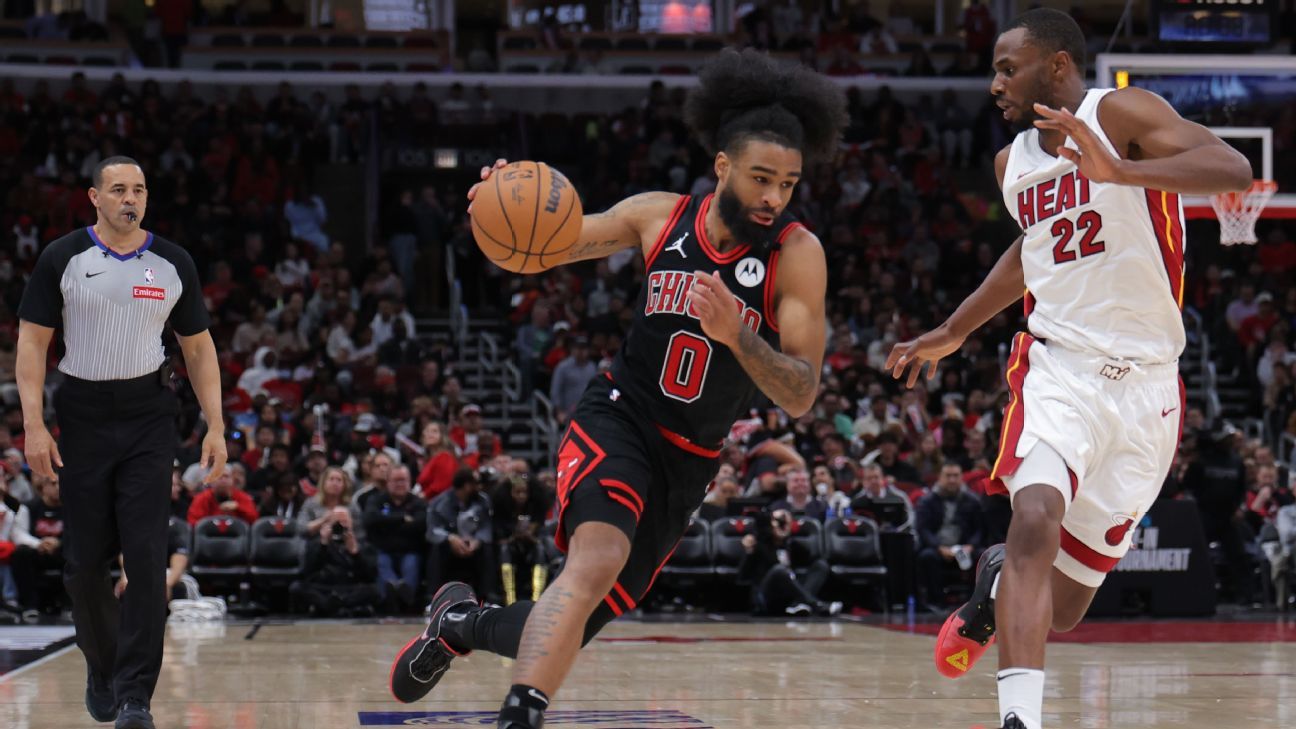
Bulls Face Early Challenge with Coby White’s Injury

As the Chicago Bulls gear up for their regular-season opener against the Detroit Pistons on Wednesday, they are facing a significant setback with the announcement that guard Coby White will be sidelined for at least two more weeks due to a right calf strain. This news was confirmed by the team’s coaching staff on Monday, leaving fans and analysts alike concerned about the implications for the Bulls’ season start.

White’s absence is a considerable loss for the team, especially as they look to establish momentum early in the season. The young guard had shown great promise in the preseason, displaying quick scoring abilities and a sharp playmaking instinct. Coach Billy Donovan expressed optimism about White’s recovery, highlighting that the focus remains on ensuring the guard’s long-term health. Donovan stated, “We want Coby to be fully conditioned and ready to contribute. Rushing him back could jeopardize his entire season.” This cautious approach highlights the importance of player health in a demanding league.

With White out, the Bulls will need to rely heavily on their depth. Key contributors like Zach LaVine and DeMar DeRozan must step up to fill the scoring void. Both players are primed for a big season, and the spotlight will be on them in the absence of their fellow guard. Additionally, the team’s defense will be crucial in these early games, as they look to build a foundation without one of their key offensive pieces.

  • Coby White officially out for at least two weeks.
  • Coach Billy Donovan emphasizes the importance of long-term player health.
  • Zach LaVine and DeMar DeRozan expected to take on more responsibility.

As the Bulls take the court against the Pistons, the stakes are high, and the pressures of early-season competition are palpable. Yet, despite the absence of Coby White, there lies a greater narrative that transcends wins and losses. Sports unite us, reminding fans that even in the face of adversity, teams rally together. The energy in the arena, the roar of the crowd, and the spirit of competition all converge, personifying the essence of sportsmanship and camaraderie. This season, the Bulls may find that while the scoreboard holds significance, the heart of the game is truly the unwavering support of their fans and the resilience within their roster.

Source link

TechCrunch Mobility: Bold Move, No Hostility – The Future of Mobility Looks Different

In the rapidly evolving landscape of transportation technology, autonomous vehicles (AVs) and electric mobility stand at the forefront of a disruptive wave that promises to overhaul traditional industry paradigms. Recent developments highlight how pioneering companies are leveraging breakthrough innovations to challenge incumbents and reshape economic opportunities. Notably, Luminar, a leader in lidar technology, is embroiled in a dramatic internal power struggle that could have far-reaching implications for the autonomous vehicle sector. The bid by Austin Russell, Luminar’s founder and former CEO, to acquire the company underscores an ongoing narrative of disruption from within, as visionary entrepreneurs seek to redefine competitive advantage amid tumultuous boardroom politics.

Russell’s return to the scene with a new venture, Russell AI Labs, signals a strategic pivot that could catalyze industry-wide innovation. The proposed bid involves acquiring or merging with other automotive tech entities, hinting at a broader trend of consolidation and diversification aimed at accelerating autonomous and sensor technology integration. This move coincides with key market shifts, as Gartner and other research institutions emphasize the importance of business model agility for AV success. Companies willing to disrupt entrenched supply chains and pivot toward value-driven services will dominate the next decade, with startups like Russell AI Labs poised to challenge established giants.

Simultaneously, the electric aviation sector exemplifies how disruption extends beyond ground mobility. Lilium, once considered a disruptor in vertical takeoff and landing (VTOL) aircraft, has transitioned its assets to Archer Aviation after ceasing operations. The acquisition of all 300 patents for €18 million underscores a strategic move driven by a desire to capitalize on legacy tech and optimize urban air mobility. While the industry is still embryonic, this deal exemplifies the potential for patent consolidation as a weapon against incumbent transportation giants, actively shaping urban mobility’s future.

  • Emerging startups like Airbound and Dexory are receiving significant funding—$8.65 million in seed capital and $165 million in Series C, respectively—highlighting investor confidence in automation and logistics innovation as markets mature and infrastructure demands escalate.
  • International expansion continues unabated, with Pony.ai and WeRide gaining regulatory approval to list on the Hong Kong Stock Exchange, signaling a burgeoning Chinese presence in global autonomous markets.

As the industry accelerates, *strategic partnerships* are becoming vital. Stellantis’ collaboration with Pony.ai aims to deploy robotaxis across Europe, threading together traditional automakers’ market reach with cutting-edge AV software—setting a precedent for legacy automakers to embrace disruption proactively. Meanwhile, automakers like Stellantis are reorienting their investment strategies; despite betting big on AVs, Stellantis plans to scale back electrification investments in favor of strengthening manufacturing capacity—highlighting a broader industry tension between supply chain resilience and innovation acceleration. Furthermore, companies like Waymo exemplify the trend of international expansion, with plans to operate robotaxi services in London, and strategic collaborations such as with DoorDash, to explore driverless delivery solutions—an indicator of the industry’s push toward multifaceted mobility ecosystems.

The future belongs to those who move fast and innovate relentlessly. With regulatory landscapes shifting rapidly, technological advances accelerating, and bold entrepreneurs pushing boundaries, the industry is poised for transformative change. Stakeholders who understand the importance of disruption, strategic agility, and disruptive business models will shape the mobility of tomorrow. The race is on, and incumbents who hesitate risk ceding their market dominance to new wave innovators. For investors, policymakers, and technologists alike, one thing is clear: the time to be bold and adapt is now. The next few years will define the trajectory of transport, and those who act decisively will reap the rewards in the decade ahead.

Young Stars Shine in Thrilling Championship Showdown: Future of Sports on Display!

Bucks’ AJ Green Secures Major Contract Extension

In a strategic move by the Milwaukee Bucks, talented guard AJ Green has agreed to a significant four-year, $45 million contract extension, according to his agent, Matt Bollero of ProMondo Sports. This decision was confirmed on Thursday and highlights the franchise’s commitment to building a robust roster leading up to the upcoming season.

Green, who has quickly become a key player for the Bucks, demonstrated his potential last season, averaging impressive stats that included 18 points and 5 assists per game. Coach Mike Budenholzer expressed confidence in Green’s abilities, stating, “AJ has shown us what it takes to compete at a high level, both offensively and defensively.” This sentiment underscores the importance the organization places on securing top talent to ensure continuity and success.

The contract extension not only cements Green’s place within the team but also signifies the Bucks’ intention to contend for a championship in the coming years. Fans are optimistic, as this extension comes alongside other key signings that further solidify the roster. Analysts noted that Green’s skills complement the dynamic play style of star players like Giannis Antetokounmpo and Jrue Holiday, creating a multidimensional threat on the court.

  • AJ Green’s contract: four years, $45 million fully guaranteed
  • Key stats: Average of 18 points, 5 assists per game last season
  • Coaching support: Mike Budenholzer lauds Green’s contributions

As the Bucks gear up for the new season, the enthusiasm surrounding Green’s new deal echoes a broader narrative: sports transcend mere competition. They foster unity, camaraderie, and a shared passion among fans and players alike. In every moment of brilliance on the court, whether it be a stunning three-pointer or a game-winning assist, the spirit of community ignites. This season, as in every season, the true victory lies not in the final score, but in the memories made and the connections forged through the love of the game.

Source link

£800m to Fix Failing NI Schools and Secure Our Future Millennials

Social Crisis in Northern Ireland Schools: Foundations of Future Society at Risk

Amid the echoes of faded chalkboards and crumbling brickwork lies a stark reality: the state of Northern Ireland’s educational infrastructure reflects deeper societal failures. Many schools across the region are caught in a cycle of neglect, characterized by a backlog of maintenance estimated at between £600m and £800m. This crisis is not merely structural but fundamentally impacts families, communities, and the very fabric of future generations. As sociologists like Charles Murray have argued, the environments in which children grow significantly influence their capacity to thrive, yet the systemic disrepair and poor management threaten to erode these foundations.

A damning report from Stormont’s Public Accounts Committee (PAC) paints a picture of systemic failure, with many children and teachers working amidst overcrowded, poorly heated, and dilapidated structures. Many educational institutions are now in a state of deferred maintenance—an issue that compromises safety and educational quality, and that critics consider an ethically unacceptable neglect of societal duty. The report highlights a reactive approach to infrastructure management rather than a comprehensive, forward-looking plan, leading to conditions where learning environments become a battleground for survival rather than a sanctuary for growth. Such neglect disproportionately affects families in less affluent communities, deepening the cycle of poverty and social exclusion that has persisted for decades, according to social historians like E.P. Thompson.

School heads, such as Emma Quinn of Rathcoole Primary School, describe their days as dominated by “chasing works,” reporting leaks, and fixing broken windows”. The frustration is palpable—their schools are described as “simply not fit for purpose,” with students enduring inadequate heating, leaky roofs, and crumbling infrastructure. These conditions, while seemingly physical, strike at the moral heart of society’s obligation to safeguard its youngest members. The disparities in funding and maintenance are especially severe for schools serving disadvantaged communities, emphasizing how socio-economic divides are entrenched within educational environments.

What Can Be Done?

  • The Department of Education (DE) and Education Authority (EA) are urged to implement a clear and sustainable management strategy with regular condition surveys and monthly maintenance planning.
  • Swift action on urgent repair backlogs, especially in classrooms where improper heating and hazardous environments threaten the health and morale of students and staff alike.
  • Broader investment is necessary, with officials like Education Minister Paul Givan calling for cross-party support to secure funding for infrastructure improvements and to address soaring costs in special educational needs provision—a sector that has seen an 850% increase in emergency placements over six years.

As society’s sociologists have pointed out, these issues extend beyond bricks and mortar—they threaten the social cohesion and moral fabric of communities. The prolonged neglect signals a failure of governance and resource allocation that, if left unaddressed, could erode trust and social mobility for generations. Yet, amidst this grim landscape, hope persists in the realization that intentional societal change—prioritized investments, strategic planning, and community engagement—can reverse these trends. In the end, society’s strength lies in its commitment to its children and the collective responsibility to build nurturing environments. Society must reflect deeply on these social wounds, for without immediate action, the very future of the next generation remains in jeopardy—an unspoken legacy of societal neglect that demands urgent redress.

Marvel Unveils Exciting New Shows at NYCC—Get Ready for the Future of Marvel!

Marvel Sets Sights on the Future: A New Era of Innovation and Industry Disruption

The entertainment giant Marvel Studios continues to redefine the landscape of digital storytelling, signaling a shift that extends beyond traditional media into a new frontier of technological disruption. With recent announcements at the New York Comic Con, Marvel unveiled an ambitious pipeline of upcoming series, hinting at a strategic focus on innovation that could set new standards for the industry. While specific release dates remain elusive, the broad timelines and thematic previews underscore a decisive move to harness cutting-edge visuals and narrative techniques, aimed at captivating the increasingly digital-native youth demographic.

Strategic Streaming Expansion and Technological Innovation

Marvel’s upcoming slate includes sequels and new installments for acclaimed titles such as Wonder Man, Your Friendly Neighborhood Spider-Man (season two), X-Men ‘97, Daredevil: Born Again, and VisionQuest. These IP expansions indicate a masterclass in leveraging existing brands for immersive storytelling, but they also reflect a broader industry trend: the convergence of entertainment and advanced technology. Notably, the inclusion of innovative storytelling elements—like the “black, oozy substance” in Spider-Man’s next chapter—hints at advanced CGI and visual effects that push the envelope of digital display capabilities.

  • Enhanced CGI technology elevates character realism and special effects, engaging youth audiences used to high-quality, interactive media.
  • Integration of virtual production techniques allows faster, cost-effective content creation without sacrificing visual fidelity.
  • Interactive storytelling, potentially leveraging AR/VR, could redefine viewer engagement and open up new monetization avenues.

This push towards technological innovation underscores Marvel’s strategic goal: creating a digitally immersive universe that outpaces competing platforms and captures the next generation’s preferences. Gartner’s latest industry reports highlight that media companies adopting **AR/VR** and **AI-powered content generation** are gaining competitive advantages — an approach Marvel seems poised to champion.

Disruption in Industry Norms & Business Implications

The move to target younger viewers with complex narratives and high-tech visual effects signals a disruption of traditional television and streaming formats. Industry analysts, including MIT Media Lab researchers, assert that “the next decade will be defined by seamless, immersive experiences that blur the lines between gaming, streaming, and virtual worlds.” Marvel’s renewed focus on serialized storytelling with rich visual storytelling not only aims to distinguish its content but also threatens established distribution models, prompting competitors to accelerate their own innovation efforts.

Furthermore, the renewed emphasis on legacy IP with updated narratives — such as the return of Jessica Jones in Daredevil: Born Again — reinforces the importance of deep content libraries. However, the industry’s broader shift toward fast-paced, technologically integrated productions suggests hurdles for traditional broadcasters still reliant on static content. The implications are clear: **business models must adapt rapidly** to leverage new technology, or risk obsolescence in an increasingly competitive, digitally-driven landscape.

The Road Ahead: Innovation as a Catalyst for Industry Transformation

As industry leaders like Elon Musk and Peter Thiel emphasize, *disruption* often accompanies rapid technological evolution. Marvel’s latest announcements serve as a bellwether for the industry: the future belongs to those who innovate at the intersection of storytelling, technology, and market agility. With groundbreaking advancements in CGI, virtual production, and audience engagement strategies, Marvel is positioning itself as a pioneer of the next media revolution. It is imperative for media enterprises, creators, and investors alike to recognize that **the next wave of success hinges on technological mastery and disruptive innovation**.

In a landscape where consumer preferences evolve at lightning speed, the urgency for strategic realignment cannot be overstated. Marvel’s integrated approach demonstrates a clear roadmap — one where innovation fuels growth, disruption redefines boundaries, and the industry as a whole must accelerate to stay ahead of the curve. The question is no longer whether technology will transform entertainment, but how swiftly and profoundly this transformation will reshape the future of media consumption.

Microplastics in our bodies: a hidden threat to our health and future generations

Microplastics and Society: A Hidden Crisis in Our Communities

In recent years, a startling discovery has emerged revealing microplastics—tiny particles less than 5mm in size—are present in almost every corner of our environment and inside the human body itself. From bloodstreams to placentas, lungs to brains, the pervasive reach of these minuscule plastics has sparked a social reckoning about the impact on families, education, and communities. According to leading scientists and sociologists, the widespread infiltration of microplastics is not just an environmental concern but a deeply social issue that threatens the very fabric of our society and the health of future generations.

It is now understood that microplastics shed from everyday items such as packaging, clothing, cosmetics, and even vehicle tires, infiltrate our bodies, often unnoticed. Recent studies suggest that our tissues—especially our blood and vital organs—may be full of these particles, which could have serious implications for public health. Dr. Jaime Ross, a neuroscientist, highlights that experiments with mice have already shown behavioral changes indicative of neurological stress, raising questions about long-term consequences for humans. Reflection on sociological theories by thinkers like Ulrich Beck, who warned about the “risk society,” reveals that these unseen hazards are testing our collective resilience and prompting an urgent cultural shift toward increased consumer awareness and lifestyle modification.

These environmental and biological revelations profoundly impact families, schools, and vulnerable populations. The rise of microplastic exposure coincides with the increasing prevalence of synthetic materials in everyday life, from children’s clothing to household products. Such exposure disproportionately affects communities with limited access to safer alternatives, which raises moral questions about equity and social responsibility. As sociologist Michael Kearns argues, the challenge is not just scientific, but moral: society must decide how to protect its most vulnerable from an invisible threat that knows no prejudice. The societal infrastructure—healthcare systems, public policy, educational programs—must adapt to address these hidden risks, with a focus on preventative measures and community education.

While the task is daunting, emerging solutions point toward systemic change.

  • Promoting the use of glass and stainless steel over plastic in households and schools
  • Implementing stricter regulations on microplastic emissions from industries and vehicles
  • Incorporating education about microplastics into school curricula to foster awareness among youth
  • Supporting scientific research to better understand the biological effects of microplastics and identify vulnerable populations

Despite the considerable gaps in current knowledge, many communities and individuals are beginning to act—reconsidering daily habits, reducing plastic use, and advocating for policy changes. The story of society’s response to microplastics is still unfolding, and with thoughtful engagement, it holds the possibility of transforming our relationship with consumption and environmental stewardship. As the sociologist David Harvey reminds us, societal change is often driven by the recognition of injustice—perhaps this pervasive plastic affliction can serve as that catalyst for a more conscientious, resilient future where health and community well-being are safeguarded from unseen threats. Only by confronting the microcosm can we hope to heal the macrocosm of society.

Rising Stars Shine: Young Athletes Redefine the Future of Sports

Falcons Face Bills Without Mooney: An Injury Blow Ahead of Monday Night Football

As the Atlanta Falcons prepare for their highly anticipated match against the Buffalo Bills on Monday Night Football, they will have to adjust their game plan considerably. The team confirmed that wide receiver Darnell Mooney has been ruled out due to a lingering hamstring injury. This news comes as a significant setback for the Falcons as Mooney has emerged as a key player in their aerial attack.

Mooney’s absence could reshape the dynamics of the game. With the season’s intensity ramping up, the Falcons’ head coach Arthur Smith must find creative ways to offset the impact of losing one of his top targets. Mooney has not only shown his ability to stretch the field but also to make crucial plays that change the momentum of a game. As highlighted by commentator Mike Tirico, “Without Mooney, teams will likely focus their coverage on other receiving threats, making it harder for the Falcons to find advantageous matchups.”

  • Darnell Mooney, ruled out for Monday’s game against the Bills due to a hamstring injury.
  • Mooney ranks among the top second-year receivers in receiving yards this season.
  • Coach Arthur Smith must find innovative solutions to fill the gap in Mooney’s absence.

The injury to Mooney is undeniably disappointing for Falcons fans. However, sports have a way of showcasing resilience and unity, especially in tough circumstances. Players must now step into elevated roles, with backup receivers gaining the spotlight. Veterans like Drake London and Kyle Pitts will need to shoulder the bulk of the responsibility, setting the stage for a gripping showdown in prime time.

As the Falcons take the field against the Bills, both teams will not just contend for a win, but they will also engage in a spirit of competition that transcends statistics. This game serves as a reminder that in the world of sports, every challenge presents an opportunity for growth and camaraderie. With each snap of the ball, fans will witness a powerful testament to teamwork and determination, crystallizing the idea that sports have the innate ability to unite people, regardless of the final score.

Source link

Campus jobs vanish as financial crisis hits youth future

Society at a Crossroads: The Human Cost of Higher Education Budget Cuts

Across the landscape of British higher education, recent years have revealed a troubling trend: an unprecedented wave of financial austerity measures that threaten the very fabric of our educational communities. The University and College Union (UCU) reports that more than 12,000 jobs have been slashed in the last year alone, with an additional 3,000 positions at risk due to ongoing cost-saving initiatives. These reductions go beyond mere numbers— they echo deeply within the lives of students and staff, altering the core of our societal structure where families, education, and community tie together. As universities grapple with the need to tighten budgets, the moral and social consequences ripple outward: what does it mean for a student aiming for a future, or a lecturer whose livelihood hinges on decisions made in boardrooms?

Disturbingly, this climate of cutbacks fuels a demoralized workforce— university staff report being “exhausted, furious, and undervalued,” as Jo Grady, UCU general secretary, starkly describes. The sustenance of >4 million students in England alone is now shadowed by uncertainty, with many witnessing the disconsolidation of vital support services such as disability resources and cleaning staff. Such austerity measures are not just financial; they strike at the ethical heart of what it means to serve the public good. Sociologists like Michael Apple warn that these policies prioritize economic “efficiencies” at the expense of societal well-being, leading to a long-term decline in social mobility and access to higher education for the most vulnerable.

Among those facing the harshest consequences are academic staff like Dr. Zak Hughes, a chemistry lecturer at the University of Bradford, who describes the stark reality: he risked losing his job and, if that happens, will have to move back with his mother into her home, a stark symbol of societal insecurity. Meanwhile, in Edinburgh, a similar story unfolds where a planned £140 million in cuts looms over nearly 1,800 jobs, casting a shadow of doubt over students’ futures. Young people like Caspar Cubitt, a theology student, admit that the uncertainty has caused them to question their very decision to pursue higher education, stirring a cultural shift where aspirations are replaced with apprehensions. The historian David Brooks underscores that these trends threaten the foundations of our civic identity, as universities have long been pillars of societal progress and moral debate.

In response, some institutions call for “swift and decisive action” from the government, emphasizing that financial stability must be balanced against the moral obligation to support future generations. Yet, the crisis illuminates a deeper societal tension: how do we preserve the integrity of education in a system increasingly driven by economic imperatives? For families, this means reconsidering their investments in their children’s futures; for communities, it signals a fracturing of the social fabric that binds generations together. As the philosopher Francis Schaeffer once noted, society is only as strong as its moral commitment to human dignity and shared purpose. The challenge now is to envision a way forward—one that not only mitigates these cuts but also redefines the role of higher education as a true societal good, rooted in the promise of opportunity, hope, and resilience. In this moment of crisis, society is called to reflect: can it transform hardship into a catalyst for moral renewal, ensuring that the pursuit of knowledge remains a pursuit of justice?

Are Tech Billionaires Overreacting? Is Doom-Prepping the Future?

The enduring landscape of geopolitical power is shifting beneath our feet as technological advancements and covert developments reshape the global order. Recent revelations about the private pursuits of Silicon Valley billionaires and the silent expansion of military-grade bunkers signal more than mere eccentricity—these are signs of a deeper stratification of society and a potential prelude to conflicts that could redefine nations’ futures. Mark Zuckerberg’s clandestine construction of a sprawling compound on Hawaiian soil, reportedly including a bunker-like storage with self-sufficient energy and food supplies, exemplifies a trend among the ultra-wealthy to insulate themselves from global disruptions. Neighboring residents hint at these projects being “bunkers” or “billionaire’s bat caves,” yet the true magnitude of their intent remains hidden behind high walls guarded by non-disclosure agreements.

While the wealthy fortify their retreats, >international organizations< and security analysts warn that, given the rapid progression of artificial intelligence (AI), a new kind of existential threat is emerging. Prominent voices like Harvard historian Yuval Noah Harari and the World Economic Forum suggest that exceptional technological breakthroughs in AI and the concept of “the singularity” could catalyze a fresh round of global chaos if mismanaged. Experts report that OpenAI’s chief scientist Ilya Sutskever has even discussed the importance of constructing underground shelters for scientists ahead of the release of artificial general intelligence (AGI), fearing unpredictable outcomes. Such disclosures highlight a disturbing narrative—tech insiders are aware of the risks, yet society at large remains unprepared for the potential consequences.

Predictions of a Near Future

Leading tech entrepreneurs and visionaries are increasingly confident that AGI could arrive sooner than most expect, with figures like Sam Altman of OpenAI claiming that the breakthrough is imminent. Such assertions, echoed by DeepMind‘s Sir Demis Hassabis, point to a future where superintelligent AI surpasses human cognition. This prospect fuels hopes of solving climate change, eradicating disease, and achieving “sustainable abundance”—visions espoused enthusiastically by billionaires like Elon Musk. Yet, skeptics, including esteemed academics such as Dame Wendy Hall of Southampton University, argue these claims are nothing more than marketing hype designed to excite investment. They stress that fundamental breakthroughs required for true AGI remain elusive, and that artificial superintelligence (ASI)—an intelligence that outstrips all human capability—is still a distant, perhaps impossible, horizon.

Nonetheless, history warns us that humankind’s greatest dangers often come from its own pursuits. The concept of “the singularity”, initially attributed to John von Neumann in 1958, underscores the risk that AI could develop in unpredictable ways, threatening human sovereignty. “The development of ASI could be the biggest risk in history,” warns Neil Lawrence, professor of machine learning at Cambridge University. The question remains: are we truly prepared to engage with a power that might decide our fate?

In the shadows of their private fortresses, societies around the world hold their collective breath, while debates about control, containment, and unintended consequences intensify. As Sam Altman and fellow tycoons hint at a future where machines might govern or even eliminate human oversight, the historical weight of these choices becomes undeniable. We are witnesses not just to the dawn of a new technological era, but to a pivotal point where the course of history hangs in the balance—a story still being written by the bold, the reckless, and the foresighted alike. The question that remains echoing in the corridors of power and across the silent depths of underground bunkers is clear: what will tomorrow hold, and who will have the last say?

Social Media Auto Publish Powered By : XYZScripts.com