Matox News

Truth Over Trends, always!

Growing Number of Girls Falling Victim to County Lines Exploitation, Data Reveals

Growing Crisis of County Lines Exploitation Among Girls

Recent statistics reveal a disturbing shift in the demographics of county lines exploitation, highlighting an increase in the number of girls and young women becoming victims of organized criminal networks. Data from Catch22, a leading charity supporting victims of modern slavery and exploitation, shows that these vulnerable girls now comprise 22% of its caseload in 2025—up from just 15% in the previous year. This alarming rise underscores the urgent need for society to recognize and address the gendered dimensions of exploitation that continue to operate under the radar.

Historically, county lines—the practice of drug gangs transporting illicit substances from urban to rural areas—has been stereotypically associated with young males. Yet, experts like sociologist Dr. Jane Matthews argue that this narrow perception obscures the experiences of girls who are groomed into criminal activity through emotional manipulation and social coercion. Such methods often mirror child sexual exploitation, wherein young girls are enticed into what they believe may be romantic relationships, only to find themselves trapped in a cycle of criminal involvement. This gendered understanding hampers recognition and support for girls, leaving them marginalized and disregarded in the fight against modern slavery.

The Hidden Toll on Families and Communities

The social fabric of families and communities bears the brunt of this exploitation. Families often struggle to detect early signs of grooming and manipulation, especially when exploitation occurs via social media platforms such as Snapchat, which gangs increasingly use to target children with additional vulnerabilities. Vulnerable youth—those experiencing mental health issues, substance misuse, or inadequate care arrangements—are more susceptible to grooming tactics, as highlighted by social commentators who warn of the long-term impact on mental health, educational attainment, and social mobility. The trauma inflicted upon victims reverberates beyond individual lives, weakening the resilience of entire communities and straining social support systems designed to protect at-risk youth.

The Government and Police Response: Progress and Challenges

  • In 2025, authorities successfully closed 2,740 county lines, charged 1,657 gang leaders, and seized 961 knives, reflecting a concerted effort to combat these networks.
  • The government plans to invest over £34 million in the county lines programme this year, aiming for greater disruption and victim support.
  • Police forces are prioritizing the disbandment of high-harm gangs, with an evolving approach to keep pace with ever-changing tactics.

However, critics like Marike van Harskamp argue that these efforts must be complemented by a gender-sensitive approach, recognizing that girls often fall through the cracks of current interventions. She emphasizes the necessity of framing county lines exploitation as a form of child abuse—an approach that could foster early intervention, better mental health support, and tailored rehabilitative services for victims. Van Harskamp warns that without addressing the underlying vulnerabilities—such as trauma, social exclusion, and lack of education—these cycles of exploitation will continue to trap future generations in a cycle of despair.

Reflections and Lamentations for Society’s Future

As the societal response evolves, the challenge remains rooted in understanding that these social issues are not isolated incidents but reflective of broader systemic failures—failures that allow exploitation to flourish in the shadows. From homes to schools and community centers, society must foster environments of safety and education, empowering young people with resilience and hope.

In contemplating these struggles, society reaches a poignant crossroads: continue to treat exploitation as an inconvenient flaw, or recognize it as a moral crisis demanding collective action. The hope lies in each community’s capacity to transform awareness into advocacy, in families’ perseverance to protect their children, and in policymakers’ resolve to craft solutions rooted in compassion and justice. Society’s true strength will be measured by its ability to heal these wounded threads and weave a future where no child is left behind in the shadows of exploitation.

Wolf bites woman in shocking Hamburg assault amid growing wildlife concerns

In a startling development that underscores the evolving landscape of Europe’s natural ecosystems, Germany has recorded what is believed to be the first wolf attack on a human in decades. This incident marks a significant milestone in the ongoing reestablishment of wolves within the region, a process that has garnered both ecological praise and societal concern. Experts, including leading conservationists and historians, note that the resurgence of this apex predator signals profound shifts in Germany’s ecological balance—shifts that carry implications well beyond conservation corridors into the geopolitical arena.

The return of wolves to parts of Germany is a direct consequence of broad environmental policies aimed at restoring natural habitats and promoting biodiversity. Since the early 2000s, European nations have partly embraced an ecosystem-based approach, allowing predator populations to recover naturally after centuries of eradication. As documented by international organizations such as the European Environment Agency, this strategic shift aims to foster healthier ecosystems; however, it also introduces contemporary challenges for local communities. The recent wolf attack, believed to be the first of its kind in Germany, is being scrutinized as a possible harbinger of increased human-wildlife interactions—interactions that could redefine the safety and safety policies in rural and suburban regions.

This incident notably echoes similar patterns across Europe, where the reintroduction of predators like the European grey wolf has ignited tensions among farmers, conservationists, and policymakers. Analysts from the International Wildlife Conservation Society suggest that such events may accelerate debates regarding the balance between ecological restoration and societal safety. As the German government and neighboring countries grapple with these realities, the overarching concern pivots around the geopolitical impact—how ecological decisions ripple outward to influence policy, security, and societal cohesion. Decisions driven by international treaties and conservation commitments are now intersecting with local realities, forcing policymakers to navigate a complex web of ecological integrity versus human safety.

Reflecting on history, some scholars argue that this moment echoes the broader pattern of nature reclaiming its territory—a movement that can be simultaneously inspiring and disruptive. Historian Dr. Hans Meier notes that “this event signifies not just a biological resurgence but a turning point in how nations respond to ecological change.” As Germany and its European neighbors reevaluate their strategies, the ongoing debate underscores a larger truth: the delicate equilibrium between human ambitions and the relentless force of nature. The wolf’s return serves as a potent reminder that choices made today about conservation, territorial sovereignty, and international cooperation will shape the fabric of society for generations to come.

As the world watches from afar, the unfolding story of ecological rebirth—the return of the wolf—becomes a chapter in the greater narrative of global environmental transformation. Yet, the current incident in Germany stands as a stark warning: the boundary between civilization and wilderness is neither fixed nor inviolable. The true weight of history is still being written, leaving humanity standing at the cusp of a new chapter where the past’s lessons and future’s fears intertwine in an uncertain dance.

Egypt Orders Shops and Eateries to Close Early Amid Growing Energy Crisis

In a decisive move triggered by an urgent need to address escalating energy shortages, several governments around the world are implementing strict measures to reduce power consumption. Notably, retail and dining establishments are now mandated to close by 21:00 for the next month. This directive, introduced in the name of national security and economic stability, underscores the profound shift in energy policy and the far-reaching implications for societies entrenched in consumer-driven economies.

The decision to curtail operating hours reflects a broader crisis underscored by global analysts, who warn that rising energy costs, supply chain disruptions, and geopolitical tensions are converging into a perfect storm. International organizations, including the International Energy Agency, have issued statements acknowledging that the measures are a short-term response to prevent more profound economic collapse. However, critics argue this move signals a turning point—a departure from previous norms that could have lasting repercussions on societal norms, employment, and the fabric of daily life.

Historically, such draconian measures have been seen in periods of national crisis, often preceding major geopolitical shifts. From wartime rationing to economic austerity, governments have used restrictions like these to demonstrate resilience and control. Yet, modern economies built on consumerism and extended operational hours now face an unprecedented challenge: balancing energy security with maintaining economic vitality. Prominent sociopolitical analysts, including Dr. John Matthews, emphasize that these policies likely herald a new period of government intervention, where the state’s role in everyday life becomes more intrusive and impactful.

Indeed, geopolitical impact extends beyond the immediate economic sphere. Countries enforcing such measures may experience altered international relations, especially if their energy shortages are perceived as stemming from geopolitical conflicts or manipulations. As nations grapple with scarcity, they may adopt protectionist policies, favoring domestic industries and disadvantaging foreign counterparts. The decision to impose cutoff times on retail and dining could also be a precursor to more stringent restrictions, which might include rationing, supply prioritization, or even border controls — all mechanisms that reshape global trade and diplomacy.

In this unfolding chapter of history, where energy scarcity threatens to reshape the socio-economic landscape, the implications for the future of globalization are profound. As the world watches how nations respond—some with cooperation, others with confrontation—the stage is set for perhaps the most pivotal geopolitical contest of our times. The silence of shuttered shops by night masks a burgeoning conflict not only over resources but over the very structure of modern society. As history unfolds, it begs the question: are these temporary measures the harbinger of a new order, or will they ignite resistance that redefines power and resilience in the centuries to come?

Princess Eugenie resigns from anti-slavery charity role amidst growing concerns

In a move that signals shifting tides in the delicate arena of international reputation and moral authority, Princess Eugenie has stepped down as patron of Anti-Slavery International, the oldest human rights organization founded in 1839. Her departure, occurring amid the ongoing fallout from the Jeffrey Epstein scandal, underscores how private scandals within elite circles can ripple across societal and geopolitical landscapes. Although no evidence links her personally to Epstein’s criminal network, her association with figures like her father, Prince Andrew, and her family’s connections to Epstein have become a focal point in mounting public concern over elite complicity in international trafficking. International analysts emphasize that such scandals threaten to erode the moral authority of monarchies and diplomatic institutions, especially as global decision-making increasingly hinges on the moral credibility of prominent figures.

Moreover, the saga exposes profound questions about international influence and accountability. The revelations extracted from U.S. Department of Justice files and emails link Epstein’s network to powerful individuals worldwide, with allegations suggesting that Prince Andrew may have been involved in illicit activities. Although he denies any wrongdoing, the allegations have prompted calls by historians and legal experts for greater transparency among global elites to combat deep-rooted corruption. The unfolding scandal threatens to undermine alliances rooted in mutual prestige, especially as U.S. authorities intensify their investigations into Epstein’s extensive trafficking ring. Such developments highlight the fragility of diplomatic trust that governments and royal families have built over decades on shared interests and mutual respect.

From a geopolitical perspective, the scandal’s fallout converges with broader issues of sovereignty, transparency, and societal integrity. As international organizations and Western governments face the difficult task of balancing diplomatic diplomacy with the pursuit of justice, nations are forced to confront their own complicity and past failures. The public exposure of elite misconduct serves as a clarion call for radical reforms in how societies oversee their most powerful leaders, resonating with the warnings of international watchdogs like the United Nations. These revelations threaten to embolden populist movements worldwide, demanding accountability and transparency, but also risking destabilization of long-standing diplomatic ties if governments are perceived as shielding their elites from justice.

As the dust settles, the weight of history’s unfolding narrative leaves the world at a crossroads. The unraveling of Epstein’s network and the profound implications for royal families, diplomatic ties, and societal morality remind us that no institution—regardless of its stature—is immune to the tides of justice and truth. The decisions made in this epoch will likely reverberate for decades, shaping how future generations view authority, morality, and the global fight against modern slavery and exploitation. Humanity now stands at a pivotal moment—whether to allow the dark shadows of the past to continue haunting the present or to forge a future grounded in unyielding transparency and moral resolve. The pages of history are turning, and the world must decide: will justice be the legacy we leave behind?

Majority of Students Secured Top School Options in a Growing Shift Towards Choice

As pupils across the country discover their secondary school placements, a wave of emotional responses and societal implications unfold, revealing much about the resilience and challenges faced by families, communities, and the broader educational landscape. This process of school allocation, often perceived as a routine administrative task, significantly influences the trajectory of a child’s social development, shaping their future opportunities and reinforcing existing social inequalities. For many families, the announcement marks a pivotal moment that tests their sense of hope and adaptability in an increasingly competitive environment.

The distribution of school placements reflects deeper societal issues, such as unequal access to quality education and the persistent socio-economic stratification that continues to define many urban and rural communities. Sociologists like Pierre Bourdieu have highlighted how educational institutions tend to reproduce societal hierarchies, with children from affluent families more likely to secure placements at prestigious schools. Conversely, disadvantaged communities often find themselves confined to underfunded institutions, undercutting students’ prospects and perpetuating cycles of inequality. The impact on families is tangible: parents may feel heightened anxiety, investing significant resources into supplementary tutoring or relocation to secure better educational opportunities for their children.

This social stratification extends beyond individual families to influence community cohesion and social mobility. Institutions such as local councils and educational authorities face mounting pressure to ensure equitable allocation within limited capacities. Yet, systemic barriers often hinder efforts, leaving marginalized populations vulnerable to social exclusion. The consequences resonate in communities, where disparities in school quality contribute to widening racial, economic, and cultural divides. Education historian Dr. Miriam Cohen warns that such disparities not only affect individual success but threaten the fabric of society itself, fostering feelings of alienation and disenfranchisement among youth.

Addressing these challenges requires a multifaceted approach, with an emphasis on reforming admissions policies, increasing investment in underserved schools, and fostering genuine community engagement. Proposed solutions involve expanding access to high-quality education through targeted funding, comprehensive scholarship programs, and initiatives that prioritize inclusive and diverse school environments. The aim is to dismantle barriers rooted in socio-economic background and to foster a sense of shared opportunity. As social commentators argue, sustainable social change hinges on recognizing that every child’s success is inherently tied to the support systems within their community and family, underscoring the ethical imperative to address educational inequities.

Ultimately, the journey of a young pupil receiving their school placement encapsulates the broader societal struggle—balancing tradition with reform, privilege with justice. As communities grapple with these social issues, it is essential to remember that behind every placement letter lies a human story, a family dreams, and a future waiting to be shaped. Society’s challenges demand collective effort, innovative solutions, and a moral commitment to forge pathways where opportunity is not dictated by circumstance but illuminated by hope. In this ongoing narrative of growth and resilience, the question remains: can society truly rise to meet the needs of all its young, offering them not just a place in a school, but a place in a future that values their potential?

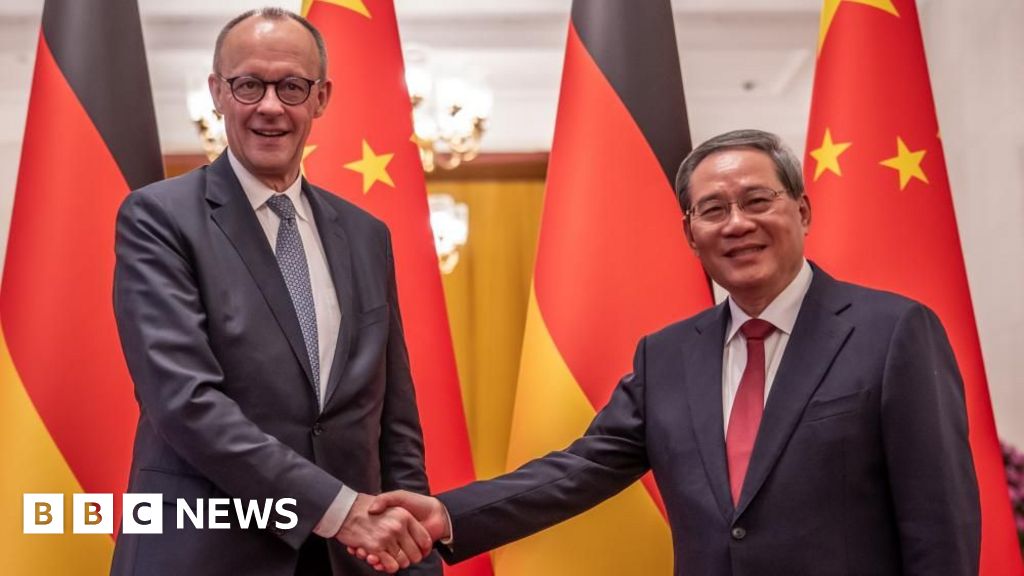
German Chancellor warns of growing trade gap with China on first Beijing visit

In a significant development amid shifting international trade dynamics, German business groups have issued a pointed appeal to Friedrich Merz, demanding a clear and decisive stance towards China’s economic practices. This move underscores growing concerns within Europe about the strategic risks posed by China’s expanding influence in global markets and the need for coherent policies to safeguard national interests. As tensions over trade competition, export controls, and technological sovereignty escalate, the call from industry leaders signals a potential turning point in Europe’s approach to balancing economic relations with China.

Under Germany’s increasingly complex geopolitical landscape, business sectors are warning that ambiguous or lenient policies could underminet the competitive edge of European firms, particularly in key sectors such as technology, manufacturing, and telecommunications. Analysts suggest that the European Union’s future approach may be pivotal in shaping global power dynamics. The pressure on Merz, the leader of the opposition, reflects broader debates within Germany—Europe’s economic powerhouse—about how to maintain a strategic and independent stance amidst rising U.S.-China tensions. Moreover, this call aligns with European efforts to reinforce export controls, safeguard technology, and counteract economic coercion, which many see as essential in preventing China’s market dominance from eroding Europe’s technological sovereignty.

Historically, decisions on trade and diplomacy have an enduring impact on national security, societal stability, and international rankings. The stance taken by Germany’s politische and business elites will likely influence the broader European Union’s foreign policy direction. Recent reports from international organizations, including the World Trade Organization, suggest that such moves could provoke retaliatory measures from Beijing, adding risk to European export-dependent economies. Meanwhile, U.S. policymakers, keen on coalition-building with European allies, are watching these developments with a mix of interest and apprehension, recognizing that the collective stance will shape how the Western bloc resists China’s strategic ambitions.

As critics warn of the potential for economic decoupling and diplomatic rupture, the words of historians and analysts carry increasing weight. Many caution that reckoning with China’s rise involves more than tariffs and export controls; it requires a deliberate, principled strategy that considers the societal and geopolitical repercussions for generations to come. The decisions made today could determine whether Europe remains a unified, resilient power or whether it succumbs to fragmentation and dependency. With Merkel’s legacy fading and a new chapter in global diplomacy emerging, the weight of history presses upon leaders to act decisively. In this unfolding saga of power, influence, and sovereignty, the future hangs in the balance—a testament to the enduring importance of strategic foresight in a rapidly changing world.

India’s Sarvam Boosts the Game with Indus AI Chat App Amid Growing Rivals

India’s Sarvam Launches Indus: Disrupting the AI Landscape with Localized Innovation

In a strategic move emblematic of regional innovation disrupting global dominance, Indian AI startup Sarvam has announced the launch of its Indus chat app for both web and mobile platforms. This development arrives amidst a fiercely competitive landscape, where international giants like OpenAI, Anthropic, and Google continue to lead the generative AI revolution. Sarvam’s entry signals a pivotal shift, emphasizing localization, digital sovereignty, and tailored solutions for India’s unique linguistic and cultural landscape.

Innovation in Context: Building AI for India’s Market

The app is powered by Sarvam’s 105-billion-parameter large language model (LLM), labeled Sarvam 105B, an ambitious undertaking that reflects advanced innovation and a disruptive approach to AI development. Alongside its 30B model, Sarvam’s models aim to democratize AI, making sophisticated language processing accessible to India’s diverse linguistic demographics. Launched just days after unveiling its models at the India AI Impact Summit, Sarvam’s initiative exemplifies how disruption is no longer confined to Silicon Valley but now thrives in emerging markets.

  • Focus on local languages and dialects for better user engagement
  • Strategic partnerships, including collaborations with HMD for AI-enabled Nokia feature phones and Bosch for automotive AI applications
  • Expanding hardware capabilities and enterprise solutions tailored for India’s burgeoning digital economy

As analysts from Gartner and academic institutions like MIT emphasize, AI models trained on localized data are key to disrupting the global AI paradigm, shifting power towards regions like India capable of fostering innovation on their own terms. This signals not just technical progress but a strategic realignment that challenges the hegemony of Western AI giants.

Business Implications and Industry Impact

The launch of Indus is more than just a new app; it signifies a strategic attempt by Sarvam to carve out a dominant foothold in a market accustomed to global giants. With initial restrictions, such as limited compute capacity and the absence of certain user controls—features expected to evolve—Sarvam aims to attract feedback while gradually expanding access. The company’s recent $41 million funding round, led by prominent investors such as Lightspeed Venture Partners and Khosla Ventures, underscores confidence in its disruptive potential. This infusion of capital positions Sarvam to scale rapidly, pushing the boundaries of what AI can achieve within India’s unique language, cultural, and regulatory context.

Industry leaders and investors are watching closely, especially as India’s AI adoption accelerates, with OpenAI’s Sam Altman reporting over 100 million weekly active ChatGPT users in India—a clear indicator of the market’s vast potential. The question now is: which regional players will leverage local innovation to disrupt this crowded space?

The Road Ahead: Urgency in a Rapidly Evolving Landscape

The emergence of Sarvam’s Indus app and its formidable models marks a turning point, highlighting both the opportunity and the necessity for regional actors to innovate rapidly. The AI industry’s trajectory is increasingly characterized by disruption fueled by localized solutions, high investment, and strategic partnerships. With India positioned as a vital AI market for the future, global competitors must adapt quickly or risk losing influence. As industry analysts warn, continued innovation and control over AI infrastructure will determine economic and strategic dominance in the coming decade.

In this rapidly evolving landscape, Sarvam’s push into the AI arena exemplifies the urgency for emerging markets to develop homegrown tech solutions that not only challenge global incumbents but also redefine industry norms. Stakeholders worldwide must prepare for a future where localized, innovative AI is at the forefront of technological progress, shaping the global digital economy for decades to come.

Rape Trial Kicks Off for Norway’s Crown Princess’s Son Amid Growing Youth Scrutiny

The recent revelations amid Norway’s political landscape have ignited a fierce debate over the role and relevance of monarchy in modern governance, positioning the issue as a critical point of contention in European politics. The leak of email exchanges involving members of the Norwegian royal family has not only exposed what critics consider a disconnect between the monarchy and contemporary societal values but has also cast a spotlight on the broader geopolitical impact of traditional institutions in a rapidly changing world order. This controversy underscores how decisions made within the walls of royal palaces ripple across nations, influencing diplomatic credibility, domestic stability, and public trust.

Leading voices from across the political spectrum have begun to scrutinize the monarchy’s place in Norway’s modern identity. Arild Hermstad, the leader of Norway’s Green Party and a notable republican advocate, stated that the email exchanges reveal a monarchy “that is not working,” pressing for transparency and reform. His comments resonate with a growing global movement questioning whether hereditary rule remains justifiable in wealthy, democratic nations. Analysts from international think tanks suggest that such revelations, if they undermine confidence in traditional royal institutions, could have broader repercussions for European unity. Many believe that the monarch’s continued symbolism as a stabilizing figure is increasingly at odds with an era demanding accountability and reform, especially as traditional monarchical legitimacy faces mounting challenges from rising republican sentiments.

Institutional critics warn that the fallout transcends mere political posturing; it risks altering Norway’s diplomatic posture within the North Atlantic Treaty Organization (NATO) and broader international forums. Historians like Dr. Ingrid Sørensen argue that monarchies historically played pivotal roles in nation-building but now threaten to be relics, especially when their transparency is questioned. The controversy has prompted international organizations, such as The European Union and Human Rights Watch, to weigh in cautiously, intimating that the integrity of political institutions—regardless of their constitutional status—must be preserved against scandals that could undermine social cohesion. As nations grapple with modern governance, the question remains: will traditional symbols of power adapt or be forsaken in the face of reform demands?

In an era defined by urgent global challenges, the unfolding narrative in Norway serves as a microcosm of broader geopolitical shifts. The enduring debate over the monarchy’s role illuminates a larger struggle between tradition and reform that extends across many democracies worldwide. The decisions that emerge from this controversy—whether to reform, retain, or even abolish monarchies—may well determine how a generation perceives authority and legitimacy. As the dust settles, the realization becomes clear: history’s pages are still unfurling, and the outcome of Norway’s internal struggles may influence the future of sovereignty, identity, and power in a world where old institutions are tested by new demands. The story of Norway’s royal scandal is more than a national crisis; it is a chapter in the ongoing saga of evolution and upheaval that defines our times.

US Committee Reassesses Vaccine Guidelines Amid Growing Concerns

Society at a Crossroads: Vaccination Debates and the Impact on Families and Communities

In recent months, social and public health institutions across the United States have signaled a significant shift in their approach to childhood vaccinations. The Advisory Committee on Immunization Practices (ACIP), the longstanding body responsible for setting vaccine recommendations, is re-evaluating its stance, emphasizing individual choice and medical advice over mandated immunizations. This move, led by figures like Kirk Milhoan, a pediatric cardiologist and current chair of ACIP, reflects a broader cultural transformation in perceptions of personal autonomy versus public health responsibility. While advocates argue that this approach preserves individual rights, critics warn it risks undermining the collective safety that decades of vaccination campaigns have built, especially for vulnerable communities.

This renewed focus on personal freedom in vaccine decisions resonates strongly within families and local communities, many of whom have expressed concern that recent policy relaxations could lead to a resurgence of dangerous, yet preventable, diseases. Sociologists like Dr. Michelle Malkin warn that such shifts tend to fragment social cohesion, creating divisions not only between vaccinated and unvaccinated individuals but also within communities where trust in public health authorities wanes. School vaccination requirements, historically a cornerstone of disease prevention, are now being challenged as states and localities gain more authority to set their rules—some permitting philosophical exemptions that many experts believe threaten herd immunity and endanger children with weakened immune systems.

As epidemiologists raise alarms over rising cases of measles, mumps, and polio—diseases once believed eradicated in the U.S.—the debate about personal rights versus collective safety intensifies. The recent surge in measles cases, from a grim 416 confirmed cases this year compared to over 2,200 last year, exemplifies how fragile the health defenses built through vaccination have become. Historians of medicine note that these outbreaks threaten to unravel progress made during the vaccine era, which has saved millions of lives. Yet, the narratives now emphasize risks and fears, fueled by a vocal minority advocating for vaccine optionality, often rooted in concerns over potential side effects. Critics argue that this trend reinforces societal divisions and amplifies health disparities among underserved populations.

Amid this tumult, social commentators and public health advocates emphasize that the rights of the individual must be balanced against the rights of others—especially those incapable of vaccination due to health conditions. They contend that a community-oriented approach, rooted in scientific consensus and moral responsibility, is essential for safeguarding future generations. The challenge for society remains: can community bonds withstand the strain of individual choices, or will society need to forge a new understanding of shared responsibility? As the next ACIP meeting approaches and states consider further exemption policies, society stands at a pivotal point—where hope lies in unapologetically embracing both personal freedoms and collective accountability. In this delicate dance, the resilience of our communities will determine if society can turn the tide and preserve the safety and integrity of our shared future—a future where health, trust, and hope are woven together once more.

Growing hints of rate hike as Australia’s inflation hits 3.8%—what it means for the youth and your wallet

Global Economic Tensions Rise as Australia Faces Inflation Surge

In a definitive sign of mounting economic pressures, Australia announced that its inflation rate accelerated to 3.8% in the year ending December, up from 3.4% the previous month. This uptick underscores a world increasingly wary of inflationary spirals that threaten to destabilize national economies. The latest data from the Australian Bureau of Statistics revealed sharp increases in housing costs, electricity, and consumer goods, putting immense pressure on households and prompting policymakers to consider aggressive monetary tightening.

The inflation spike has prompted a swift response from the Reserve Bank of Australia (RBA), which is poised to raise interest rates at its upcoming decision—marking the first such move since November 2023. According to leading economists, the now elevated inflation figures have shifted expectations, with all four major banks predicting a rate hike. While some analysts, like Adam Boyton of ANZ, suggest this might be a temporary “insurance” measure rather than the start of a series of hikes, the geopolitical impact remains significant. Rising rates in Australia echo broader global trends where countries are grappling with inflation caused by post-pandemic recovery, geopolitical tensions, and policy missteps.”

How Inflation and Policy Shifts Reshape The< u>global economic landscape

  • In Europe, inflation rates are also climbing, forcing the European Central Bank to consider tightening monetary policy—potentially affecting trade and investments worldwide.
  • In North America, the U.S. Federal Reserve has already begun tapering measures, but persistent inflation continues to challenge its strategies.
  • In emerging markets, rising U.S. interest rates have led to capital outflows and currency depreciation, heightening social unrest and economic instability in vulnerable societies.

International organizations like the IMF and World Bank warn that aggressive rate hikes could slow growth and escalate social pressures. Historian and economic analysts emphasize that these decisions carry a long-term legacy, shaping societal stability and geopolitical alliances. With inflation now surpassing the target range of many central banks, the risk of *stagflation*—a combination of stagnant growth and rising prices—is becoming a palpable danger on the horizon. Each policy move ripples through the fabric of global society, affecting jobs, homes, and the basic cost of living for millions.

The Broader Geopolitical Impact

As Australia’s economic incident unfolds, it mirrors a broader pattern of nations recalibrating their monetary stance amidst volatile markets. The decision-making process echoes similar dilemmas faced by global policymakers: balancing inflation control with economic growth. Historian Michael Lewis has pointed out that history frequently demonstrates how overzealous tightening can lead to recession, social unrest, and the redefinition of national power dynamics. Meanwhile, the G20 and G7 continue to monitor these developments, acutely aware that their choices could either safeguard prosperity or plunge societies into chaos.

Global markets reacted swiftly—the Australian dollar briefly surged above U.S.70 cents—highlighting the interconnectedness of competitive currencies, trade, and geopolitical influence. How nations respond to inflation will determine the trajectory of world power balance for decades to come. As the IMF warns of potential slowdown and the World Bank assesses rising debt burdens, a delicate dance unfolds—one that may well decide whether history records this era as a turning point or a descent into prolonged turmoil.

In the end, the ongoing battle against inflation in Australia and across the globe is more than economic numbers; it is a reflection of societal resilience, political will, and the enduring struggle for stability amidst chaos. The decisions taken now—by central banks, governments, and international institutions—are reshaping the landscape of international power, with the shadows of today’s choices stretching long into an uncertain future. The echoes of history remind us: in this fragile balance, the weight of the future rests heavily on what is decided today, and the stories of tomorrow remain unwritten in the unfolding fabric of history.

Social Media Auto Publish Powered By : XYZScripts.com