Matox News

Truth Over Trends, always!

Could Dark Matter Be Hidden Black Holes From Another Universe?

Emerging Cosmological Models Signal Disruption in Scientific Paradigms and Tech Innovation

The latest advancements in cosmology are pushing the boundaries of understanding fundamental physics, with profound implications for technology, innovation, and disruption across multiple sectors. A groundbreaking model proposed by physicist Enrique Gaztanaga from the Institute of Space Sciences in Barcelona integrates two of the most radical ideas in physics—cyclic universes and primordial black holes—to offer a radical reinterpretation of dark matter and the origins of our universe. This model challenges conventional Big Bang-centric paradigms and posits that the universe may undergo an eternal cycle of expansion and contraction, with relic structures from pre-Big Bang epochs potentially surviving through cosmic rebounces.

The Disruptive Potential of a Cyclic Universe

Unlike the popular multiverse theories popularized by the entertainment industry, the cosmic bounce model shortlisted by Gaztanaga underscores that each universe is sequential, emerging from the ashes of its predecessor rather than existing in parallel. This shift in perspective suggests that structures left over from previous cosmic cycles—some larger than 90 meters—could persist through the universe’s collapsing phase, revolutionizing our understanding of cosmic evolution. Such relics could act as seeds for the formation of anomalous large-scale structures observed today, pointing to a seamless integration of cosmology with advanced physics and big data analytics.

  • Survivability of relics could redefine search parameters for dark matter.
  • Persistent black holes from prior universes present an alternative explanation for dark matter, sidestepping issues plaguing the particle hypothesis.
  • Impacts on future observational astronomy, including gravitational-wave backgrounds, galaxy surveys, and cosmic microwave measurements.

The implications for tech and industry are enormous. As global tech firms and startups spearhead projects like gravitational wave analysis, the emerging ability to detect signals of ancient black holes could shift the entire dark matter discussion, steering innovation towards new instrumentation, data processing, and AI-powered analysis tools. Institutions such as MIT and leading industry players are eager to capitalize on the possibility that the cosmic dark matter puzzle may finally be cracked through a new paradigm rooted in disruptive physics.

From Theoretical Breakthroughs to Business Opportunities

The paradigm shift toward a universe born with primordial black holes signifies more than just a scientific curiosity; it opens pathways for transformative business applications. The hypothesis suggests that dark matter may originate from relics of a ‘pre-Big Bang’ universe—a legacy that redefines the narrative of the universe’s origin and underscores the importance of next-generation hardware capable of probing these ancient signals. Silicon Valley, along with European tech hubs, is increasingly investing in advanced quantum sensing, high-precision astrophysical instrumentation, and machine learning algorithms tailor-made to sift through cosmic data for relic signatures.

  • Startups and tech giants are forming strategic alliances to accelerate the development of quantum detectors and AI interpretation platforms.
  • Potential for disruption in space-based telescope technology and gravitational wave observatories.
  • New markets emerging around cosmic data analytics, offering fresh revenue streams and positioning firms as leaders in fundamental physics innovation.

Leaders like Elon Musk and Peter Thiel recognize that breakthroughs in understanding the universe’s cyclic nature and dark matter could catalyze a new era of technological supremacy. As these scientific frontiers continue to rapidly evolve, the urgency for bold investment, interdisciplinary collaboration, and proactive policy becomes paramount. The cosmic bounce concept isn’t just a theory—it’s a clarion call for the tech industry to prepare for a future where physics, data science, and business converge at the very edge of human knowledge. The window to capitalize on this disruption remains open, but closing fast—those who act decisively will define the trajectory of 21st-century innovation.

Looking ahead, the integration of these cosmological insights promises to be a defining element of future technological progress. As researchers inch closer to unraveling the universe’s deepest secrets, the ripple effects will resonate across AI, space exploration, data infrastructure, and beyond. This is a pivotal moment for science and industry alike—signaling a future where understanding cosmic relics could unlock unprecedented possibilities for humanity’s technological and economic evolution.

NASA’s Artemis II to Blaze a New Path Around the Moon’s Hidden Side

As NASA prepares for the historic Artemis II mission, the agency is poised to shatter the longstanding distance record set during the Apollo 13 lunar campaign nearly six decades ago. On April 15th, 1970, Apollo 13 traveled a remarkable 248,655 miles from Earth, marking a milestone in human spaceflight. Today, with the Orion spacecraft orbiting the far side of the Moon, expected to reach a maximum distance of 252,757 miles, NASA is not only rewriting the record books but also setting the stage for a new era of deep-space exploration.

The upcoming lunar flyby, scheduled for today with live coverage beginning at 1 PM ET, embodies a testament to technological innovation and disruption within the aerospace sector. As Orion completes its six-hour journey around the Moon, it will facilitate unprecedented observations of the lunar surface, providing critical data to refine future landing strategies. This mission isn’t just about breaking records; it’s about establishing a robust framework for next-generation space exploration. Industry analysts from Gartner and experts from institutions like MIT emphasize that these advancements could accelerate commercial participation in lunar and Martian missions, catalyzing a new wave of innovation driven by both government agencies and private enterprise.

The strategic significance of Artemis II extends beyond exploration, impacting the broader space economy and disrupting traditional modes of space travel. According to industry leaders, the mission signals a shift where private companies—such as SpaceX and Blue Origin—are no longer mere contractors but active collaborators shaping the future of outer space. This evolving landscape presents immense business implications: opportunities for new supply chains, spacecraft manufacturing, and lunar resource utilization. As Peter Thiel and other entrepreneurs highlight, this paradigm shift represents a golden chapter for disruptive innovations targeting not just exploration, but sustainable lunar economies.

With the world watching, Artemis II exemplifies how disruption, innovation, and strategic foresight are redefining the limits of human achievement. This mission underscores the urgency for the global space industry to adapt quickly, harness emerging technologies, and forge new business models aimed at making humanity an interplanetary species. As we stand on the cusp of this new frontier, the next few years promise an acceleration in technological breakthroughs, with the potential to transform both exploration and enterprise—driving us toward a future that once only existed in science fiction.

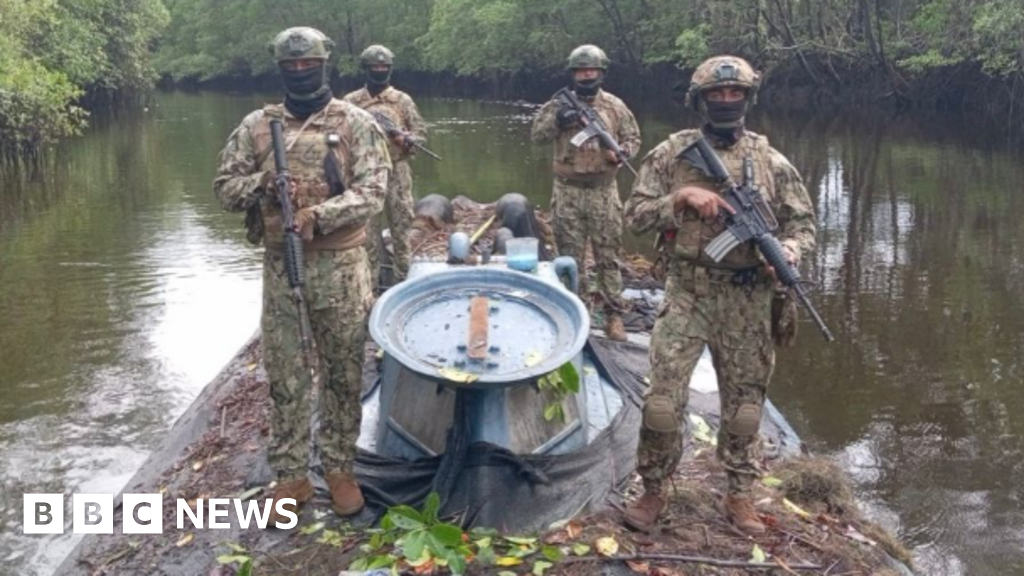
Ecuadorian Troops Uncover 35-Meter Drug Sub Hidden in Nature Reserve

In a significant development underscoring the ongoing shadow war against international drug trafficking, Ecuador’s military announced that an alleged drug-trafficking submersible was intercepted, fully loaded with fuel and primed for departure. This incident highlights the escalating use of sophisticated maritime technology by criminal syndicates operating across South America, a region increasingly pivotal in the global narcotics trade. Authorities reveal the vessel was discovered in Ecuadorian waters, a strategic corridor for traffickers aiming to evade conventional detection methods and reach their international markets.

The interception comes amid mounting concerns from regional and global security agencies over the expansion of clandestine underwater routes. These submersibles, often capable of traveling submerged for days and carrying large shipments, represent a technological leap in the trafficking arsenal, complicating efforts by law enforcement. The Ecuadorian military, in cooperation with international partners including the United States Drug Enforcement Administration (DEA), reportedly identified the vessel as part of a broader network operating throughout the Pacific coast, connecting South American production zones with transnational markets. Such operations pose a direct threat to regional stability and challenge existing maritime counter-narcotics strategies.

From a geopolitical perspective, this incident underscores the importance of Ecuador’s strategic position amid growing tensions in the broader Andean region. The country’s ability to intercept and dismantle such traffickers not only demonstrates effective state capacity but also signals a shift in regional security dynamics. Analysts from the International Crisis Group argue that these interdictions are crucial in curbing the flow of illegal drugs, which, if left unchecked, could fuel violence and corruption across South American nations. Furthermore, the use of technologically advanced submersibles reveals the adaptability of transnational criminal organizations, pushing law enforcement agencies to develop equally sophisticated surveillance and response capabilities.

  • Following this discovery, international organizations have called for increased surveillance and intelligence-sharing among neighboring states to combat the evolving threat.
  • Experts warn that such maritime trafficking methods, if left unchallenged, could lead to heightened violence, destabilizing governments and societies dependent on stability and rule of law.
  • The incident puts a spotlight on the importance of regional cooperation within U.N. conventions aimed at curbing illegal trafficking, although critics debate whether existing frameworks are sufficient to handle the technological advancements employed by traffickers.

As President Guillermo Lasso and military officials vow to intensify anti-drug operations, the incident serves as a stark reminder of the shifting landscape of global crime. Historians and security analysts emphasize that these technological innovations are not only a challenge but also a wake-up call—highlighting how clandestine networks adapt rapidly to enforce their illicit trade. The incident also raises questions about the efficacy of international cooperation and intelligence sharing, as criminal syndicates develop new methods to conceal and move their contraband beneath the waves.

In this unfolding chapter of international history, the confrontation over the seas and the shadows beneath them is far from over. Will nations succeed in strengthening their defenses and dismantling these covert networks, or will the ocean once again become a graveyard for their ambitions? As the world watches, the complexities of this war—fought in the depths of the Pacific and beyond—continue to shape the future of security, sovereignty, and the rule of law in the 21st century. This is a war not only of ships and submarines but of willpower and resilience, where the outcomes will reverberate through the corridors of global power for generations to come.

36 Hours in Las Vegas: Essential Experiences and Hidden Gems for the Modern Explorer

In the modern tumult of rapid technological advancement and shifting societal landscapes, culture remains the resilient core of human identity. It is not merely a collection of artistic expressions or popular trends; rather, it embodies the essence of tradition, memory, and moral comprehension. As Ortega y Gasset observed, a society’s true vitality hinges on its capacity to preserve its cultural core amid the chaos of change. In today’s youth, a conscious engagement with cultural symbols—whether through music, cuisine, or even leisure—serves as a vital act of reclaiming the narrative of what it means to belong. The cultural renaissance that seeks to reforge community and patriotism is not a fight against modernity but a dialogue with it—an attempt to reconnect with inherited values that anchor our collective spirit.

Take, for instance, the vibrant culinary scene illustrated by the opening at Egghead in Las Vegas—a no-frills breakfast counter that challenges the notion that meaningful tradition requires ornamentation. Here, the simple act of enjoying a breakfast sandwich becomes a reaffirmation of local craftsmanship and personal history. While such establishments are often privately owned, their connection to the larger societal framework echoes Chesterton’s idea of the spiritual significance of everyday customs. Food, after all, is a cultural language, a Rediscovery of roots that transcends superficial trends, reminding us that culture is the foundation of societal cohesion and continuity. As we savor these small yet meaningful rituals, we participate in an ongoing dialogue that shapes our identity and sustains our traditions.

Yet, culture is not static; it is a living vessel that carries the **tensions and triumphs** of human history. A symbolic journey unfolds along the Black Canyon Water Trail, where kayaking through the serene waters toward the phosphorescent glow of the Emerald Cave becomes a moment of communion with the natural spirit—an echo of the timeless human pursuit of wonder. It is during these moments that we realize that culture functions as both memory and prophecy: memory, in its preservation of the past’s wisdom; prophecy, in its beckoning us to envision a future rooted in ancestral truth. Such experiences, celebrated through art and action, reflect Tocqueville’s insight that democracy flourishes when connected to the cultural fabric of shared values and symbols. For the youth, embracing these traditions—and daring to innovate within them—is a vital act of sovereignty over their cultural inheritance.

In an age characterized by fleeting digital trends and superficial diversions, cultivating a sense of belonging through cultural continuity is a profound act of resistance. We are called not merely to consume culture but to understand it as a living dialogue—a dialogue that molds identity, fosters societal resilience, and preserves the moral compass guiding future generations. In this ongoing process, the arts, the shared customs, and even spontaneous acts of community serve as the poetic voices whispering through history. As T.S. Eliot articulated, only through engaging with the deep, enduring currents of tradition can we hope to craft a society that is both rooted and open. Culture, at its core, reminds us that we are both custodians of memory and architects of destiny; a testament that humanity’s greatest journey is devotion to the enduring, the beautiful, and the true—forever weaving the present into the fabric of an unending poetic future.

Bondi under fire for claiming all Epstein files are out—what’s really hidden?

The recent disclosure by the United States Department of Justice marks a pivotal moment in the ongoing saga surrounding high-profile criminal investigations. In a formal letter, Attorney General Bondi and her deputy Blanche revealed that the department has fully complied with legal mandates to release all records, documents, communications, and investigative materials related to the Epstein and Maxwell prosecutions. This move underscores a significant commitment to transparency, yet it also exposes the complex web of connections and possible cover-ups that have confounded international audiences and policymakers alike. The question remains: what geopolitical consequences will stem from this unprecedented release of classified information?

This decision is not solely a matter of domestic justice; it resonates deeply within the global geopolitical landscape. The Epstein scandal, intertwined with allegations involving powerful figures across nations, has long teased the borders of diplomatic immunity and covert influence. Analysts suggest that the disclosure of these materials could serve as a catalyst for uncovering international networks of influence, corruption, and abuse. Some experts argue that the release might reveal how certain nations, perhaps even allied with the U.S., have historically engaged in illicit dealings, complicating relations and raising questions about sovereignty and justice.

Historians and international organizations have warned that such revelations can alter the course of diplomatic history. The World Justice Project and other watchdog institutions are already scrutinizing the implications, emphasizing how these disclosures could challenge the narrative of how justice is administered across borders. Furthermore, how nations respond to these revelations will determine future trust in global governance structures and may influence the trajectory of international cooperation. This unfolding controversy presents a stark reminder: the decisions of a single department can ripple across continents, shaping the balance of power and societal perceptions of justice.

  • Key Event: The US Department of Justice releases comprehensive documents related to Epstein and Maxwell, potentially exposing international complicity.
  • Implication: The move threatens to reshape diplomatic relations and challenge the integrity of international institutions.
  • Long-term consequence: Societies worldwide may reconsider notions of accountability, transparency, and power dynamics within their own borders.

As history’s pen continues to write this complex narrative, the weight of this revelation hangs heavy in the air. It highlights the fragile fabric of trust that binds nations and societies—trust that can be torn asunder by secrets long buried. The global community stands at a crossroads: will this act of transparency usher in a new era of accountability or unleash chaos within international diplomacy? The answer remains unwritten, yet the echoes of this crucial moment will undoubtedly shape the course of history for generations to come. In an era where information is power, the decisions made today reveal that the shadows of the past are never truly vanquished, only waiting to emerge at the most consequential of moments.

Hidden Underground Railroad Passage Discovered in New York Museum

The Merchant’s House Museum in New York City has long been celebrated as an architectural and cultural landmark, preserving 19th-century life in Manhattan. However, recent archaeological discoveries have unveiled a profound layer of historical significance, shedding light on its secret role as a refuge for escaped slaves during a tumultuous period in American history. Hidden beneath the floorboards of a nondescript hallway, investigators found a clandestine space—a small, enclosed cellar with a ladder leading to the street—used as an escape route for those fleeing bondage before and during the civil war. This remarkable find underscores the fact that America’s fight against slavery was not only fought in legislative halls but also in clandestine networks woven into the fabric of towns and cities like Manhattan.

This discovery offers critical insight into the operational depths of the Underground Railroad, a clandestine network of abolitionists who risked everything to ensure the safety of runaway slaves seeking freedom. The house’s hidden compartment, likely installed by Joseph Brewster, the original builder, suggests active involvement by abolitionist-minded residents—an extraordinary assertion in a city where white abolitionism was, historically, a minority view. Experts like Michael Hiller, a preservation attorney and professor, have described this find as “a generational breakthrough,” emphasizing its importance for understanding the underground resistance movement. The space, roughly two feet by two feet with an emergency escape ladder, indicates a well-constructed hideout designed to shield and expedite escape for enslaved individuals during a period when the Fugitive Slave Act of 1850 empowered bounty hunters and law enforcement to capture those fleeing slavery, often with local complicity.

More than just an archaeological curiosity, this discovery redefines the geopolitical impact of Northern cities like New York. Historically, the city’s elite and law enforcement apparatus often wavered in their stance on abolitionism, exemplifying the deep societal divide of the era. The role of abolitionists and free black communities in the city becomes more tangible through such findings, highlighting how local actions contributed to the broader abolitionist movement that ultimately reshaped the international order. In a recent statement, Christopher Marte, a New York councilman, emphasized the significance of the house as “a crucial part of the city’s history,” reminding us that the fight against slavery was fought on the streets as much as in parliamentary halls. This narrative resonates today amid ongoing geopolitical shifts, as nations grapple with their own histories of oppression and resistance, asserting that the struggle for freedom is universal and ongoing.

As the future of the Merchant’s House faces threats from urban development—most notably, plans for an adjacent eight-storey building—advocates warn that losing this emblem risks erasing the physical trace of a critical chapter in American history. Historians underscore the importance of preserving such sites, deeming them essential to understanding not only the past, but the ideological battles shaping the present. In an age where geopolitical tensions often ignite around questions of sovereignty, civil rights, and historical memory, this discovery leaves us with a stark reminder: the currents of history continue to flow beneath our cities, their weight felt most when least expected. As the shadows of the past collide with the ambitions of the future, the question remains—all of us are part of this unfolding story—will we listen to the silent echoes within this historic house and stand vigilant against the forces seeking to erase it?

Discover the Hidden Stories: Take This Quiz on Mysteries in America’s Small Towns

In an increasingly homogenized world, the sense of place emerges as a vital thread woven into the fabric of cultural identity. Literature and narrative are not merely tools of entertainment but serve as mirrors reflecting the soul of a community and its history. The recent exploration of American towns through a literary geography quiz underscores how settings are often more than mere backdrops — they function as living, breathing characters shaping the story’s trajectory. This phenomenon echoes the timeless truth that culture is both memory and prophecy; it anchors a society in its roots while hinting at its future.

Historically, the connection between geography and cultural consciousness has been recognized by thinkers like Oswald Spengler and Arnold Toynbee, who perceived civilizations as organisms rooted in their land and tradition. Today, this truth persists. In American literature, towns evoke a distinct spirit — from the stoic resilience of small Midwestern villages to the rugged independence of frontier towns. As T.S. Eliot once suggested, culture comprises an ongoing dialogue with the past, informing the present and guiding the future. Literature set in specific locations acts as a testament to that dialogue, anchoring abstract values and collective identity in a tangible landscape.

This recognition of place as essential to cultural continuity is especially vital in a global age driven by rapid change and digital fragmentation. The tradition of storytelling forms a cornerstone of societal cohesion, as it preserves shared values and history. It is what G.K. Chesterton celebrated as the enduring strength of localism and community — the idea that our roots define us, and that cultural memory endures through stories told about and within those places. The towns and cities we cherish are not arbitrary; they are repositories of agonistic memory and collective resilience, embodying what it means to be rooted in a specific cultural soil.

In contemplating the enduring importance of place in shaping identity, we confront the delicate balance between the preservation of tradition and the dynamism of cultural evolution. The challenge is to honor our ancestral heritage while embracing the ongoing narrative of modern life. As Gilbert Keith Chesterton insightfully observed, “Tradition means giving a vote to the most obscure of all classes — our ancestors”. This speaks to the idea that real culture is akin to a sacred trust, passed down through generations, yet alive in the present. Our collective cultural fabric is a living archive, whispering both of who we were and what we might yet become.

Ultimately, culture embodies both the memory of human experience and the prophecy of future generations. It is the poetry of our shared journey, echoing in the towns that serve as both monuments of the past and green shoots of hope for the future. As we reflect on stories rooted in distinct places across the United States, let us remember that in each imprinted landscape lies a fragment of divine craftsmanship — a testament that the human spirit, anchored in history, charts a course toward eternity. In this interplay of memory and prospect, we find the divine unfolding in the portals of our localities, and in doing so, we glimpse the poetry that echoes through all of human civilization: a living, breathing symphony of memory and prophecy.

Unveiling the Hidden Vibes of Turkey’s Iconic Cool Capital

Discovering Izmir: A City of Ancient Roots and Modern Resilience

In the heart of the Levant, Izmir stands as a testament to centuries of cultural confluence and historical resilience. Once Turkey’s most cosmopolitan city, it was renowned over a century ago for its sophistication, with streets bustling with families from Greek, Armenian, Turkish, and Levantine backgrounds. The era of Parisian fashions, imported Munich beers, and elite schools marking the city’s golden age was abruptly halted in 1922 by devastating fires and political upheavals—yet Izmir’s spirit has refused to fade. Today, this ancient port city embraces a *vibrant blend* of history and modern lifestyle, inviting young explorers to discover its layered legacy while forging their own stories of inspiration.

Walking through Izmir today, the historical imprint is undeniable. The Kemeralti Bazaar, a labyrinth of covered streets and han inns, remains the pulsating heart of the city’s commerce and culture. Its architectures whisper tales of the Silk Road, once making Smyrna Quay the hub for merchants exchanging silk, spices, and exotic goods. Travel buffs and history enthusiasts should heed these echoes of the past, where traditional Turkish coffee still brews over hot coals in Kahveciler Sokağı, and relics like the copper bazaar tell stories of bygone eras. Beyond the bazaar, visitors can explore the Clock Tower in Konak Square, an Ottoman-era masterpiece influenced by North African and Andalusian styles. Its ornate architecture not only provides a scenic backdrop for social media but also embodies the city’s eclectic character—a comforting reminder that beauty often lies in the convergence of diverse influences.

Yet, Izmir is more than a city frozen in time; it is a narrative of revival and entrepreneurial vigor. The reclaimed waterfront along Smyrna Quay, now known as the Kordon promenade, serves as an open-air playground for young people and tourists alike. The promenade invites activities from jogging at dawn to biking amid sunset hues, fostering a wellness culture that values well-being over the mundane. Cultural landmarks like the Adal Sultan Clock Tower symbolize resilience, constructed in 1901 with influences spanning multiple continents, echoing the city’s history of multicultural exchange. Moreover, Izmir’s music scene flourishes through figures like Darío Moreno, a singer whose legendary recordings such as *“Ya Mustafa”* continue to inspire generations. Such stories underscore how personal passions—be it music, art, or street food—fuel the city’s modern heartbeat, making it an ideal destination for the youth seeking an authentic encounter with history while forging new paths toward health and happiness.

  • Explore local cafes serving Ottoman-style coffee over traditional copper cezves.
  • Take a day trip to Ephesus, where Roman streets and mosaics tell stories of Mediterranean trade and civilization.
  • Walk or cycle along the Gulf of Izmir, soaking in views that blend natural beauty with urban revival.
  • Visit hidden gems like Havra Sokak, where ancient synagogues stand as silent witnesses to centuries of multicultural coexistence.

Ultimately, Izmir exemplifies how a city can honor its storied past while embracing a future filled with vitality and youthful energy. Its resilience, driven by centuries of multicultural exchange, reminds us that even amid chaos, there is always an opportunity to rebuild and redefine one’s identity. For the young explorer, entrepreneur, or wellness seeker, Izmir offers a metaphorical journey—a personal odyssey through history, innovation, and lifestyle. As you stand on its shores or wander its ancient streets, you realize that lifestyle itself is an evolution—a continuous act of reclaiming, rediscovering, and celebrating the spirit of resilience. In this city of the phoenix, every moment becomes an invitation to craft your own narrative of strength and inspiration, one step at a time.

Exclusive: Rare Photos Reveal Hidden Side of Epstein’s Island

In a development that continues to shake the foundations of international justice and expose the shadows lurking in the corridors of power, democratic lawmakers in the United States have recently released unprecedented images and videos from Jeffrey Epstein’s private island, Little St James. These revelations come amidst mounting pressure on the Trump administration to declassify a broad range of files relating to Epstein’s criminal enterprise. As the world watches, the implications of these disclosures threaten to ripple across countries and societal structures, challenging narratives of justice and transparency at the highest levels.

The newly surfaced imagery, characterized by detailed room layouts, personal artifacts, and disturbing scenes of abuse, serve as stark evidence of Epstein’s extensive and heinous crimes. The images depict opulent residences, including bedrooms, a room with masks on the wall, and even a dental chair amid other cryptic signs that victims and investigators believe are connected to human trafficking and exploitation. According to historians and analysts, such explicit visuals are a turning point—shedding light on the underbelly of a global network that may have involved influential figures from multiple nations. The U.S. Virgin Islands authorities have previously settled for over $105 million in a case alleging trafficking and abuse, yet many questions remain unanswered about the extent of Epstein’s international links.

This case exemplifies how decisions made within judicial systems and government agencies impact entire societies. The ongoing fight to release Epstein-related documents, including those held by the Department of Justice, exposes a broader struggle: whether accountability extends beyond local jurisdictions to influence global power dynamics. The newly released images, which include a walk-through video of Epstein’s island, hint at a carefully curated lifestyle of wealth and secrecy, while masks and other artifacts suggest a sinister undertow of intimidation and cover-up. Experts warn that withholding information under the guise of protecting ongoing investigations risks further eroding public trust—especially as prominent figures’ names potentially entwined in Epstein’s circle still remain shielded from scrutiny.

As international organizations and political actors debate the scope and timing of declassified files, the geopolitical impact becomes increasingly evident. The United States finds itself at a crossroads where transparency could lead to seismic shifts—possibly implicating foreign officials and altering diplomatic relations. The pressure on Attorney General Pam Bondi and the President to release these files underscores a wider debate about justice, sovereignty, and the accountability of the global elite. How nations will respond to the unveiling of such truths remains to be seen, but one fact is undeniable: the revelations mark a harbinger of change, forcing the world to confront uncomfortable realities.

In the ongoing narrative of political intrigue and justice, the imagery from Epstein’s island underscores a harsh reality—power often masks profound darkness, and accountability is a battle hard-fought at the crossroads of history. As the files are gradually released, with most expected by December 19th, the world holds its breath, knowing that this story is far from over. The play of shadows and light continues, and in the unfolding tapestry of this scandal, the most enduring question remains: who will be the last to reckon with the truth, and what shadows will emerge when history dares to look into the abyss?

Exposing the Hidden Dangers of Illegal HMOs in Our Communities

Across communities in Britain today, a disturbing pattern emerges—one that reveals the deep-seated failures of our social and political systems. Within these neighborhoods, demographic shifts and increasing housing insecurity have paved the way for the proliferation of illegal houses in multiple occupation (HMOs), a practice that exposes families and individuals to deplorable living conditions. These properties, often hidden from view, are frequently managed by private landlords and housing associations with little regard for regulation, safety, or human dignity. As detailed in recent reports and firsthand accounts, such as those shared by residents and social commentators, the consequences extend far beyond individual discomfort, striking at the core of community stability and family well-being.

The plight of residents living alongside unchecked overcrowded HMOs underscores a broader societal issue: the failure of local authorities and government agencies to effectively regulate and enforce standards. As sociologist Dr. Mark Granovetter once argued, social networks and trust are vital for the cohesion of communities; yet, when residents face persistent neglect, broken infrastructure, and unhygienic conditions, that trust erodes. For many families, especially those with children, these environmental hazards—cockroaches, broken furniture, and urine-soaked mattresses—are no longer isolated incidents but symbols of neglected social responsibility. The impact on families includes not only physical health risks but also psychological stress, which impairs educational attainment and emotional development for children growing up in these neglected environments. The presence of these poor conditions often breeds a cycle of despair and social marginalization, undermining the very fabric of society.

Addressing this crisis demands strict enforcement of housing standards, a stance supported by experts and social commentators alike. One proposed solution involves the confiscation of properties that fail to meet minimum health and safety requirements, with the proceeds reinvested into community regeneration and affordable housing initiatives. Such measures would not only remove hazardous dwellings but also serve as a deterrent to unscrupulous landlords seeking to profit from neglect. Coupled with properly funded courts capable of expediting legal proceedings, this approach would restore accountability. At the same time, reforms such as allowing tenants to claim rent repayment orders for unlicensed HMOs serve as counterbalances, creating tangible disincentives against unregulated practices. These solutions are grounded in the pressing moral duty to protect the most vulnerable among us—those who find themselves trapped in a system that prioritizes profit over human dignity.

Yet, it is essential to recognize that the social issues surrounding housing are deeply intertwined with broader societal complacency. As historian Dr. David Starkey noted, the decline of our shared moral commitments and a focus on individual gain have led to a deterioration of community bonds. The decline of underfunded local authorities, overwhelmed judicial systems, and a political environment that treats housing as a commodity rather than a human right create a perfect storm—one where neglect becomes normalized. We must consider how, as a society, we uphold the values of equity and fairness, ensuring that every family has access to safe, dignified shelter. When society ignores these injustices, it does so at its peril—losing sight of the moral foundation that holds us together.”

Reflecting on these challenges, society is confronted with a poignant choice: continue to tolerate the squalor that taints our cities or commit to a future where dignity and fairness reclaim their place at society’s center. Like a battered but resilient tree, the hope lies in regeneration—if we dare to nurture and protect the roots of our communities. Out of these darkened streets and broken homes, the seeds of societal renewal may yet blossom—if only we prioritize justice over profit, compassion over indifference. The question remains whether enough of us will heed this call before the last vestiges of community integrity are lost, leaving behind an underclass alienated and forgotten, a silent testament to a society that chose neglect over nurture.

Social Media Auto Publish Powered By : XYZScripts.com