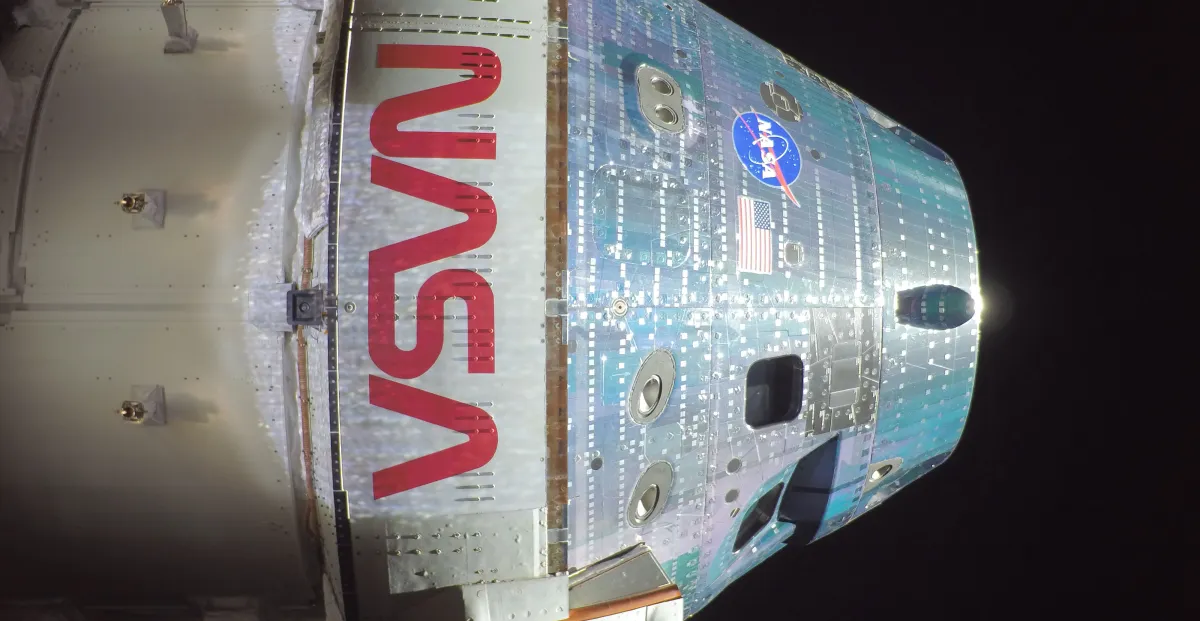
As NASA prepares for the historic Artemis II mission, the agency is poised to shatter the longstanding distance record set during the Apollo 13 lunar campaign nearly six decades ago. On April 15th, 1970, Apollo 13 traveled a remarkable 248,655 miles from Earth, marking a milestone in human spaceflight. Today, with the Orion spacecraft orbiting the far side of the Moon, expected to reach a maximum distance of 252,757 miles, NASA is not only rewriting the record books but also setting the stage for a new era of deep-space exploration.
The upcoming lunar flyby, scheduled for today with live coverage beginning at 1 PM ET, embodies a testament to technological innovation and disruption within the aerospace sector. As Orion completes its six-hour journey around the Moon, it will facilitate unprecedented observations of the lunar surface, providing critical data to refine future landing strategies. This mission isn’t just about breaking records; it’s about establishing a robust framework for next-generation space exploration. Industry analysts from Gartner and experts from institutions like MIT emphasize that these advancements could accelerate commercial participation in lunar and Martian missions, catalyzing a new wave of innovation driven by both government agencies and private enterprise.
The strategic significance of Artemis II extends beyond exploration, impacting the broader space economy and disrupting traditional modes of space travel. According to industry leaders, the mission signals a shift where private companies—such as SpaceX and Blue Origin—are no longer mere contractors but active collaborators shaping the future of outer space. This evolving landscape presents immense business implications: opportunities for new supply chains, spacecraft manufacturing, and lunar resource utilization. As Peter Thiel and other entrepreneurs highlight, this paradigm shift represents a golden chapter for disruptive innovations targeting not just exploration, but sustainable lunar economies.
With the world watching, Artemis II exemplifies how disruption, innovation, and strategic foresight are redefining the limits of human achievement. This mission underscores the urgency for the global space industry to adapt quickly, harness emerging technologies, and forge new business models aimed at making humanity an interplanetary species. As we stand on the cusp of this new frontier, the next few years promise an acceleration in technological breakthroughs, with the potential to transform both exploration and enterprise—driving us toward a future that once only existed in science fiction.