Matox News

Truth Over Trends, always!

Man faces charges after defacing Churchill statue with graffiti

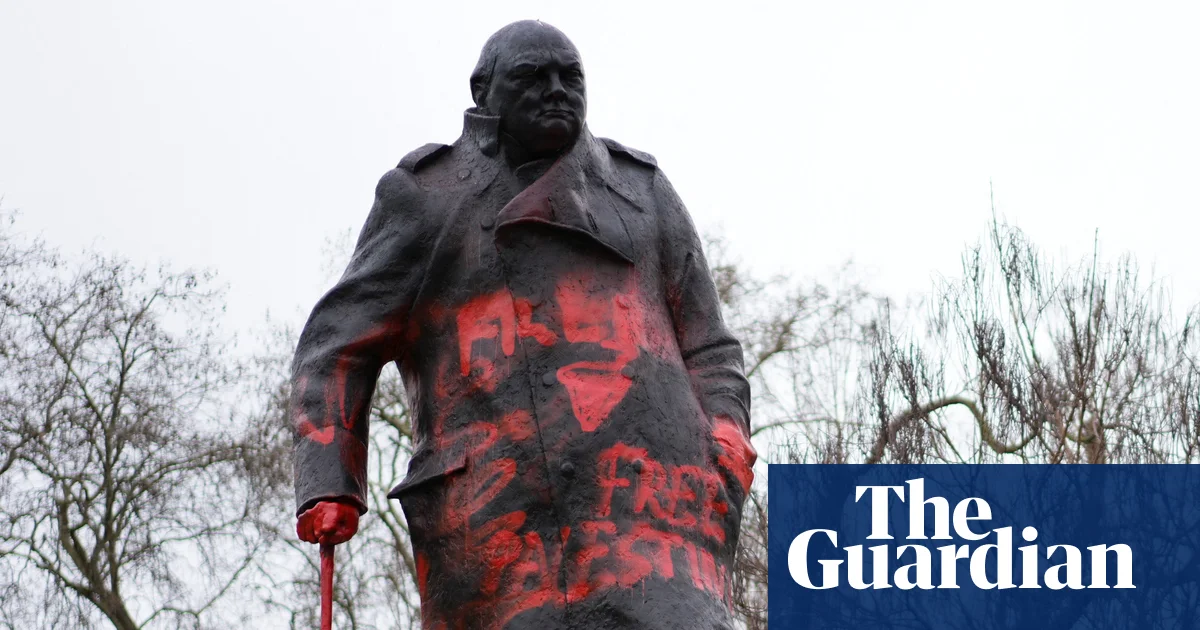
In a dramatic display of dissent that echoes across London’s historic political landscape, an unidentified individual was apprehended for spray-painting the statue of Sir Winston Churchill outside the Houses of Parliament. The act, laden with provocative slogans such as “stop the genocide,” “free Palestine,” and “globalise the intifada,” signifies more than mere vandalism; it symbolizes the deepening fault lines within global ideological conflicts. The perpetrator, Caspar San Giorgio, was swiftly charged with criminal damage by Metropolitan police, highlighting how these acts become flashpoints in broader cultural and geopolitical struggles.

The incident, occurring just after 4 a.m., is layered within a context marked by recent terrorist threats and violence. Following attacks at Heaton Park synagogue in Manchester and Bondi Beach in Australia, authorities have sought to tighten security and curb inflammatory rhetoric, especially slogans like “globalise the intifada,” which have previously led to arrests. These acts of vandalism are perceived by many as symptomatic of a rising tide of militant activism that reflects fractured global alliances and ideological battles. The UK government’s condemnation emphasizes its commitment to upholding “our values,” but critics argue that such incidents highlight the divisive dangers of unchecked political expressions that threaten the social fabric.

The statue itself, a 3.6-meter bronze monument by Ivor Roberts-Jones, stands as a symbol of not only British history but also of the ongoing debate about national identity and historical memory. It has been subjected to multiple acts of vandalism, including graffiti calling Churchill a “racist” during the Black Lives Matter protests of June 2020, illustrating how historical figures become focal points in modern ideological clashes. Reactions from London authorities and Prime Minister’s office reflect a sentiment of indignation, emphasizing Churchill’s role as a “great Briton” and rejecting the disruptive messages painted on his statue. However, the recurring incidents reveal an undercurrent of tension whereby global conflicts—such as the longstanding Israeli-Palestinian dispute—manifest violently on historic symbols.

International analysts warn that these acts of vandalism and inflammatory rhetoric are more than isolated protests—they are symptomatic of a shifting geopolitical landscape. As China and Russia challenge Western influence, and Middle East conflicts ignite new ideological battles, the symbolism of statues like Churchill’s is increasingly weaponized. Historians caution that how nations choose to interpret and confront their history, especially through contentious monuments, will shape the future of global cultural diplomacy. The escalating violence and provocative slogans serve as stark warnings—how societies remember their heroes and villains today may determine the course of international stability tomorrow.

As the dust settles and authorities scrub away the graffiti, the question remains: how will the world confront these cultural battlegrounds in the years to come? The ongoing struggle over history’s symbols, nations’ identities, and ideological allegiances signals that the true conflict is far from over. The world’s gaze is fixed on these unfolding chapters—each act of defiance adding a new line to the ever-growing narrative of history, with the weight of future generations hanging in delicate balance.

Man arrested after stabbing in western Sydney leaves one dead, two critically injured

Emerging Security Concerns in Australia: A Reflection of Societal Underbelly

In the heart of Australia, a tragic incident has underscored the persistent issues of societal unrest and internal security threats. A man is in police custody after stabbing three individuals near a train station in Merrylands, a suburb of western Sydney. The attack resulted in one death and two critically injured victims, raising troubling questions about community safety and mental health. Authorities swiftly responded, and within moments, managed to apprehend the suspect on Smythe Street. This incident, while localized, echoes broader concerns about social fragmentation and security risks that are beginning to affect developed nations globally.

While the incident appears isolated, analysts argue that such acts of violence are symptomatic of deeper fissures within society—fissures that, if left unchecked, could exacerbate national insecurity. Some security experts warn that the rise in unpredictable violence could undermine public confidence in law enforcement and strain social cohesion. As Australia grapples with internal challenges, the incident raises profound questions about resilience, social policy, and the capacity of Western democracies to protect their citizens. How nations respond to these tragedies can shape their social fabric for generations, a point emphasized by international security think tanks.

Global Implications: Connecting Local Violence to a Broader Geopolitical Canvas

Such outbreaks of violence, while seemingly confined, have global repercussions. In an era where international stability depends on internal cohesion, the European Union, United States, and China watch incidents like this with keen interest. Historians and analysts highlight that domestic disturbances can weaken a country’s soft power, making its geopolitical stance more vulnerable. As international organizations like the UN reiterate the importance of social stability, the ripple effects of violence in Australia underscore the essential need for comprehensive internal security strategies aligned with national interests.

Furthermore, the incident amplifies concerns over how decisions made within global power corridors impact internal security policies in nations worldwide. Australia’s internal security policies, including community policing and mental health initiatives, are now under increased scrutiny, with some observers warning of the dangers of underfunding social safety nets. The shift in policy directions could resonate beyond Australia, influencing security frameworks elsewhere, particularly in regions vulnerable to internal dissent and violence.

Looking Ahead: The Weight of History and Societal Transformation

As the world observes and reacts to such tragedies, the question remains: how will societies adapt and evolve? The incident in Merrylands is more than a local tragedy; it is a stark reminder of a larger turning point in global security and societal resilience. Historians warn that the path nations choose in response to internal crises will define future generations. Will governments strengthen social cohesion or succumb to division? Will policymakers prioritize mental health and social safety, or neglect these issues in favor of superficial measures?

In this unfolding narrative, Australia’s ordeal becomes a symbol of the fragile boundary between order and chaos. The decisions made in the coming weeks will determine if this violence remains an isolated incident or a sign of something far more troubling brewing beneath the surface. As history continues to turn, the weight of unresolved societal tensions hangs heavy, threatening to reshape the geopolitical landscape in ways yet to be fully understood.

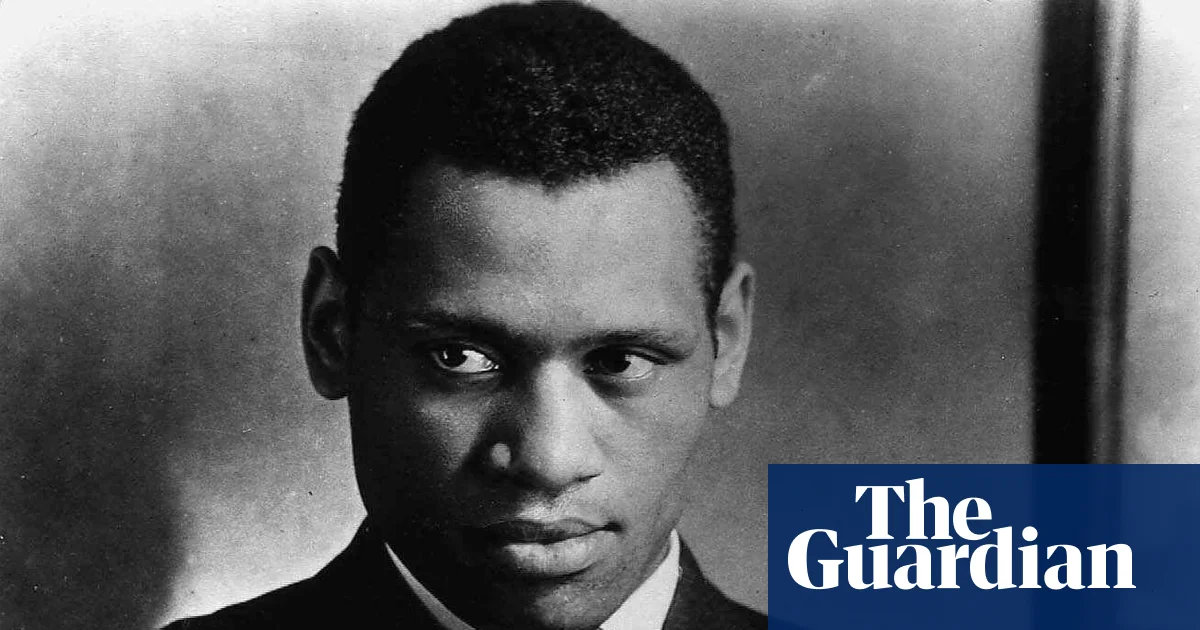
‘The Man Who Challenged the Status Quo: How Paul Robeson Transitioned from Hollywood Icon to Target of the Blacklist’

In an era where cultural memory is often manipulated for political expediency, the story of Paul Robeson stands as a testament to the profound link between culture, identity, and societal values. Robeson, a prodigious talent whose talents spanned opera, film, sports, and law, was once the most celebrated Black American in the world. His towering voice, compelling performances on Broadway—most notably as Othello—and achievements as an athlete and lawyer made him a symbol of excellence and integrity. Yet, for all his accomplishments, his legacy was systematically erased during the Cold War era, obliterated by a combination of political blackmail, ideological purges, and the self-serving silences of societal elites—an echo of historical parallels where state power sought to silence dissenters and redefine cultural memory.

Robeson’s experience reveals the dangerous potential of culture as a battleground for societal control. His refusal to denounce the Soviet Union during the Cold War, coupled with his outspoken advocacy for human rights, led to his marginalized status and the denial of his passport for nearly a decade—a stark reminder of how political conformity can threaten the very fabric of individual expression. The Great Forerunner, as he was called, was subjected to a brutal campaign of erasure that sought to diminish his influence, even removing him from textbooks and public esteem. This systematic suppression reflects a profound truth: culture functions as the embodiment of collective identity and societal memory, and whoever controls it wields immense power over the narrative of a nation’s soul.

Today’s cultural landscape echoes these struggles in ways both subtle and overt. The ongoing efforts to downplay or ban Black history in public schools, the assault on traditional narratives, and the hostility toward figures like Malcolm X—reclaimed and revered by a new generation—are reminiscent of Robeson’s own marginalization. Just as Jack Robinson and Robeson once confronted the double-edged sword of societal expectations and political loyalty, modern voices confront the distortion of history and the suppression of cultural identities that threaten to homogenize the national story. Cultural critics like G.K. Chesterton and T.S. Eliot have long argued that culture sustains the moral fabric of society; its erosion is an erosion of the very essence of community and tradition. As Tocqueville warned, democracy’s greatest danger lies not in tyranny but in the tyranny of forgetfulness, where history and culture are so manipulated that the collective memory becomes a mere echo of power.”

  • Reclaiming American history entails recognizing figures like Robeson as the true architects of cultural resilience and national authenticity.
  • The ongoing debate over the teaching of Black history—its suppression and revival—underscores a broader struggle for the soul of the nation.
  • The ideals Robeson embodied—excellence, integrity, and republican virtue—remain vital in fostering a society rooted in shared memory and collective purpose.

In the end, culture is both the memory of humanity and its prophecy. It echoes the voices of ancestors and echoes the hopes of future generations, shaping a society that honors its roots while daring to envision a just tomorrow. As the poet T.S. Eliot reminded us, “For last year’s words belong to last year’s language, and next year’s words await another voice.” Robeson’s voice, silenced too long, beckons us to remember that true culture—like true liberty—is composed of the unyielding symphony of tradition and the brave promise of renewal, forever standing as a testament to the enduring spirit of a people who refuse to be silenced. Culture, therefore, remains humanity’s celestial compass—guiding us through darkness, illuminating our collective memory, and whispering whispers of what yet might be.

Awaken the Spirit: Dissecting the ‘Wake Up Dead Man’ Scene

In contemplating the essence of culture, one recognizes it as the living memory of existence, a tapestry woven through generations that sustains the identity of societies and shapes their moral and aesthetic fibers. Amid the accelerating tide of modernity, which often dismisses tradition as an obstacle to progress, it becomes crucial to reflect on how culture anchors us to our roots, serving as both remembrance and prophecy. As the philosopher Ortega y Gasset famously warned, “The great wound of the world is the loss of roots.” In this perspective, culture emerges not merely as entertainment or superficial ornament, but as the vital fabric that preserves our collective personality—our deep sense of who we are and where we come from.

This cultural continuity is vividly exemplified through the arts and storytelling—carriers of timeless truths and moral clarity. Consider the perennial efficacy of classical literature and philosophy: from the moral clarity of Chesterton to the poetic that beckons us to see life through a lens of transcendent meaning. Today’s filmmakers, such as Rian Johnson—a modern auteur—demonstrate a nuanced understanding of this narrative craft. His film scenes, rich with ensemble performances and layered dialogue, echo the theatrical traditions that stress the importance of human relationships and moral dilemmas. Just as the Shakespearean or Golden Age of Hollywood cinema built mythic worlds rooted in human virtue and vice, modern directors continue to remind us that storytelling remains a mirror held up to society, a vital conduit of cultural memory.

Milestones like the Enlightenment or the Renaissance serve as cultural touchstones, illustrating how societies have historically relied on their arts and ideas to define and reinforce shared virtues. Tocqueville’s analysis of American democracy highlights the importance of cultural cohesion—the “habits of the heart”—which sustains political liberty and social cohesion. Today’s cultural agents, whether in film, literature, or visual arts, wield the power to forge that same cohesion, fostering a collective spirit and moral clarity. Their work reminds us that the preservation and evolution of culture are central to community resilience and societal vitality. As fin de siècle critics warned against cultural nihilism, contemporary guardians of tradition stand as vigilant custodians of the moral compass that guides humanity through chaos toward the inevitable dawn of renewal.

In this continuous dialogue between memory and hope, culture wields its silent yet profound influence, shaping identities that anchor us in the present while pointing forward to the destiny of human civilization. As T.S. Eliot poetically asserted, “There is no pagan school of poetry but what the world is better for its existence.” Culture, then, is both the echo of the past and the prophecy of future virtues—a divine inheritance urging each generation to build on its foundations and extend the horizon of human excellence. In times of tumult, culture remains our steadfast compass, charting a course through history’s vast ocean toward a future where tradition and innovation intertwine—reminding us that who we are is always a prelude to who we shall become. Truly, amid fleeting epochs and shifting sands, culture endures as the most eloquent testament to humanity’s eternal hope and supreme memory, whispering silently that indeed, we are, and always shall be, its custodians and heirs silenced in the melody of history and destiny.

Man detained after Heathrow crowd reportedly assaulted with pepper spray, authorities say

In a stark reminder of growing security vulnerabilities within vital global hubs, Heathrow Airport experienced a disturbing incident this morning involving an assault with what authorities described as a weaponized spray, akin to pepper spray. The incident, which unfolded in the bustling terminal 3 car park, underscores broader concerns about public safety in one of the world’s busiest international gateways. Despite swift police response, the event raises questions about how such disruptions could escalate in an environment where security is paramount for both national sovereignty and economic vitality.

The Metropolitan Police reported that armed officers arrived at approximately 8:11 a.m., responding to multiple reports of assault. A group of men, believed to be known to each other, allegedly used a chemical spray on several victims before fleeing the scene. The immediate response led to the arrest of one individual on suspicion of assault, while authorities continue to pursue additional suspects. The incident’s details suggest an escalated argument, possibly reflecting underlying tensions that, if left unaddressed, could manifest in more severe forms of violence at international points of contact—areas where security is not just about prevention but about safeguarding sovereignty against asymmetric threats.

While the injuries were reportedly not life-threatening, the incident’s implications extend far beyond the individual victims. Security analysts warn that such attacks at major infrastructure sites are emblematic of evolving threats that challenge the posture of border and airport security. International organizations and national governments are increasingly attentive to these vulnerabilities, driven by the reality that in today’s interconnected world, even a small-scale attack can have disproportionate repercussions, shaking public confidence in international travel and economic stability. Moreover, as global tensions heighten, adversaries and terror groups may view crowded, high-profile sites like Heathrow as viable targets for disruptive action.

The incident has set off a wave of discussions among geopolitical experts regarding the importance of strengthening security protocols, especially in the face of *relative geopolitical shifts* that threaten global stability. U.S. and European nations continue to navigate a complex web of threats—ranging from terrorism to organized crime—requiring a concerted, international response. Analysts from organizations such as the International Security Council underscore the necessity for *innovative security measures* like integrated surveillance, intelligence-sharing, and targeted operations to preempt future incidents. It is a stark reminder that our interconnected world offers fewer safe spaces from those willing to exploit weaknesses for disruptive ends.

As history unfolds in the shadow of escalating global tensions, the Heathrow incident could be seen as a microcosm of the wider challenges nations face—balancing openness with resilience. Decisions made today on security posture, international cooperation, and societal cohesion will influence how societies withstand future upheavals. The weight of history persists, and with it comes the sobering realization that the landscape of security is ever-shifting, demanding vigilance and decisive action. In this delicate hour, where everyday safety hinges on choices made at the highest levels, the future remains an unwritten chapter—one that could either deepen divides or forge stronger resilience in the face of uncertainty.

Australia Shark Attack: Woman Killed, Man in Critical Condition on NSW Beach

Rising Tragedy on Australia’s Shores: A Wake-Up Call for Global Marine Safety

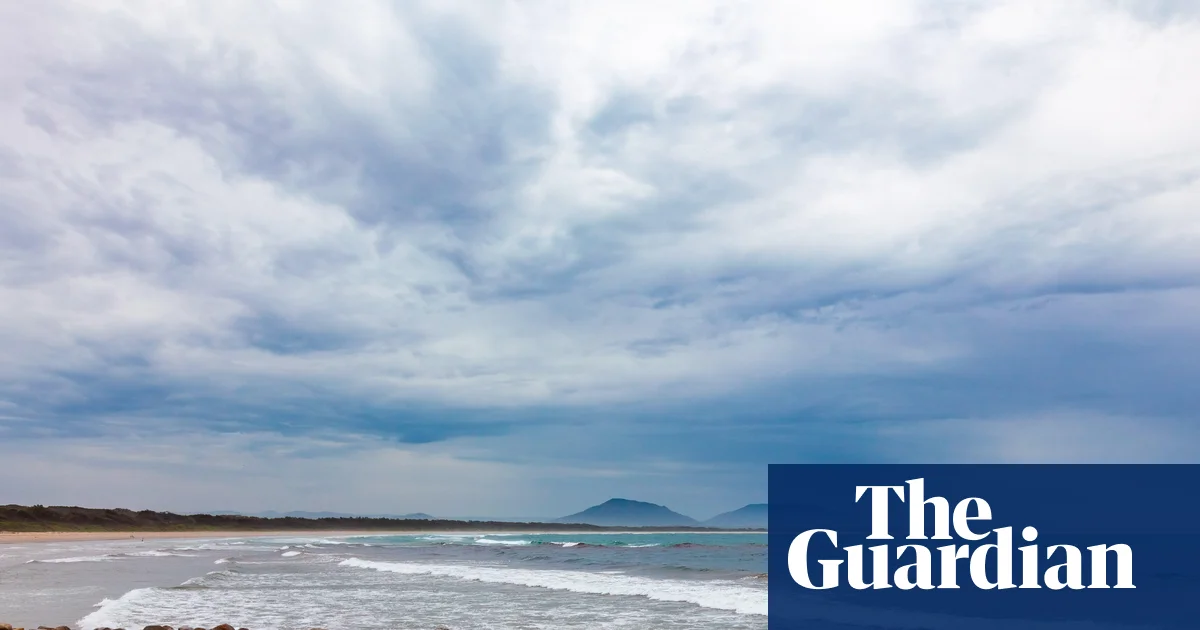
In the latest chapter of Australia’s ongoing struggle with marine safety, a tragic shark attack on the New South Wales mid-north coast has resulted in the death of a woman in her 20s at Kylies Beach. Emergency responders responded swiftly early Thursday morning, but despite their efforts, the woman succumbed to her injuries at the scene. The incident also left a man critically injured, though he is now reported to be in a serious but stable condition. Such events have become a stark reminder of the increasing dangerous interactions between humans and marine life, sparking debates on how international communities should address the rising threat of shark attacks amid climate shifts and human encroachment.

Australia’s rising number of shark bite incidents has raised alarm bells across the international community, with experts citing an unprecedented increase in unprovoked bites over the last two decades. According to Prof. Charlie Huveneers from Flinders University, while the surge in water activities among Australians contributes to the risk, other factors—possibly including climate change, coastal development, and shark migration patterns—are fueling an intensifying threat. Over the past year alone, Australia has experienced five fatalities due to shark attacks, with the current year marking 13 unprovoked bites—10 fewer than 2023 but still indicative of a troubling trend.

Local authorities, responding to the incident, promptly closed Kylies Beach and deployed advanced “smart” drumlines equipped with real-time shark monitoring capabilities. These non-lethal devices, which use baited hooks to lure and tag sharks before releasing them back into open waters, exemplify innovative strategies being considered by international marine safety agencies. A report from the Department of Primary Industries (DPI) aims to identify the species involved and assess the ongoing threat, demonstrating Australia’s commitment to balancing ecological integrity with human safety. Such measures, along with drone surveillance, highlight how technology is increasingly critical in managing human-wildlife interactions on a global scale. However, international experts note that while these efforts are vital, they remain only part of the solution, as the root causes of rising shark encounters are complex and multi-faceted.

Looking beyond Australia, the geopolitical impact of marine safety and climate-related shifts in marine ecosystems could have far-reaching consequences. Nations with extensive coastlines—such as the United States, South Africa, and countries across Southeast Asia—are closely watching Australia’s approach, as the patterns of shark migrations and oceanic changes are global phenomena. As international organizations like the United Nations Environment Programme (UNEP) caution about climate change’s role in altering marine biodiversity, analysts warn that uncoordinated responses could exacerbate tensions and threaten maritime economies. Historians and environmental experts emphasize that these incidents are a “turning point,” underscoring the urgency of collective global action on climate mitigation, marine conservation, and sustainable tourism. Failing to act decisively may result in an era where coastlines are plagued by ever-increasing dangers, and societies are forced to confront the devastating costs of ecological neglect.

In this unfolding saga of survival and sovereignty over the seas, the incident at Kylies Beach serves as a visceral warning—one that underscores how decisions made today will carve the contours of future generations’ relationship with the ocean. As history rushes forward, the question remains: will humanity learn to coexist with these majestic but unpredictable creatures, or will we continue to witness tragedies that echo through the corridors of time? The weight of this moment rests heavily on the shoulders of international leaders, environmental strategists, and communities alike. The tide is turning; the narrative of human stewardship over the ocean is still being written, and the world hangs in the balance as nature’s patterns reveal that no coast, no matter how remote, is immune to the profound shifts underway.

Teen 'Slender Man' attacker Morgan Geyser caught after fleeing custody
Teen ‘Slender Man’ attacker Morgan Geyser caught after fleeing custody

In recent years, young individuals across the globe have become entangled in developments that underscore the fragility of societal safety nets and the influence of digital folklore. The case of Morgan Geyser, the 23-year-old involved in the infamous 2014 Slender Man stabbing, exemplifies how online mythologies can transcend virtual boundaries, inspiring real-world violence that shocks entire nations. Her escape from a group home in Wisconsin, and subsequent arrest at a truck stop in Illinois, serve as a stark reminder that the confluence of mental health challenges, youthful impressionability, and digital subcultures demands urgent international policy attention.

  • The attack was carried out by Geyser and her childhood friend, Anissa Weier, both aged 12 at the time, motivated by stories from creepypasta—the internet’s dark folklore describing the shadowy figure known as Slender Man.
  • Geyser was sentenced in 2018 to 40 years in a mental hospital—an outcome that reignited debate over juvenile justice, mental health treatment, and the influence of cyberspace on impressionable minds.
  • Her recent attempt to flee detention highlights the ongoing security and societal risks posed by individuals who have been conditionally released, especially when societal cohesion is strained by misinformation and the unchecked spread of fringe narratives.

This incident underscores a >concerning trend recognized by international organizations such as the United Nations, which warns that digital ecosystems can radicalize youth and obscure the line between myth and violent reality. Historians and analysts have long debated whether modern media amplify youthful vulnerabilities or simply reveal existing societal fissures. The Geyser case starkly exemplifies the <psychological toll> of digital mythology, which can distort perceptions of reality, especially among the most impressionable. Many experts argue that the online environment, unlike traditional folklore, is less regulated and more potent in shaping dangerous beliefs—an aspect nations worldwide are now grappling with.

The geopolitical impact of such incidents extends beyond criminal justice. They highlight potential vulnerabilities in national security frameworks, as online subcultures and misinformation networks can proliferate violent ideas across borders without regard for state sovereignty. Some international security agencies are advocating for strengthened cooperation to monitor and counteract the spread of harmful narratives that could incite violence, emphasizing the need for a coordinated approach that involving technological, educational, and legal measures. As nations prioritize these strategies, the consequences of their decisions—whether stronger mental health initiatives or internet regulation policies—will have lasting effects on how societies manage youth wellbeing and digital literacy.

In the broader context of an increasingly interconnected world, the Geyser case is a stark chapter in a narrative still being written. It reminds policymakers, communities, and families that the digital age demands vigilant stewardship of the minds of future generations. History will judge whether decisive, collaborative action can stem the tide of such tragedies or whether mankind will continue to watch helplessly as the line between myth and reality blurs in the chaos of a digital dawn—not with hope, but with the weight of the lessons lost and the future yet to be shaped.

South African man caught at neo-Nazi rally loses Australian visa, protecting our values

In a disturbing display of rising populist extremism, Australia recently confronted a stark reminder of the global threat posed by far-right ideology and neo-Nazi sympathies. A South African immigrant, Matthew Gruter, who has been residing in Australia since 2022, was seen participating in a neo-Nazi rally outside the New South Wales parliament organized by the National Socialist Network. The event, attended by approximately 60 men dressed in black and chanting racist slogans, revealed that Europe’s old demons are finding fertile ground in the Pacific continent—a development that nations must take seriously in the face of returning fascist rhetoric and anti-Semitic mobilization. Australian authorities swiftly responded, revoking Gruter’s visa on character grounds and detaining him as they prepare to deport him, underscoring the government’s firm stance against hate speech and Extremism.

This incident comes amid heightened efforts by the Australian government to combat the resurgence of extremism in the region, which many analysts warn could threaten the fabric of multiculturalism that has defined Australia’s modern identity. Home Affairs Minister Tony Burke emphasized that visa holders in the country are considered guests, and those who actively promote hatred or division are unwelcome. “Like any household, if a guest turns up to show hatred and wreck the household, they can be told it’s time to go home,” Burke stated, making clear that the Australian government views such acts as unacceptable breaches of societal norms. The decision to deport Gruter was based on concerns that his participation in the rally not only contravenes Australia’s anti-racism laws but also undermines the nation’s commitment to multicultural values—a stance supported by many international organizations advocating for the preservation of pluralistic societies amid growing global intolerance.

The rise in neo-Nazi activity and anti-Semitic incidents in Australia has elicited alarm from various advocacy groups. The Jewish Council of Australia warned that such hate groups pose a direct threat to multiculturalism, emphasizing the need to distinguish between peaceful protests and acts of hate. The rally’s chants of “blood and honour,” a phrase linked to Hitler Youth, evoke a dark chapter of history that should serve as a warning rather than a rallying cry. The Australian government’s decisive action signals a broader commitment to uphold the values of modern, inclusive society in the face of divisive and extremist rhetoric. Meanwhile, international observers, including analysts from regional security think tanks, warn that what occurs within Australia could mirror a distrubing wave of similar radicalism elsewhere, as global politics ferment conflicts around identity and sovereignty.

History’s gaze lingers over this modern chapter where nations are forced to confront the re-emergence of dangerous ideologies: a reminder that the struggle against extremism is not confined within borders but is a shared, global challenge. With the resurgence of such hate-mongering, international institutions and governments alike find themselves at a pivotal crossroads. As the Australian government asserts its authority to cleanse its society of those who threaten its cultural harmony, the bigger story unfolds—a story of nations defending their sovereignty and values against forces that threaten to unravel them. Here, amidst the echoes of history’s darkest moments, the watchful eyes of the world remain, knowing the weight of the future is still being written, piece by piece, in this unfolding struggle for civilization itself.

Man who forcibly approached Ariana Grande at Wicked sequel premiere faces serious charges | Wicked: For Good

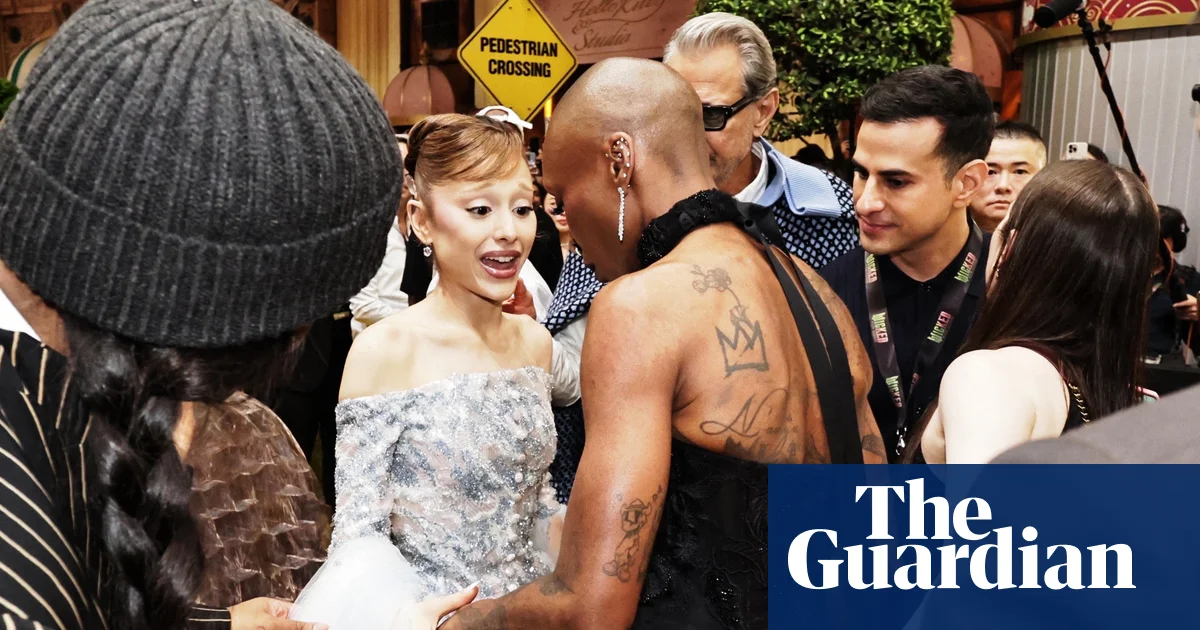
In an era where security measures are tighter than ever, the spectacle of red carpet invasions reveals a deeper cultural tension—a collision of individual expression and societal boundaries that define our collective identity. Recently, a man in Singapore charged as a public nuisance exemplifies this ongoing struggle. His attempt to breach security and approach Ariana Grande on the premiere of Wicked: For Good underscores a timeless human desire: the urge to connect, to be seen, to make an impact amid the swirling currents of modern spectacle. Though his actions were met with condemnation—highlighted by warnings of fines up to S$2,000—what remains undeniable is the audacity of the individual in the face of societal order.

This fringe phenomenon is not new. History and culture have long chronicled instances of figures who sought to disrupt the polished veneer of celebrity and spectacle. From Hugh Grant handcuffed to a celebrity on the 2007 premiere of Music and Lyrics to Kim Kardashian being flourbombed in 2012, these acts echo a persistent desire to breach the superficial boundaries of entertainment and enter the realm of raw human emotion. Such acts serve as a mirror—illuminating the fragile tension between public decency and the innate human longing for authenticity. As Ortega y Gasset observed, culture is not merely an accumulation of artifacts but the living fabric of *people’s identities*, an ongoing dialogue where the individual seeks to carve a space within communal narrative.

Amid these moments, the cultural significance of celebrity becomes evident: it is both a reflection of societal ideals and a battleground where **tradition** confronts **modernity**. The red carpet, historically, is a ceremonial threshold—an arena of societal memory—yet it has evolved into a stage of continuous challenge, where figures like Bradley Cooper or Cynthia Erivo stand as witnesses to the fragile boundary between admiration and intrusion. These episodes underscore the need for society to uphold its shared norms without suppressing the individual’s essential drive for recognition. Critics like Chesterton have long argued that the true strength of a society lies in its capacity to reconcile discipline with compassion, preserving the integrity of both community and individual aspiration.

In contemplating these moments, one recognizes the enduring power of culture: a living archive of memory and prophecy, where each act of defiance or reverence adds to the unfolding story of human dignity. As T.S. Eliot suggested, true culture is the *spiritual foundation* that guides us through chaos towards meaning. Today, as stars and spectators alike grapple with the spectacle of invasion—whether it be a fleeting viral moment or a profound act of rebellion—what remains is the profound truth that our cultural expressions are the echoes of our shared hopes and fears. They are both the fabric woven by our ancestors and the silent hymn calling forth future generations in the eternal quest for identity, continuity, and hope. Culture, then, is not merely the legacy of the past but the prophecy of humanity—an ongoing testament to the resilience of our true selves amidst an ever-changing world.

Meet ‘Fedora Man’: Dapper French Teen Revealed as Louvre Heist Hero in Viral Photo | France

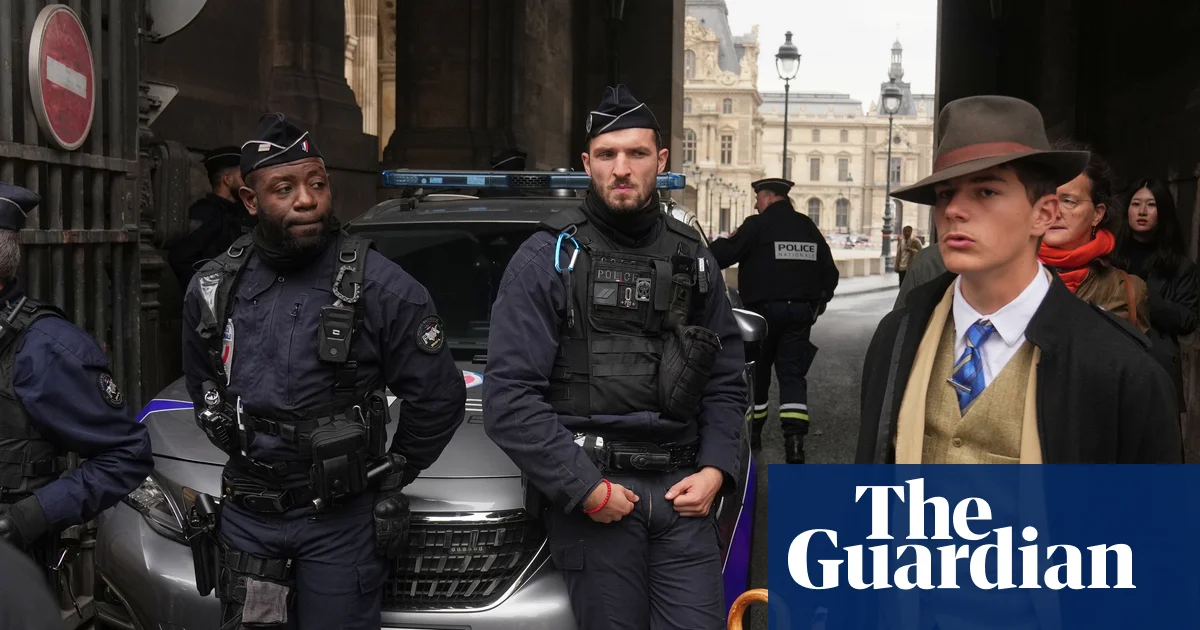
In a striking manifestation of how digital imagery can shape global narratives, a 15-year-old French youth, Pedro Elias Garzon Delvaux, inadvertently became an international phenomenon through a single photograph. His image, captured by Associated Press photographer Thibault Camus amidst the chaos of the French crown jewel heist, captured the imagination of millions across the world. Clad in vintage fashion, including a fedora, Pedro’s unintended role in this modern-day mystery showcases how media, perception, and historical aesthetics converge into a powerful symbol that transcends national borders. This phenomenon underscores a key geopolitical impact: how cultural symbols and images can ignite transnational stories that influence public sentiment and societal outlooks.

  • Pedro, a lover of 20th-century history and classic detectives, was merely passing through when police barricades closed access to the Louvre. His coincidental presence in the frame turned him into an eerie chess piece in a worldwide narrative concerning art theft, national identity, and cultural heritage. The image sparked online debates on whether the “fedora man” was an AI fabrication or a true shadow figure of the underworld. Such narratives challenge perceptions of authenticity and the digital age’s influence on reality, with analysts from institutions like INTERPOL emphasizing the need for cautious verification amid rapid information dissemination.
  • The viral spread of his image, with over 5 million views and headlines across continents, demonstrates the power of visual storytelling in shaping public discourse. As international commentators dissect the implications, many note how image-driven narratives reflect a broader cultural shift: one where individual stories are magnified into symbols of societal anxieties or aspirations. In this case, Pedro’s vintage attire and mysterious aura evoke an era-long gone, yet their resonance in the digital age emphasizes how cultural memory is harnessed and repurposed in contemporary geopolitics.

Historians and analysts recognize this event as emblematic of a new era where images serve as potent flags in the ongoing battle for cultural influence. The incident highlights an ongoing phenomenon: the blending of historical aesthetics with modern storytelling, fueling debates about identity, authenticity, and the role of digital media in shaping perceptions. As European nations remain vigilant over their cultural treasures, the story of Pedro not only offers a glimpse into the power of visual imagery but also signals how global narratives about legality, art, and history are increasingly constructed through social media’s lens.

As the episode concludes with Pedro’s relaxed outlook—publicly waiting for film roles—one cannot ignore how this small story echoes larger themes in international relations and societal values. The innocence of a boy unwittingly caught in a global myth reminds us that, in this era, history is perpetually in the making, and every image carries the potential to reshape perceptions and influence global affairs. In the end, this story remains a testament to a critical turning point: the digital age’s capacity to transform humble moments into enduring symbols, shaping the course of history in unpredictable ways, with the weight of the future still counting down in the shadows of the past.

Social Media Auto Publish Powered By : XYZScripts.com