Matox News

Truth Over Trends, always!

Are We Overdoing It? Men’s Lapel Messaging Takes Center Stage at the Oscars | Accessories Trend

In recent years, fashion insiders have observed a quiet but undeniable shift in male style: the revival of brooches and lapel pins as a powerful form of personal expression. At this year’s Oscars, this trend reached its crescendo, with Hollywood’s leading men turning lapels into canvases of cultural commentary and individuality. From Adrien Brody’s astronomically large brooch“Ulysses” to Pedro Pascal’s silk and feather Chanel flower, these accessories are now more than mere additions—they’re becoming central to a new conversation about masculinity and style. As sociologists suggest, this is more than vanity; it’s a reflection of men’s desire to balance tradition with self-expression in a society increasingly open to diversification of gender norms.

Interestingly, this accessory renaissance isn’t solely about aesthetics but also carries social and political messages. Javier Bardem’s “No a la Guerra” badge and the Handala pin symbolize a growing tendency for male celebrities to use their platforms as banners for activism. Such deliberate choices challenge the long-standing notion that formal menswear must be uniform and devoid of signifiers. Jewellery historian Rachel Church notes that these elements are rooted in history—originally functional and status symbols—yet now serve as social talismans conveying values, alliances, or causes. This evolution underscores how men are increasingly willing to use style as a visual language, making their lapels part of a broader genre of expressive activism.

The trend is also driven by a younger generation eager to break away from traditional masculine stereotypes. Influencers and fashion analysts point out that brooches offer a playful yet sophisticated way for men to experiment. Michael B. Jordan’s choice to wear three brooches at the Vanity Fair Oscar after-party exemplifies how these accessories are becoming a staple of red carpet risk-taking. Experts highlight that men are wanting to soften the rigidity of formalwear, making their suits stand out with eye-catching details that turn heads and spark conversations. It’s a move that speaks directly to a social shift where individuality and personal storytelling are prioritized over conforming to traditional masculine fashion norms.

As the trend continues to grow, the fundamental question becomes: what’s next for male accessorizing? Will this resurgence lead to a broader cultural acceptance of men wearing more jewelry, or will it remain a fleeting moment driven by high-profile events? Fashion analyst Javier Mores suggests that the next frontier might be integrating these accessories with technology—think smart brooches that change color or display messages—further intertwining style with social commentary. Such innovation could redefine not just men’s fashion, but how society perceives masculinity and self-expression. The real debate, perhaps, isn’t about the jewelry itself, but about how much further men are willing to go in redefining what it means to be fashionable, expressive, and socially engaged in the modern era.

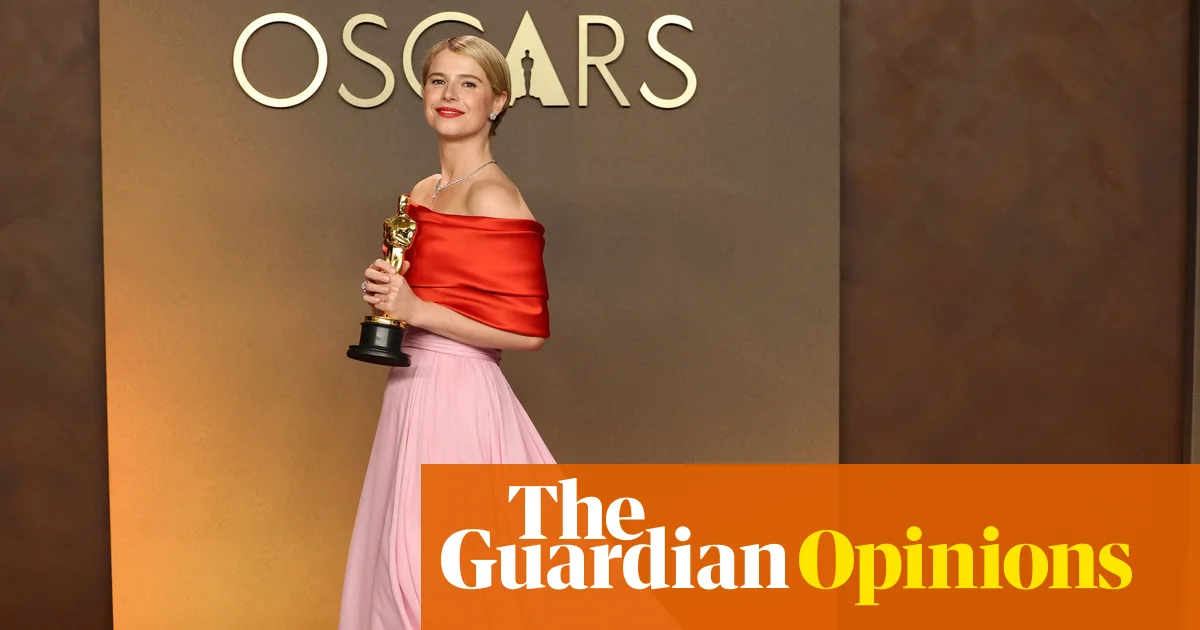
Cherry on the top: Jessie Buckley dominates Oscars 2026 with double win — and makes Chanel proud

The Evolution of Red Carpet Fashion: More Than Just Glamour

In the world of celebrity culture, the Oscars have long been seen as a pinnacle of both artistic achievement and personal branding. Historically, the red carpet has been a stage for timeless glamour, where black, gold, and classic couture dominated. However, recent years have witnessed a formidable shift — red carpet fashion is now a powerful canvas for self-expression and social messaging. The stunning appearance of Jessie Buckley, who not only secured the best actress award but also made a bold style statement, epitomizes this transformation. Her custom Chanel gown, with its blood-red satin-backed leather and rose pink chiffon, was more than eye-catching; it was a deliberate reflection of her character’s tenderness and emotional depth, nodding to the history of Hollywood’s stiff traditions while simultaneously breaking new ground in celebrity aesthetics.

Today’s fashion influencers and sociologists recognize that the red carpet has become a social forum as much as a glamorous runway. For instance, Teyana Taylor’s daring Chanel ensemble—featuring sheer fabrics and black and white feathers—demonstrates how stars are harnessing the event’s visibility to embody cultural narratives rooted in strength, audacity, and authenticity. Stylistically unapologetic and visually stunning, such choices serve to elevate the social relevance of fashion beyond the superficial, positioning stars as cultural commentators. This trend towards narrative-driven style aligns with the ideas of sociologists who emphasize that clothing can reinforce identity and influence societal perceptions. Influencers like Kylie Jenner further exemplify this shift, as her dramatic crimson Schiapelli gown effortlessly combined high fashion with viral appeal, amplifying the role of style as a tool for cultural dialogue.

But the evolution extends beyond individual styles—design houses like Chanel are capitalizing on this cultural redefinition. Their recent Paris runway shows, staged in unconventional spaces like a New York subway station, signal a strategic push to resonate with a more socially conscious and politically active generation. As fashion houses like Chanel weave social commentary into their branding, they reinforce the idea that style is now a form of societal engagement. Fashion and celebrity are no longer solely about superficial aesthetics but are intertwined with larger conversations about identity, power, and social justice. For the younger generation, the question isn’t just “What are they wearing?” but “What does it stand for?”

As we marvel at the daring choices of stars like Timothée Chalamet, who embraced an 2000s-inspired suit that challenged traditional notions of masculinity and style, one cannot help but wonder: what will be the next frontier in this cultural revolution? Will red carpet fashion continue to evolve into an arena where social values and personal truths collide, or will it revert to pure spectacle? The future of celebrity fashion might reveal not just the next big trend, but the emerging narrative of a generation that refuses to see style as superficial—it’s a platform for truth, resistance, and authentic expression in a rapidly changing society.

Michael B. Jordan Celebrates Oscars Win with Classic In-N-Out Burger Feast

Across the world, cultural phenomena often transcend national borders, influencing geopolitical strategies and societal values in subtle but profound ways. The American fast food chain, In-N-Out Burger, has long been associated with Hollywood glamour and elite social events, particularly its longstanding connection with the Academy Awards. Since 1994, this brand has been a staple at Vanity Fair’s renowned Oscar afterparty, symbolizing how American pop culture continues to wield soft power—a phenomenon that many analysts see as a manifestation of cultural diplomacy. Such events exemplify the way entertainment and consumer brands serve as tools for international influence, shaping perceptions of the United States while reinforcing its cultural dominance worldwide.

However, the implications of these cultural exports extend beyond mere entertainment. Many world leaders and diplomatic circles observe how American lifestyle branding, exemplified by iconic brands like In-N-Out, contributes to a covert form of influence that can sway public opinion and societal aspirations. Historians argue that the pervasive reach of American media—bolstered by corporations and Hollywood—acts as a catalyst in shaping national identities and elevating Western ideals across diverse societies. Meanwhile, international organizations such as the United Nations increasingly recognize the need to balance cultural exchanges with the preservation of local traditions and sovereignty, particularly in regions where Western influence is perceived as a threat to indigenous values.

The global geopolitical impact of these cultural intersections is complex. In an age where information and cultural content are rapidly disseminated via digital platforms, the dominance of American brands and media creates a form of soft power that can undermine traditional regional power centers. Some geopolitical analysts warn this dynamic fuels the tension between Western liberalism and emerging authoritarian regimes that seek to assert their own cultural narratives. As nations grapple with this tension, international institutions like the World Trade Organization and regional alliances are tasked with managing the delicate interplay between economic interests and cultural sovereignty. The decisions made today—whether in trade policy, censorship, or cultural promotion—will determine the contours of the global order for generations to come.

Ultimately, these developments underscore how choices by corporations, governments, and cultural icons reverberate through the fabric of society. From the glamour of Hollywood to the corridors of diplomatic power, the ongoing saga of influence and resistance unfolds. Historians and international analysts warn that the trajectory of this cultural imperialism could either cement Western values as universal or spark a resurgence of regional identities and sovereignties. As the world watches, the fading echoes of history’s past struggles—between empire and independence, tradition and change—persist, reminding us that the unfolding story of geopolitics is as much about ideas as it is about power. The future remains uncertain, yet one certainty endures: history’s grand narrative continues to be written, and its next chapters are yet to be revealed.

Oscars 2026: Full Winners List — Live Updates

Global Significance of Cultural Celebrations in a Shifting World

As the world turns its gaze toward the latest installment of a renowned entertainment ceremony, the focus on film and artistic achievement offers more than just a moment of celebration. These events, often seen as cultural milestones, have historically served as a mirror to the prevailing socio-political currents across nations and regions. However, in the backdrop of turbulent geopolitical shifts, the awards season now commands a deeper analytical lens, revealing how soft power, national identity, and global influence intertwine through the arts.

International analysts and global organizations now contend that such ceremonies are increasingly a platform for soft diplomacy, where the recognition of certain films, stars, and artistic visions can subtly influence international perceptions. Countries like the United States and South Korea leverage their cinematic achievements to project cultural dominance, but this cultural export also sparks debates on cultural imperialism and national sovereignty. Meanwhile, China and Russia continue to refine their narratives, seeking to shape global image through curated artistic displays, further fueling the ongoing struggle for influence.

Historian John Merrick recently emphasized that such awards are more than superficial recognitions—they are pivotal in asserting a nation’s cultural narrative amid the current geopolitical upheavals. As international institutions like the United Nations observe this spectacle, some argue that it underscores both the potential and the limits of culture as a tool for national diplomacy. The recognition of certain films and stars often reflects broader ideological allegiances, with recent years witnessing a rise in political resonance behind Hollywood versus emerging regional cinemas seeking to redefine global narratives.

Yet, amidst this complex socio-political tapestry, the film industry remains a battleground for ideological contestation and cultural influence. Major studios and national governments both understand that artistic exports can shape the perceptions of billions worldwide; thus, the awards ceremony transcends entertainment, becoming a strategic chessboard where perception is power. As the curtains fall and the winners are unveiled, the cultural landscape of the future is subtly but undeniably being rewritten, with each accolade poised to influence international discourse for years to come. History watches on, waiting to see which visions will shape the saga of nations in an era of unprecedented global realignment.

Oscars 2026: Cast Your Vote and Shape the Future of Hollywood’s Biggest Night

In an epoch where the conflation of spectacle and illusion threatens to eclipse the foundational role of culture as society’s ethical and moral compass, the upcoming cinematic reflections encapsulated in the 2026 Oscars ballot serve as a potent reminder. As Ortega y Gasset profoundingly asserted, “man is himself a manufacture, a work-in-progress, and his culture—his way of life—is the blueprint of this ongoing construction.” The films nominated—ranging from “Bugonia” to “Sinners”—are not mere entertainment but manifestations of societal soul-searching; they uphold the enduring link between art and national as well as individual identity. Here, the cinematic arts serve as both reflection and prophecy, echoing a cultural heritage that defines, sustains, and often challenges the collective conscience.

In a world increasingly dominated by superficial trends, the cultural role played by revered artists and movements assumes a vital importance. As T.S. Eliot observed, “Poetry and art are the memory of humanity, the hauntings of our collective consciousness,” and so the categories and themes of this year’s nominees—be it the profound narrative of “Frankenstein” or the poignant human stories in “Sentimental Value”—serve as a testament to the resilience of cultural memory. The meticulous craftsmanship highlighted in distinctions such as production design or cinematography underscores the enduring value placed on tradition, precision, and aesthetic excellence. These elements, woven into the very fabric of societal identity, remind us that culture is not a fleeting sensation but a foundational pillar that shapes our understanding of ourselves and our future.

By engaging with stories that often confront the shadows of history—such as “The Secret Agent” or “Mr. Nobody Against Putin”—modern cinema reminds us that every cultural act bears a moral and philosophical weight. Much like those who, in the past, recognized the significance of cultural continuity, contemporary artists serve as custodians of a tradition—a tradition that Chesterton described as maintaining the “truth of identity amidst the chaos of modernity.” They interpret the human condition, offering both solace and challenge to society. As Tocqueville warned, the potential for culture to foster a civilization of individual greatness or mediocrity hinges on our collective will to cherish and preserve what is worth fighting for—a moral and artistic legacy rooted in the remembrance of our shared human narrative.

In essence, culture’s ultimate power resides in its capacity to serve as both memory and prophecy—a wellspring of human hope and resilience. The spirit of art compels us to scrutinize not only where we have come from but where we are heading. As the stars of cinema bring forth these visions, they remind us that tradition is not static but dynamic; it bends and expands, mirroring the human soul’s perennial quest for meaning. In that dance of memory and prophecy, culture bears witness to our humanity, whispering that we are both the heirs and prophets of our destiny—writers of the future inscribed upon the foundations of our collective past.

Oscars 2026: Oscars boss Bill Kramer highlights the power of YouTube to engage 2.5 billion viewers—criticizes TV, embraces AI, and advocates for early starts

As the sun blazes over downtown Los Angeles, a city that pulses with dreams and ambitions, the Academy Awards prepares to stage its annual celebration of cinematic artistry. Yet beneath the glitz and glamour, a profound shift is underway—one that threatens to redefine the very essence of cultural tradition. Historically, the Oscars have represented more than mere awards; they are a mirror to society’s soul, a reflection of shared values, myths, and memories. However, as Hollywood leans into the digital future with live streams on YouTube and grapples with emerging technologies like artificial intelligence, questions of authenticity, identity, and cultural continuity come to the fore. Culture—the bedrock of societal coherence—stands at a crossroads, demanding that we consider whether these innovations serve humanity’s collective memory or erode its cherished traditions.

Long regarded as the guardian of artistic excellence, the Academy of Motion Picture Arts and Sciences recognizes its vital role in shaping cultural continuity. As described by Academy CEO Bill Kramer, these changes are not mere technological shifts but signify a broader evolution of what culture represents in a rapidly transforming world. Kramer, a man whose career began with community-oriented work before rising to Hollywood’s highest echelons, echoes the wisdom of thinkers like G.K. Chesterton, who marveled at the importance of preserving the “secret” of tradition amid modern flux. The move towards global livestreaming aims to magnify Hollywood’s reach, extending the spectacle to an estimated 2.5 billion viewers worldwide. Yet, this expansion raises profound questions: Does the digital dissemination diminish the cultural significance that once hinged on communal, in-person experiences? Or can it serve as a contemporary vessel, carrying age-old stories into the modern age, much like the artist and philosopher T.S. Eliot suggested that tradition is the preservation of memory and prophecy intertwined?

This cultural transition also touches upon the industry’s response to technological innovations like artificial intelligence. While some waver in trepidation, fearing that AI could diminish human creativity, Kramer advocates a nuanced perspective. He asserts that AI is merely a tool—an extension of human ingenuity, not a replacement. This viewpoint aligns with the philosophical insight of Ortega y Gasset, who stressed that culture is the ongoing project of human consciousness shaping its tools and symbols. The true challenge lies in maintaining the integrity of artistic authorship—preserving the human spirit at the heart of storytelling. The Academy’s subtle updates on eligibility criteria and its firm stance on theatrical releases stand as testament to this effort to uphold tradition in the face of relentless technological change. Modernity need not dissolve cultural roots; instead, it offers an opportunity to deepen our understanding of what makes art genuinely human—a sentiment echoed by Chesterton, who revered faith in the enduring value of tradition.

Amid these transformations, voices such as Timothée Chalamet remind us of the importance of genuine cultural experience—those moments that etch themselves into collective memory. His remarks, though contentious, highlight a crucial debate: must art adapt to survive, or must it be preserved precisely because it is a window to our shared human essence? The challenge for the cultural custodians, like Kramer, is to navigate this tension—striving to honor tradition without forsaking innovation, fostering a cultural symphony that resonates across generations. As the Oscars prepare to unveil their latest chapter, one can sense that the true significance lies not solely in the awards handed out but in the unbroken thread connecting the past to the future—a testament that culture remains humanity’s memory and prophecy, a luminous testament to what we are and what we aspire to be. In this ongoing dialogue between memory and prophecy, we find a reflection of our very soul, enduring through the shifting tides of time—a reminder that, ultimately, culture is the living, breathing reflection of human spirit’s eternal voyage.

Decoding the Process: How the Oscar for Best Picture Is Decided

In the realm of cultural celebration, few events encapsulate the collective consciousness quite like the Oscars. The prestigious award for Best Picture, uniquely decided by a preferential ballot, exemplifies how art’s decisiveness intertwines with societal values. This voting method, intricate yet profound, reflects more than mere preference; it symbolizes the delicate balance between individual choice and collective judgment. As our reporter Marc Tracy elucidates, this process exemplifies how culture, in its most refined form, acts as a mirror and a compass for society’s evolving identity.

At its core, the preferential ballot is a testament to the nuanced nature of cultural appreciation. Unlike simple plurality votes, it requires voters to rank their choices, fostering a dialogue of values and taste that transcends superficial preference. This method resonates with the philosophical insights of Ortega y Gasset, who asserted that culture is a living, dynamic organism—an expression of the society that sustains it. The Academy’s voting process, therefore, not only determines a winner but also enacts a philosophical statement about the richness of collective taste. It suggests that art and film are not isolated expressions but foundational elements shaping societal identity, anchoring us to shared memories while propelling us into future possibilities.

Historically, cultural critics like G.K. Chesterton warned against the narrowing of society’s moral imagination, emphasizing the importance of celebrating diverse visions within a culture’s narrative. Similarly, Tocqueville observed that democracy’s strength lies in the varying expressions of its people—each individual contributing to the overarching story. The Oscars, then, serve as a modern-day forum where this democratic ethos is celebrated, not merely through votes but through the cultural values they embody. The preferential ballot underscores the importance of harmony among diverse preferences, fostering a sense of unity forged through appreciation of the arts.

In this context, culture functions as both history and prophecy: a collective memory that grounds society in tradition, and a visionary force that anticipates what humanity aspires to become. The Oscars’ voting process exemplifies this duality—each film representing a chapter of shared history and a prophecy of future cultural landscapes. As T.S. Eliot famously noted, “The purpose of art is not a rarified expression but a means of ordering human understanding.” By selecting a film through a method that embodies depth and nuance, audiences reaffirm their collective commitment to cultural continuity and renewal. Ultimately, culture remains the vital thread that weaves the fabric of society—anchored in history, yet forever reaching towards the horizon of human potential.

Hamnet | Dissecting the Power of a Moment in Youthful Storytelling

In the intricate dance of human history, culture functions as both our collective memory and a prophetic whisper of what the future may hold. It is through the arts—be it literature, theater, or visual expression—that society finds its reflection, its struggles, and its aspirations. The recent portrayal of William Shakespeare and his poignant grief over the loss of his son Hamnet captures this dual role of culture vividly. Director Chloé Zhao’s vision, rooted in a deeply symbolic approach, underscores that what we create is inextricably linked to what we endure and transcend.

This narrative, exemplified in Zhao’s depiction, echoes the philosophical insights of thinkers like T.S. Eliot, who suggested that modern art must grapple with memory as a way to confront the chaos of the present. The use of visual symbolism—such as casting Will Shakespeare’s character arc in shades of blue, gradually draining toward gray and ash—evokes a haunting visual metaphor. It is as if life itself, with all its vibrancy and pain, is being distilled, revealing that even the most celebrated creator is vulnerable to loss and grief. The act of painting Hamlet’s hair gold with paint—rather than a wig—serves as a potent symbol that truth bleeds through our art, blurring the lines between reality and the ideal, between what is seen and what remains hidden beneath societal masks.

Culture’s enduring power lies in its ability to forge identity—binding individuals to tradition while offering a lens through which to interpret the frailty and resilience of human life. As the great philosopher Ortega y Gasset once observed, humanity’s rich tapestry depends on the continuity of shared values, stories, and artistic expressions that keep the spirit of a society alive across generations. Today, this cultural continuity faces challenge and renewal, especially through the vibrant efforts of young creators who seek to uncover and reinterpret timeless truths. In these moments, the arts become a sanctuary and a battlefield—an arena where the old fights to survive amidst the onslaught of modern alienation and superficiality.

Ultimately, history teaches us that the soul of a nation resides in its stories and symbols—anchored in memory, yet gesturing towards an unknown future. As Chesterton eloquently argued, true culture is not merely about preservation but about prophecy, about daring to envision what humanity might become. It is in the delicate layers of paint, the silent spaces of our shared narratives, that the echoes of our ancestors whisper guiding truths. Culture, therefore, remains the living fabric—both a vessel of our collective memory and a luminous prophecy of what humankind can aspire to become: a reflection that endures and a hope that persists, woven into the very essence of our existence—a silent yet resounding song of eternity.

Train Dreams: Unveiling the Power Behind the Scene

In the quiet elegance of cinema, we find a mirror to our souls—a mirror that reveals the intricate tapestry of memory, tradition, and identity. The recent final scene of “Train Dreams” exemplifies this truth, illustrating how visual storytelling transcends mere entertainment to engage with fundamental questions about what it means to be human. As Joel Edgerton’s character, Robert Grainier, embarks on a flight that becomes a voyage through his memories, we are reminded of the profound power of cultural memory to shape individual and collective identity. These fleeting moments in the sky serve as a poetic reflection on how history, personal and societal, are stitched together by the threads of remembrance, forging a sense of continuity amid chaos.

Filmmakers today, much like historians or philosophers of the past, play a vital role in preserving and interpreting our cultural heritage. Ortega y Gasset emphasized that “a people that forgets its past is condemned to relive it”. This scene’s meticulous construction—combining practical effects with cutting-edge VFX—underscores an essential truth: the craft of filmmaking is itself a form of cultural memory, a preservation of moments that might otherwise vanish into obscurity. The deliberate choice to recreate the antique plane and craft seamless transitions between past and present aligns with the timeless human pursuit of meaning through storytelling. Just as T.S. Eliot argued that tradition is the anchor of innovation, contemporary cinema—particularly in its focus on memory—serves as both a custodian and a prophet of our cultural identity.

Furthermore, the scene’s meditative narration guides us through the layered landscape of personal history, echoing the insights of Chesterton who extolled the importance of tradition as the vital link between our ancestors’ sacrifices and our present lives. The visual montage of memories—some seen earlier in the story, others new—mirrors the ongoing dialogue between individual memory and societal narratives. The flickering images, like the legends passed down through generations, affirm that culture is neither static nor mere relic. It is a dynamic force that animates our sense of __who we are__ and propels us forward, providing a moral and spiritual compass amid the upheavals of modernity.

As the final shot captures Grainier’s face, suffused with a myriad of emotions, there is a poignant reminder of philosopher Tocqueville’s assertion that democracy and culture are intertwined; both require active remembrance and participation to flourish. The scene’s culmination—Grainier’s feeling of connection—resonates universally: that through art and memory, humanity glimpses a glimpse of a transcendent order, a poetry in the cosmos of our collective soul. Culture, in its essence, is not merely a reflection of the past but an unfolding prophecy of our future, whispered across the ages in the silent language of human creativity. And in this symphony of fleeting images and enduring memories, we find a glorious testament—that culture is an indelible part of our identity, anchoring us in the wisdom of tradition while guiding us toward an unknowable yet inevitable horizon.

‘Marty Supreme’ | Exploring a Defining Moment in Modern Cinema

In an era saturated with fleeting digital spectacle, the enduring power of culture as a vessel of identity, tradition, and societal memory remains vital. The creative process, exemplified vividly in the work of filmmakers like Josh Safdie, underscores that beneath the veneer of modern entertainment lies a profound dialog with history, human aspiration, and collective identity. Safdie’s meticulous craftsmanship—integrating evocative imagery, layered soundscapes, and carefully choreographed performance—recalls the insights of Ortega y Gasset, who argued that society’s true strength resides in its cultural fabric, a tapestry woven through shared stories and artistic ethos. It is through these stories that we preserve our history and plant the seeds of future meaning, uniting generations in a dialogue that transcends time.

Safdie’s depiction of iconic moments—such as the cinematic reference to billiards champion Bela Kletzki or the stylized presentation of Kay Stone, played with tragic grace by Gwyneth Paltrow—serves as a reminder that artistic expression is inherently political. The scene’s orchestration—grounded in visual and sonic symbolism, from the heavenly choir to the iconic apple—becomes a reflection of cultural rituals surrounding triumph, failure, and the fleeting nature of fame. This echoes T.S. Eliot’s view that “what we call the beginning is often the end,” reminding us that culture is not only a reflection of where we come from but also a prophecy of where humanity may go. It acts as both mirror and lamp, capturing our historical desires while illuminating the path forward.

  • Memory as foundation: Culture preserves the echoes of the past, giving voice to tradition across generations.
  • Creativity as rebellion: Artistic innovation often challenges the status quo, fostering societal renewal.
  • Shared stories as identity: Our collective narratives form the bedrock of cultural unity, mitigating chaos and inspiring hope.

Such reflections align with the thoughts of thinkers like Chesterton, who championed the idea that the true function of art is to affirm life in its full richness. In Safdie’s meticulous attention to detail—capturing the glory of 1949 newsreel championships or the subtle joy of Timmy’s laughter—there is an affirmation of life’s grandeur, its nobility, and its tragedy. Not simply entertainment, these moments serve as cultural touchstones, anchoring society in a shared sense of purpose and aspiration. As Tocqueville observed, democracy and culture are intertwined; both flourish in a landscape where the populace values tradition as a means of collective self-realization. Culture thus becomes both shield and sanctuary, a means to uphold the values that forge common ground amid societal tumult.

In the end, the essence of culture manifests as a poetry of memory and prophecy. It whispers of who we are and warns of who we might become, whispering through the ages the enduring melody of humanity’s quest for meaning. Like a well-composed film or a timeless song, our cultural heritage reminds us that we are both heirs and prophets—stewards of an ongoing story that, in its most profound expression, is both a reflection of our past and a blueprint for our future. It is within this silent dialogue—between memory and hope—that we find the true vitality of our human spirit, forever reaching toward the horizon of what is yet to come.

Social Media Auto Publish Powered By : XYZScripts.com