Matox News

Truth Over Trends, always!

Andy Burnham Urges Labour to Drop Restrictive Asylum Rules — UK Politics Live

The UK’s Political and Immigration Innovations Signal a Shift in Global Power Dynamics

In an era characterized by relentless geopolitical transformation, the United Kingdom stands at a critical crossroads. Recent decisions emanating from Westminster exemplify a broader trend among Western nations striving to redefine their social fabric and geopolitical influence. The UK’s immigration policy reforms, coupled with efforts to reshape its political landscape, underscore a strategic repositioning—aimed at bolstering national sovereignty and economic resilience amid the evolving international order.

Central to these developments is Home Secretary Shabana Mahmood’s announcement of dramatic changes in migration rules. These measures, set to double the waiting period for indefinite leave to remain from five to ten years, and enforce stricter language and criminal record requirements, signal the government’s intent to prioritize control over sovereignty and social stability. Analysts like Dr. James Tennant, a geopolitical strategist, argue that such policies are designed to reinforce national borders against the destabilizing influxes that characterize unchecked migration flows. In essence, these reforms are not merely domestic adjustments but a calculated move to assert post-Brexit independence, signaling to global actors that the UK will prioritize sovereignty over open borders.

Yet, this shift is not happening in isolation. Andy Burnham, the mayor of Greater Manchester, reflected widespread sentiment among pragmatic leaders who see the long-term implications. Burnham, a prominent figure vying for Labour leadership, explicitly voiced concern over the proposed 20-year waiting period for settlement—highlighting how prolonged limbo could hinder national integration efforts and strain public resources. His stance exemplifies the mounting tension between those advocating for controlled immigration and those emphasizing social cohesion and economic stability. The ongoing debate vividly illustrates how internal policies are grappling with the geopolitical need to project strength while maintaining societal resilience.

Furthermore, the broader international context amplifies the significance of these shifts. Many analysts, including members of the International Institute for Strategic Studies (IISS), interpret these measures as part of a strategic calculus—aimed not only at bolstering domestic security but also at asserting the UK’s post-pandemic global stance. This recalibrated approach suggests a move away from the legacy of open-door policies, favoring instead a model aligned with traditional nationalist principles. Historically, nations that have prioritized sovereignty and robust border controls have often repositioned themselves to wield greater influence in global affairs. The UK’s renewed focus on internal control reflects a desire to reassert its influence in an increasingly multipolar world—balancing relationships with peer powers and regional allies.

As history continues to unfold, these decisions evoke echoes of earlier moments—when nations chose sovereignty over globalization. From the unrest of post-war Europe to the rise of nationalist movements, the trajectory of nations often hinges on their leadership’s willingness to assert control amidst international chaos. Historians warn that such policies, if poorly managed, could deepen societal divisions or provoke retaliatory measures from trading partners. Nonetheless, the current course signals that **the UK is eager to carve an independent path**, shaping a future where its influence is defined less by its proximity to Bruxelles and more by its strategic national interests.

The stakes are monumental. As Britain crafts its new identity—leaning into strength, sovereignty, and renewed national pride—the world watches with bated breath. The decisions taken today are not isolated; they are the threads woven into the fabric of history, setting a precedent for how nations respond to a shifting global landscape. In the shadows of these policies lies the promise—and peril—of a future shaped by bold choices. History’s pen continues to write, and the pages ahead will reveal whether Britain’s gamble will forge resilience or deepen its divisions. Either way, the unfolding story will mark a defining epoch in international history.

Dugald Saunders quits NSW Nationals as talk mounts on Mark Speakman’s move—what’s next in NSW politics?

The recent resignation of Dugald Saunders, leader of the New South Wales Nationals, marks a pivotal moment amidst ongoing internal political upheavals that have significant geopolitical implications for Australia. Saunders, citing personal and family reasons, stepped down as the party grapples with contentious issues surrounding climate policy and regional concerns that mirror and potentially influence national narrative. His departure underscores the deepening divisions within the coalition, notably over the decision to abandon a net zero emissions target by 2050, a shift that signals a broader resistance to global environmental initiatives perceived by many as threatening to regional industries and traditional livelihoods.

The Coalition in NSW, comprising the Liberals and the Nationals, faces mounting challenges not only on climate policy but also on issues such as management of wild horse populations and the protection of iconic ecosystems like the Great Koala National Park. These internal disagreements reflect a larger, internationally significant struggle between progressive environmental agendas and conservative, regional priorities that many analysts argue are rooted in a broader geopolitical tension. How these decisions shape Australia’s stance on climate diplomacy and regional security will influence its relationships with key partners, including the United States, China, and the European Union, particularly as global powers intensify their competition over influence in the Indo-Pacific.”

Commentators and historians, such as Dr. Robert Crane of the Australian Strategic Policy Institute, emphasize that domestic political shifts in key regional states like NSW carry the potential to tip the balance of influence in this vital region. The internal leadership contest currently brewing, with former leader Paul Toole and potential contenders Gurmesh Singh and Steph Cooke, may have profound effects on the coalition’s future stance and Australia’s broader strategy. As the party’s internal dynamics intensify, the outcome could alter not just regional governance but also Australia’s role in international energy and environmental negotiations, which are increasingly becoming battlegrounds for geopolitical influence and economic resilience.

Meanwhile, Mark Speakman, the current Liberal leader, has praised Saunders’ dedication, yet political analysts warn that the coalition’s instability, combined with a declining public opinion, could accelerate leadership changes. Reports suggest that the coalition’s future hinges on how quickly and decisively it can reconcile internal divisions—a process that could have cascading effects on Australian society and its global alignments. As historical forces continue to unfold, Australia finds itself at a crossroads where local leadership decisions are intertwined with global power dynamics. The very fabric of regional stability and the future of Australia’s international commitments could be rewritten in the coming weeks, leaving the impression that, in the grand chessboard of geopolitics, today’s political upheaval may indeed be tomorrow’s defining chapter in world history.

Reeves’ U-turn sends markets into a spin, hikes borrowing costs—UK politics live | Politics

Global Political Turmoil Escalates as UK Budget Shifts Shake Markets

In a striking display of political and economic chaos, the recent developments in Britain’s government paint a picture of a nation on the brink of financial and institutional disintegration. As Prime Minister Keir Starmer and Chancellor Rachel Reeves maneuver through a rapidly changing political landscape, their U-turns and strategic missteps threaten not only domestic stability but also the geopolitical standing of the United Kingdom. The core issue remains rooted in their apparent inability to uphold manifesto promises amidst a turbulent fiscal environment, echoing concerns voiced by international analysts about the risks posed by domestic political instability to global markets.

Historians and financial experts warn that political indecisiveness at such a critical juncture can have repercussions far beyond the shores of London. The UK’s bond markets have already begun reacting negatively, with yields on long-term gilts experiencing their worst day since July, reflecting a perception of increased fiscal risk. This market turmoil underscores the fragile confidence within the international financial community, which is closely watching British politics for signs of fiscal irresponsibility. Such volatility indicates a growing breach of trust in the UK’s ability to manage its debt, thereby undermining its influence and threatening to destabilize global financial corridors.

The internal political strife is amplified by the debate over taxes and public spending. Originally, Reeves had signaled a plan to increase income tax, a move that would have jarred with her manifesto commitments. However, the recent *dramatic U-turn*—prompted by an improved fiscal forecast—has seen the government ditch this unpopular initiative. Yet, this retreat raises questions about the true stability of the UK’s fiscal policy; critics argue it signals a government beholden to financial markets rather than steadfast policy principles. Meanwhile, the Conservative Party has seized on this shift, claiming victory while warning that the underlying issues—such as the possibility of cutting thresholds for higher income taxes—remain unresolved, risking further market instability.

The international community watches as the UK’s political whiplash exposes deeper systemic flaws. Economists argue that such indecision erodes investor confidence, which in turn jeopardizes the UK’s borrowing ability and raises borrowing costs. The International Monetary Fund, along with independent financial analysts, have repeatedly cautioned that unpredictable policymaking can cause long-lasting damage to a nation’s economic credibility. As the European economy and global markets tremble, the UK’s internal crises serve as a stark warning: political instability is no longer an internal affair but a signal that the global order remains vulnerable to the caprices of national politics.

As the dust settles on the UK’s turbulent political landscape, history will judge these events as a critical juncture—yet the narrative remains unfinished. The decisions taken today could ripple through the corridors of power for generations, shaping how nations respond to internal crises amid an interconnected world economy. For now, the UK stands as a testament to the perils of political brinkmanship, with the shadows of uncertainty looming large. Will it find its footing again, or will the current chaos be remembered as the moment the foundations of the mighty British Empire finally shook? Only time, still silently writing its story, will tell.

House prepares to vote on shutdown-ending deal as Democrats face division — US politics update | 2025 government showdown

As the United States grapples with its historic government shutdown, global signposts indicate that the geopolitical landscape is entering a new and unpredictable chapter. The recent developments within the US Congress—notably the relentless 50+ days of government paralysis followed by a tentative short-term funding deal—highlight the profound partisan divisions and influence of political factions. Such internal strife, as analysts suggest, does not occur in a vacuum but reverberates around the world, affecting strategic alliances, economic stability, and regional security.

The Joe Biden administration’s handling of the shutdown, coupled with the fiery debates over healthcare subsidies, underscore a broader trend of internal dissonance that echoes across democracies committed to reforms. Meanwhile, the European Union and NATO members watch intently, recognizing that chaos within America’s core institutions compromises collective security. As political commentator and international strategic think tanks warn, the present chaos could weaken the world’s most powerful democracy’s capacity to project power, defend its allies, and uphold a rules-based order.

Meanwhile, abroad, Israel faces its own diplomatic turmoil as President Isaac Herzog receives a letter from Donald Trump urging him to pardon the controversial Benjamin Netanyahu. The plea, based on a perception that legal proceedings against Netanyahu are politically motivated, exemplifies how domestic political battles in one nation can influence geopolitically sensitive decisions. The ongoing trials of Netanyahu, accused in corruption cases, demonstrate how internal legal processes can impact international alliances, especially with a staunch U.S. ally historically central to the Middle East’s stability. Historians argue that such interventions, whether perceived as support or interference, often shape diplomatic landscapes for decades.

Further afield, unprecedented reports allege that Venezuelans deported by the Trump administration to El Salvador endured systematic torture, including sexual assault, and inhumane detention conditions. This revelation shines a stark light on the unresolved dark chapters of U.S. immigration policy, linking human rights abuses to the broader narrative of American influence in Central America. Such actions, condemned by human rights organizations like HRW, threaten to tarnish the global image of the U.S., as critics warn that the patterns of brutality and disregard for international law undermine the moral authority used to justify its foreign policy agenda.

Analyzing these interconnected crises, international relations experts argue that the ripple effects of internal American disputes—from congressional gridlock to diplomatic negotiations—shape the destiny of nations and influence the societal stability of democracies worldwide. As international institutions and watchdogs sound warnings about the erosion of legal norms and human rights, history presses on, reminding us that these moments are not isolated but part of an ongoing, tumultuous saga that tests the very fabric of civilisation. On the horizon, as political leaders, military strategists, and citizens grapple with these unfolding events, one truth remains clear: the choices made today will echo across generations, and the weight of history continues to press down as the future’s blueprint is inscribed with both hope and peril.

Government Shutdown Sparks Urgent Cybersecurity Risks for the Future

US Government Faces Cybersecurity Breach During Ongoing Shutdown, Highlighting Industry Vulnerabilities

The recent six-week-long US government shutdown has unexpectedly exposed critical vulnerabilities within federal digital infrastructure. The Congressional Budget Office (CBO), tasked with providing unbiased economic data to policy makers, confirmed it suffered a cyber breach attributed to a suspected foreign actor. This event underscores a broader trend: even during periods of political paralysis, cyber threats to vital national security and economic data continue unabated, leveraging the digital systems that underpin government functions.

Disruption & Innovation in Federal Cybersecurity

  • Despite the shutdown, many federal agencies, including the CBO, maintain operational cloud infrastructures, illustrating a shift towards resilient, cloud-based security architectures.
  • In response to the breach, CBO has implemented enhanced security measures, including advanced monitoring tools and new controls.
  • However, cybersecurity experts warn that relying on cloud infrastructure, especially during operational disruptions, can be a double-edged sword, exposing vulnerabilities if not managed properly.

Industry leaders and analysts, citing research from institutions such as MIT and firms like Gartner, emphasize that government agencies and private corporations alike must prioritize disruptive cybersecurity innovation. Traditional perimeter security models are no longer sufficient in the face of sophisticated threat actors, and this breach epitomizes the critical need to adopt adaptive, AI-powered defenses that can react in real time to emerging dangers.

Business Implications & Broader Industry Impact

The breach at the CBO illustrates industry-wide vulnerabilities, reinforcing the importance for innovative cybersecurity solutions that blend automation, threat intelligence sharing, and resilience. As Peter Thiel and Elon Musk have long warned, “security is a competitive advantage in the digital age”, and the failure to innovate rapidly can spell disaster for both public institutions and private enterprise.

Moreover, the incident signals a paradigm shift in how government and business protect sensitive data: disruption in cybersecurity defenses during crises is unacceptable. Organizations must now view security as an ongoing battle, integrating next-generation AI, blockchain, and zero-trust architectures to outpace threat actors.

Looking Forward: The Urgency of Next-Gen Cybersecurity

Industry observers and government officials agree that the current breach is likely a wake-up call, stressing the necessity of proactive, innovative security strategies. As _cyberthreats continue to evolve_, companies and agencies must accelerate investments in disruptive technologies to safeguard critical infrastructure and maintain trust. The government’s ongoing shutdown underscores a fragile moment for national security, with industry pioneers poised to lead the charge in redefining cybersecurity resilience.

In this rapidly shifting landscape, the future will belong to those who innovate aggressively, disrupting old paradigms before they are exploited. The clock is ticking, and the stakes have never been higher for tech leaders to step into this digital frontier with urgency and foresight—because the next attack could be just one breakthrough away.

Minister blames ‘broken system’ for releasing prisoners, defends David Lammy — UK politics update

UK Prison System Crisis: A Reflection of Broken Governance

The recent controversy surrounding the mistaken release of prisoners in the United Kingdom exposes more than just a scandal—it reveals a systemic failure that holds profound geopolitical implications. At the core, this crisis underscores a Government grappling with inadequate institutional capacity, especially in criminal justice, which in turn affects national stability and international credibility. As international organizations and domestic analysts scrutinize these failures, the message is clear: the world is watching how Britain manages its most vulnerable institutions—because societal stability today reflects a nation’s strength tomorrow.

The government, led by Prime Minister Rishi Sunak and heavily influenced by Home Secretary Suella Braverman, has faced mounting criticism over the recent prisoner release debacle. Critics highlight that this is not just an isolated mistake but rather symptomatic of broader issues—namely, the broken and underfunded system for managing prisoner data and release procedures. David Lammy’s role as the Justice Secretary has come under intensive scrutiny, as reports now suggest that mistakes in prisoner releases—potentially numbering into the hundreds—are linked to an archaic, manual processing system vulnerable to errors. This directly compromises public safety and raises questions about the UK’s ability to project stability and order—elements that are vital in a geopolitically turbulent world where confidence in security institutions influences diplomatic standing.

International Repercussions and Sovereignty Challenges

Internationally, the crisis threatens to deepen the skeptics’ view that the UK is increasingly fragmented in its governance, with historians and analysts warning that such internal instability could embolden adversaries or weaken alliances. The European Union, along with other allies, may question the UK’s capacity for reliable cooperation on law enforcement and counter-terrorism—areas that are essential for collective security. United Nations reports emphasize that the perceived decline in institutional integrity can undermine global efforts to foster peace, especially when a major nation like the UK appears unable to manage its internal safety net effectively.

Furthermore, the domestic turmoil has generated a ripple effect, challenging the rule of law and affecting societal cohesion. As analysts point out, a broken prison system does not merely propagate dangerous offenders; it fosters mistrust among the populace, which in increasingly polarized societies can threaten social stability and national resilience. The situation has prompted leaders like Keir Starmer to defend the government publicly, claiming accountability must be enhanced through increased digitization and improved oversight —a solution that some critics argue echoes the need for a fundamental overhaul rather than band-aid fixes.

Turning Point in Governance

Indeed, this crisis is a pivotal moment—an inflection point that demands leaders and society alike confront the rotten core of a broken system. The decision to digitize and overhaul prison release procedures represents a necessary, albeit long-overdue, forensic cleansing of the judiciary’s administrative machinery. Historians remind us that systemic failures like these often serve as a catalyst for either reform or collapse. Therefore, the weight of history is upon policymakers to heed the warning signs before chaos becomes entrenched. How Britain responds will determine whether it emerges stronger or succumbs to the consequences of political neglect—a lesson echoed by countries that have faced similar crises in the past.

As the world watches in tense anticipation, the question remains: will the decisions taken now forge a resilient future or deepen the cracks in Britain’s societal fabric? The answers will be etched into the annals of history, a stark reminder that in governance, as in life, failure to address systemic flaws inevitably bears its price—a legacy that can either be one of renewal or ruin.

Senate to vote on stopping illegal war against Venezuela — US politics update

As the world watches in increasing concern, the geopolitical landscape in the Western Hemisphere is rapidly transforming into a theater of heightened conflict and strategic maneuvering. At the forefront is the United States, embroiled in a complex web of military posturing, congressional power struggles, and economic warfare, all with profound implications for regional stability and global diplomacy.

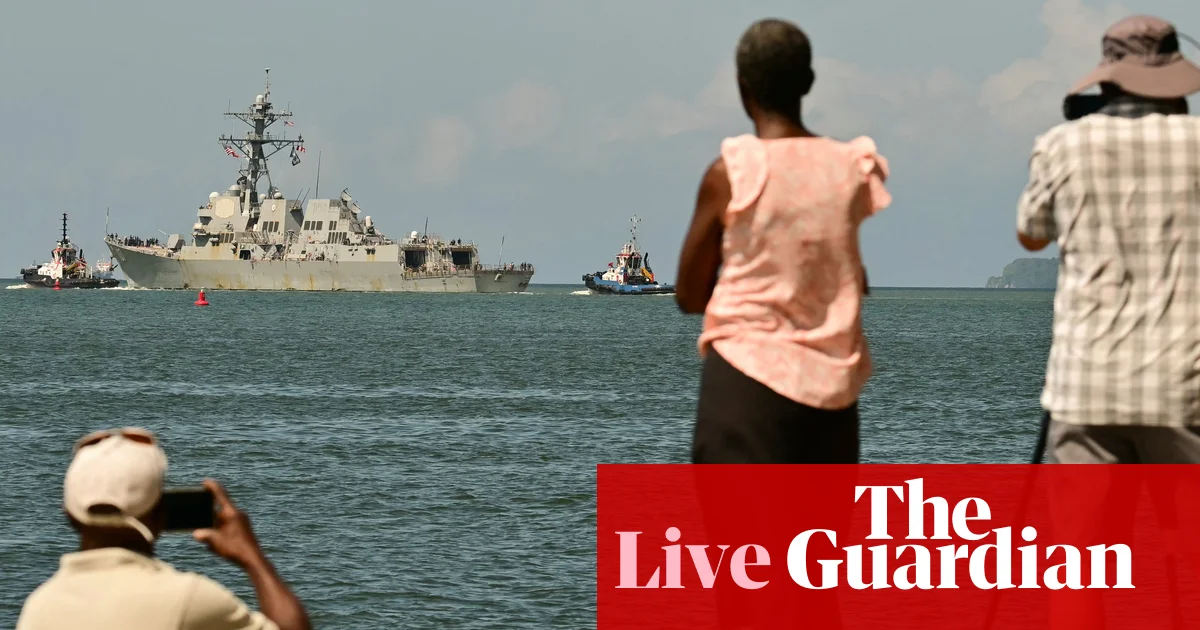
Recent developments reveal a concerted effort by the Trump administration to leverage military force, particularly in Venezuela. Reports indicate that discussions within the US government are gravitating toward authorizing land strikes—a move that would sharply escalate the ongoing covert and overt conflicts in the region. The Senate is now poised to vote on bipartisan legislation aimed at barring President Trump from initiating unauthorized military actions against Venezuela, a clear sign of growing congressional concern over unchecked executive power. Such legislation from Senators like Tim Kaine and Adam Schiff, along with Rand Paul’s support, underscores the deep bipartisan unease about the administration’s push for military intervention. Meanwhile, reports of aggressive US military deployments—including an aircraft carrier heading to South American waters and deadly strikes on alleged drug vessels—point to a hardening US posture that many analysts see as a replay of past interventions like Panama in 1989. The echoes of Operation Just Cause are unmistakable as the US seems determined to destabilize the Maduro regime, a move critics argue is driven more by strategic interests than genuine concern for regional sovereignty.

This militarization coincides with an aggressive economic stance. The US Supreme Court recently questioned the legality of Donald Trump’s tariffs imposed under the International Emergency Economic Powers Act (IEEPA). Even the high court’s conservative supermajority appeared skeptical about the president’s authority to levy duties not explicitly authorized by Congress, raising questions about the legality of economic sanctions that have far-reaching effects. Analysts warn that, regardless of the court’s ultimate ruling, these unilateral measures weaken international economic stability and further erode the balance of powers between branches of government. Simultaneously, the ongoing government shutdown threatens to disrupt vital infrastructure, with potential cuts to flights and public services that directly impact both domestic and international mobility, economic stability, and regional security.

On the diplomatic front, Trump’s engagement with China took a notable turn as he reportedly appealed to Xi Jinping to intervene in the case of jailed Hong Kong media tycoon Jimmy Lai. This move signals a broader strategy to simultaneously project US influence and influence global perceptions of China’s internal governance. Meanwhile, the internal chaos within the US government—marked by protests from furloughed workers and legal challenges over detention conditions—exposes a nation divided against itself, with its institutions strained by persistent partisan battles. Historians and international bodies warn that such internal disarray complicates the US’s ability to project power and uphold international commitments, risking a decline in global influence and credibility.

As the chaos unfolds, so too does history a new chapter—one where America’s future remains uncertain, its choices echoing through the corridors of power and the streets of Venezuela, Panama, and beyond. The decisions made today are not just about policy—they are the shaping of a new geopolitical reality, whose true impact will be measured by the stones we cast into the waters of history. In this unfolding drama, the specter of conflict and the struggle for influence loom large, with each gamble drawing the world closer to a precipice. The weight of history presses heavily upon the present—what legacy will today’s leaders leave in the sands of tomorrow?

Australia Politics: Banks Told to Respect WFH Rights as Nationals Scrap NetZero Goal—Youth Watchdog Alert

International Geopolitical Impact: Australia’s Internal Struggles Reflect Broader Global Trends

In recent weeks, Australia has once again proven itself as a pivotal player on the world stage — though not through the strength of its international diplomacy, but through internal upheaval that echoes larger geopolitical shifts across the globe. The nation’s ongoing political developments, particularly within its major parties, serve as a disturbing mirror for a world increasingly divided over energy, climate policies, and economic reform. With the NSW Nationals contemplating abandoning their *net zero* commitments, and the federal government locked in debate over energy policy, Australia’s political trajectory points to a broader trend of rising populist resistance against the global push for sustainable development and climate action.

As the NSW Nationals prepare to ditch their *net zero* pledge amid mounting anger from rural communities and conflicting interests within the coalition, international analysts warn that such decisions threaten to destabilize the Coalition government, potentially emboldening other nations to follow suit. Studies conducted by the International Institute for Strategic Studies suggest that these internal conflicts could have ripple effects, weakening Australia’s diplomatic standing and destabilizing regional alliances. How Australia manages this internal crisis—balancing economic realities with international commitments— will determine if it remains a credible partner in global efforts to combat climate change or succumbs to the siren call of nationalism and short-term economic gains.

Meanwhile, the internal struggles over energy policies—particularly the flirtation with nuclear energy and the rejection of *net zero*—highlight a broader, contentious debate over sovereignty and independence. Conservative factions, led by figures like Paul Toole and Dugald Saunders, challenge the more progressive globalist approach championed by Prime Minister Anthony Albanese. This rift underscores a wider phenomenon seen across nations — where the push for energy independence and economic sovereignty clashes with international treaties and climate agreements that threaten to infringe on national sovereignty. Historians warn that such internal fractures could permanently alter Australia’s role within the Indo-Pacific and its diplomatic alliances, opening the door for opportunistic rivals and regional powers to fill the void.

How Internal Political Decisions Reshape Society and Global Dynamics

The reverberations of these policy debates extend beyond mere political jockeying, impacting society at large. The reported 40% increase in electricity and gas prices since commitments to *net zero* were announced exemplifies the tangible consequences for ordinary Australians, especially in rural and regional communities. It exemplifies how global environmental policies, when manipulated by internal partisan interests, can deepen societal divisions and economic disparities. As analysts assert, decisions made in Canberra today have the potential to influence international energy markets, regional security calculations, and even the future of global climate negotiations.

Experts like Anne Davies and international commentators warn that Australia’s internal turbulence could serve as a cautionary tale for the world. If other nations see internal party conflicts and policy reversals as signs of political weakness, they might hesitate to commit to long-term international treaties. With regional powers like China and India watching closely, the fate of Australia’s energy policy will have transcontinental repercussions. As the debate rages on, the global community waits for the next move—knowing that the outcome will shape the future of energy, geopolitics, and international cooperation for decades to come.

The Weight of History: A Nation at a Crossroads

The unfolding saga in Australia embodies a larger narrative—a nation grappling with the twin pressures of internal sovereignty and external expectations. As historians acknowledge, the decisions made today echo through the annals of history, often dictating a country’s trajectory for generations. Will Australia stand as a beacon of sovereign resilience, or succumb to populist pressures that threaten to unravel its commitments and alliances? In the shadow of global upheaval, the choices made in the coming weeks will determine whether Australia’s internal chaos fosters a broader shift toward nationalism or paves the way for renewed international cooperation under firm, principled leadership.

One thing remains certain: this is not just a domestic dispute but a turning point in global geopolitics, where internal policies intertwine with international destiny — and the weight of history remains unforgiving to those who falter in their resolve.

Teachers Face Threats After MAGA Claims Over Halloween Costumes Mocking Charlie Kirk

Disruptive Social Media Campaign Ushers in New Challenges for Educational Privacy and Political Discourse

In a stark illustration of the rapid evolution of information warfare, a recent incident involving a high school in Arizona underscores the profound business implications and societal disruption driven by social media’s power to amplify misinformation. The controversy originated when Turning Point USA (TPUSA) spokesperson Charlie Kirk was falsely associated with an innocent Halloween costume worn by teachers, sparking viral outrage. The incident exemplifies how disruptive platforms like X (formerly Twitter) have become conduits for rapid-spread misinformation that can threaten personal safety and reputation on an unprecedented scale.

The incident reveals a pivotal challenge confronting educators and businesses: the ability of malicious actors to weaponize social media for mass psychological operations that threaten privacy, safety, and trust. In this case, an image of teachers in bloodied T-shirts was wrongly interpreted, leading to doxxing, targeted online harassment, and even death threats—an unsettling reminder that the digital landscape’s regulatory and ethical frameworks are lagging far behind technological capabilities. The impact extends beyond individual rights, striking at the core of institutional stability and public confidence in grassroots institutions like education systems.

The incident also signals a burgeoning market for advanced content verification technologies, with industry leaders like Gartner emphasizing that the future of digital trust hinges on automated fact-checking and AI-enabled content moderation. These solutions are critical for preventing similar disruptions at scale, as disinformation campaigns grow more sophisticated. For instance, AI-based image analysis and network tracing mechanics could be employed to preempt false narratives, but such innovations require significant investment and legal safeguards, given the privacy concerns involved.

  • Emerging tools are capable of identifying manipulated images and videos quickly
  • Automated alerts can notify stakeholders of potential misinformation spikes
  • Legal and ethical frameworks remain underdeveloped, risking misuse or overreach

Furthermore, the incident underscores the necessity for businesses, educational institutions, and policymakers to reevaluate their engagement with social media. The disruption also presents an opportunity: those who develop and implement cutting-edge verification and safety technologies could become essential partners in safeguarding digital spaces. Pioneering entities like MIT’s Media Lab are exploring such solutions, recognizing that true innovation in this realm is crucial for maintaining integrity in digital communication. As these technologies mature, they could serve as the foundation for a new era where truth prevails over misinformation, transforming the social media landscape into a more resilient, trustworthy environment.

Looking ahead, this incident serves as a clarion call for all stakeholders to urgently invest in disruption-resistant technology and foster a culture of digital responsibility. Rapid technological advancements—ranging from blockchain-based verification systems to AI-driven content analysis—are poised to redefine how truth is maintained in an age overwhelmed by data. The coming decade is critical: failing to adapt could mean allowing malicious actors to shape perceptions, destabilize institutions, and influence societal outcomes. As Elon Musk and Peter Thiel have often emphasized, the future belongs to those pioneering disruptive, innovative solutions that can turn the tide against digital chaos and misinformation. Strategic foresight and swift technological deployment will determine who leads this new digital frontier—those who act now will shape the foundations of a more secure, transparent digital world.

Nancy Mace Clashes with Airport Cops in Explosive Outburst: Police Report

Major Political Controversy Sparks Disruption in Public Sector Operations

In a development that underscores the unpredictable intersection of politics and technology, South Carolina Congresswoman Nancy Mace has recently found herself embroiled in a controversial incident at Charleston International Airport. According to an incident report obtained by WIRED, her unruly behavior toward law enforcement and security personnel has not only raised eyebrows but also spotlighted vulnerabilities within logistical and security infrastructures. As public sector disruption becomes increasingly intertwined with political theatrics, tech companies operating in the realm of security, identity verification, and AI-driven enforcement are now reassessing their innovation strategies to navigate industry instability.

This episode exemplifies the critical need for disruption-resistant systems in operational workflows, especially where governmental and security agencies rely heavily on automation and digital interfaces. While traditional security protocols—such as manual checks and human oversight—have served well, the incident emphasizes the urgency for emerging automated compliance tools and AI-driven behavioral analytics. Companies that incorporate these innovative technologies could not only improve operational efficiency but also enhance resilience against unforeseen political risks. As analyst Gartner has consistently reported, the future of public sector security will increasingly depend on the ability of AI systems to prevent, detect, and adapt to unexpected human behaviors that threaten safety and order.

Furthermore, the incident highlights a broader industry shift towards automation and smart security protocols, especially in high-stakes environments such as airports. Disruption in traditional security models—exacerbated by operational gaps such as the ongoing government shutdown affecting TSA salaries—calls for a strategic pivot towards blockchain-based identity verification, biometric authentication, and AI-powered behavioral monitoring. Companies that recognize these market shifts early will lead the next wave of public-private partnerships, which could fundamentally redefine security logistics and compliance in a post-pandemic, hyper-polarized world.

From an innovation perspective, the episode underscores the urgency for disruptive technologies that can predict and manage human factors within critical infrastructure. Experts from MIT and industry leaders like Elon Musk have long championed the integration of autonomous compliance systems, recognizing their potential to mitigate risks associated with human unpredictability. As industry analysts warn, failure to adapt to these disruptive shifts could expose vulnerabilities, inviting greater instability and operational costs. The future landscape will likely favor businesses leveraging AI, blockchain, and advanced behavioral analytics to create resilient, adaptive systems—and those slow to innovate risk becoming obsolete.

In a world increasingly defined by rapid technological transformation and fleeting political stability, the call for proactive innovation is more urgent than ever. National security, business resilience, and public trust depend on their ability to disrupt traditional models and adopt next-generation infrastructure. The incident at Charleston Airport serves as both a cautionary tale and a clarion call to innovators: those who harness the disruptive potential of emerging technologies will shape the future of security, governance, and societal stability. As the industry evolves, remaining static will no longer be an option—forward-thinking companies must lead the charge into a disruptive new era.

Social Media Auto Publish Powered By : XYZScripts.com