Matox News

Truth Over Trends, always!

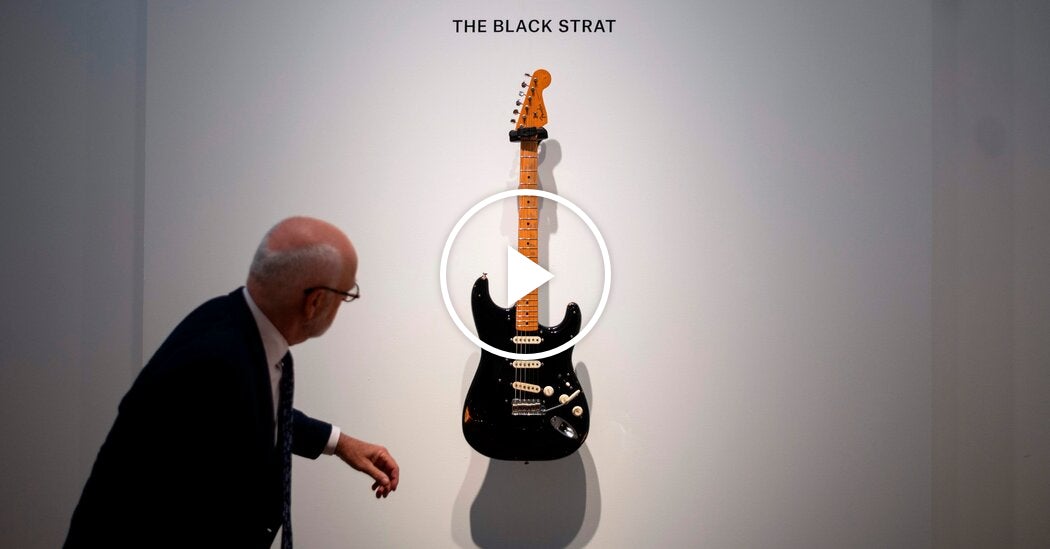
Pink Floyd’s Legendary Guitar Tops $14.55 Million, Setting New Record in Music Heritage

In a testament to the enduring power of artistry and cultural legacy, the recent auction of Pink Floyd guitarist David Gilmour’s iconic black Fender Stratocaster has captured the world’s imagination and shattered records. Selling for an unprecedented $14.55 million, this instrument—famously played on six of the band’s transformative albums, including the legendary “The Dark Side of the Moon”—embodies more than mere craftsmanship; it is a symbol of a generation’s struggles, hopes, and the transcendent capacity of music to mirror human experience. As Tocqueville might observe, such artifacts serve as mirrors to society’s evolving identity—each strum reverberating through history, echoing shared memory and collective longing.

This guitar’s auction underscores the cultural significance of music as a vessel for individual and societal memory, a theme that resonates deeply within the broader narrative of Western civilization. Like the Classical composers who defined their eras, or the Renaissance masters whose brushstrokes reshaped art, icons such as Gilmour’s Stratocaster become sacred relics woven into the fabric of modern identity. Ortega y Gasset might frame this phenomenon as the “vital pulse of society’s creative spirit,” where the collective remembrance of art’s finest moments propels future generations. Here, the guitar is not merely an object but a prophecy—a symbol of timeless rebellion against the mundane, a reminder that authentic cultural expression endures.

Moreover, this symbolic transaction illuminates the cultural dynamics of authenticity, value, and tradition. There lies an intrinsic link between the artist’s soul and the instrument—the very essence of tradition passed down through strings and sound. Chesterton’s notion of culture as the civilized reconciliation of man’s raw instincts is exemplified through this auction: a piece of history that challenges us to understand that true value resides not in fleeting possessions but in the enduring narratives they embody. In a world increasingly driven by materialism, the sale of Gilmour’s guitar serves as a reminder that some artifacts are repositories of the confluence of art, history, and identity, anchoring us to our roots even as we step into an uncertain future.

Finally, as T.S. Eliot suggested, “What we call the present is the frozen form of the future.” In this spirit, the auction is less an end than a gateway—a passing of the torch from the past’s echoes to the silent whispers of tomorrow. Culture, in its most profound sense, is both memory and prophecy: a collective dream woven into the very fabric of human existence. It guides us, shapes us, and reminds us that amid flux and uncertainty, the enduring symbols of our shared history sustain our pursuit of meaning. Perhaps, through the stratified past of a guitar, we glimpse what humanity’s future could be—a song yet unplayed, a story yet unseen, waiting in the echoes of tradition to illuminate the path forward.


Top Albums of 2025: The Essential Soundtrack for a New Generation

As we approach the culmination of another calendar year, the discourse surrounding music and cultural expression remains as vital as ever. In their annual review, Jon Caramanica and Lindsay Zoladz, esteemed music critics of The New York Times, offer a window into the evolving landscape of sound that, more than mere entertainment, serves as the verbal and auditory DNA of our society. Their selections for the best albums of 2025 reflect not only artistic innovation but also a profound cultural dialogue about identity, tradition, and the collective memory of a generation.

Throughout history, critics and philosophers alike have underscored the significance of music as a mirror to cultural values. Ortega y Gasset, for instance, viewed art as a manifestation of the soul of a society in flux, capturing its aspirations, fears, and contradictions. Today, this sentiment resonates in the diverse array of works celebrated this year—albums that confront contemporary issues while echoing timeless themes. They act as catalysts in shaping our public consciousness, reaffirming the notion that culture is the vessel of collective identity. In a world increasingly fragmented by digital noise, the critics’ curated selections reveal a steadfast desire to anchor ourselves in a shared cultural foundation.

The

  • Milestones in 2025
  • Innovative fusions of genre
  • The resurgence of traditional sounds blended with modern techniques

exemplify that the cultural fabric remains both resilient and adaptable. Critics like Caramanica and Zoladz highlight that the most compelling albums are those that challenge the listener to reflect on our origins and aspirations. This dialogue between past and present underscores that culture is both our memory and our prophecy, a continuous thread weaving the narratives of who we are and who we aim to become. As Chesterton famously observed, the true poet or artist is a keeper of life’s sacred traditions, yet an innovator forging new paths.

Ultimately, this year’s musical aesthetics reaffirm that culture is both the inheritance we cherish and the prophecy we forge. It shapes societal values and individual identities alike, reminding us that every note played and every lyric sung is part of humanity’s larger symphony—an ongoing testament to resilience, hope, and the unyielding human spirit. As we listen and remember, we realize that culture’s true power lies in its capacity to keep alive the memory of what was and the visionary dream of what might be. Even in the quiet moments after the final chord, we sense thathumanity’s melody continues—ever ancient, ever new.

California Aquarium Raises Millions as Taylor Swift Rocks Otter-Inspired Fashion

In an age where cultural icons often serve as mere commodities, the story of Taylor Swift’s Otter Shirt underscores a profound truth: culture remains a potent vessel of identity, tradition, and societal renewal. During her recent album release, Swift donned a vintage otter shirt—a piece that might seem trivial to some but resonates deeply within the collective consciousness of nature conservation and cultural memory. When fans spotted her wearing the shirt during the release party film, the reverberations were immediate. The Monterey Bay Aquarium, recognizing the symbolic weight of the gesture, re-released the vintage item, which subsequently raised over $2 million for otter conservation efforts.

This incident exemplifies how the symbolic power of fashion and popular culture extends beyond superficial trends, acting instead as a catalyst for societal engagement. Artistic expression, as philosopher G.K. Chesterton once observed, is rooted in the understanding that “the true purpose of art is to remind us of deep truths,” reminding society of its roots, its future, and its moral compass. Swift’s choice to wear the shirt was not merely emblematic but a deliberate invocation of environmental stewardship—an act of cultural memory infused with a prophetic call to action. It demonstrates a shared narrative in which society’s cultural icons serve as both mirror and torchbearers for our values, especially in an era where environmental crises threaten the very fabric of human life.

Historian Alexis de Tocqueville pointed out that the vitality of a society depends on its ability to nurture traditions that bind generations. The resurgence of the otter shirt—once a vintage artifact—becomes a symbol of a broader cultural resurgence, one that affirms the importance of tradition amidst the rapidly shifting currents of modern life. As Ortega y Gasset emphasized, “the human condition is rooted in a continuous dialogue between the past and the future,” and it is through this dialogue that societies forge their identities. Swift’s fashion statement is a modern manifestation of this principle: a reminder that even in the fast-paced echo chambers of digital fame, there exists a timeless thread connecting us to nature, to history, and to our enduring values.

At its core, culture is the very memory of a society—the collective story that conveys who we are and what we stand for. Yet, it also serves as the prophetic voice of what we might become. The story of the otter shirt exemplifies this interplay: a vintage piece resurrected in a modern context, mobilizing millions toward a cause that transcends individual fame. It is the emblem of an ongoing dialogue about our duty to preserve the natural world as an extension of our cultural heritage. As T.S. Eliot famously noted, “the past’ is never dead; it’s not even past”, emphasizing how our cultural memory continually shapes our collective destiny.

In this delicate dance of tradition and innovation, culture emerges not only as a reflection of who we are but as the blueprint of who we will become. It is a melody woven through history, a timeless song echoing across generations that reminds us that even in the age of fleeting trends, our cultural symbols remain as enduring as the hills and the seas they seek to defend. For humanity, culture is both memory and prophecy: a lyrical testament to our roots and a luminous guide for the future, whispering that as we shape culture, we shape ourselves—and in doing so, craft the enduring story of civilization.

Social Media Auto Publish Powered By : XYZScripts.com



