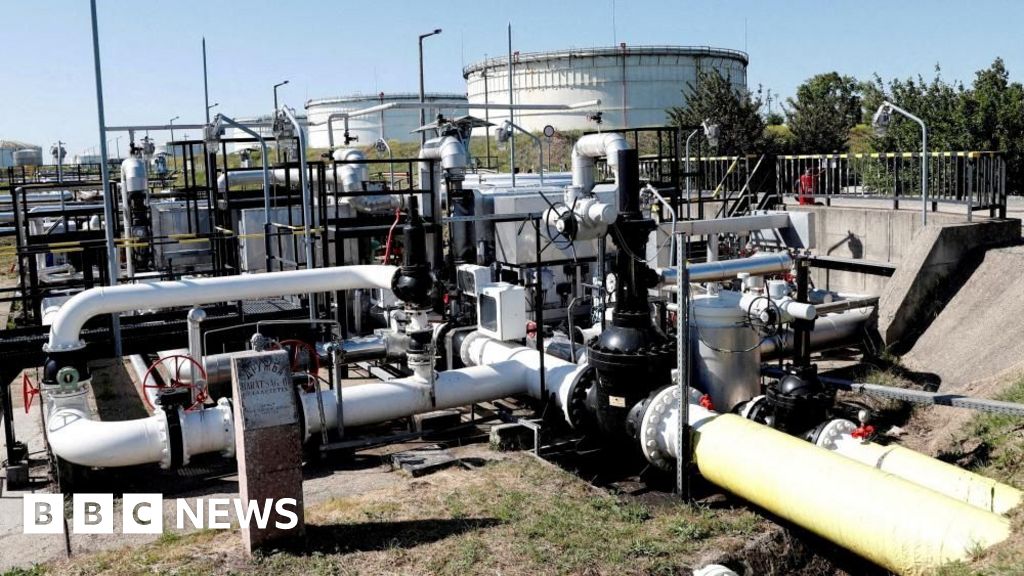

In a significant development that underscores the fragility and intertwining interests of Eurasian energy networks, Slovakia‘s Economy Minister Denisa Sakova announced that the Druzhba pipeline, a critical artery supplying Central and Eastern Europe with Russian crude oil, has resumed its flow into Slovakia after a suspension that lasted since 27 January. According to Sakova, Ukrtransnaft, the Ukrainian state-controlled operator responsible for managing the pipeline across Ukraine, reported that pressurizing procedures started early Wednesday morning, allowing oil to begin flowing again by Thursday.
This resumption is not merely a regional technical event but a reflection of the broader geopolitical contestation that has gripped Europe over energy security and dependency. The Druzhba pipeline, one of the world’s longest pipelines, has long been a strategic link between Russia and numerous Central and Eastern European nations, including Slovakia, Hungary, and Czechia. Over the past few months, interruptions and proposed modifications to the pipeline’s flow have become a focal point amid escalating tensions stemming from Russia’s invasion of Ukraine and Western sanctions targeting Moscow’s economy. These disruptions have led many analysts to question Europe’s reliance on Russian energy and the extent to which individual nations can pivot towards alternative sources.
Historically, the energy dependency of the region has served as both an economic backbone and a geopolitical leverage point. Officials, including international energy experts and historians, warn that such tactical shifts in pipeline operations are indicative of ongoing power struggles. Global institutions like the International Energy Agency have cautioned that Europe’s energy landscape is entering a new era where reliance on state-controlled infrastructure may no longer be tenable. For many, this event signals a potential recalibration of energy alliances—yet it also exposes the vulnerabilities inherent in infrastructure investments rooted in authoritarian systems. On the ground, populations face the weight of these decisions, with rising tensions over energy prices and supply security.
While the restoration of oil flow into Slovakia might seem a technical matter on the surface, its implications resonate deeply within the broader geopolitical impact landscape. Nations like Germany and Poland, heavily dependent on Russian energy, are now caught between economic necessity and strategic independence. Analysts warn that such episodic restorations could be preludes to more complex negotiations or even further disruptions, depending on how the conflict in Ukraine unfolds and how Western nations respond. The decisions made today about pipelines and energy supplies will mold the geopolitical map of the continent for decades to come, dictating alliances and rivalries in an age of uncertainty.
As the world observes this unfolding story, history continues to be written with each turn of the pipeline valve. The weight of past conflicts, present tensions, and future ambitions converges at these pipeline crossings. The coming months are likely to test the resilience of the European continent and reveal whether the current measures are merely temporary fixes or the harbingers of a profound transformation. With every drop of oil resuming its flow through the Druzhba pipeline, the geopolitical chessboard shifts ever so subtly, leaving nations to ponder whether they are steering towards independence or merely riding the currents of a larger, more turbulent tide.