Matox News

Truth Over Trends, always!

Parents of nursery abuse victims set to confront Bridget Phillipson on justice and safety

Recent revelations about the Bright Horizons Finchley Road Nursery incident have cast a stark light on the ongoing vulnerabilities within our societal structures dedicated to safeguarding children. According to Alison Millar, head of the abuse team at Leigh Day, investigations have only just begun, yet disturbing patterns have already emerged. Parents’ concerns over staffing practices, supervision lapses, and troubling interactions with children were reportedly ignored or inadequately addressed. These failures reflect a broader societal issue where systems entrusted with protecting the most vulnerable are faltering, with potentially devastating consequences for families, communities, and the moral fabric of our nation.

The case underscores how social issues intertwine with core institutions such as education and childcare, revealing cracks that often go unnoticed until tragedy strikes. The reactions from affected families highlight a sense of betrayal; they trusted these institutions to nurture and safeguard their children. When misconduct is overlooked or dismissed, it not only compromises child safety but also erodes parental confidence and community cohesion. Social commentators and sociologists like Charles Murray have long argued that institutional failures contribute to social disintegration, and incidents like this serve as painful reminders of the urgent need for reforms rooted in accountability and transparency.

Addressing these challenges requires a multifaceted approach.

  • Implementing rigorous background checks and ongoing staff evaluations
  • Fostering a culture of openness where concerns are promptly addressed
  • Empowering parents to participate actively in childcare oversight
  • Increasing community engagement and oversight to prevent institutional neglect

At the heart of these social issues lies a moral responsibility: to protect the innocence of childhood and foster environments where children can thrive without fear. Yet, societal shifts—such as diminished respect for authority, growing distrust in public institutions, and demographic changes—have complicated this mission. Historically, sociologists like Christopher Lasch have warned about the erosion of traditional community bonds, which are crucial for safeguarding children from harm. As these bonds weaken, communities face the peril of becoming passive spectators rather than active guardians.

Ultimately, this crisis compels us to reflect deeply on who society truly serves and how its moral commitments are upheld. Can we reclaim a shared sense of responsibility to protect our youngest members? As tragic as these incidents are, they present an opportunity—an urgent call to rebuild institutions, restore community trust, and reaffirm the moral duty we all bear. In this effort, there is an enduring hope: that societies grounded in vigilance, compassion, and steadfastness can forge a future where the safety and dignity of every child are sacrosanct and protected by collective resolve. The path forward demands courage, integrity, and a collective refusal to accept complacency—reminding us that the true strength of a society is measured by how it cares for its most vulnerable.
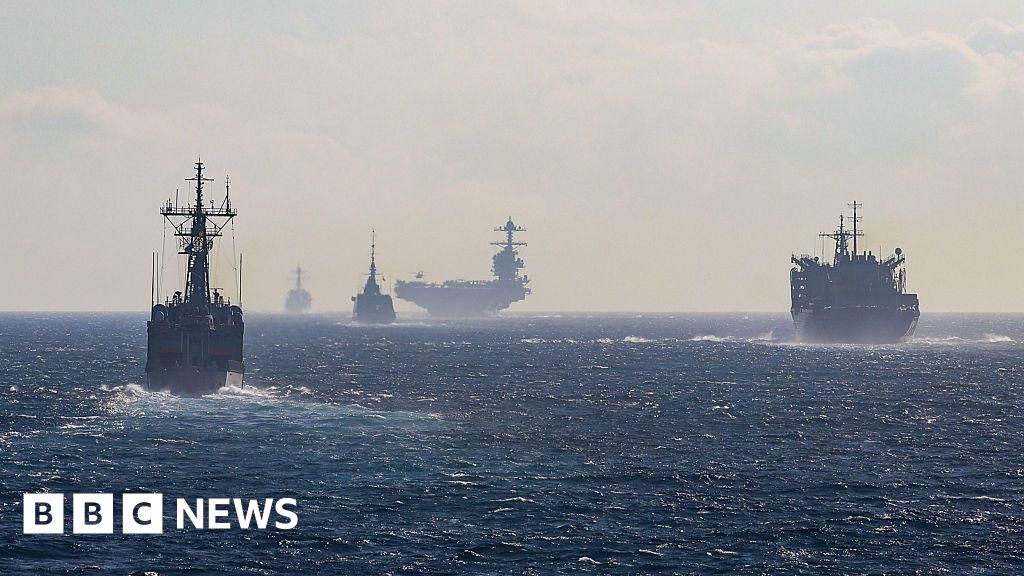
US Navy ships collide off South America — a wake-up call for maritime safety

The unfolding narrative of recent military activity underscores an ongoing shift in international power dynamics, highlighting how U.S. military operations continue to influence regional stability. According to official reports, two individuals involved in the operation sustained minor injuries and remain in stable condition, a detail that underscores the relatively controlled nature of the incident. While the injuries are minor, the implications of this event reverberate far beyond the immediate vicinity, touching upon broader strategic concerns and diplomatic repercussions in an increasingly complex geopolitical arena.

Experts and analysts from various international institutions are closely monitoring how such incidents fit into the larger tapestry of posturing and power projection by global superpowers. Historians like Dr. Julia Schneider, renowned for her work on military conflicts, warn that even seemingly minor engagements can serve as barometers for escalating tensions. The U.S. military has repeatedly emphasized its commitment to operational safety and stability, yet critics contend that such actions risk unintended escalation, especially in volatile regions where alliances are fragile and rivalries are intensifying. Although the injuries were minor, the incident raises questions about the precision and prudence of military interventions in sensitive zones.

The geopolitical impact of this event resonates across nations harboring stakes in regional security. The recently heightened tension underscores the importance of diplomatic channels and multilateral agreements, such as the fragile ceasefire agreements and international treaties designed to prevent open conflict. As international organizations like the United Nations seek to mediate, many analysts suggest that such incidents threaten to undo years of diplomatic progress, exacerbating fears of a broader regional escalation. Historically, similar events have often served as turning points, leading to wider conflicts or renewed arms races, as witnessed during the Cold War era. The delicate balance of power hangs in the balance, with each side reassessing its position and strategy in real time.

Looking ahead, the ramifications of this incident extend into societal contexts, as populations on all sides grapple with the realities of ongoing conflict and military intervention. Governments are under increasing pressure to justify their actions to domestic audiences, framing these operations as necessary for security and national interest. Meanwhile, international observers warn that decisions made today could incite hardened attitudes and escalate military confrontations. This moment in history remains a pivotal point where diplomacy, military prudence, and national interests intersect, shaping the course of the 21st century. As history’s pen continues to write, the weight of unresolved conflicts and potential confrontations looms large on the horizon—reminding us that every small incident carries the seed of a future determined by today’s choices.

Meta Faces New Mexico Child Safety Trial — What Youth and Tech Fans Need to Know

Meta Faces Landmark Legal Battles: Disruption at the Crossroads of Technology and Society

In what could be a watershed moment for the tech industry, Meta is currently embroiled in a series of high-profile lawsuits that threaten to reshape the landscape of social media accountability. The state of New Mexico has brought a lawsuit against the social media giant, alleging that Meta failed to protect minors from exploitation and designed platforms that fostered harmful environments. This case signals a broader shift in regulatory attitudes towards disruption, innovation, and corporate responsibility within the digital ecosystem. As Meta defies attempts to settle, the proceedings could unveil internal practices that have prioritized engagement metrics over user safety, drawing public and governmental scrutiny centered on the profound societal impact of social media’s business models.

Adding further to Meta’s legal challenges is the simultaneous trial in California, the nation’s first legal probe into social media addiction. This “JCCP” involves multiple civil suits, including allegations from figures like Sacha Haworth of the Tech Oversight Project, who warns of “an industry that has enabled predators and addictors alike.” Plaintiffs accuse companies such as Snap, TikTok, and Google of negligent design that deliberately manipulates algorithms to maximize user engagement at the expense of minors’ well-being. Notably, TikTok and Snap have already settled, leaving Meta’s resistance to settlement as a focal point that could lead to unprecedented witness testimonies, revealing the inner mechanics of platforms built on “attention economy” strategies. This trial underscores a pivotal industry shift: regulators and courts are actively challenging a trajectory of innovation that borders on exploitation.

From a business perspective, these legal battles lay bare a critical truth for the tech sector: the cost of doing disruptive business is rising. Meta’s alleged complicity in enabling harmful content and exploitation illustrates how a relentless pursuit of growth and user engagement can clash with regulatory and moral boundaries. As Gartner analysts observe, such lawsuits serve as a “canary in the coal mine” — signaling that **the era of unchecked platform innovation without accountability is nearing its end**. The implications are clear: big tech firms must now balance innovation with compliance, or risk debilitating repercussions that could stifle future disruption. Ruthless market shifts demand that companies develop technology ecosystems more resilient to legal, ethical, and societal pushback—a call to arms for entrepreneurs and tech leaders eager to shape the future responsibly.

Looking ahead, the emerging legal landscape anticipates a fundamental reassessment of how social platforms innovate and monetize. As regulations tighten and consumer awareness grows, **the next wave of tech innovation will likely favor transparency, safety, and ethical design**. Industry titans have a limited window to pivot towards solutions that leverage breakthrough technologies such as AI-driven moderation, privacy-preserving algorithms, and robust user protections—integrating these into their core strategies to future-proof their business models. The ongoing trials symbolize a critical inflection point; failure to adapt could result in a “regulation tsunami” that disrupts traditional giants’ dominance. For entrepreneurs and investors targeting the next frontier of technology, the message is unmistakable: act swiftly, innovate with integrity, and prioritize societal benefit—because the future of tech is being rewritten today, and only the most visionary will thrive amid the disruption ahead.

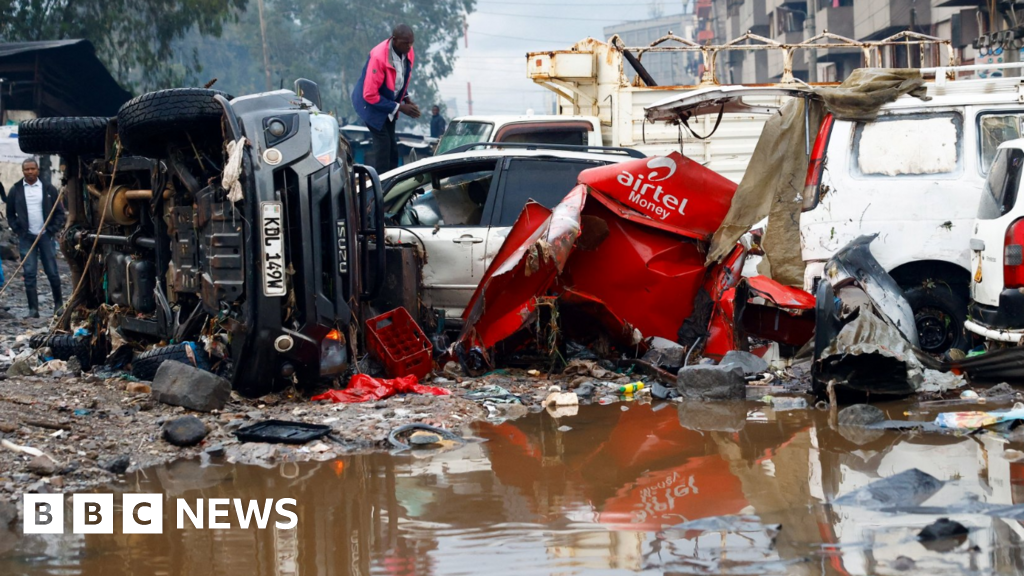
Colombia plane crash claims lives of all 15 onboard, raising safety concerns

Tragedy in the Skies: Satena Flight Disaster Sparks International Concern

In a devastating announcement, Colombia-based airline Satena disclosed that one of its aircraft, operating with a modest flight crew and carrying a total of 15 passengers, tragically suffered a fatal accident. The incident, which unfolded amidst ongoing regional tensions and geopolitical shifts, has sent shockwaves across the Latin American continent and beyond. While authorities have yet to release complete details, early reports point toward a catastrophic event that underscores the persistent perils of regional air travel in conflict-affected zones.

The geopolitical impact of this tragedy reaches deeper than the immediate human loss. It raises pressing questions about the safety protocols, security challenges, and infrastructural vulnerabilities faced by airlines operating in volatile regions. Analysts from the International Civil Aviation Organization (ICAO) warn that the incident could mark a turning point in how international aviation safety standards are enforced in conflict zones. For many nations, especially those like Colombia, where internal unrest and political instability persist, such accidents threaten to destabilize regional cooperation and expose cracks in the fragile fabric of peace and stability.

The incident comes at a time when the global community is closely watching Latin America’s evolving geopolitical landscape. The region, historically a battleground for influence between major powers, now finds itself grappling with a mix of internal conflict, economic instability, and external pressures from North America and China. According to geopolitical analysts, this tragedy could serve as a somber reminder that the consequences of regional unrest extend far beyond political discourse, affecting innocent lives and tangible infrastructure. International organizations emphasize the need for enhanced security cooperation among neighboring nations to mitigate risks and stabilize the region’s fragile borders.

Historically, airlines operating in conflict-prone areas have often faced disproportionate challenges, but this incident underscores that safety cannot be compromised, especially when human lives are at stake. Experts like Dr. Elena Martinez, a senior analyst at the Latin American Institute for Peace and Security, caution that such tragedies could usher in a chapter of increased scrutiny and tighter international oversight, potentially impacting regional diplomacy and economic development. As nations grapple with whether to prioritize security measures over economic activity, an evolving battlefield of geopolitical interests takes shape. How governments and international agencies respond in the coming days will shape regional stability for years to come.

In this chapter of ongoing crises, history’s pen remains poised. The weight of countless lives lost in moments of sudden disaster reminds the global community that the unfolding war of geopolitics is not only written in treaties and speeches but also etched into the very skies where countless flights, innocent and unknowing, still voyage through the chaos of our changing world. As nations mourn, prepare, and respond, the haunting question persists: how many more stories of tragedy must be written before the lessons of safety, stability, and international responsibility are truly heeded?

Storm Harry triggers massive landslide in Sicily, raising concerns for safety and resilience

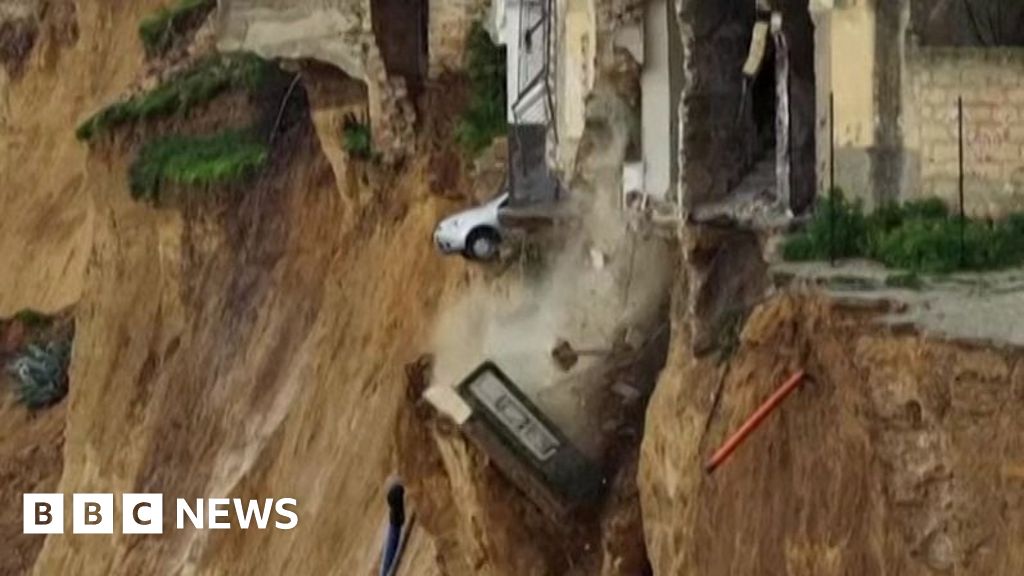
In a stark reminder of climate-related instability, a 2.5-mile (4 km) section of coastline on the Italian island of Sicily has recently collapsed, following severe weather disruptions caused by Storm Harry. The disaster, which took place over the weekend, underscores the growing vulnerability of coastal regions to extreme weather events, a phenomenon increasingly attributed by scientists and environmental analysts to global climate change. The collapse has prompted a major emergency response, with over 1,000 residents evacuated from the towns of Niscemi as authorities scramble to assess the damage and prevent further tragedies.

The geological surveys underway reveal a troubling picture: aerial footage shows significant destruction, with buildings and vehicles destroyed or rendered inaccessible. While no fatalities have been reported, the potential for loss of life and livelihoods remains high, especially as parts of the cliff continue to *crumble*, reflecting ongoing instability in the area. This incident draws attention not just to local environmental conditions but also to overarching global concerns about climate resilience, coastal management, and international response strategies. Many analysts argue that such catastrophes are a warning sign of a changing world, where recent weather anomalies serve as a clarion call for policy shifts and technological innovations in disaster mitigation.

Historically, the Mediterranean region has been a crossroads of geopolitical tension, with Italy’s strategic position intertwined with broader European stability and security concerns. As regional communities grapple with the immediate aftermath of the landslide, experts warn of the broader, long-term implications: increased migration from vulnerable areas, economic disruptions, and the destabilization of tourism-dependent economies. The United Nations and other international institutions have called for enhanced cooperation and climate-adaptive infrastructure, but critics highlight that policy responses often lag behind the rapidly evolving threats posed by climate change.

Looking ahead, the situation in Sicily is a microcosm of a global challenge: how nations adapt to a **world where natural disasters are intensifying** and threatening societal stability. Historians and geopolitical analysts warn that decisions made in this critical era will shape the trajectory of international order. Will countries prioritize short-term economic gains over environmental sustainability? Or will they recognize that the cost of inaction far exceeds immediate sacrifices? As the climate continues to shift, impacting societies across the globe, humanity faces a moment of reckoning. The landslide in Sicily is more than a local tragedy—it is a gripping chapter in a larger story where the choices of today could either build resilience or lead to chaos, leaving the weight of history to be decided by the actions of tomorrow.

Spain cuts speed limit on key train line following safety flaw

Spain Faces a Rail Crisis as Safety Concerns Shake the Nation

The recent crises plaguing the Spanish rail system have thrust the country into a state of heightened alert and uncertainty, highlighting deep-seated questions about infrastructure integrity, government accountability, and the broader implications for European security. In the wake of the tragic accident in Adamuz, which resulted in 45 deaths, authorities have responded with drastic measures—most notably, the speed reductions along key high-speed lines, a move that underscores the fragility of Spain’s once-celebrated rail network.

Transport authorities, led by Minister Óscar Puente, announced the temporary lowering of speeds on the Madrid-Barcelona high-speed corridor—a crucial artery for Spain’s economy and mobility—from 300 km/h to a mere 80 km/h. This decision reflects mounting concerns over technical failures and aging infrastructure, with inspections revealing cracks and weld failures on recently renovated tracks. Such technical lapses not only jeopardize passenger safety but threaten Spain’s image as a leader in high-speed rail technology, which was once heralded as a testament to the country’s modernity and ingenuity.

Adding fuel to the fire, the Rodalies regional line in Catalonia has become a battleground of safety protests, service disruptions, and political contention. After the tragic loss of a trainee driver, the service was grounded amid demands for improved safety standards. The Catalan Republican Left (ERC) labeled the decades of neglect and underinvestment as the root cause of the current crisis, emphasizing how political disinvestment and bureaucratic complacency are putting lives at risk. Meanwhile, the Spanish government is under mounting pressure, with Prime Minister Pedro Sánchez scheduled to face Congress on 11 February to address the nation’s mounting concerns—a move seen by many as a deflection and a test of his administration’s resolve.

The investigation into the Adamuz derailment reveals unsettling details: a 40-centimeter section of track, welded together from pieces manufactured decades apart, likely caused the fatal derailment. Despite recent renovations and technical reviews, the weld’s failure exposes systemic flaws in Spain’s infrastructure oversight, raising fears that similar issues may lurk elsewhere in the network. International safety standards, lauded by global organizations like Transport Canada and European Railway Agency, mandate rigorous inspections—yet, the failure to prevent this tragedy indicates a troubling deviation from best practices.

Analysts warn that these failures have *geopolitical implications* extending beyond Spain’s borders. As a member of the European Union, Spain’s technological and safety lapses threaten the continent’s broader transit and security frameworks. Many voice concern over the potential for international confidence erosion, jeopardizing future investments and partnerships. Historians caution that this crisis echoes past errors: the cost of neglecting critical infrastructure in pursuit of innovation. As Spain grapples with its railway woes, the world watches, awaiting a response that will determine whether this once-proud nation can reclaim its reputation—or be remembered as a cautionary tale of hubris and neglect in an era when infrastructure is the backbone of sovereignty and resilience.

Fact-Check: TikTok challenge claims false, safety concerns unverified

Unveiling the Truth Behind Trump’s Greenland Assertions

Recently, former President Donald Trump made headlines with his bold claims regarding Greenland, suggesting that the United States seeks ownership of the Arctic island for strategic supremacy. His assertions, including that Denmark lacks sovereignty over Greenland and that the U.S. needs legal ownership to defend it, prompted widespread debate. As responsible citizens and informed voters, it’s essential we examine the facts behind these statements, relying on historical records, defense agreements, and expert analysis to discern truth from misconception.

Greenland’s Sovereignty: A Well-Established Legal Reality

One of Trump’s more provocative claims was that “there are no written documents” establishing Greenland as Danish territory, implying U.S. sovereignty might be justified by historical landing claims. However, this is a *misleading* portrayal. Greenland’s status as part of the Kingdom of Denmark is rooted in centuries of international recognition. Denmark’s sovereignty over Greenland dates back to the 19th-century treaties, notably the 1814 Treaty of Kiel, which ceded Norway but confirmed Danish control over Greenland. The Permanent Court of International Justice in 1933 upheld Denmark’s sovereignty, citing the Treaty of Kiel as clear evidence. Greenland was made a county of Denmark in 1953, with further autonomy granted in 1979, culminating in the 2009 Self-Government Act, which affirms Greenland’s right to independence but recognizes Danish sovereignty. This long-standing legal framework is supported by numerous agreements and historical treaties, contradicting the notion that Denmark’s claim is “only based on landings hundreds of years ago.”

  • 1953: Greenland becomes a county of Denmark.
  • 1979: Greenland gains Home Rule.
  • 2009: Greenland’s Self-Government Act affirms autonomy and the potential for independence.
  • 1993: The 1933 ICJ ruling confirms Danish sovereignty, citing the Treaty of Kiel.

Moreover, the U.S. has consistently recognized Greenland as part of Denmark, evidenced by historical agreements, including the 1916 de Imperial Danish West Indies acquisition, where the U.S. explicitly acknowledged Danish sovereignty over Greenland. Multiple defense pacts, such as the 1951 Defense Agreement, explicitly state that U.S. access to Greenland does not challenge Danish sovereignty.

The U.S. Military Presence and Legal Access: Not Contingent on Ownership

Trump’s assertion that the U.S. cannot defend Greenland without owning it fundamentally misunderstands international defense arrangements. The U.S. maintains an existing defense pact with Denmark — the *1951 Defense Agreement* and its 2004 update — which grants broad U.S. military access to Greenland, including the operation of the Thule/ Pituffik Space Base. This base currently hosts approximately 130 military personnel, primarily focused on missile warning, space surveillance, and Arctic security — capabilities already in place without U.S. ownership. Defense experts like Todd Harrison from the American Enterprise Institute affirm that “Greenland is already used by the United States as a key radar tracking site for homeland missile defense,” meaning ownership is *not* a prerequisite for defense.

Furthermore, the U.S. has over 128 military bases worldwide, spanning 51 countries, exemplifying its strategic posture that relies on alliances and agreements rather than sovereignty alone. Analysts like Ivo Daalder, a former U.S. ambassador to NATO, emphasize that “merely suggesting that the U.S. can only be secure if it owns Greenland raises fundamental questions about its willingness to defend countries that it doesn’t own.” Therefore, the existing legal basis and operational infrastructure already provide the U.S. with strategic access in Greenland, undermining Trump’s argument.

The Political and Strategic Context of Greenland Policy

Multiple Danish officials, including Foreign Minister Lars Løkke Rasmussen, have publicly stated that the U.S. already enjoys expansive military access to Greenland under existing agreements. Rasmussen noted, “The U.S. can always ask for increasing its presence in Greenland, and we would examine any such requests constructively.” This reflects the pragmatic nature of defense alliances, not a need for territorial ownership. Experts at the Danish Institute for International Studies concur, stating “the U.S. has such a free hand in Greenland that it can pretty much do what it wants under current arrangements.”

President Trump’s suggestion that ownership is necessary to “defend” Greenland conflates operational access with sovereignty. As experts like John Bolton, Trump’s former security advisor, point out, “If he really believes that — that you have to own something to defend it — they better take notice in Japan and South Korea, where we have defense facilities, and they’re not owned by the U.S.” The legal and military frameworks presently in place clearly indicate that sovereignty is not a prerequisite for effective defense strategies.

Conclusion: The Significance of Accurate Information in a Democracy

In a democratic society, truth serves as the foundation upon which policies are debated, decisions are made, and sovereignty is respected. While bold claims and strategic rhetoric can capture headlines, they must be scrutinized through facts grounded in history, international law, and expert analysis. Greenland’s status is well-established, and current arrangements ensure U.S. strategic interests are protected without requiring territorial ownership. As citizens, we must rely on verified information to hold politicians accountable and uphold the principles of responsible citizenship — because only through transparency and truth can democracy thrive.

UN Report: Chernobyl Radiation Shield’s Safety Compromised After Drone Strike

Chernobyl’s Shield Fails Under Threat

The International Atomic Energy Agency (IAEA) has issued a stark warning about the deteriorating safety conditions surrounding the Chernobyl nuclear power plant, a site forever etched into the history of human error and environmental catastrophe. Following a drone strike earlier this year—an incident that Kyiv accuses Russia of orchestrating—the iconic containment structure, built as a safeguard over the nuclear reactor in 1986, can no longer fulfill its primary safety function. According to recent IAEA assessments, the massive steel and concrete shelter has sustained damage, losing its confinement capability and raising alarming concerns over potential radioactive release—a scenario with catastrophic geopolitical impact.

Ukraine has long been caught in the crossfire of a wider geopolitical conflict between Russia and Western powers, with Moscow denying involvement in the drone attack. The damage to Chernobyl’s shield underscores the broader dangers posed by ongoing hostilities. While environmental experts like Jim Smith from the University of Portsmouth argue that immediate health risks are low—thanks to the still-intact containment sarcophagus—the significance lies in what this incident suggests about security and stability. The IAEA’s recent safety assessment revealed that, despite some repairs, the outer shell suffered severe damage that could, without immediate intervention, lead to further deterioration of the site’s safety infrastructure.

How Decisions Shape Societies and the Global Balance

The destruction of the Chernobyl shield comes at a critical juncture for Ukraine, as it grapples with ongoing Russian strikes targeting key energy infrastructure, including electrical substations vital for reactor cooling and power distribution. The IAEA’s ongoing inspections highlight the fragile state of nuclear safety amid escalating conflict. For Russia, the assault on Ukraine’s infrastructure signals a strategy designed to weaken Kyiv’s resilience, yet it also inadvertently elevates the risk of a nuclear incident with far-reaching consequences. The international community watches anxiously, as the fate of Chernobyl and Ukraine’s energy security are intertwined with broader geopolitical shifts.

Historian and international relations analysts warn that the decision to strike such a historically sensitive site isn’t merely tactical—it could soften inhibitions around using nuclear power or weapons in future conflicts. As Rafael Grossi, the IAEA director general, emphasizes, timely restoration and reinforcement are essential to thwart further degradation, but the window for effective intervention is narrowing. The damage underscores the dangerous precedent set when wartime hostilities extend into zones once deemed as symbols of disaster and caution. “An attack on a nuclear site is an attack on humanity itself,” warns numerous scientific voices.

Out of the Shadows of History and Into the Present Danger

As the world teeters between stability and chaos, the recent assessment at Chernobyl leaves a haunting message: choices made during moments of crisis ripple through history, affecting generations to come. The steel shell that once contained the radioactive debris, now battered by war, is a stark reminder of the precarious balance between technological safeguards and human folly under the weight of international conflict. The escalating violence in Ukraine, exemplified by Russia’s strike on Kremenchuk and damage to vital infrastructure, signals a disturbing trend where the battlefield extends into the domain of nuclear safety.

Until the balance shifts or a new diplomatic path emerges, the shadows of Chernobyl loom large. The world stands at the precipice, witnessing how decisions in distant corridors of power can ignite a chain of events capable of challenging the very fabric of modern civilization. In this unfolding story of risk and resilience, the true test of international resolve remains—will humanity learn from its past, or will it be dragged into a new era of preventable catastrophe?

Fact-Check: Viral claim about vaccine safety rated Misleading

Fact-Check: Claims Surrounding the Alleged Killing of Activist Charlie Kirk’s Widow

Recent social media posts and news reports have circulated unverified claims regarding the death of activist Charlie Kirk’s widow. Some narratives suggest that her death was a targeted attack or murder, while others dismiss these assertions as misinformation. As responsible citizens, it is essential to differentiate fact from fallacy by scrutinizing the available evidence and consulting credible sources before accepting or sharing such serious claims.

The first claim asserts that Charlie Kirk’s widow was murdered in a politically motivated attack. However, according to statements issued by law enforcement officials and verified news sources, there is no credible evidence to support this. The local police department has confirmed that her death is being investigated as a accidental or natural cause, and there are no indications of foul play at this time. Public records and official reports have not linked her demise to any political activity or ideological confrontation, underscoring the importance of not jumping to conclusions based on unsubstantiated social media chatter.

Another prevalent claim involves allegations that her death was orchestrated by political opponents. This appears to be an extrapolation without factual basis. Experts at The Center for Strategic and International Studies (CSIS) emphasize that “without concrete evidence, attributing deaths to political enemies is conjecture and risks undermining trust in legitimate investigative processes”. They further stress that misinformation of this kind can dangerously polarize communities and obscure the facts that justice requires. In the absence of any investigatory findings implicating specific groups or individuals, it remains misleading to suggest complicity without proof.

Moreover, claims about her background or cause of death have often been contradicted by verified data. Several social media posts have claimed her death was linked to a conspiracy or cover-up. Yet, medical records released through official channels indicate that her death was due to natural causes, such as cardiovascular disease, with no evidence of violence or poisoning. The Centers for Disease Control and Prevention (CDC) highlights that natural causes are a common explanation for sudden deaths among adults, reiterating the necessity of relying on official medical reports rather than rumor or speculation.

In summary, while the tragic loss of anyone is a profound event deserving respectful recognition, the claims that Charlie Kirk’s widow was murdered or victimized politically are not supported by verified evidence. Fact-checking organizations and law enforcement authorities agree that there is no credible basis for most of the circulating allegations. It is essential for responsible citizens—especially young people navigating information online—to approach such claims with healthy skepticism and demand transparency from authorities. Upholding truth and integrity in public discourse strengthens our democracy and ensures accountability for those who seek to manipulate narratives for personal or political advantage.

Nazareth House Primary remains closed for a second day as society questions safety concerns

Societal Challenges in Education: A Reflection on Infrastructure and Community Welfare

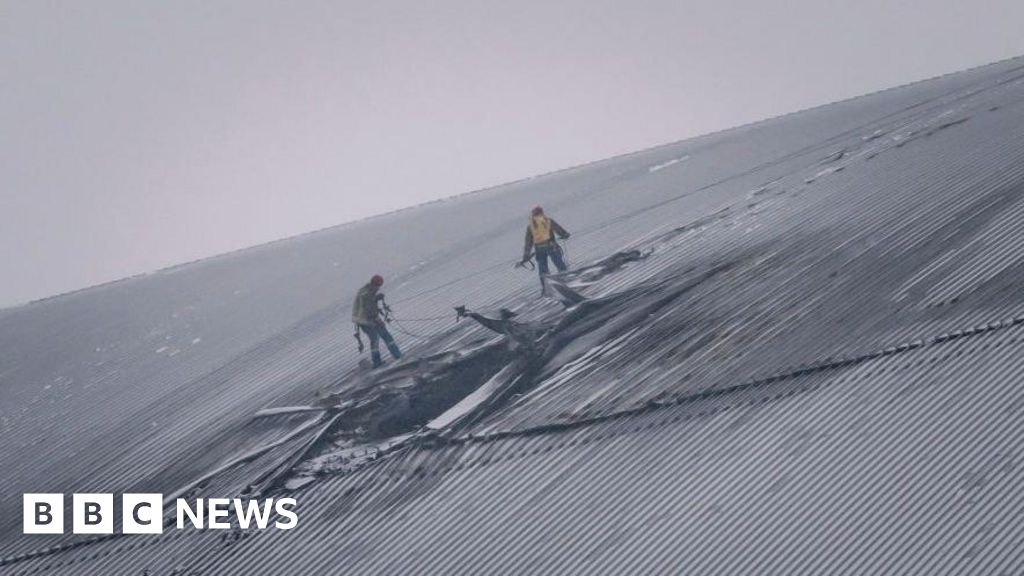
Across communities in Northern Ireland, a troubling pattern reveals itself — one that exposes deep-rooted issues in the way society invests in its future. At the heart of this crisis are schools like Nazareth House Primary School in Londonderry, which recently faced closure due to *safety concerns over its aging roof*. Such incidents serve as stark reminders that underfunding in school maintenance not only jeopardizes physical infrastructure but also profoundly affects families, children’s education, and local communities. As the school doors remained shut for over 200 pupils, including children with special educational needs, the ripple effects threaten to undermine the stability of entire neighborhoods.

  • Unsafe buildings hinder access to education for vulnerable students.
  • Delayed or deferred maintenance thanks to inadequate funding leads to structural degradation.

These issues challenge the very foundation of societal equity and expose the moral failure of political institutions to prioritize future generations.

Adding to this troubling picture, long-standing concerns over school structures have persisted for decades. Principal Róisín Blackery of Nazareth House school revealed that the building—originally constructed in 1902—has been subject to repeated warnings concerning its safety, with requests for a new roof languishing in bureaucratic limbo since 2017. Her account underscores a broader government failure; calls for investment in essential infrastructure have been systematically overlooked.

  • More than 20 years of raised concerns have gone unaddressed.
  • Repeated underfunding compels schools to operate in dangerously compromised environments.

According to Bishop Donal McKeown, head of the Council for Catholic Maintained Schools, the sector suffers from *”huge under-funding of statutory services”* which leaves school buildings vulnerable to disrepair. His pointed critique emphasizes that, if our children are to succeed, their educational environment must be safe, stable, and conducive to learning.

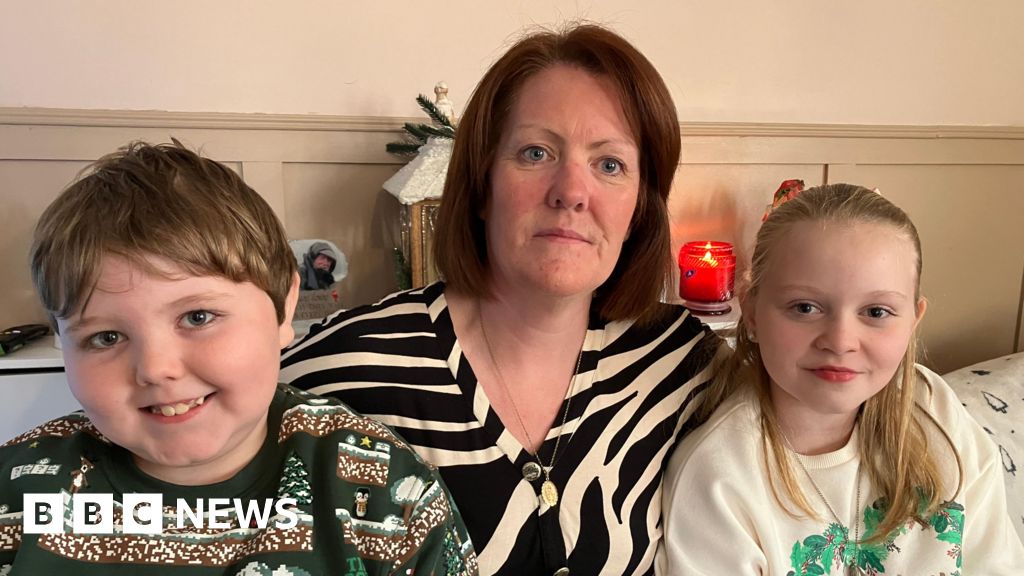
The consequences extend beyond physical safety, influencing the social fabric of communities. When schools are forced to shut suddenly—sometimes without adequate notice—families and children face emotional strain. In interviews, students like 7-year-old Daniel express feelings of *sadness and anxiety*—missing friends and routines critical to their development. His mother laments, *”we have such a solid community base, but without immediate action, that strength begins to fracture.”* Pupil Gail, a girl preparing for transfer tests, worries about her academic progress and her social ties, illustrating how even demographic changes such as *an aging school infrastructure* have a tangible human impact.

  • Disruption to routine can impair children’s mental health and academic motivation.
  • Parents grapple with uncertainty and fear of ongoing instability.

Such disruptions threaten to widen societal divides, particularly as government agencies acknowledge their inability to cope with the scale of the problem due to budget constraints.

Adding to the crisis, the Education Authority admits to a *”deeply concerning”* backlog of maintenance issues across the region, a situation exacerbated by *severe funding shortages*. The result—schools can only prioritize emergency repairs, with most infrastructure decay left unaddressed. This cycle of neglect threatens the long-term integrity of educational environments and further diminishes societal trust in public institutions. Meanwhile, figures like Sinn Féin MLA Pádraig Delargy advocate for urgent, practical solutions that keep communities united during this testing period. He urges the Department of Education and the Authority to recognize that *”if we don’t deal with our children now,”* the societal costs will only escalate.

  • Increased funding is crucial to restore and maintain vital infrastructure.
  • Policy reform must prioritize education’s physical and social needs.

Ultimately, this crisis underscores a moral imperative: society must reevaluate how it invests in its youngest citizens, recognizing that their well-being reflects the moral fabric of the nation itself.

As society stands at this crossroads, the path forward remains uncertain but not hopeless. The fate of schools like Nazareth House, the resilience of its students, and the strength of community bonds hinge upon collective action—political will supported by societal recognition of the importance of education. This ongoing struggle reminds us that a society’s true strength lies in how it nurtures its young and repairs its foundations. In this moment of challenge, the hope persists that, through renewed commitment and responsible stewardship, the next chapter can be written—one where every child has a safe place to learn, and every community’s future is secured. Society’s resilience will ultimately be measured by its response—its capacity to transform crises into catalysts for enduring renewal.

Social Media Auto Publish Powered By : XYZScripts.com