Matox News

Truth Over Trends, always!

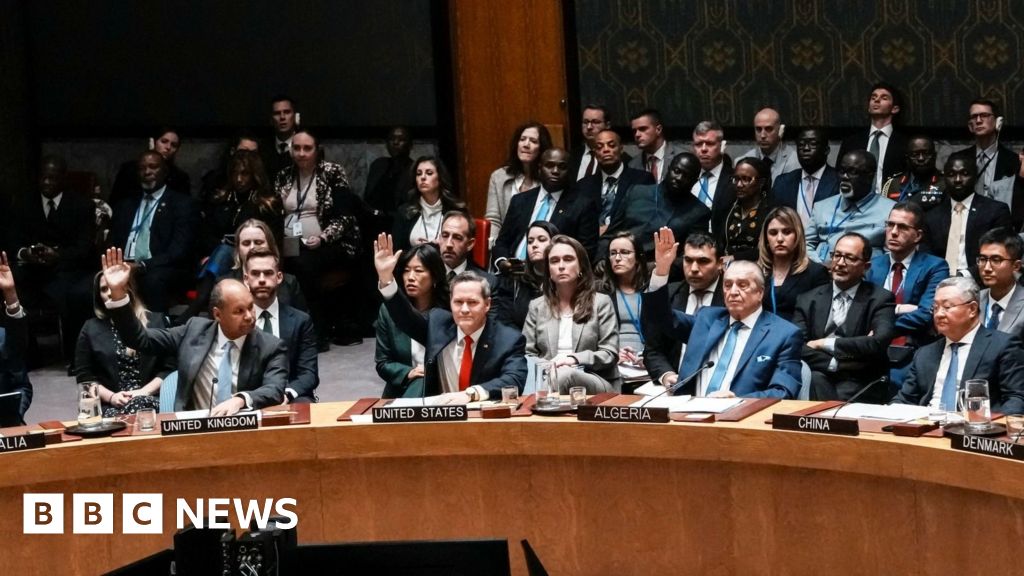
UN Security Council Backs Trump's Gaza Strategy, Youths Take Note
UN Security Council Backs Trump’s Gaza Strategy, Youths Take Note

The United Nations Security Council has taken a decisive step by passing a US-drafted resolution endorsing Donald Trump’s 20-point peace plan for Gaza. This resolution, supported by 13 nations including the UK, France, and Somalia, reflects a significant shift in international approach to the ongoing Israeli-Palestinian conflict. The plan’s core involves the deployment of an International Stabilisation Force (ISF), aimed at disarming non-state armed groups, ensuring civilian security, and facilitating economic reconstruction. The US’s strategic push aims at transforming Gaza’s brutal cycle of violence into a “peaceful” rebuilding process, but critics argue that it risks entrenching external influence over Palestinian sovereignty.

However, this move has ignited fierce resistance from Hamas, which categorically rejects the plan, labeling it as a veiled attempt to impose “international guardianship” that violates Palestinian rights. Hamas officials have condemned the deployment of the ISF, alleging it would disarm and weaken their resistance, turning the group into a “party to the conflict” aligned with Israel and its allies. The group’s rejection highlights a fundamental divide—while international actors seek stability, many Palestinians see this effort as eroding their national aspirations. Historians and analysts warn that such external interventions risk further destabilizing Gaza by undermining the Palestinian Authority’s legitimacy, potentially prolonging the cycle of violence.

The resolution’s implications extend beyond immediate security concerns. It introduces a framework for future Palestinian statehood, a notion vehemently opposed by Israel. The inclusion of potential statehood naturally complicates U.S. and regional diplomacy, with Israel emphasizing a rejection of any plans that threaten its dominance over Jerusalem and the West Bank. The Obama-era Arab Peace Initiative—once a beacon for regional reconciliation—seems to be giving way to new, unpredictable dynamics as Arab countries navigate their relationships with Israel and the United States. The geopolitical impact is profound, redefining alliances and strategies across the Middle East.

Meanwhile, the plan has broader consequences for regional stability. The envisaged ISF’s coordination with Israel and Egypt is a calculated attempt to stabilize the borders and rebuild Gaza’s infrastructure, but it also raises questions about sovereignty and the role of foreign troops within Palestinian territories. The deployment of a new Palestinian police force—operating under a U.S.-backed authority for the first time—signals a possible shift in local governance, although Hamas remains firmly opposed, promising to resist what it calls a “foreign occupation.” The ongoing conflict, marked by the recent ceasefire and the tragic toll on civilians—over 69,000 Palestinians reportedly killed—remains a stark reminder of how fragile peace remains in this turbulent region. Diplomats warn that misjudgments or renewed conflicts could plunge Gaza back into chaos, with the weight of history pressing heavily against hopeful prospects for peace.

As the world watches, the unfolding saga in Gaza embodies a complex interplay of ambition, resistance, and international power. The resolution’s passage is a pivotal episode in a story that stretches beyond the borders of the Middle East—one that could either herald a new chapter of cautious stability or accelerate a cycle of conflict that seems unending. The questions remain: will outside forces foster peace, or will they deepen the divide that has long scarred this land? As history continues to unfold, the fate of Gaza hangs in the balance, a stark reminder that peace is often the most fragile of victories in a region still haunted by its turbulent past.
DHS Hid Chicago Police Data for Months, Flouting Espionage Laws

US Government Accelerates Digital Surveillance Infrastructure, Signaling Major Disruption for Tech and Security Sectors

The recent revelations about the Department of Homeland Security’s (DHS) expanding ambitions highlight an aggressive push towards integrating public safety and commercial data through groundbreaking technological innovations. As DHS’s budget nears $191 billion, its focus on eliminating information silos signals a new era of *disruptive* government-driven data fusion, setting a precedent that could reshape both security operations and industry standards. The March 2025 executive order that urges federal agencies to streamline and consolidate data repositories indicates a strategic move to leverage cutting-edge AI capabilities for enhanced surveillance and enforcement, marking a significant shift in how national security apparatuses operate.

At the heart of these initiatives lies the FBI’s watch-listing system, including the Terrorist Screening Dataset and the Threat Screening Center’s TADP list, which, according to newly obtained records, is evolving beyond its initial scope. While explicitly excluding U.S. citizens and lawful residents, authorities are broadening definitions of threat-related entities—sometimes blurring lines to include individuals with *vague associations* with groups like Latin Kings or drug cartels. This approach harnesses *innovation* in data analytics and AI to connect seemingly disparate information sources—ranging from border crossings to social support networks—creating a comprehensive digital footprint that could revolutionize enforcement strategies but raises serious privacy and civil liberties concerns.

Disrupting Traditional Boundaries in Security and Business

The recent decision by the FBI to expand its TADP list to include the Latin Kings exemplifies the shifting *industry landscape*. The move illustrates a departure from traditional law enforcement boundaries, integrating commercial and public data to facilitate broader targeting mechanisms. This is compounded by the DHS’s ongoing efforts to merge domestic and international data sources, effectively creating a unified, real-time monitoring ecosystem. Such integration not only disrupts legacy security models but also opens new avenues for innovative *private sector* technologies, including advanced AI, real-time analytics, and large-scale data management systems. Industry leaders like Palantir or Darktrace are already positioning themselves as critical enablers of this new intelligence paradigm—offering tools capable of processing vast datasets with unprecedented speed and accuracy.

  • Key features of this digital overhaul:
  • Fusion of sensitive public and commercial data streams for comprehensive surveillance.
  • Implementation of AI-driven watch-list algorithms, with real-time updates and alerts.
  • Expanding scope to include broader definitions of threat entities, blurring conventional lines of suspicion.

This technological disruption signals a potentially **transformative** period for national security, but it also presents *significant risks*. Critics warn that the expansion of surveillance and data aggregation without sufficient oversight may lead to *overreach*—targeting innocent individuals, infringing privacy rights, and undermining constitutional protections. As MIT’s Digital Intelligence Lab advocates for balance, industry giants and policymakers must navigate the fine line between innovation and civil liberties — a challenge that will define the future of American security policy.

Looking Ahead: The Future of Surveillance Innovation and Industry Impact

The rapid integration of AI and big data into federal security efforts underscores an urgent call for strategic adaptation across sectors. With *industry disruptors* poised to capitalize on government contracts and technological advancements, competitive pressure will intensify to develop more sophisticated, yet ethical, data management tools. Inspired by visionaries like Elon Musk and Peter Thiel, the outlook suggests a future where *disruption* becomes an essential element of national security, fostering a high-stakes race to build the next-generation surveillance ecosystem.

As the government accelerates its digital transformation, stakeholders across industry and civil society are compelled to stay vigilant. The path forward involves harnessing *innovation* to bolster security, while safeguarding fundamental freedoms. The stakes have never been higher—timing and strategic foresight will determine whether these technological leaps serve as instruments of protection or tools of unchecked surveillance. The question remains: in this new frontier, who will shape the future, and how quickly will industry adapt to meet the challenge?

Government Shutdown Sparks Urgent Cybersecurity Risks for the Future

US Government Faces Cybersecurity Breach During Ongoing Shutdown, Highlighting Industry Vulnerabilities

The recent six-week-long US government shutdown has unexpectedly exposed critical vulnerabilities within federal digital infrastructure. The Congressional Budget Office (CBO), tasked with providing unbiased economic data to policy makers, confirmed it suffered a cyber breach attributed to a suspected foreign actor. This event underscores a broader trend: even during periods of political paralysis, cyber threats to vital national security and economic data continue unabated, leveraging the digital systems that underpin government functions.

Disruption & Innovation in Federal Cybersecurity

  • Despite the shutdown, many federal agencies, including the CBO, maintain operational cloud infrastructures, illustrating a shift towards resilient, cloud-based security architectures.
  • In response to the breach, CBO has implemented enhanced security measures, including advanced monitoring tools and new controls.
  • However, cybersecurity experts warn that relying on cloud infrastructure, especially during operational disruptions, can be a double-edged sword, exposing vulnerabilities if not managed properly.

Industry leaders and analysts, citing research from institutions such as MIT and firms like Gartner, emphasize that government agencies and private corporations alike must prioritize disruptive cybersecurity innovation. Traditional perimeter security models are no longer sufficient in the face of sophisticated threat actors, and this breach epitomizes the critical need to adopt adaptive, AI-powered defenses that can react in real time to emerging dangers.

Business Implications & Broader Industry Impact

The breach at the CBO illustrates industry-wide vulnerabilities, reinforcing the importance for innovative cybersecurity solutions that blend automation, threat intelligence sharing, and resilience. As Peter Thiel and Elon Musk have long warned, “security is a competitive advantage in the digital age”, and the failure to innovate rapidly can spell disaster for both public institutions and private enterprise.

Moreover, the incident signals a paradigm shift in how government and business protect sensitive data: disruption in cybersecurity defenses during crises is unacceptable. Organizations must now view security as an ongoing battle, integrating next-generation AI, blockchain, and zero-trust architectures to outpace threat actors.

Looking Forward: The Urgency of Next-Gen Cybersecurity

Industry observers and government officials agree that the current breach is likely a wake-up call, stressing the necessity of proactive, innovative security strategies. As _cyberthreats continue to evolve_, companies and agencies must accelerate investments in disruptive technologies to safeguard critical infrastructure and maintain trust. The government’s ongoing shutdown underscores a fragile moment for national security, with industry pioneers poised to lead the charge in redefining cybersecurity resilience.

In this rapidly shifting landscape, the future will belong to those who innovate aggressively, disrupting old paradigms before they are exploited. The clock is ticking, and the stakes have never been higher for tech leaders to step into this digital frontier with urgency and foresight—because the next attack could be just one breakthrough away.

Kenya Calls for Justice and Security After Post-Election Crackdown

Post-Election Turmoil and Its Geopolitical Reverberations

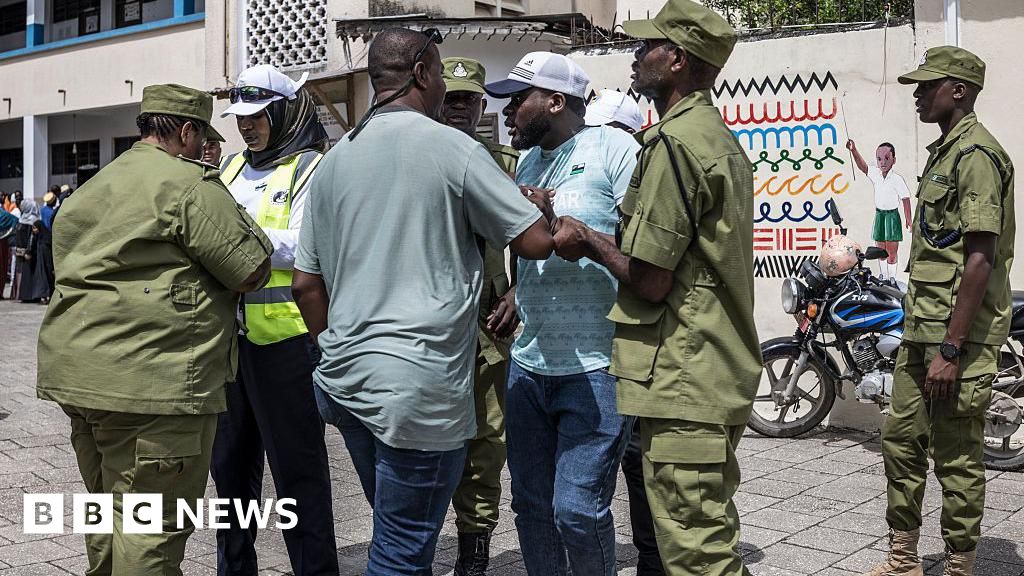
The recent election in Tanzania has ignited a complex web of domestic and international consequences, exposing the fragile stability of East Africa’s political landscape. President Samia Suluhu Hassan, who secured her position with an overwhelming 98% vote majority, declared her victory amidst allegations of electoral irregularities. Critics, including election observers and opposition figures, argue the polls fell short of democratic standards, citing the imprisonment and disqualification of key opposition candidates. This electoral outcome not only consolidates President Hassan’s power but also signals a narrowing of political space, even as her government attempts to project an image of stability on the international stage. Such developments are crucial for understanding how local governance can ripple across regional and global structures.

However, beneath the veneer of political legitimacy, unrest has erupted, especially in the wake of the contested election results. Reports of excessive force deployed by Tanzanian security forces during protests have sparked a wave of international criticism, with many alleging that hundreds of protesters and civilians were killed or injured in a crackdown that critics say was disproportionate and reckless. Tanzania’s government dismisses these claims, asserting that the opposition’s figure of casualties is exaggerated, but independent international observers and human rights groups contend that a troubling pattern of suppression persists. Analysts warn that such violent repression could destabilize Tanzania, potentially igniting broader regional tensions and complicating diplomatic relations with neighboring countries, especially Kenya.

The situation is further complicated by the plight of Kenyans residing in Tanzania, an estimated 250,000 people engaged in various economic activities across the border. This diaspora has become collateral damage in Tanzania’s internal conflicts, with reports of Kenyans being detained, injured, or even killed amidst the unrest. Kenyan authorities have responded by urging their Tanzanian counterparts to prioritize the safety of their citizens, emphasizing that diplomatic channels are now critical in addressing this crisis. The recent death of Kenyan teacher John Ogutu, shot by Tanzanian police, underscores the urgency of the matter; his family and international rights organizations demand transparency and accountability. The uncertainty surrounding these incidents reflects a broader pattern of governments using mass violence to maintain control, making the prospect of regional destabilization more imminent.

Historically, the East African Community (EAC) has tried to foster economic and political integration, but recent events threaten this fragile unity. Strained diplomatic ties, resurging political repression, and accusations of state-sponsored violence threaten to undermine decades of regional cooperation. In particular, Tanzania-Kenya relations, once aimed at economic expansion and shared development, are now a battleground of mutual distrust. The fallout from these conflicts suggests that regional geopolitics are on a knife’s edge, with the potential for violence and instability to spill beyond national borders and into wider international corridors. The role of international organizations, such as the United Nations and the African Union, looms large, as their ability to mediate and promote good governance in this volatile context is profoundly tested.

As history continues to unfold in East Africa, the implications of these events serve as stark warnings of what can happen when political contestation turns violent and international diplomacy falters. The emergency of new power dynamics, coupled with the unresolved tensions between established governments and dissenting voices, could usher in an era of prolonged instability. How the global community responds, and whether regional leaders prioritize dialogue over repression, will determine the course of history in this pivotal chapter of Africa’s story. The weight of future generations now hangs in the balance, as nations grapple with the double-edged sword of sovereignty and stability—each decision shaping the destiny of this strategically vital region.

Jakarta High School Mosque Blast Injures 54, Raising Security Concerns

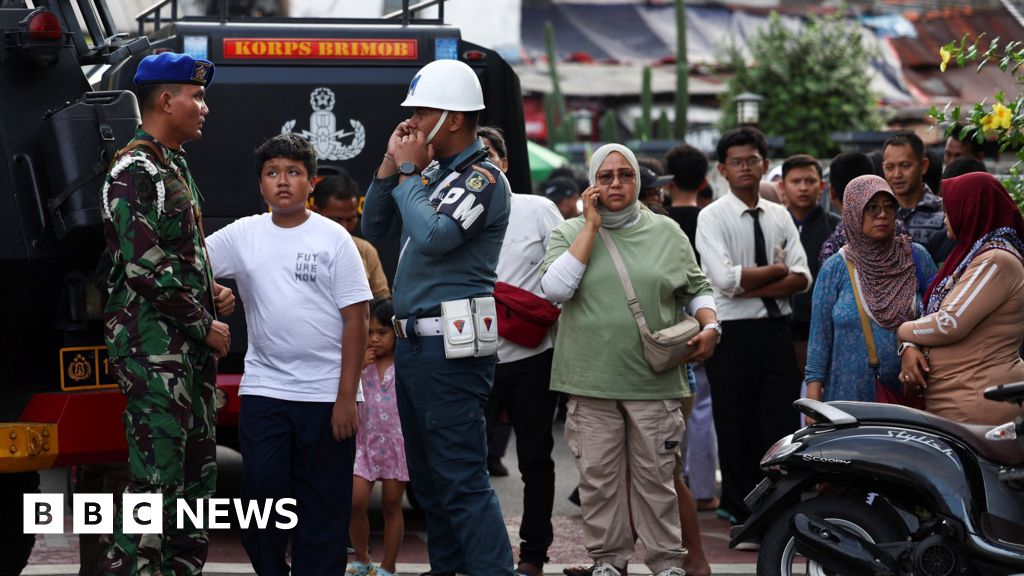
Jakarta, Indonesia — One of the world’s largest Muslim countries faced a harrowing moment this Friday when an explosion during Friday prayers at a mosque inside a high school complex injured dozens of individuals. Authorities report that at least fifty-four people have been hospitalized, with injuries ranging from minor burns to more severe wounds. The incident has sent shockwaves across the nation, raising questions about security, radicalism, and societal vulnerabilities within Indonesia’s diverse landscape.

Initial investigations point to a potentially complex motive, as officials have detained a 17-year-old student who is currently undergoing surgery. Police and bomb disposal experts continue to search the premises for evidence, with some preliminary reports indicating the presence of homemade explosives and suspicious objects resembling firearms. Authorities have yet to determine whether this tragedy was an isolated act of violence, a personal grievance, or a symptom of deeper societal unrest, but the emergence of such violent incidents in Indonesia—home to the world’s largest Muslim population—raises alarming questions about the current geopolitical climate.

Experts and analysts are scrutinizing the troubling details that have come to light. An anonymous pupil reported that the suspect had often been bullied and was known for drawing violent imagery, casting the incident in a troubling light concerning social alienation and mental health issues among youth. Additionally, a school cook described a “massive” blast with smoke billowing and windows shattered. The scene’s disturbing evidence included two objects resembling firearms and a belt designed for storing gun cartridges. Disturbingly, one such firearm bore inscriptions referencing “14 words. For Agartha.” and “Brenton Tarrant. Welcome to Hell.”—a chilling echo of Christchurch’s terrorist who murdered 51 worshippers in 2019, highlighting a disturbing crossover of violent ideologies.

Global institutions and security analysts are concerned about the broader geopolitical impact of such incidents. Historians warn that violence in Indonesia, while often framed as internal or local, reflects a shifting landscape where global radical ideologies can infiltrate societies, inciting unrest even in nations with strong Islamic traditions. The presence of the inscribed firearm, referencing a notorious mass shooter, signals a troubling nexus—whether imported extremism or domestic radicalization—posing a threat not only to Indonesia but to regional security. International organizations have called for heightened vigilance, emphasizing that societal resilience depends on addressing underlying causes such as extremism, societal alienation, and the proliferation of dangerous ideologies online—elements that threaten to destabilize the fabric of peaceful coexistence.

As investigators pursue answers, the incident serves as a stark reminder that history remains a fluid and ominous narrative. With each violent event, the trajectory of societal stability is challenged and reshaped by decisions made today. Indonesia’s leadership faces a critical crossroads: continue to grapple with internal divisions or confront the socio-political fractures fueling youth radicalization. The world watches with bated breath, knowing that how Indonesia responds will influence regional stability and could set a precedent for either resilience or further chaos. The echoes of this tragedy will continue to reverberate through the corridors of history, underscoring that the struggle against violence is unending—and often, the price of peace is paid in the silent, watchful moments of history’s unfolding story.

Trump limits refugee admissions to 7,500 to prioritize national security and sovereignty

Washington’s New Refugee Admission Limits and Its Impacts on International Relations

President Donald Trump’s administration has announced a significant reduction in the number of refugees permitted into the United States, capping the intake at 7,500 for the upcoming fiscal year—a stark contrast to the 125,000 set during the previous administration of President Joe Biden. This decision, delivered via an official notice, has raised eyebrows across global diplomatic circles, not least because no explicit reasons were provided apart from vague references to “humanitarian concerns or national interest.” It marks a continuing trend from Trump’s early days in office, including the suspension of the US Refugee Admissions Program (USRAP) in January 2025, which aimed at prioritizing national security and public safety.

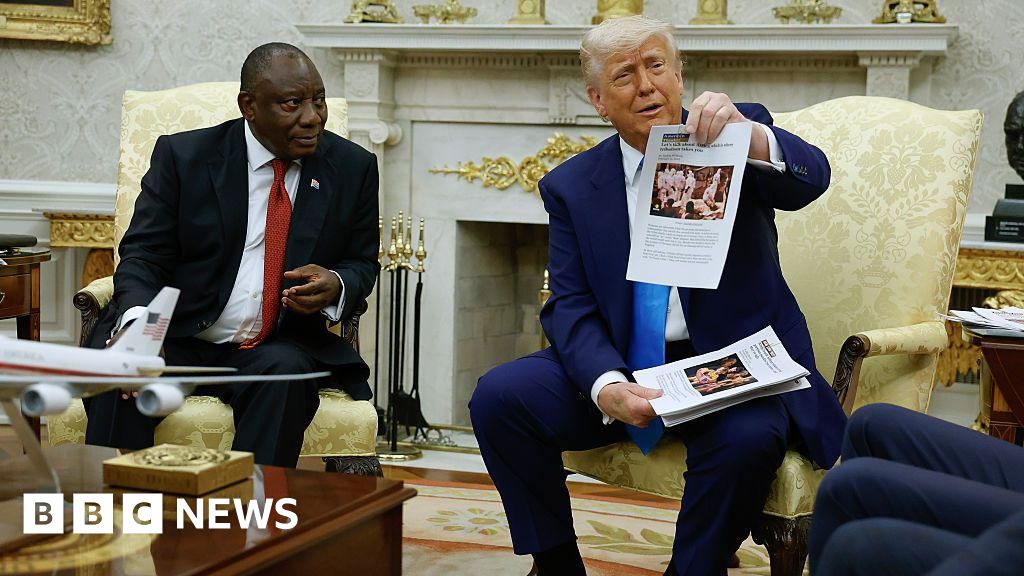
The focus of this new policy appears to favor white South Africans, primarily Afrikaners, with a sizable portion of the quotas allocated to victims of what the White House describes as “illegal or unjust discrimination” in South Africa. During a meeting in May, Trump sharply criticized South African President Cyril Ramaphosa, accusing his government of persecuting white farmers and showcasing disturbing images of burial sites representing murdered farmers—all scenes later clarified to be from protests material dating back to 2020. The White House’s overt regard for these victims underscored an overarching shift in U.S. refugee policy, apparently influenced by geopolitical and ideological considerations.

Geopolitical Impact and Rising International Tensions

Global analysts and historical experts have expressed concern that such selective refugee policies threaten the longstanding credibility of U.S. humanitarian commitments. Krish O’Mara Vignarajah, CEO of Global Refuge, contended that the decision “lowers our moral standing,” especially during a time when crises persist in Afghanistan, Venezuela, Sudan, and beyond. Critics argue that by focusing heavily on a specific demographic, the United States risks alienating its allies and betraying its reputation as a defender of human rights. Meanwhile, accusations of unfair treatment and discrimination against other persecuted groups have surfaced, suggesting a dangerous shift away from the country’s traditional openness.

Furthermore, this policy comes with serious geopolitical ramifications. As the U.S. tightens its refugee admissions, other nations are watching closely, questioning American values and leadership. Some analysts interpret this move as a sign of Trump’s broader desire to reshape U.S. foreign relations—favoring nationalist policies that prioritize domestic security over international cooperation. The impact is palpable: allies in Europe and Africa are now reconsidering their own approaches to asylum and diplomatic engagement. Historically, shifts in refugee policy have often prefigured more profound geopolitical realignments, and experts warn that the current trend could contribute to a fracturing of international consensus on humanitarian obligations.

Societal and Cultural Consequences: A Turning Point in U.S. Policy

As the policy unfolds, the consequences extend beyond diplomacy—deepening societal divisions in the U.S. itself. Immigration advocates have criticized the move as a betrayal of American values, arguing it discriminates against vulnerable populations and undermines the moral foundations of the nation. Critics further point out that this narrowed focus risks fueling policy shifts that favor ethnonational interests at the expense of universal human rights. The decision is emblematic of a broader ideological clash over identity, security, and what it means to be a nation of immigrants in a rapidly changing world.

Meanwhile, the undercurrent of international skepticism grows stronger. As a major power, the U.S. has long wielded influence over global norms surrounding refugees and human rights. With recent decisions seemingly departing from this tradition, the global community stands at a crossroads, watching whether the United States will uphold its commitments or retreat into a more insular approach. The unfolding story remains a dramatic chapter in the larger narrative of a world grappling with new realities—where decisions on refugee intake are less about compassion and more about geopolitical leverage. Indeed, the yet-to-be-written pages of history continue to turn, leaving the world uncertain if the U.S. will remain the beacon of hope it once was or drift into a new era of nationalist retrenchment.

Weather balloon disruption shuts down Lithuania’s top airports—major security alert!

The recent series of provocative incidents in the Baltic States underscores a shifting landscape of geopolitical instability that threatens the delicate balance of power in Eastern Europe. Lithuania, a staunch member of both European Union and NATO, responded decisively by closing its two largest airports and border crossings following the discovery of numerous helium weather balloons drifting into its airspace. These balloons, believed to be used for smuggling, notably carry Belarusian cigarettes, which are far more expensive within EU borders. The Lithuanian government blames Belarusian President Alexander Lukashenko, an ally of Russian President Vladimir Putin, asserting that his regime tolerates and perhaps facilitates this covert smuggling operation—a move that directly undermines EU security principles and regional stability.

This escalation is not isolated. Reports indicate that, throughout the year, Lithuania has seen an unprecedented number of incursions, with hundreds of helium balloons detected and dozens crossing into its territory. The same pattern of aerial intrusions is evident in neighboring Poland, which experienced over 100 similar incidents, further signaling an orchestrated effort to destabilize the Baltic region. Analysts point out that these seemingly minor incursions are part of a broader strategy by Russia and its proxies to test NATO’s resolve and to sow chaos within EU borders, exploiting vulnerabilities in eastern European countries. Security experts warn that such tactics could prelude more aggressive actions, echoing fears of a renewed hybrid warfare aimed at dividing the alliance and reasserting Moscow’s influence.

The recent encounter involving Russian military aircraft further amplifies these concerns. On Thursday, Lithuanian military sources confirmed the entry of a Sukhoi SU-30 fighter and an IL-78 tanker into Lithuanian airspace—an area protected by NATO’s Enhanced Air Policing Mission. Though the aircraft departed after brief incursions, NATO scrambled fighter jets as a show of force, signaling that the alliance remains vigilant amid the continued threats. These deliberate aerial provocations coincide with diplomatic protests from Vilnius, which summoned the Russian chargé d’affaires and issued a stern warning, underscoring the fragile diplomatic environment. Russia’s denial of the incursions, despite credible military reports, reveals its attempt to obfuscate the narrative and maintain plausible deniability—yet the message remains clear: the Baltic States are caught in the crossfire of a renewed geopolitical struggle.

This unsettling chain of events illuminates the broader geopolitical impact of Russia’s tactics. Under the veneer of trivial balloon crossings, a strategic message is sent: the security of eastern NATO members is fragile, and the Kremlin is willing to test the collective resolve of the West. International organizations and security analysts alike warn that such provocations could serve as precursors to more serious escalations—potentially softening defenses or creating opportunities for unilateral actions that threaten regional sovereignty. Historians like John Mearsheimer argue that Moscow’s deliberate destabilization efforts are designed to weaken NATO from within, reviving Cold War-era fears of renewed conflict in Europe. The unity of the alliance and the resilience of its eastern flank are under direct threat; the question remains whether Western nations can suppress the temptation to retreat or whether they will confront this threat head-on, risking broader confrontation in their effort to uphold stability.

As the curtains lift on this chapter of unfolding history, the precarious balance between sovereignty and aggression continues to sway. The Baltic region has again become a testing ground for geopolitical rivalry, where every balloon, incursion, and diplomatic protest leaves an indelible mark on the fabric of international security. The question looms: how much longer can democratic nations defend their borders against this invisible war? The answer, still shrouded in uncertainty, echoes across the corridors of power—while history, with relentless perseverance, watches and waits, ready to judge the decisions that will shape the future of the free world.

F5 Hack Sparks Urgent Alert: Thousands of Networks at Risk

Nation-State Hackers Exploit F5 Software in Major Cybersecurity Breach

In an alarming development for both government agencies and Fortune 500 corporations, F5 Networks, a leading provider of networking and cybersecurity solutions headquartered in Seattle, has disclosed a significant breach indicating an advanced persistent threat (APT) campaign. According to federal government officials, hundreds of networks remain vulnerable to breaches by nation-state hacking groups. This incident underscores the growing threat landscape targeting critical infrastructure and enterprise systems, with potential disruptive implications for global digital ecosystems.

F5’s breach reveals an unprecedented level of threat sophistication, with hackers working for an undisclosed nation-state maintaining long-term access within the company’s internal network. The group had surreptitiously infiltrated the infrastructure overseeing updates for F5’s flagship product, BIG-IP, which is used by 48 of the world’s top 50 corporations for load balancing, security, and data management. The hackers exploited this position, downloading proprietary source code, including vulnerabilities that had yet to be publicly patched. This revelation signals a fundamental disruption in the traditional cybersecurity paradigm, as adversaries gain access to the very building blocks of network security—potentially enabling supply-chain attacks of a scale previously deemed unlikely.

The implications extend beyond F5’s immediate client base. By obtaining configuration details and source code, threat actors now wield a level of control and insight capable of orchestrating exploitative supply-chain compromises. Such breaches could enable the suppression or manipulation of traffic, data exfiltration, or even deployment of malicious firmware—posing grave concerns for critical infrastructure, financial institutions, and government networks. Security analysts highlight this as a stark warning: the vulnerabilities at the network’s edge—particularly those tied to sophisticated management systems—are high-value targets that can destabilize entire industries. As Peter Thiel and Elon Musk have long emphasized, technological dominance hinges on securing these crucial nodes before adversaries can establish footholds.

In the aftermath, F5 has responded by rolling out critical updates for its affected products, including BIG-IP, F5OS, BIG-IQ, and APM. Despite the company’s assurances of thorough investigations—coordinated with firms like IOActive and NCC Group—no evidence surfaced of data exfiltration or modifications to the system’s source code. Nevertheless, this incident has highlighted a pressing need for organizations to rethink cybersecurity strategies centered around disruption-resistant architectures and zero-trust frameworks. The breach’s strategic implications reinforce that disruption is no longer a future concern but an immediate reality; the next frontier of cybersecurity must prioritize resilience and rapid detection.

Looking to the future, industry analysts and security firms concur that we are standing on the brink of a new era. Major corporations and government agencies alike must accelerate efforts to adopt innovative safeguards, including real-time threat intelligence, AI-powered anomaly detection, and proactive threat hunting. As experts from MIT and Gartner warn, the cyberarms race is intensifying, and falling behind now will have catastrophic consequences. This breach serves as a stark reminder: the battle for digital dominance is being waged at the very core of our most vital networks. In this landscape of relentless disruption, rapid adaptation is the only way to defend the future of our interconnected world.

Former Bush Adviser Charged with Stockpiling Top Secret Files—Threatening National Security

In a revealing turn of events that underscores the fraught landscape of international security, India-born scholar and former US government adviser Ashley Tellis has been arrested on charges of unlawfully possessing and sharing top secret information. This arrest, occurring amidst rising tensions within global intelligence communities, signals a potential new phase in the ongoing contest for technological and military supremacy. The case is not merely a matter of individual misconduct but a reflection of broader geopolitical struggles that are shaping the future of international power balances.

Tellis, a prominent figure who has played a significant role in negotiating the historic US-India nuclear deal, was found in possession of thousands of classified documents—including material related to U.S. military capabilities—raising alarm bells about the security of sensitive information. According to federal authorities, the FBI discovered these documents at his residence in Virginia, where he held a top-secret security clearance due to his past employment. Allegations orbiting his interactions with Chinese officials further complicate the narrative, suggesting a web of espionage that spans continents and threatens diplomatic stability. These developments come at a time when Western nations and China are engaged in a high-stakes race for technological dominance, especially in areas like artificial intelligence, military systems, and cybersecurity.

This incident sparks a broader debate among international analysts and historians about the authenticity and reliability of global alliances. According to experts at the Council on Foreign Relations, such breaches are not isolated but indicative of a new era where the transnational flow of information can destabilize long-standing diplomatic agreements. For nations like Russia and China, tension-filled espionage cases like Tellis’s serve as both warnings and opportunities—reminders that information is the most potent weapon in the modern geopolitical arsenal. Officials have promised stringent measures in prosecuting those who mishandle classified information, echoing the warnings issued by US intelligence agencies about the potential security risks involved.

The repercussions extend far beyond the United States and directly impact the global geopolitical fabric. The arrest sends a powerful message about accountability and the fragile trust between allied nations, underscoring that even high-profile intellectuals and policymakers are not immune to the relentless tides of espionage and cyber warfare. How this case will influence future intelligence-sharing agreements, especially between India and the US, remains uncertain. Yet, its significance is in how it underscores the perilous fragility of modern diplomacy where secrets are currency—more valuable than ever, but increasingly vulnerable. As international organizations and national governments recalibrate their security protocols amid these revelations, the shadow of espionage looms large over the corridors of power. The true weight of history in the making can be felt palpably, reminding the world that in this intricate game of shadows, the line between ally and adversary can shift with a single revelation.

Feds smash $15B Bitcoin haul from alleged scam empire—justice in action!

Global Crackdown on Cryptocurrency-Linked Scam Centers Signals Tech Disruption and Business Shifts

The recent seizure of 127,271 bitcoins, valued at over $15 billion, marks the largest cryptocurrency confiscation in U.S. history, signaling a seismic shift in how law enforcement is leveraging blockchain forensics to combat organized cybercriminal syndicates. Led by agencies determined to dismantle *factory-scale* operations, this historic action exposes the rigor and sophistication behind *illicit financial networks* that utilize the speed, transparency, and pseudo-anonymity of cryptocurrencies to sustain large-scale scams. As cryptocurrency ecosystems become intertwined with criminal enterprises, the impact on digital asset exchanges and related business sectors urges industry stakeholders to rethink compliance, security paradigms, and the role of technology in safeguarding legitimate markets.

Innovation in Enforcement and Industry Disruption

The seizure, which includes a trove of digital assets linked to *scam compounds* operating across Southeast Asia, Europe, and Latin America, underscores the depth of innovation in both malicious schemes and the efforts to counter them. According to Ari Redbord, global head of policy at TRM Labs, the broad scope of the operation “strikes at the operational and financial core” of this *criminal infrastructure,* revealing how *sophisticated laundering techniques*, often involving *layered jurisdictions* and *cryptography*, sustain these illegal enterprises. The criminal operations, as detailed in recent indictments, also maintain *bribery records* and leverage *mobile-controlled social media accounts*, illustrating how technology-driven these scams have become.

The implications for the crypto business landscape are profound. As researchers observe the *growth of scam compounds* outside Southeast Asia—spreading into the Middle East, Eastern Europe, and Latin America—the industry must accelerate *innovative security solutions*. Venture-backed startups, such as blockchain analytics firms, and giants like Elon Musk’s Tesla and Peter Thiel’s Palantir, are already pushing boundaries with AI-driven fraud detection. Yet, the scale of these operations suggests that *regulatory frameworks* and *technological innovation* must outpace criminals if legitimate markets are to prosper amid *disruption*.

Business Implications and the Future Trajectory

With well over $15 billion seized, this case exemplifies the critical intersection of financial technology and law enforcement’s new frontier—using data analytics, machine learning, and cross-border cooperation to identify and dismantle *illicit financial flows*. As industry experts from Gartner and MIT emphasize, the evolution of *crypto compliance* tools can serve both as *deterrents and enablers*, fostering a more resilient and transparent digital economy. Conversely, unchecked illicit activity poses a risk of *massive financial destabilization* and erodes public trust in cryptocurrency markets.

The broader business community must recognize that *disruption is inevitable*; however, it also presents enormous opportunities for *disruptive innovation*. Companies invested in *blockchain security*, *AML frameworks*, and *regulatory technology* are poised to lead the next wave of *trust-based blockchain environments*. As international authorities allocate greater resources—highlighted by the U.S. Justice Department’s resolve—the imperative to innovate and adapt becomes urgent. Moving forward, *proactive engagement* with emerging technologies and *collaborative enforcement* will determine whether the crypto economy can evolve into a secure asset class or become a battleground for criminal disruption. The clock is ticking for industry leaders to stay ahead in this high-stakes game, where technological evolution and law enforcement will define the future of digital assets and global finance.”

Social Media Auto Publish Powered By : XYZScripts.com