Matox News

Truth Over Trends, always!

VC Kara Nortman Doubling Down on Women’s Sports: Shaping the Future of the Game

Angel City FC’s Rise Sparks Broader Disruption in Women’s Sports Investment

In a landscape historically dominated by male-centric sports, Angel City FC is emerging as a groundbreaking case study in how strategic innovation can redefine the commercial potential of women’s sports. Despite a disappointing on-field performance this season, the franchise has achieved unprecedented success off the pitch, illustrating the potent business implications that disrupt traditional sports economics. Venture capitalist Kara Nortman, co-founder of the club, has exemplified how a focus on innovative marketing, celebrity involvement, and strategic sponsorships can generate explosive revenue—going from zero to $30 million in revenue before the team had even scored a single goal.

Disruption Through New Business Models and Investment Strategies

This success has catalyzed a new paradigm in sports investment, highlighted by Monarch Collective, Nortman’s $250 million fund launched in 2023—a pioneering venture that is fundamentally changing how capital flows into women’s sports. Unlike traditional sports franchises that rely primarily on ticket sales and merchandise, Monarch’s portfolio spans multiple leagues and international markets, including stakes in three other National Women’s Soccer League clubs and an international investment in FC Viktoria Berlin. This diversified approach signals an industry-wide shift, where the conventional single-team focus is giving way to a broader ecosystem with multiple franchises supported by sophisticated operational and media strategies.

  • Standout features include setting industry milestones, such as Monarch being the first foreign investor in a German women’s team
  • Fund growth from an initial $100 million to $250 million showcases the market’s rapid evolution and burgeoning confidence
  • Investments extend beyond soccer into emerging women’s sports like basketball, golf, and tennis, underpinning a diversified growth strategy

Market Realignments and the Road Ahead

As Nortman highlights, the global women’s sports market has surged from a modest $0.5 billion to an estimated $3 billion—yet this is merely a fraction of the $500 billion sports industry worldwide. Strategic disruption is therefore not optional but imperative for investors aiming to capitalize on this momentum. Industry analysts such as Gartner and MIT researchers emphasize that sustained growth depends on infrastructure investments, league governance, and community engagement. The focus is shifting toward operational excellence, where teams can reach breakeven and capitalize on higher-margin media rights, a move that threatens to outflank entrenched traditional models.

Experts warn that history’s cautionary tales, reminiscent of the 1920 ban on women’s football in England, illustrate the importance of consistent innovation and strategic resilience. As with the early days of the internet and cleantech disruptions, timing and execution are everything. Nortman’s commentary underscores that external support, investor confidence, and foundational industry reforms are vital to avoid the setbacks that have historically hampered progress in women’s sports.

Looking Forward: The Urgency of Sustained Disruption

With transformative investments and innovative marketing reshaping perceptions, the future of women’s sports is poised for extraordinary growth. The upcoming Techcrunch event in San Francisco, October 2026, underscores the accelerating pace at which this sector is maturing. As investor interest intensifies and international markets open, the window for strategic disruption is closing fast. Forward-looking stakeholders must prioritize scalable business models, embrace technological innovations, and foster genuine community ties, or risk being left behind in a rapidly evolving landscape where the next big breakthrough could redefine global sports economics.

In sum, what began as a niche venture is quickly transforming into a multi-billion-dollar industry with global implications. The question is no longer if women’s sports will be disrupted, but how, when, and by whom. As key players like Angel City demonstrate, the next decade will determine whether this revolution will be enduring or just a fleeting moment of novelty.

Oxfordshire Schools Step Up to Support More SEND Students, Shaping a Stronger Future for All

Across communities in the UK, a growing crisis in special educational needs and disabilities (SEND) support threatens to undermine the very fabric of inclusive education. As local authorities grapple with ballooning costs and a demographic shift towards greater demand for specialized care, families face the stark reality of limited resources and uncertain futures. Oxfordshire County Council exemplifies this trend, with a forecasted £153 million high needs funding deficit next year. To address this, the council is pioneering efforts to bring children with SEND into mainstream schools, aiming to reduce reliance on expensive private institutions, which can cost up to £64,000 annually per child.

But such solutions are far from simple. The financial pressures extend beyond just funding, affecting families, educators, and entire communities. As Oxfordshire seeks to expand its mainstream support, it faces the challenge of not only increasing funding but also fostering effective leadership and inclusive practices within schools. Paul James, chief executive of the River Learning Trust, emphasizes that creating truly inclusive environments requires more than policy adjustments; it demands ambitious, well-led teaching backed by adequate financial support. Without this, schools are compelled to make difficult cuts—reducing staff, resources, and enrichment activities—compromising the quality of education for all students, particularly those with complex needs.

  • Research by sociologists such as Hannah Arendt warns that without social support and equitable funding, the marginalized—like children with SEND—risk being pushed further into social isolation.
  • Historically, public education systems have reflected societal values; increasingly, the neglect of SEND funding signals that society’s priorities may be shifting away from inclusive justice.
  • Local authorities are calling for clear government strategies to address mounting debts, as the current funding model, approved and kept off councils’ books, leaves communities vulnerable to fiscal crises and potential bankruptcy, which would have devastating ripple effects through local families and services.

Social issues surrounding SEND support profoundly influence families’ stability, educational equity, and community cohesion. As costs escalate—highlighted by the fact that mainstream school support costs around £10,000 per child annually—families find themselves caught between inadequate systemic support and the relentless demand for specialized care, further emphasizing the urgent need for reform. The societal implications go beyond economics; they are a moral question about the human right to equitable education and the societal obligation to nurture every child’s potential. As social commentator Michael Sandel argues, our collective moral core is tested in how we prioritize vulnerable populations; neglecting these needs erodes the fundamental bonds that hold society together.

Yet, amidst these daunting challenges, glimmers of hope emerge. Communities, educators, and policymakers recognize that collaborative, well-funded leadership is essential for meaningful change. With plans to add 340 specialized school places and reduce dependency on private alternatives, local authorities are aiming to rebuild a system rooted in fairness and accessibility. Leaders like Paul James insist that “children only get one go” at their education, and it is a moral imperative that society commits to supporting them fully. Ultimately, society’s capacity for resilience and reform will determine whether we can transform these challenges into opportunities—building a future where families, education, and communities thrive together in the embrace of genuine inclusion.

As society stands at this crossroads, the question remains: can our collective resolve turn the tide of neglect into a wave of hope and transformation? The future of our children—the very essence of society’s moral health—depends on the answer we choose to write today.

Thanksgiving 2025: The Bold Takes Shaping Our Holiday Scene — The New York Times

In an era where personal well-being becomes increasingly intertwined with everyday life, a _shift_ in how we approach our leisure and wellness routines is unfolding—one that champions the importance of rebalancing between productivity and genuine self-care. This new mindset invites us to reconsider the traditional schedules and expectations, emphasizing that _living intentionally_ can transform the way we experience daily routines. As wellness experts like Dr. Deepak Chopra have pointed out, _the journey toward self-awareness_ begins with simple, deliberate choices—starting with how we structure our days and the foods we consume.

One of the most significant lifestyle changes gaining momentum is the push toward eat-at-normal dinner hours. Simply put, aligning meal times with _natural circadian rhythms_ not only enhances your metabolism but also frees hours otherwise lost in hasty dining. Reports from leading food journalists like Priya Krishna highlight the benefits of eating at 7:30 PM, which paradoxically grants you extra hours to _unwind_, _prep_, and even _enjoy_ a relaxed happy hour featuring dishes like _bhel puri_. This approach encourages a _more mindful appreciation_ of food, turning meal times into daily rituals rather than rushed episodes. The core message: when we manage our schedule proactively, we create space for _meaningful leisure_, which is essential for developing resilience and _personal wellness_.

In parallel, contemporary culture is venerating the concept of _authentic connection_—whether through setting the right playlist for dinner parties or engaging in games that cultivate _shared joy_. Chef Natasha Pickowicz advocates for something as simple as saying, _“This should be the least formal scenario you can imagine,”_ urging us to dismantle the overcomplicated social scripts. Her advice emphasizes that in embracing _casual, honest interactions_, we foster communities rooted in _authenticity_. Foods and entertainment are no longer mere indulgences but tools for creating _memories_ and _meaning_, connecting us to our roots and each other on a deeper level.

  • Adopt a regular meal schedule to align with your body’s natural rhythms.
  • Prioritize _intentional_ leisure activities—like game nights or soulful playlists—over superficial social rituals.
  • Embrace _authentic connections_, whether through meaningful conversations or shared experiences that foster _resilience_.

Ultimately, this lifestyle shift is about _embracing your true self_—your instincts, your passions, your health. Figures like Andy Baraghani remind us that _the playlist_ is as vital as the food served; it sets the tone and creates an environment of _genuine enjoyment_. As Eddie Huang eloquently states, _“Thanksgiving is different when your team’s playing,”_ urging us to infuse tradition with personal passion, turning routine holidays into _celebrations of self_ and _community_. When we choose the paths aligned with _our authentic desires_, we pave the way for a life that feels less like obligation and more like _a journey we’re proud to walk_. With each deliberate choice, we write our stories—filled with health, joy, and resilience—culminating in a lifestyle that celebrates the _fullness of being_.”

Discover the understated and unexpected: the coolest men’s knitwear brands shaping the new style rebellion

In an era dominated by fast fashion and fleeting trends, a new movement among the youth is quietly reshaping how men approach wardrobe staples: knitwear. Once relegated to the realm of grandma’s closet or reserved for winter wear, knitwear now stands at the forefront of social relevance and cultural impact. This shift isn’t merely about warmth—it’s a statement about long-term investment, responsibility, and individual style. Influencers like Pedro Pascal and Paul Mescal are leading the charge, sporting cropped silhouettes and statement knits that achieve a chic yet rebellious aesthetic, emphasizing the importance of personalization and authenticity in menswear.

The embrace of responsible knitwear is redefining what it means to dress with purpose. Endorsed by brands like Asket and Sheep Inc, today’s consumers are more conscious of the societal and environmental footprint of their clothing choices. Transparency is becoming as vital as durability, with notable brands offering conservation-focused initiatives such as repairing or recycling, and sourcing textiles from regenerative farms. The rise of carbon-negative knitwear—where your jumper becomes part of the solution rather than the problem—illustrates how fashion is cementing its role as a social force. Such narratives elevate knitwear from simple apparel to a symbol of activism and lifestyle alignment, especially among younger generations seeking authenticity and impact.

Trends in Knitwear: From High Street to Luxury

Mid-range and luxury brands are elevating knitwear to an art form. A Day’s March exemplifies this with its minimalist, Scandinavian aesthetic, offering luxurious pieces like mohair sweaters and cardigans that boast understated elegance and purpose. Meanwhile, Les Deux taps into the demand for statement knitwear, with options that include bold colors and playful graphics, embodying a counter-culture feel that resonates with youth seeking individuality. On the high street, brands like Uniqlo and Gap cater to a broader audience, making quality knitwear accessible, with staples like cashmere crew necks and merino wool sweatshirts priced under £100. This democratization of premium textiles underscores a collective shift towards quality over quantity, driven by a desire for durable, versatile, and stylish wardrobe foundations.

The Cultural and Social Significance

What makes this resurgence of knitwear particularly compelling is its cultural resonance. Modern knitwear isn’t just about practicality—it’s intertwined with socially conscious narratives. Whether it’s through brands promoting regenerative wool, or influencers experimenting with layered textures and vintage-inspired designs, the trend signifies a collective move toward meaningful fashion. Sociologists point out that this evolution symbolizes a rejection of disposable fashion: today’s young men want garments that tell stories, reflect values, and stand the test of time.

Yet, amid this backdrop of style and responsibility, a next big question looms: as knitwear becomes a symbol of cultural authenticity and activism, how will future trends balance fast-paced innovation with the long-term ethics of sustainable fashion? Will the market sustain this level of conscientious consumerism, or is it another fleeting fad? As influencers and brands continue to push the conversation, one thing remains clear—this isn’t just about clothing; it’s about redefining societal values around an age-old craft that’s now more relevant than ever.

Revamping fear: How evolving horror movies are shaping youth culture and driving profit

In our modern era, where societal fracture lines have deepened and alienation seems endemic, culture remains the vessel through which we define ourselves, preserve tradition, and anticipate the future. No genre better exemplifies this than the evolving realm of horror, which—despite its reputation—has become a mirror for the collective psyche of the 21st century. From its origins tangled in gothic antiquity, horror has consistently haunted the margins of respectability, yet at each cycle, it has reasserted itself as a genre capable of profound commentary. As Ortega y Gasset believed, culture is not merely ornamentation but a vital arena for understanding human existence—horror, in its essence, is a visceral dialogue with mortality, morality, and the chaos that underpins our shared reality.

The renaissance of horror in recent years signals a cultural shift from superficial entertainment to a nuanced exploration of contemporary fears and anxieties. The rise of “elevated horror”—epic-length films by directors like Jordan Peele, Robert Eggers, and Jennifer Kent—demonstrate a deliberate move away from pulp and slasher tropes, embracing complex narratives and aesthetic experimentation. Their work abandons the traditional 90-minute formula to delve deeply into themes of societal trauma, identity, and existential dread. These auteurs recognize, as T.S. Eliot did, that the true function of art is to serve as both memory and prophecy—a means to confront the darkness of today while illuminating the path forward. Horror’s capacity for metaphor allows it to address issues like racial injustice, colonialism, and environmental decay with a symbolic language that speaks directly to the core of societal decency and decadence alike.

Moreover, the genre’s international infusion—enabled by the proliferation of digital media—has broadened the horizons of what horror can embody. From the visceral extremities of France’s New French Extremity to Korea’s unflinching psychodramas, filmmakers now push boundaries that once seemed sacrosanct, echoing Chesterton’s assertion that “the true critic,” especially in times of moral decline, must be a *defender of culture* against entropy. Today’s horror, with its innovations in visual storytelling and narrative ambiguity, blurs the line between arthouse and mainstream, reflecting a culture increasingly skeptical of simple narratives and eager for provocation and reflection. This tension suggests that in every shadow cast by a horror film lies the unspoken truth of our collective soul—a testament to our fears, hopes, and moral compass.

As history reveals, the genre’s cycles of reinvention—spurred by breakthroughs like The Blair Witch Project and Get Out—are not accidental. Each wave signifies a society grappling with new terrors, be they technological, political, or existential. The modern horror landscape recognizes this; it constructs masterpieces like Eggers’s Nosferatu or Fargeat’s vicious narratives, to echo the ancient truth that through darkness, we find our deepest selves. While mainstream cinema dons the guise of heroism and moral certainty, horror dares to peer into the abyss, revealing that perhaps the true measure of our civilization lies not solely in our progress but in our resilience to face what lurks beneath—whether it be social upheaval, internal trauma, or the unseen horrors of a world unmoored. In this continuous process, culture becomes both a guardian of memory and a prophet of future reckonings, whispering softly that humanity’s greatest strength is not avoidance, but the courage to confront the shadows within and without, with eyes wide open and hearts steadfast.

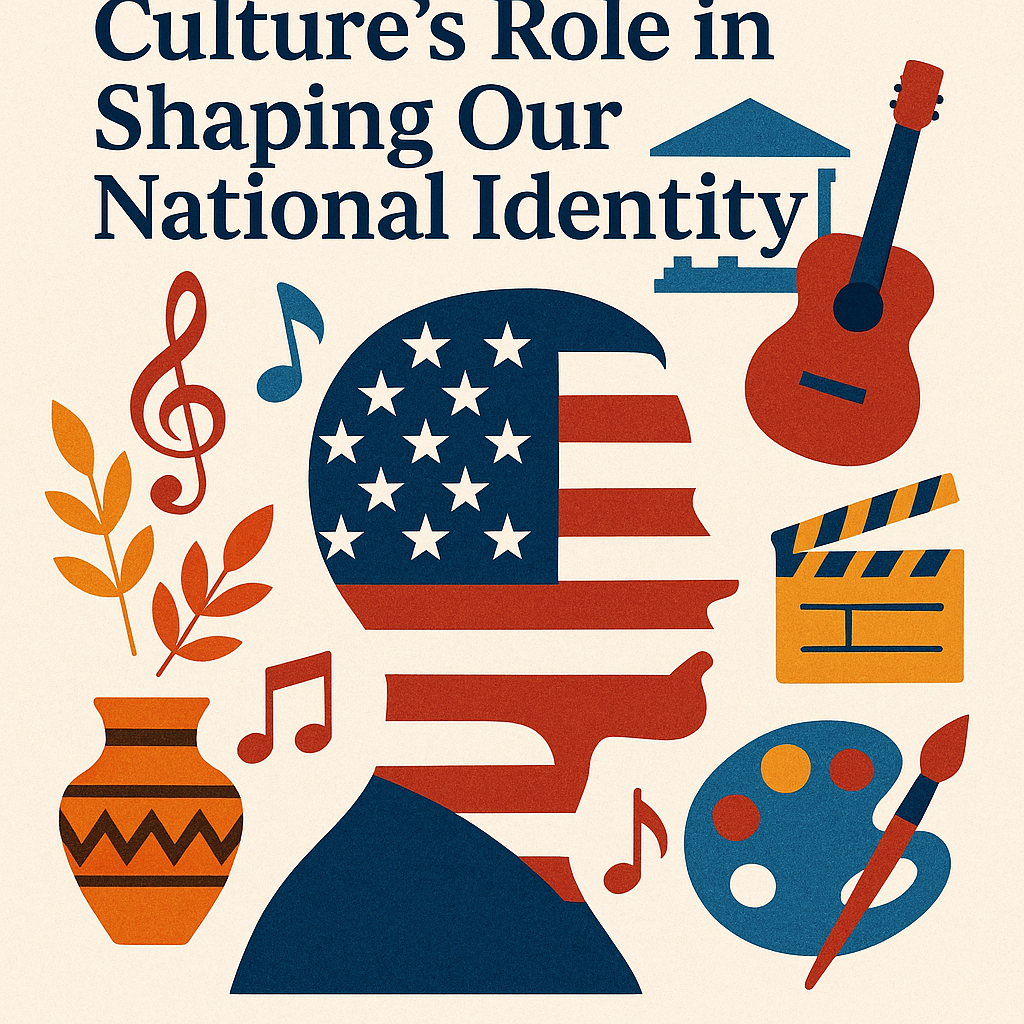
Culture’s Role in Shaping Our National Identity

At the core of a nation’s identity lies its culture — an intricate tapestry woven from history, traditions, language, and shared values. Critics often argue that in an increasingly globalized world, the preservation of cultural distinctiveness becomes a challenge, yet it remains the most powerful force shaping national character. Alexis de Tocqueville famously observed that culture provides the moral fabric that binds individuals to their collective destinies. Today, as nations face pressures from economic and cultural homogenization, it becomes essential to recognize how deeply rooted cultural narratives foster a sense of belonging and reinforce the social cohesion needed for a resilient nation.

Many contemporary analysts suggest that the identity crises faced by modern nations can be traced back to the erosion or neglect of cultural foundations. When policies prioritize economic growth over cultural preservation, societies risk losing their distinctiveness, leading to a dilution of their shared values. This concern has been passionately articulated by thinkers like Samuel P. Huntington, who argued that cultural identities are vital in shaping political stability and social harmony. A nation’s cultural narratives serve as a bridge connecting past, present, and future — fostering a collective memory that guides societal norms and expectations. When these narratives are deliberately marginalized, communities may experience fragmentation, weakening the social fabric that has historically held them together.

Furthermore, educational systems and media serve as battlegrounds for cultural transmission, playing a pivotal role in either strengthening or undermining national identity. Critics note that in many democracies, there is a tendency to soft-pedal the importance of shared cultural values to appease a globalized mindset that champions diversity at the expense of unity. However, as Roger Scruton emphasized, a vibrant national culture is essential for fostering patriotism and civic pride — qualities that underpin societal resilience in times of crisis. It is through the celebration of heritage, language, and traditions that young generations cultivate a deep-seated respect and understanding for their roots, ensuring that the spirit of the nation endures amid tides of change.

Ultimately, the weight of culture in shaping our national future resonates as an almost poetic truth: that in the silent depths of shared stories and customs lies the blueprint for survival and renewal. As history’s currents threaten to drown distinct identities in a sea of sameness, it falls upon each generation to carry the torch of cultural memory. For only then can a nation remain more than just a geopolitical entity — it becomes a living, breathing vessel of collective hope, resilience, and destiny. The future waits patiently in the shadows of history, whispering that a nation’s true strength is not merely in borders or armies, but in the enduring legacy of its cultural soul, beckoning us towards a horizon where identity is not lost but reborn anew in the flames of tradition and innovation alike.

Private Schools Warned: Higher Ofsted Fees Could Hit Now, Shaping Future Choices

Societal Divide Deepens: The Impact of Private School Policies on Families and Communities

In recent months, the fractures within the fabric of British society have become more evident, as government and educational authorities grapple with the future of private education. The Department for Education (DfE) has proposed increased fees for Ofsted inspections of private schools, a move seen by many as a step toward economic fairness but criticized by others as a threat to exclusive community benefits. Currently, the regulator’s inspection costs are partially subsidized by taxpayers; however, the DfE suggests that private institutions should shoulder more of this burden, claiming that the taxpayer shouldn’t be subsidizing private businesses in this way. This policy shift raises questions about the social cohesion of communities and the role of private institutions within the broader society, especially given their historic role in perpetuating class distinctions and access to elite education.

Private schools inspected by Ofsted—those classified as “non-association”—comprise a significant portion of England’s independent educational landscape, with nearly half the 1,150 inspected institutions being specialized schools catering to pupils with disabilities and special educational needs. These smaller institutions serve as vital anchors for families seeking tailored education for their children—but looming financial pressures threaten their sustainability. The DfE’s proposal to increase fees over the next five years, climbing for schools with 150–399 pupils from £2,500 to £3,300, is part of a broader initiative to channel additional funds into **state school excellence**. Education Secretary Bridget Phillipson insists this approach is aimed at “driving up standards for children in state schools,” but critics argue it risks widening the social divide—thereby impacting family choices, community stability, and the very fabric of local life.

  • The financial burden on private schools could escalate, potentially making it more difficult for families already under economic strain to access these institutions.
  • Such shifts may incentivize educational consolidation, reducing the diversity of school options within communities.
  • The ongoing VAT on school fees and legal disputes over discrimination allegations compound the economic pressures faced by families and institutions alike.

This evolving landscape underscores how social and economic policies directly influence families and community dynamics. The higher fees could deepen existing inequalities, positioning private institutions as increasingly exclusive enclaves while challenging the principles of equal opportunity. Experiencing socioeconomic and cultural transformations, society faces the challenge of balancing meritocracy with accessibility. Sociologists like Charles Murray have long argued that education serves as a cornerstone of societal mobility; yet, policies that threaten to make private education more inaccessible risk entrenching disparities that threaten to undermine social cohesion. As families navigate these shifting currents, their choices and opportunities are being reshaped, impacting generations to come.

Reflecting on these societal shifts demands more than policy adjustments; it calls for a collective moral reconceptualization of what it means to foster an equitable society. The true test lies not merely in economic recalibrations but in nurturing a social fabric where opportunity and dignity for every family remain attainable. However, as history reminds us, societal transformations are seldom smooth, and the resilience of community bonds will be challenged amid economic austerity and cultural shifts. Yet, with deliberate effort and moral clarity, society can forge pathways that bridge divides, ensuring that future generations inherit not a fragmented landscape but a resilient, inclusive, and hopeful society.

Social Media Auto Publish Powered By : XYZScripts.com