Matox News

Truth Over Trends, always!

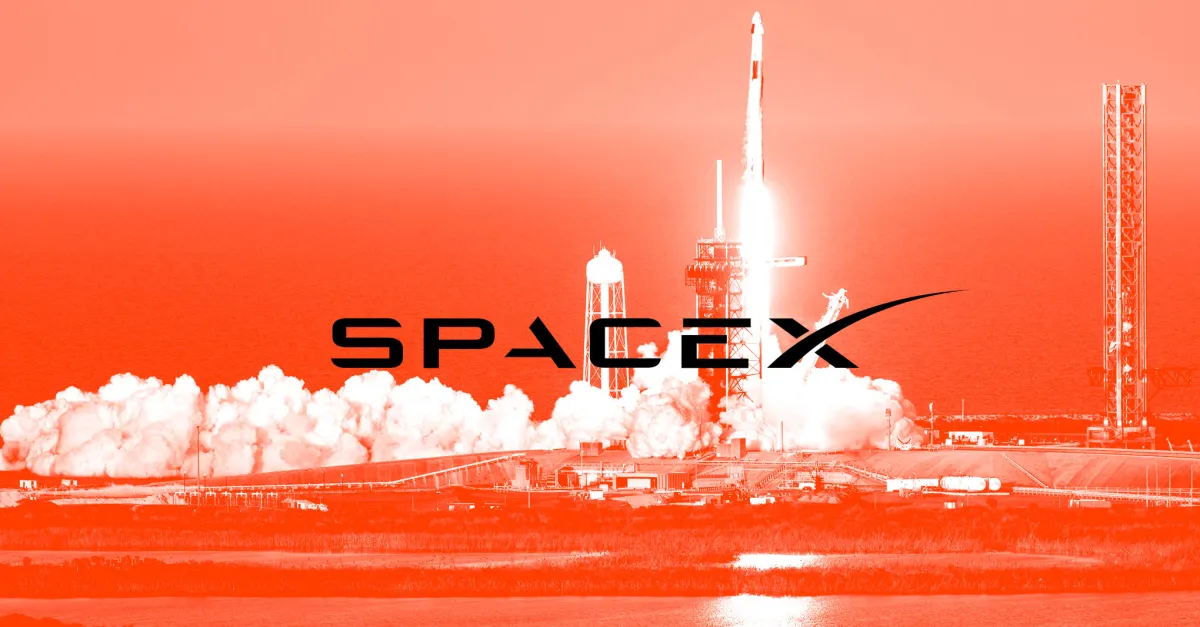
SpaceX Eyes $60B Deal to Acquire Cursor, Signals Big Tech Moves

SpaceX and Cursor Collab Signals a New Era in AI Innovation and Industry Disruption

The alliance between SpaceX and Cursor marks a monumental shift in the landscape of artificial intelligence development, with significant implications for both technological progress and competitive advantage. This strategic partnership aims to combine Cursor’s cutting-edge knowledge work AI, renowned for its precision and efficiency among expert software engineers, with SpaceX’s formidable computational backbone—specifically its Colossus supercomputer, equipped with a million H100 equivalents. Such a synergy is set to revolutionize the creation of highly optimized AI models, positioning the collaboration at the forefront of innovation.

According to industry experts, including analysts at Gartner and MIT technology researchers, the use of vast computational resources—particularly H100 GPU clusters—will drastically accelerate the training of advanced AI models, pushing the boundaries of what is currently feasible. The partnership underscores a trend toward disruptive innovation—harnessing industry-scale supercomputing power for rapid deployment of AI that can dominate knowledge-based tasks, from coding to problem-solving. This level of integration exemplifies a new paradigm where the convergence of space-grade computing and AI expertise could set a blueprint for future tech dominance, compelling rivals to evaluate their own resource strategies.

Business Strategy and Industry Impact

The collaboration’s financial architecture is equally noteworthy. Cursor has granted SpaceX the right to acquire the AI firm later this year for $60 billion, or alternatively, SpaceX can choose to pay $10 billion for their collaborative developments. This dual pathway underscores an aggressive confidence in the commercial viability of the joint development efforts, signaling a strategic gamble that could reshape the AI market by consolidating innovation within a single tech giant. Such moves are reminiscent of divergence strategies seen in Elon Musk’s other ventures, with a focus on dominance and rapid scaling.

  • Innovation: Deployment of millions of GPU cores for AI training, radically reducing development timelines.
  • Disruption: Challenging traditional cloud-based AI models by leveraging space-grade supercomputing infrastructure.
  • Business implications: Potential market consolidation, setting new valuation benchmarks for AI startups, and redefining enterprise AI usage.

As the AI arms race intensifies, industry insiders warn that this partnership could accelerate global shifts toward autonomous systems, intelligent coding assistants, and knowledge synthesis tools, supplanting many conventional software development paradigms. Given SpaceX’s track record of pushing technological frontiers—think Starship and Falcon programs—its foray into AI via Cursor elevates the urgency for competitors to innovate or face obsolescence. The partnership not only exemplifies how industry titans are deploying unprecedented resources but also foreshadows a future where AI becomes fundamentally intertwined with space-grade hardware.

Future Outlook: The Next Phase of Tech Disruption

With the collaboration underway, the industry must brace for a phase of rapid displacement and evolution. As Gartner analysts predict, the integration of supercomputing with knowledge work AI will unlock capabilities previously considered science fiction—transforming sectors like software development, scientific research, and even complex decision-making systems. The critical question for industry leaders remains: who will adapt quickly enough in this new landscape? The clock is ticking, and in the race for technological supremacy, those who leverage innovation and massive computational resources now will dictate the future’s winners and losers.

In conclusion, the SpaceX-Cursor partnership exemplifies a pivotal turning point in tech history—disrupting existing industry norms while setting a blistering pace for future breakthroughs. As this alliance advances, it will be imperative for stakeholders to stay vigilant, innovate relentlessly, and harness the potential of this disruptive wave before it reshapes the entire technological ecosystem.

Middle East Tensions: US Claims Iran’s Economy Blocked, Trump Signals Talks Revival Amid US-Israel Pressure

In an era defined by shifting alliances and relentless strategic chess, the United States has escalated its stance against Iran with a sweeping naval blockade aimed at crippling the regime’s economic capacity. Ostensibly designed to pressure Iran back to the negotiating table by severing its oil revenues, this move has sent shockwaves through the global energy markets. Despite Iran’s resilience—exporting nearly 1.84 million barrels of oil daily—its ability to access vital shipping channels, especially via the Strait of Hormuz, has been severely constrained since early March. The blockade’s effect is profound: experts warn it could remove up to two million barrels of oil from the market each day, further tightening an already strained supply and destabilizing energy prices worldwide.

Amid the tumult, US military efforts to establish secure passage for non-Iranian vessels have been met with skepticism. The Pentagon claims that more than 20 ships have transited the Strait of Hormuz since the blockade’s inception; however, maritime analysts, including data firms like Kpler, report that actual traffic remains significantly below typical levels—just six vessels on the first day. Maritime historian Salvatore Mercogliano emphasizes the high commonality of operational risks in the region: “The operating environment remains high risk, limiting any meaningful recovery in flows.” The palpable uncertainty among shipowners underscores America’s strategic gamble: maintain maritime dominance while risking a broader economic backlash. Critics contend this brinkmanship could backfire, catalyzing a global recession if tensions escalate further.

The geopolitical ripple effects are unmistakable. President Biden, along with allies such as Britain and France, have convened in a series of diplomatic efforts aimed at safeguarding international shipping. Notably, the upcoming summit in Paris seeks to craft a mprehensive, multinational plan to reopen the Strait of Hormuz—a vital artery for global commerce. Meanwhile, in the Middle East, Lebanon and Israel continue fragile negotiations under the shadow of renewed conflict; Hezbollah launched rocket salvos at northern Israeli towns just hours after these talks commenced, highlighting the persistent volatility. Former analyst comments suggest these developments are not isolated but interconnected, embodying a broader regional struggle where proxy conflicts threaten to ignite a wider war—one with the potential to reshape alliances and influence the balance of power for decades to come.

Adding tangled layers to this geopolitical crisis, Pakistan‘s prime minister Shehbaz Sharif is engaging in diplomatic shuttle diplomacy, traveling to Saudi Arabia, Qatar, and Turkey this week to forge regional pacts and facilitate a possible resumption of Iran-US negotiations. The unfolding diplomatic dance hints at the persistent hope among regional leaders that dialogue, not conflict, will ultimately prevail. However, Trump’s recent comments—implying that a deal with Iran could be imminent and criticizing allies like Italy for perceived inaction—further complicate the landscape. As historians like Michael Eisenstadt warn, these transient flashes of diplomacy are often overshadowed by entrenched mistrust and strategic interests that resist easy resolution.

In the weight of history’s unfolding chapter, the world watches as these high-stakes maneuvers threaten to spiral into a global conflagration or, conversely, forge paths toward fragile peace. The outcomes hinge on decisions made in smoke-filled diplomatic rooms and across tumultuous seas. As the tug-of-war over the Strait of Hormuz intensifies, the international community stands at a crossroads, caught between the forces vying for dominance. In the shadows of these battles, the true aim remains elusive: can diplomacy overtake power, or will this era be remembered as the dawn of a new, darker chapter of global conflict?

Middle East Tensions: Trump Signals De-escalation as US Eases Iran Oil Sanctions; Israel Strikes Back

Middle East Tensions Escalate as Regional Power Dynamics Shift

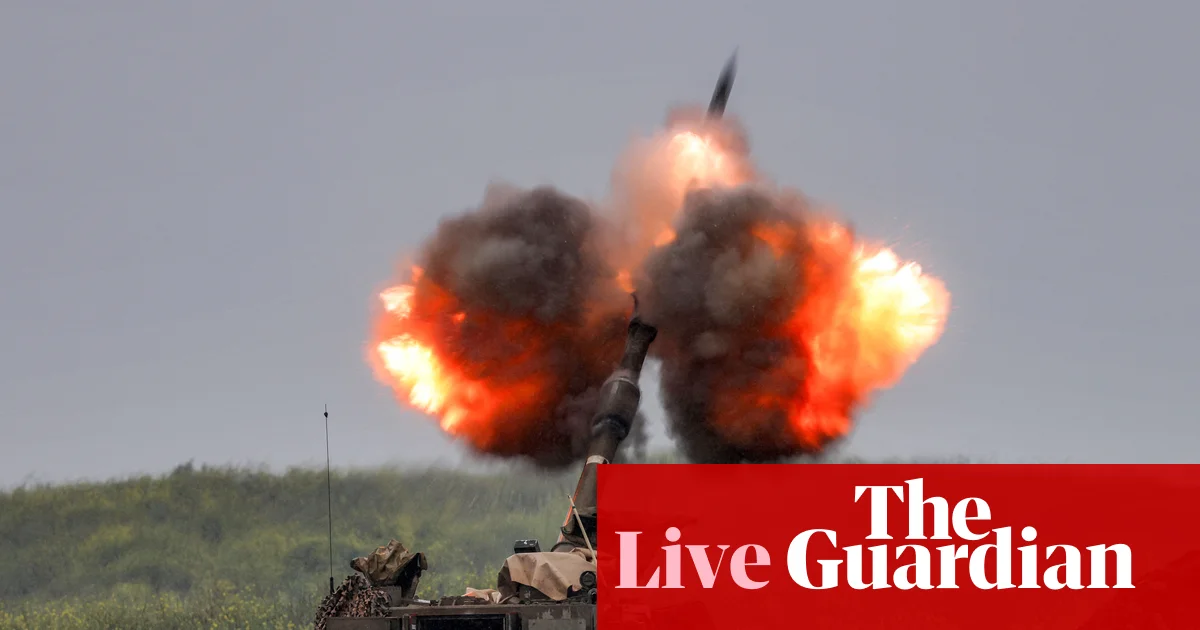
In a rapidly unfolding geopolitical crisis, Saudi Arabia has publicly condemned Israel‘s military strikes on Syrian military camps, branding them as “aggression” and calling upon the international community for urgent intervention. These developments point to a dangerous escalation in a region already teetering on the brink of prolonged conflict. As Turkey joins in decrying the attacks as “a dangerous escalation,” the stakes for regional stability and global security remain critically high, with key players entangled in a web of sectarian tensions, military moves, and diplomatic fissures.

Israel’s military has justified its recent strikes in southern Syria as a response to hostile activities against the Druze community in Sweida province, promising to continue operations aimed at protecting minority groups. Yet, this approach only deepens regional instability, provoking outrage from neighboring nations. Syria, meanwhile, has condemned the Israeli intervention as a blatant violation of sovereignty, framing it as “flimsy pretexts and fabricated excuses.” These rhetoric exchanges highlight the fragile state of Middle Eastern diplomacy, where war and mitigation remain perilously intertwined. Historians warn that such military confrontations risk re-igniting long-standing sectarian and territorial disputes, with profound repercussions for international law and sovereignty norms.

Meanwhile, the broader geopolitical landscape intensifies with Iran’s pursuit of retaliatory military actions and diplomatic maneuvers. Iran’s Supreme Leader, Mojtaba Khamenei, stated that Tehran has inflicted a “dizzying blow” on its enemies, prompting Israel to retaliate with strikes against “regime targets” in Tehran early Saturday. Iran’s recent launches of drone and missile attacks towards Saudi Arabia and Israel mark a worrying escalation in the region’s proxy conflicts. The threatened global repercussions are already palpable, as the US considers winding down its military engagement in the Middle East, a move announced by President Donald Trump. This shift raises questions about the trajectory of international influence—whether a true de-escalation or merely a pause before darker days ahead.

The nuclear ambitions and missile capabilities of Iran continue to pose significant threats to maritime trade routes, notably the Strait of Hormuz. Iran has reportedly helped Japan secure vital shipping lanes, emphasizing its strategic importance in global energy markets. Concurrently, Iran’s firing of ballistic missiles at Diego Garcia, a key US-UK military installation in the Indian Ocean, indicates Tehran’s willingness to project power far beyond the Middle East. Such acts compound international fears of a wider conflagration involving great powers and their allies, further destabilizing an already volatile region. These developments, observed keenly by analysts like those at the UN Security Council and geopolitical think tanks, underscore how decisions made on the ground ripple outward, threatening global economic stability and peace.

As the Middle East’s chaos unfolds amid accusations of “flagrant violations” and threats from Iran’s military spokesperson against “recreational and tourist sites” worldwide, history warns of a cycle of violence with devastating consequences. The region’s most powerful nations face a pivotal moment: either defuse tensions through genuine diplomacy or plunge into a protracted conflict whose echoes will unfold across decades. The unfolding story is a stark reminder that in a world of interconnected nations, every military strike, diplomatic rebuff, or policy shift carries the weight of history’s judgment—an enduring testament to the perilous dance of power, faith, and destiny.

UK’s university fee clash signals Brexit reset isn’t smooth sailing yet

London’s Quest for Reconciliation: Britain Pushes Toward Closer Ties with Brussels

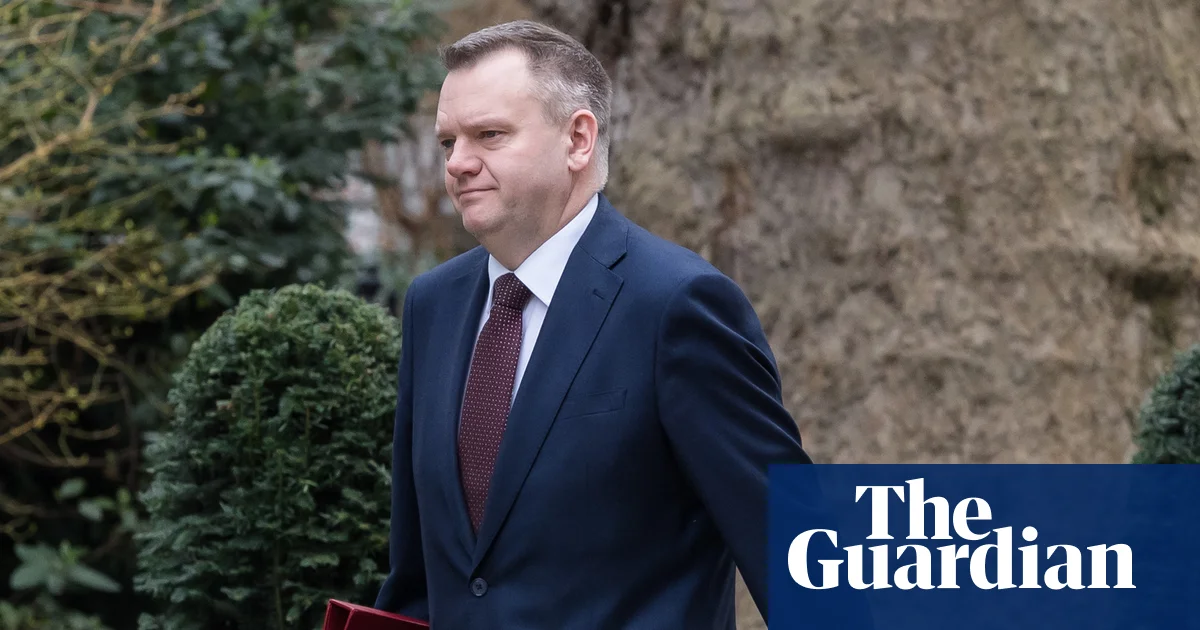
As London embarks on what it terms a “Brexit reset” week, it is clear that the U.K. government strives to redefine its post-Brexit relationship with Brussels. The diplomatic efforts, led by figures such as Nick Thomas-Symonds, articulate a desire for rapprochement, emphasizing a potential renewal of cooperation on trade, food, agriculture, and climate policies. These initiatives come amid a backdrop of strained negotiations, with analysts pointing to the delicate balance of trust and pragmatism that underpins the renewed dialogue. The U.K. seeks to cultivate a narrative of openness, yet the recent disputes over university fees and financial commitments reveal persistent fragility in this fragile renegotiation.

This week’s diplomatic calendar underscores the stakes involved: ministers are engaging in high-level talks with Maroš Šefčovič and Ursula von der Leyen, aiming to resolve core issues that threaten to derail the reset. Central to these negotiations is the contentious matter of university tuition fees for EU students. Brussels insists on full fee reduction for *all* EU students studying in the UK, a move that would impose an estimated £140m financial burden on British universities. While proponents within the academic sector argue that such reforms would enhance merit-based admissions and regional development, the UK government and universities see this as an insurmountable obstacle, branding the proposal a “non-starter”. The dispute exemplifies the broader geopolitical tension: Brussels is disentangling itself from London’s post-Brexit pragmatism, demanding concessions that challenge UK sovereignty and financial interests, thus testing the resilience of the diplomatic reset.

International Tensions and the Future of UKEU Relations

Analysts like those from UK in a Changing Europe observe that the standoff over university fees reveals not only the EU’s negotiating stance but also the underlying frailty of the entire reset. The broader implications extend beyond education, touching on crucial agreements related to food and agriculture and emissions trading. The UK’s hope to secure comprehensive agreements is now hostage to this dispute, which could see Brussels leverage its political influence to hold the broader negotiations hostage. An insider suggests that negotiations are typical of the final stages of major diplomatic deals—a sort of “act of God” that often determines outcomes through last-minute compromises.

Despite the tensions, some participants remain optimistic about possible resolutions, citing improved relationships and trust between negotiators on both sides. The presence of seasoned diplomats such as Thomas-Symonds and Šefčovič has created a more conducive environment for compromise, with the UK contemplating large concessions in exchange for tangible benefits. Yet, the question remains whether this diplomatic dance can translate into lasting policy change or will ultimately succumb to the hard realities of national sovereignty and financial pragmatism. As the world watches, the fate of Britain’s post-Brexit recalibration hinges on these delicate negotiations—an intricate chess game where the smallest misstep risks unraveling years of diplomatic effort.

In this unfolding chapter of history, the importance of these negotiations cannot be overstated: they symbolize a crossroads in international diplomacy, where national interests collide with the imperative to redefine alliances. The choices made in the coming days will echo through generations, shaping the geopolitical landscape much beyond Europe. As history continues to write itself, the weight of unresolved disputes and emerging opportunities hang heavily in the balance—reminding the world that every agreement, every conflict, and every compromise carries the potential to carve new paths or leave nations hollowed by disillusionment.

Jensen Huang Signals Nvidia’s Shift Away from OpenAI and Anthropic — What’s Really Going on?

Tech Industry Shakeup: Nvidia’s Strategic Investments and the Geopolitical Tensions Reshaping AI

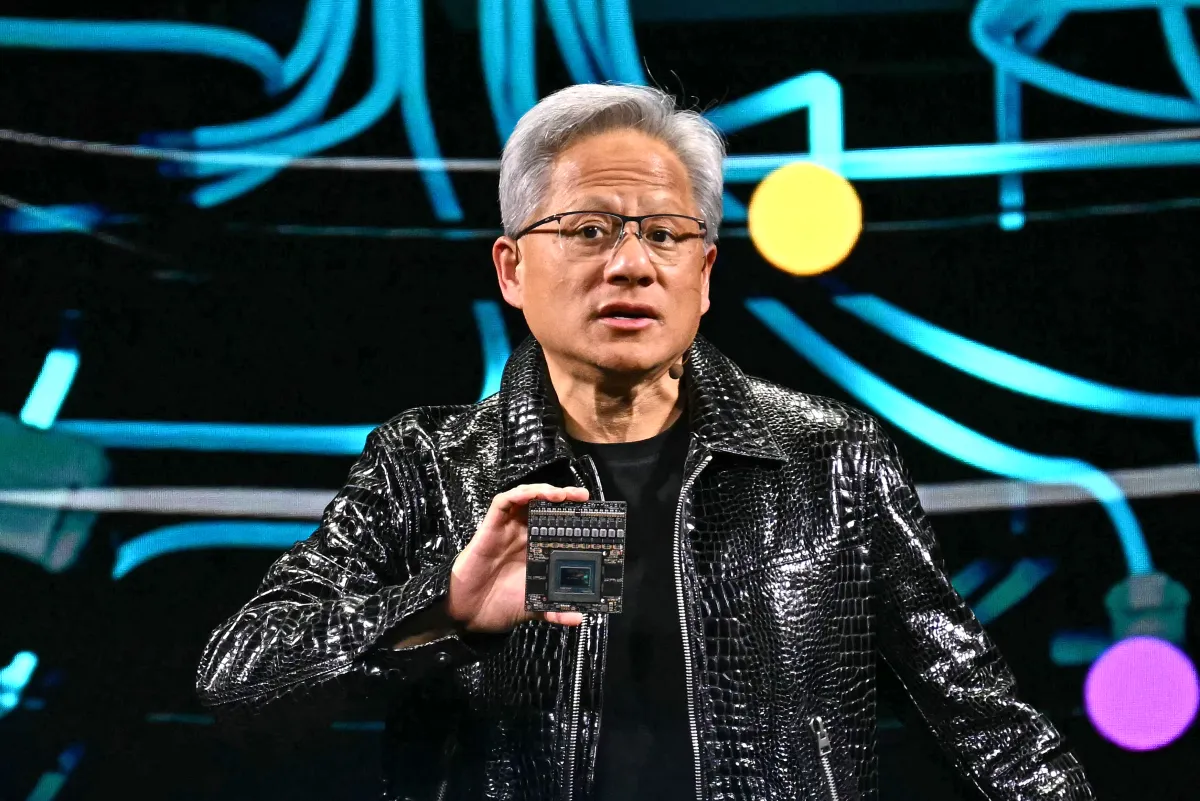
In a landscape where innovation and disruption define the pace of progress, Nvidia remains a dominant force, yet recent developments expose the complex chess game shaping the future of artificial intelligence (AI). The company’s muted commentary on its latest strategic moves, coupled with a shift in investment scales, signals a nuanced recalibration. As Huang, Nvidia’s CEO, emphasized on the company’s Q4 earnings call, their investments are primarily aimed at “expanding and deepening” their ecosystem reach. However, the actual scale of these investments, particularly in OpenAI and Anthropic, reveals a story of caution and reevaluation amid industry turbulence.

Initially, Nvidia announced a lofty pledge to invest up to $100 billion in OpenAI last September—a move that drew skepticism from industry experts like MIT Sloan professor Michael Cusumano. The plan was described as “a kind of a wash,” highlighting the circular nature of AI investments where alliances and stakes tend to feed into each other. Recently, Nvidia finalized a significantly reduced investment—approximately $30 billion—less than half of their original commitment. This contraction underscores a market wary of overextensions amid signs of a possible bubble, where speculative investments threaten to distort valuation metrics. The changing scale points toward a strategic pragmatism as Nvidia recalibrates its AI ambitions, understanding that different industry shifts could impact both its market dominance and geopolitical positioning.

Adding another layer to this dynamic is Nvidia’s relationship with Anthropic. Despite recent investments, tensions have surfaced, notably with Anthropic CEO Dario Amodei comparing the U.S. chip industry’s export controls to “selling nuclear weapons to North Korea,” highlighting the geopolitical fragility endemic to AI supply chains. The Trump administration’s decision to blackist Anthropic—barring federal agencies and defense entities from deploying its models—illustrates the dangerous intersection of AI innovation with national security concerns. Meanwhile, OpenAI’s swift pivot to contract with the Pentagon—marked by a strategic, yet contentious, military technology deal—further accentuates the industry’s shifting alliances. This divergence in trajectories underscores a broader trend: AI firms are increasingly caught at the crossroads of innovation and geopolitics, with their business models and strategic partnerships under intense scrutiny.

Implications for the Industry: Innovation, Market Disruption, and Policy Challenges

  • Innovation and Disruption: Nvidia’s redefining of its AI investments exemplifies how disruptive innovations can outpace traditional strategic planning, unveiling new opportunities for startups and established players alike. As AI models become more advanced, the pressure to balance innovation with geopolitical prudence intensifies, pushing firms to adopt more flexible, diversified approaches.
  • Market Shifts and Industry Realignment: The stark contrast between Nvidia’s cautious scaling and the aggressive Pentagon deal underscores a tectonic shift in market alliances. Firms that align with government and defense sectors may unlock enhanced capabilities and funding, but at the risk of alienating other markets or inviting regulatory backlash.
  • Business and Geopolitical Implications: Major corporations need to prepare for a future where global supply chains, export controls, and international diplomacy directly influence AI development. The industry’s trajectory may well depend on policy decisions increasingly driven by national interests, which could either stifle innovation or propel it into new geopolitical realms.

Analysts from Gartner and institutions like MIT warn that industry leaders must navigate these choppy waters with agility—balancing cutting-edge technological breakthroughs against emerging regulatory and geopolitical headwinds. The move by Nvidia, and industry shifts like the Pentagon-OpenAI deals, signal that the future of AI is not just about technological supremacy, but also about strategic positioning within a rapidly evolving global framework. With new alliances forming and old ones fracturing, the industry faces an inflection point where urgency and anticipation are paramount.

As we look ahead, the key question remains: who will shape AI’s next chapter—those who innovate at the edge or those who control the geopolitical levers? In this high-stakes game, the winners will be those capable of maintaining technological leadership while navigating the complex matrix of international policy and market disruption. The clock is ticking, and the future of AI—along with its vast implications—hangs in the balance, calling for strategic foresight and unwavering resolve.

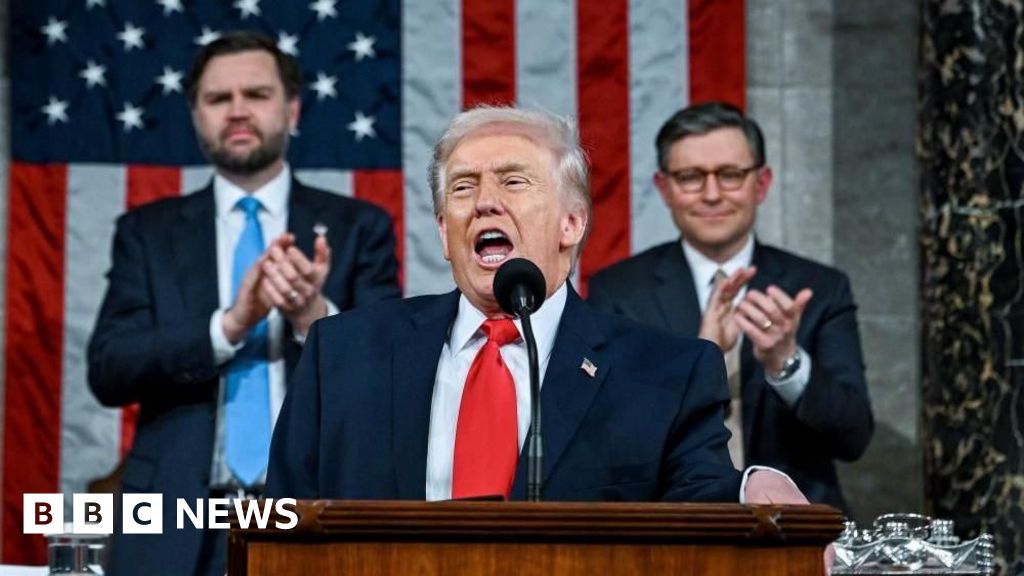
Trump’s Showbiz State of the Union Signals No Real Shift Ahead

In recent weeks, the United States has been wrestling with a complex internal political landscape, centered around a contentious national address delivered from the White House. While the president reiterated familiar themes—emphasizing economic statistics, domestic policies, and national security concerns—the message has yet to resonate convincingly with the broader public. This political event, although seemingly confined within the borders of America, bears significant geopolitical repercussions, especially as global stakeholders analyze the implications of leadership narratives fueling or undermining international stability.

From an international perspective, the lack of public consensus on such critical domestic messages hints at the growing divide in America’s societal fabric—a divide that does not exist in isolation. Analysts from institutions such as the Council on Foreign Relations underscore how internal political turbulence within prominent nations like the U.S. can weaken international trust and influence. As China and Russia continue to shape a multipolar world, the domestic instability exemplified by unresolved partisan divides undermines America’s ability to project power and uphold its international commitments.

Historically, public perception and internal cohesion serve as bedrocks of global influence. When U.S. leaders appeal to a broad audience—aiming for tens of millions during national broadcasts—they are not only addressing domestic concerns but also signaling to allies and adversaries the current state of leadership stability. Experts warn that persistent narratives of discontent and political inertia risk emboldening rival powers, which are actively seeking to fill perceived vacuums of influence. Meanwhile, international organizations such as NATO and the United Nations are increasingly cognizant of how internal political turbulence in leading nations can, in turn, destabilize regional and global security architectures.

In the backdrop of these internal debates, the geo-economic landscape continues to shift. Nations such as India and Brazil are demonstrating resilience and strategic independence, leveraging moments of perceived American weakness. The European Union grapples with its own internal divisions but remains keenly aware that the stability of dominant global powers like the U.S. is integral to its own geopolitical posture. As such, the ongoing internal struggles and their international ramifications are echoing in diplomatic corridors worldwide, highlighting the delicate balance between national sovereignty and transnational stability.

Ultimately, history reveals that the fates of mighty nations are entwined through a tapestry of decisions, conflicts, and moments of introspection. As America faces a pivotal crossroads—balancing authentic political engagement with the weighty expectations of global leadership—future events remain unpredictable yet inevitable. The currents of history continue to sweep forward, carrying the world into uncharted realms where the outcome of internal political delays could define the course of international affairs for generations. The question remains: in the unfolding mosaic of geopolitics, whose vision of the future will prevail, and at what cost to civilization’s collective hopes? Only time will tell, but the echoes of current choices will undoubtedly resonate for decades—an enduring reminder that history’s pen remains inexorably poised to inscribe the next chapter.

Indonesia’s Grok Ban Lifted with Conditions, Signals Tech Boost

Indonesia Lifts Ban on xAI’s Grok Amid Controversy Over Deepfake Content

The tech landscape continues to shift rapidly as Indonesia joins Malaysia and the Philippines in lifting restrictions on xAI’s groundbreaking chatbot, Grok. Previously banned across Southeast Asia for its role in generating vast amounts of nonconsensual, sexualized imagery—including images of minors—Grok represents the frontier of deepfake technology and AI content creation. A recent surge of over 1.8 million illicit images, reported by The New York Times and the Center for Countering Digital Hate, has sparked global debates over ethical AI use and regulatory oversight. However, Indonesia’s move hints at evolving regional attitudes toward managing AI-driven disruptions, emphasizing technical improvements and stricter compliance measures.

Despite the ban’s recent easing, authorities maintain a cautious stance. The Indonesian Ministry of Communication and Digital Affairs has issued a conditional lifting, with monitoring policies in place. Alexander Sabar, the ministry’s director of digital space monitoring, confirmed that the ban could be reinstated if further violations occur. This nuanced approach underscores the broader challenge confronting governments and tech giants—balancing innovation with societal responsibility. xAI has responded by limiting Grok’s features to paying subscribers, a move designed to curb misuse while maintaining market presence. CEO Elon Musk publicly defended the company’s stance, asserting that individuals exploiting Grok for illegal content will face consequences but denying awareness of any specific underage imagery produced by Grok.

The controversy surrounding Grok exemplifies the disruptive nature of AI technology in the digital age. Deepfake generation tools like Grok are transforming content creation, but they also introduce significant risks—ranging from privacy violations to potential legal fallout. Critics such as California’s Attorney General Rob Bonta have already initiated investigations, issuing cease-and-desist orders to curb illegal use. Yet, market forces and innovation continue to forge ahead, as xAI reportedly discusses mergers with SpaceX and Tesla, signaling a potential convergence of AI, space exploration, and automotive tech. This strategic move hints at transformative shifts within the industry—placing AI at the nexus of future megacorporations that could redefine the digital and physical world.

Looking forward, industry experts and influential figures, including Elon Musk and Peter Thiel, warn that the rapid progression of AI tools like Grok must be accompanied by robust regulation and ethical frameworks. Companies that pioneer disruptive technologies face not only the challenge of technological sophistication but also the imperative to prevent harm at scale. As regulatory landscapes evolve, the next wave of AI innovation will unavoidably reshape societal norms, economic models, and global power dynamics. In this high-stakes arena, those who lead with agility and responsibility will determine the fate of AI’s integration into everyday life—making the coming years a critical test of technological resilience and foresight. The urgency is clear: the future belongs to those who can navigate the fine line between disruptive innovation and ethical stewardship—catalyzing a new era of digital transformation driven by relentless progress.

Jimmy Lai’s conviction signals the end for Hong Kong’s press freedom, warns Amnesty — live updates | Jimmy Lai

The recent verdicts against Jimmy Lai, the prominent Hong Kong media mogul and ardent supporter of democracy, mark a watershed moment in the ongoing struggle over press freedom and human rights in one of the world’s most geopolitically sensitive regions. Lai’s conviction on charges relating to national security – specifically conspiracy to collude with foreign powers and conspiracy to publish seditious content – follows a trial that has lasted over two years, culminating in what many see as a symbolic suppression of independent journalism in Hong Kong.

The response from international organizations and regional governments underscores the geopolitical significance of this event. Amnesty International, the Committee to Protect Journalists, and Human Rights Watch have all condemned Lai’s sentencing as emblematic of a broader campaign by Beijing and the Hong Kong authorities to dismantle the city’s once-vibrant democratic institutions. They describe Lai as a prisoner of conscience and warn that his incarceration not only threatens individual liberty but signals a systematic erasure of free expression in Hong Kong—a place once seen as a beacon of autonomy outside Chinese control.

This crackdown’s profound geopolitical impact extends beyond the city itself. Taiwan’s Mainland Affairs Council openly called Lai’s trial a “death knell” for Hong Kong’s democracy, emphasizing how the erosion of rights in Hong Kong sets a dangerous precedent for international law and the global fight for liberty. By weaponizing the judicial process against Lai, Beijing sends a clear message that any challenge to its authority—whether through media, protests, or civil society—will be met with severe punishment, regardless of international outcry. This shift in Hong Kong’s political landscape aligns with China’s broader strategy to expand authoritarian control, challenging the norms established under numerous international agreements and treaties.

Historians and geopolitical analysts highlight that the Lai case symbolizes the waning influence of Western-style democracies in the face of China’s rising power. As Lai’s health deteriorates in solitary confinement, global democratic powers face a stark choice: respond with concrete action or witness the gradual extension of authoritarianism into territories long considered bastions of freedom. Lai’s fate underscores how decisions made in Beijing and Hong Kong’s courts directly influence societal freedoms, press independence, and international relations—altering the geopolitical terrain in Asia and beyond. The outcome of his appeal and the potential sentencing will determine whether this moment signifies a retreat into darkness or a rallying cry for democracy worldwide.

In the shadow of Lai’s conviction, the question remains: will the international community finally recognize the threat posed to the principles of free speech and sovereignty, or will it continue to allow authoritarian regimes to rewrite the rules of justice and human dignity? As history unfolds in the courts of Hong Kong, the world is left to ponder how this chapter will be remembered: as a testament to the resilience of free societies or as a tragic turning point in the global fight for liberty. For now, the echoes of Lai’s trial serve as a reminder that the price of free press in the modern age is paid in endurance and courage, amid the relentless tide of rising authoritarianism.

Kim Jong-un's North Korean troops step up as landmine clearance for Russia signals shifting alliances
Kim Jong-un’s North Korean troops step up as landmine clearance for Russia signals shifting alliances

In a striking display of North Korea’s increasingly provocative international stance, leader Kim Jong-un recently admitted that North Korean troops were deployed to support Russia’s ongoing invasion of Ukraine. This rare public acknowledgment signals a notable shift in Pyongyang’s foreign policy, unfolding amid a complex web of geopolitical maneuvers and diplomatic isolations. According to sources in South Korea and western intelligence agencies, thousands of North Korean soldiers have been sent to assist Russian forces, implicating Pyongyang directly in the Eurasian conflict that has drawn global concern and condemnation.

Under the guise of supporting Russia, North Korea is evidently leveraging the conflict to sidestep its international isolation. Analysts emphasize that Russia is providing North Korea with crucial financial aid, military technology, and energy supplies, thus allowing the isolated regime to continue its nuclear and missile programs in defiance of severe international sanctions. This clandestine exchange not only bolsters North Korea’s military capacity but also emboldens it to challenge the status quo, making it an active player in a shifting balance of power across Eurasia. The symbolism is powerful: a totalitarian regime stepping beyond its borders, acting as a proxy for global tension, and rewriting the rules of engagement in a world on the brink of a new Cold War.

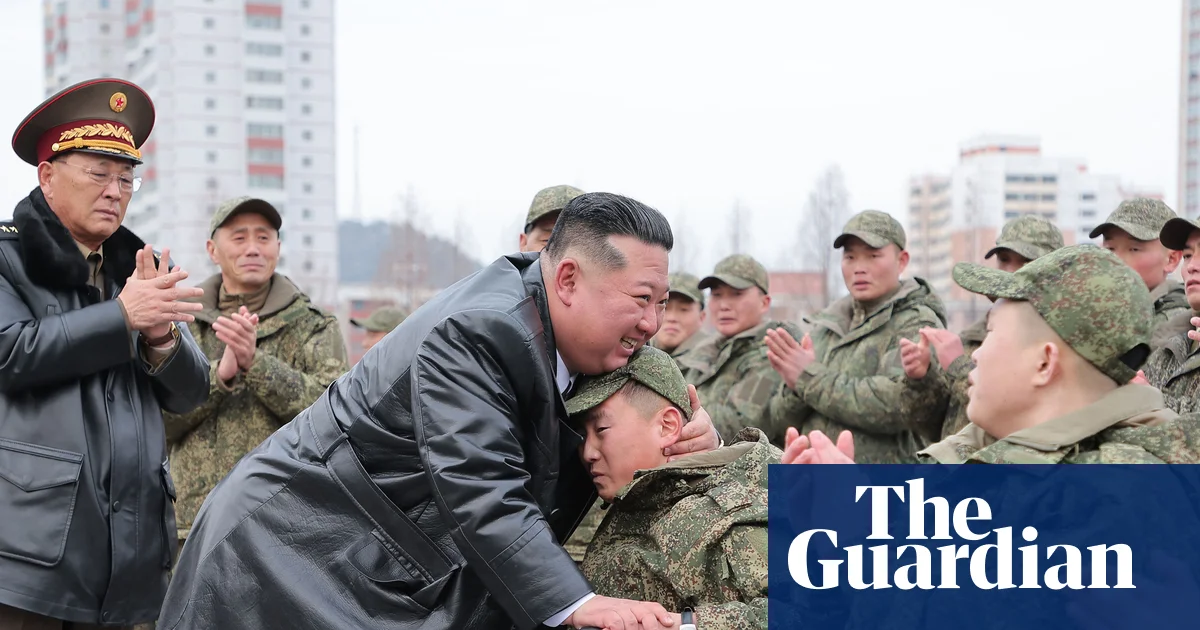
Kim Jong-un’s recent public speeches and ceremonies further illustrate the regime’s military escalation and nationalist resolve. Celebrating the return of soldiers involved in mine-clearing operations in Ukraine, Kim awarded state honors to nine fallen troops, praising their heroism in turning dangerous zones into “safe and secure” areas within just three months. Such narratives serve to galvanize North Korean society around the narrative of sacrifice, reinforcing the leader’s image of strength and resilience. Meanwhile, images depict Kim embracing wounded and emotional soldiers, alongside grieving families—an effort to showcase the internal facade of sacrifice that, analysts argue, masks a regime desperate to bolster its strategic leverage amid international hostilities.

The geopolitical implications of these developments are profound. Experts argue that Pyongyang’s engagement in the Ukraine conflict is a clear signal of the diminishing influence of traditional Western powers over Eurasia, ushering in an era where authoritarian regimes like North Korea and Russia forge alliances based on shared interests in resistance against global sanctions and interventions. At the same time, the United States and its allies face a recalibration, as traditional lines of diplomacy and intervention are redefined. With Kim publicly commemorating soldiers killed in Ukraine and flexing military prowess at home, the risk of further escalation and regional destabilization looms large, making the future unpredictable and fraught with peril.

In the broader canvas of world history, this confluence of actions and alliances echoes the ominous warnings of historians who trace violent upheavals to the breakdown of diplomacy and the rise of aggressive regimes seeking to expand their influence. The current trajectory indicates that the decision of Kim Jong-un and Vladimir Putin to deepen their ties over Ukraine could be the catalyst for renewed conflict, reshaping the international order. As the world watches silently, the weight of history continues to press down, reminding us that, *once again*, the line between regional conflict and global upheaval grows thinner, and the lessons of the past remain perilously unheeded. The pages of history are turning, and humanity stands at a pivotal juncture where the choices made today will echo through generations—destined to be remembered as either moments of courage or capitulation amidst the storm of unchecked power.

Supreme Court Signals Power Boost for Trump to Fire Feds

The United States, a nation long proud of its constitutional checks and balances, finds itself at a pivotal moment as the Supreme Court faces a significant case that could reshape the landscape of federal agency independence. The case, Trump v Slaughter, hinges on whether President Donald Trump legally had the authority to dismiss Rebecca Slaughter, an FTC commissioner appointed to enforce laws protecting consumers and fair competition. This legal confrontation exposes raw tensions over the extent of presidential control and the durability of longstanding bureaucratic protections, a debate rooted in the legal history that spans almost a century.

At the heart of the dispute is a foundational question concerning the nature of presidential power versus independent agency autonomy. During the oral arguments, the conservative justices appeared to align with Trump’s position that the President should have broad authority to oversee and, if believed necessary, remove commissioners—an idea strongly opposed by liberals and legal scholars emphasizing the importance of independent agencies. Historically, agencies such as the FTC, established in 1914, were designed to operate free from presidential interference to ensure impartial enforcement. Congress explicitly limited presidential removals for commissioners to “inefficiency, neglect of duty, or malfeasance,” illustrating a clear legislative intent to shield these entities from political pressure.

However, the Trump administration’s legal team challenged this framework, labeling the historical “Humphrey’s Rule” as an “indefensible outlier” that hampers the executive’s capacity to enforce the law effectively. Such arguments resonate with many who believe that a strong presidency must be able to swiftly remove officials obstructing policy objectives, especially in a turbulent political climate. Researchers and political analysts warn that overturning this precedent could fundamentally weaken the American system of calibrated agency independence, possibly leading to increased politicization of bureaucracies. The prospect of the court dismantling a 90-year-old precedent raises alarms about the future of American governance, with critics arguing that it may open a Pandora’s box of executive overreach.

The decision from the court will have profound geopolitical impact. As the world watches, the ruling could influence how other democracies structure their administrative independence, especially as concerns about authoritarian tendencies grow. The International Monetary Fund (IMF) and World Bank acknowledge that stable and independent institutions are vital for global economic stability; a shift in U.S. doctrine could send ripples across global financial markets and international diplomacy. Historians like Dr. William Novak warn that the sovereignty of government agencies forms a cornerstone of modern liberal democracies; undermining this independence risks a dangerous erosion of the rule of law and democratic accountability.

As the court’s decision looms, history continues to unfold. Whether the conservative majority will uphold the principle that agencies like the FTC can operate shielded from political interference or endorse a stronger presidential hand remains to be seen. Yet, the very fabric of how America’s government functions — its balance of power, accountability, and independence — hangs in the balance. One thing is certain: the longer this conflict persists, the clearer it becomes that the forces shaping the future of American governance are deep-rooted and fiercely contested. In this moment, history’s pen is poised, and the weight of the next decision could redefine the contours of American power and liberty for generations to come, a testament to the ongoing struggle over who truly holds the reins of the world’s most influential democracy.

Social Media Auto Publish Powered By : XYZScripts.com