Matox News

Truth Over Trends, always!

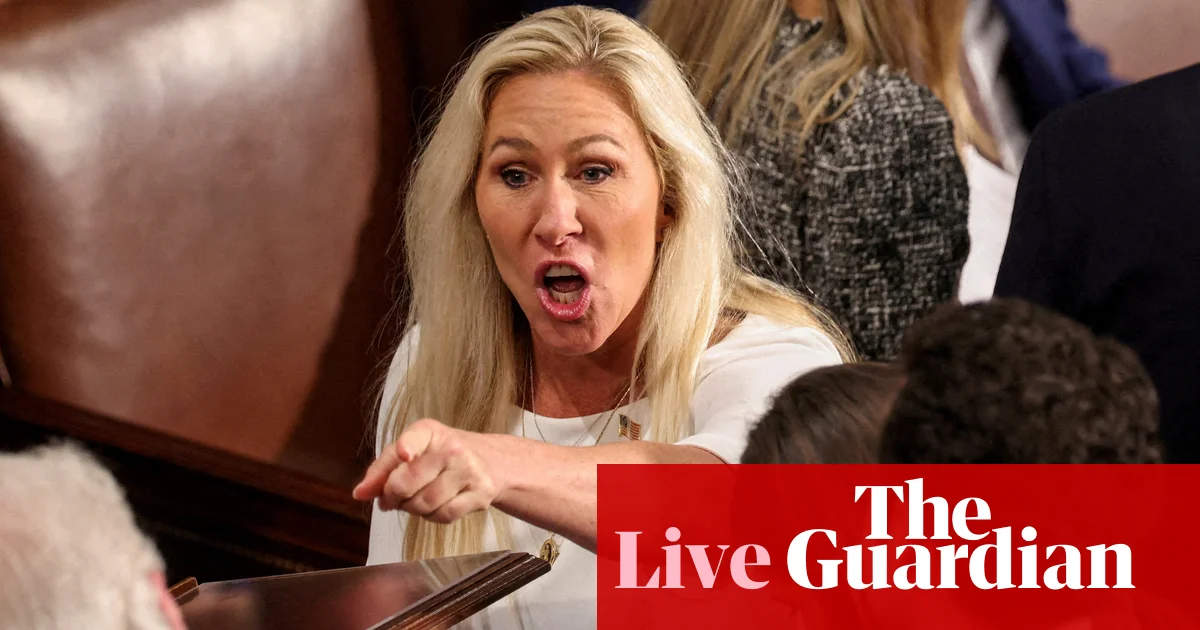
Former House Speaker Warns Greene’s Departure Signals GOP Warning Sign for Future Success

The recent upheavals on Capitol Hill and the evolving international diplomacy around the Ukraine conflict underscore a tumultuous chapter in U.S. and global geopolitics. As Marjorie Taylor Greene abruptly resigned from her congressional seat, analysts highlight this as a critical indicator—an emblem of the escalating internal crises within the GOP. Her departure signals a broader pattern of instability, with over twenty-two House Republicans already announcing retirements or plans to forgo re-election next year. Such mass withdrawals depict a party on the brink, fractured by internal divisions and teetering amidst impending electoral battles, which could fundamentally reshape America’s political landscape.

Beyond domestic upheavals, the international chessboard remains equally volatile. The Kremlin has confirmed that Steve Witkoff will return to Moscow next week, hinting at renewed efforts to broker peace in Ukraine. This follows reports of a leaked recording in which Witkoff advised Russia’s Yuri Ushakov on how to pitch a peace deal to Donald Trump. The recording reveals a hands-on diplomatic approach—one that many experts interpret as a testament to the fragile and complex negotiations underway. Furthermore, the US has rolled out a markedly concessionary peace plan, aimed at appeasing Russia and European stakeholders, but it risks further entrenching divisions, especially if those compromises undermine Ukrainian sovereignty.

The geopolitical impact of these intertwined developments is profound.

  • On one side, the U.S. appears to be shifting towards a more pragmatic, yet controversial stance, risking accusations of appeasement amid its support for Ukraine.
  • On the other, Russia’s diplomatic overtures—guided by a perceived desire to leverage the US’s internal discord—highlight Moscow’s strategic patience and its ongoing ambitions to weaken Western unity.
  • Within America, the Republican Party’s internal turmoil and leadership struggles threaten to weaken the United States’ global influence, particularly just as adversaries like China and Russia recalibrate their own geopolitical strategies.

International organizations and military analysts warn that decisions made in these critical moments will resonate through history, shaping the future of Western dominance and extending the shadows of conflict into the coming decades. As experts like prominent historians observe, the current period bears the hallmarks of a historic turning point—one where internal discord, diplomatic machinations, and strategic negotiations collide with unpredictable outcomes. The choices of today could either solidify a new era of resilience or usher in a perilous downslide into escalating conflict and chaos.

Indeed, as history unfurls its latest chapter, one cannot help but consider the weight of the decisions being made—in Capitol Hill, in Moscow, and amidst the Kremlin’s corridors of power. The tipping point may be just beyond the horizon, and the next move in this high-stakes game will determine the course of the world’s future, leaving us all to wonder: in this new epoch of geopolitical upheaval, what will be written into the annals of history, and what will be swept aside in the relentless tide of change? The stakes are clear—they are nothing less than the destiny of nations and the legacy we leave behind.

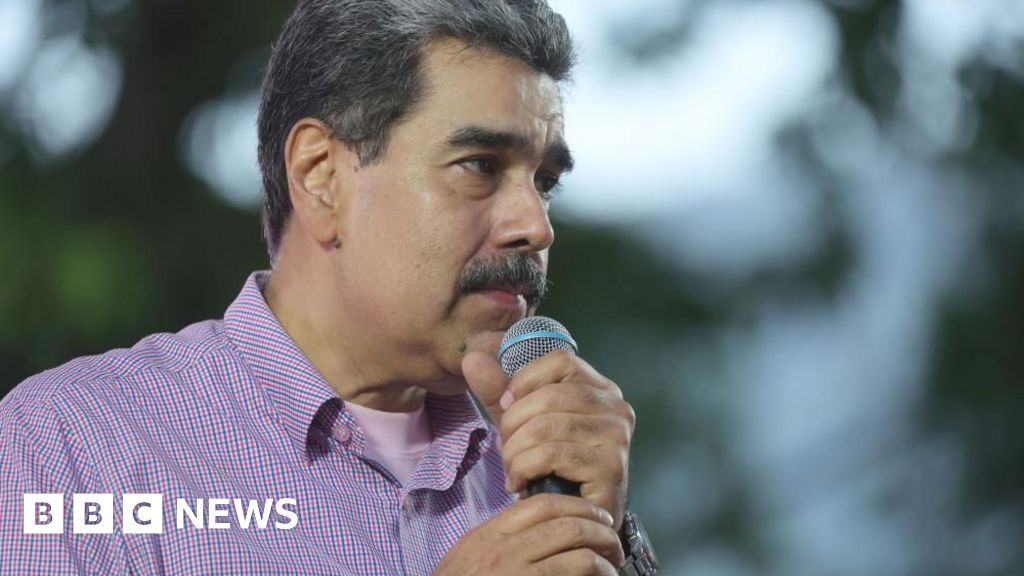
Maduro Signals Openness to Direct Talks Amid Rising US Pressure

In an unmistakable sign of the escalating crisis in Venezuela, the country’s leader, Nicolás Maduro, has publicly expressed willingness to engage in direct talks with representatives of the Trump administration. This development comes amid intensifying international pressure, while Washington’s rhetoric and military maneuvers suggest a broader strategic aim beyond mere diplomacy. Just hours before Maduro’s announcement, President Donald Trump had not ruled out deploying ground forces to the South American nation, igniting fears of an outright conflict. The United States, through its actions and statements, appears to be pushing toward a decisive intervention—yet the question remains: is this for regime change or strategic control over Venezuela’s vast oil reserves?

The US government’s aggressive policies have shown few signs of backing down. Since Trump’s second term began, Washington has doubled its bounty on Maduro, offering up to $50 million for information leading to his capture, and launched a counternarcotics operation targeting vessels crossing Caribbean waters. These strikes, conducted under the guise of removing “narcoterrorists,” have resulted in over 80 fatalities, igniting a debate about their legality and effectiveness. Critics, including legal experts and international analysts, argue that no concrete evidence has been provided linking these vessels to drug trafficking. The strikes, primarily in the Caribbean and Pacific, underscore a broader strategy: to sow chaos within Venezuela’s borders and weaken Maduro’s hold on power. Meanwhile, the presence of the US Navy’s largest aircraft carrier, the USS Gerald Ford, signals that Washington’s military posture may be more than a bluff; some interpret it as a veiled threat to remove Maduro forcibly.

Simultaneously, diplomatic signals fluctuate. Trump’s contradictory statements—initially denying the possibility of war, then leaving open the option of military action—are read as a warning to Maduro: enter negotiations or face harsher measures. The State Department’s decision to delay labeling the alleged Venezuelan drug cartel, Cartel de los Soles, as a Foreign Terrorist Organization until late November, appears to be a calculated move. Experts suggest that this delay is a strategic ultimatum: engage in dialogue or face intensified sanctions and military pressure. The designation, if enacted, would criminalize any American support for the cartel, bolstering the US’s legal basis for further action. As President Trump wavers, some analysts see this as part of a broader tactic—an attempt to reinforce the narrative that Maduro’s regime is a significant threat to regional stability and US security.

Within Venezuela, Maduro’s approach openly contrasts with US escalation. The leader, who has once even sung in English during public addresses, is calling for dialogue and peace. Addressing the American people directly, he underscores his readiness for face-to-face talks—yet, past negotiations mediated by the Vatican and Norway have collapsed. Meanwhile, opposition figure and Nobel laureate María Corina Machado is actively urging the military to defect, framing Maduro’s regime as a “criminal structure” responsible for “crimes against humanity.” Her “freedom manifesto” highlights the stakes—an impending epoch where “our natural rights will prevail,” but only if Venezuelans unite against what she describes as a dictatorial tyranny. The ongoing internal struggle echoes the larger geopolitical tension: a nation on the brink, caught between authoritarian repression and external intervention—whose fate remains suspended between history’s relentless march and the unpredictable tides of geopolitics.

The weight of this unfolding crisis leaves the international community pondering the future of Venezuela, as the echoes of history ring louder than ever. Will diplomacy prevail, or will this simmering conflict ignite into another chapter of regional upheaval? With each tug of geopolitics, entire societies are caught in the crossfire, and the world watches as the pages of history turn—unfolding a saga of power, resistance, and the quest for sovereignty that may yet reshape the very fabric of South America. The question lingers: how much longer can this fragile balance be maintained, before the next chapter of conflict is written in blood and fire?

BNPL’s rapid rise signals big shifts—are we ready?

Emerging Risks in Buy-Now-Pay-Later Sector Signal Possible Financial Disruption

The rapid rise of Buy-Now-Pay-Later (BNPL) services reveals a growing facet of the modern financial ecosystem, marked by intense innovation and disruptive business models. As highlighted at this year’s Web Summit, industry veteran Morris underscores a troubling trend: consumers are increasingly resorting to BNPL for basic needs such as groceries, indicating a significant strain on household finances. The statistic speaks volumes — with over 91.5 million users in the U.S., a substantial quarter utilize BNPL for essential purchases, a clear sign of economic stress among ordinary Americans. This built-in flexibility originally aimed at discretionary spending now positions BNPL as a vital, yet potentially precarious, financial tool for lower-income populations.

Within this context, the business implications are profound. Leading fintech firms like Klarna and Affirm, which have introduced innovative solutions including banking licenses and integrated payment tools, have rapidly expanded their influence, blurring lines with traditional banking entities. These companies are evolving into essential infrastructure components—embodying a marketplace-driven shift where “fintech as a service” disrupts traditional credit channels. The growing integration into platforms like Apple Pay and Google Pay epitomizes their centrality in consumer transactions, raising questions about the future of banking regulation and consumer protection.

However, lurking beneath these advancements are significant risks. Data from the Consumer Financial Protection Bureau exposes a concerning pattern: a majority of BNPL borrowers, particularly those with subprime credit, are facing mounting debt burdens. Nearly two-thirds of borrowers had lower credit scores, with 33% juggling multiple BNPL loans from various platforms—often simultaneously. Most troubling is that these loans are largely absent from credit report footprints, creating what industry insiders call “phantom debt”. This opacity hampers regulators’ ability to assess systemic risk, risking a scenario akin to the 2008 mortgage crisis, but far less visible and more insidious.

Market analysts like Gartner warn that such “light regulation and debt layering” could precipitate a cascade of defaults, especially as macroeconomic pressures mount. Rising unemployment, the end of student loan forbearance, and regulatory rollbacks create a volatile backdrop that could accelerate borrower distress. The rising default rates observed in early data mirror early warning signs of a looming storm. Notably, quantitative easing of risky debt—parallel to the subprime mortgage bubble—is now being undertaken through large-scale asset-backed securities, effectively packaging and selling off this opaque risk to Wall Street investors. The potential for widespread contagion makes urgent regulatory intervention vital, yet current efforts remain fragmented at the state level.

As the tech and financial sectors grapple with these emerging risks, industry experts warn that the next phase could involve business-to-business BNPL. The trade credit market, valued at nearly $5 trillion, is now targeted by fintech players seeking to expand their reach into corporate financing, where risk is even less visible. This mirrors the dangerous financial engineering seen prior to 2008, with layered, opaque debt structures that could destabilize markets if left unchecked. The crucial challenge for regulators and investors alike is to recognize that while these innovations offer unparalleled disruption, they also pose existential threats to financial stability — risks that demand urgent vigilance and, ultimately, firm regulatory oversight.

Looking ahead, the trajectory of BNPL signals a pivotal moment for the industry. The traditional boundary between innovative fintech and systemic financial infrastructure is dissolving, with real-time implications for the broader economy. As Morris warns, the current complacency risks a future where unsustainable debt spirals into large-scale fallout. The hour’s urgency calls for proactive measures—before the invisible debt bubble bursts and triggers a crisis that could reverberate across all levels of the financial system. Maintaining vigilance now could be the key to avoiding the next economic catastrophe, as disruptive innovation continues to reshape—and threaten—the foundational pillars of credit and consumer finance.

Microsoft’s new agent platform signals a rightward tech shift | The Verge

In an epochal shift within the technology landscape, Microsoft is positioning itself at the forefront of the AI revolution through groundbreaking developments unveiled at its recent GitHub Universe developer conference in San Francisco. As AI accelerates its encroachment into core facets of software development, disruption is becoming inevitable, signaling both opportunity and strategic recalibration for industry leaders.

The conference spotlight was on GitHub’s ambitious initiative to transform into an AI-powered coding hub with the introduction of Agent HQ. This new interface aims to serve as an ecosystem where outside coding assistants—including OpenAI’s Codex, Anthropic’s Claude Code, and emerging AI agents from Google, Cognition, and xAI—can seamlessly integrate with GitHub’s platform. These advances are designed to reinforce GitHub’s role as the connective tissue for AI-driven software development, effectively making it the central node where AI agents interact directly with vast codebases used by over 180 million developers globally.

  • Enhanced ecosystem openness, allowing multiple AI providers to plug into GitHub
  • Strategic move to maintain Microsoft’s centrality in the developer universe
  • Potential to embed AI as the default collaborator in coding workflows

Such strategic positioning underscores a clear mandate: to remain indispensable in an industry on the cusp of profound transformation. Jared Palmer, GitHub’s new senior vice president, emphasized the goal of fostering an “arms-wide-open ecosystem” where developers retain control, regardless of which AI tools they adopt. As Microsoft’s Jay Parikh, overseeing CoreAI, articulates, the focus is on “building better tools and fostering choice,” as the company accelerates efforts to integrate AI into every layer of software infrastructure. This approach aligns with industry analysis from Gartner, which asserts that the next decade will see AI become embedded in nearly all development tools—disrupting traditional workflows and redefining efficiency thresholds.

The implications extend beyond mere productivity gains. With Microsoft’s deep-rooted partnership with OpenAI—cited explicitly by CEO Satya Nadella as the catalyst behind the surge of AI coding innovations—the company aims to dominate the emerging “AI code economy.” Nadella’s reference to “the billion to ten-billion happened at GitHub” highlights a pivotal trend: AI-generated code is not just augmenting human effort but fundamentally altering the creative and specification phases of software engineering. This evolution is increasingly pushing humans towards design, strategy, and oversight, while delegating routine coding tasks to powerful GPUs and AI agents. Harvard’s MIT AI Lab and industry insiders warn that such disruption could render traditional development paradigms obsolete unless companies adapt swiftly.

Looking ahead, Microsoft’s strategic focus on disruptive AI integration signals an urgent call to industry players: those who fail to adapt risk obsolescence in a fiercely competitive AI arms race. The converging force of innovation, strategic alliances, and ecosystem decentralization suggests a future where agility and openness are paramount. The industry must accelerate investment in AI infrastructure, talent, and alliances, recognizing that the next wave of technological dominance hinges on early, bold action. As Elon Musk and Peter Thiel have long warned, this is the era where the first movers will captivate the market—those who recognize the industry’s tectonic shifts now will shape the digital future or be swept aside.

Sam Altman’s new venture aims to tap into sound waves to decode your brain signals

Tech Industry on the Brink of a Revolution: Merge Labs and the Future of Brain-Computer Interfaces

In a move that could redefine the boundary between human cognition and machine intelligence, Sam Altman, the visionary behind OpenAI, is set to unveil Merge Labs, a groundbreaking startup focused on brain-computer interfaces (BCIs). Led by biomolecular engineer Mikhail Shapiro, Merge’s strategic aims are as ambitious as they are disruptive, promising to accelerate the fusion of AI, gene therapy, and advanced neurotechnology into a unified frontier.

The core innovation driving Merge Labs is an emerging approach that sidesteps invasive electrode implantation. Instead, Shapiro’s work centers on utilizing sound waves and magnetic fields to interface with neurons through gene editing techniques. This methodology has the potential to revolutionize BCI technology by making it significantly less invasive and more scalable. As Shapiro explained during a recent presentation, “It’s easier to introduce genes into cells that modify them to respond to ultrasound,” opening new vistas for neural interfacing that could withstand regulatory and safety hurdles currently hampering traditional electrode-based systems.

Disruptive Technologies and Market Implications

This innovative strategy could turn the industry on its head, challenging entrenched players like Neuralink and advancing the race to develop safe and effective BCIs. Merge Labs’ approach aims to facilitate a seamless “brain-machine merge,” a goal that has long been a speculative dream of futurists and industry insiders alike. With plans to raise hundreds of millions of dollars from investors including OpenAI and strategic partners, the startup is positioning itself to capture a significant share of the emerging neurotech market, which analysts like Gartner project to hit $50 billion by 2030.

  • Leverages gene therapy to enable non-invasive neural modulation
  • Potential to accelerate adoption of neuro-enhancement and cognitive augmentation
  • Addresses safety and scalability issues that have hindered progress in neural interfaces

According to industry experts and MIT researchers, this leap toward bio-compatible, scalable BCIs could open countless business opportunities—not only in healthcare, but also in entertainment, education, and AI-powered cognition enhancement. Companies that can establish dominance early will have a strategic edge, especially as AI development accelerates and demands for seamless human-AI collaboration grow.

Future Outlook: A Rapidly Evolving Battlefield

While the full capabilities and commercial timelines remain under wraps, the industry already perceives this move as a significant disruption. As Sam Altman alludes, the convergence of humans and AI might become a reality as soon as 2025. With key figures like Altman and Shapiro positioning themselves at this vanguard, the question isn’t if, but when the next leap in neural technology will redefine what it means to be human.

In an era of relentless innovation, the race to integrate brain and machine will likely intensify. Investors, tech giants, and policymakers must stay vigilant, as these breakthroughs hold the power to sway societal norms and reshape industries overnight. The coming months promise a surge of breakthroughs that could fundamentally rewrite the technology landscape, making the next decade one of the most extraordinary periods in human history.

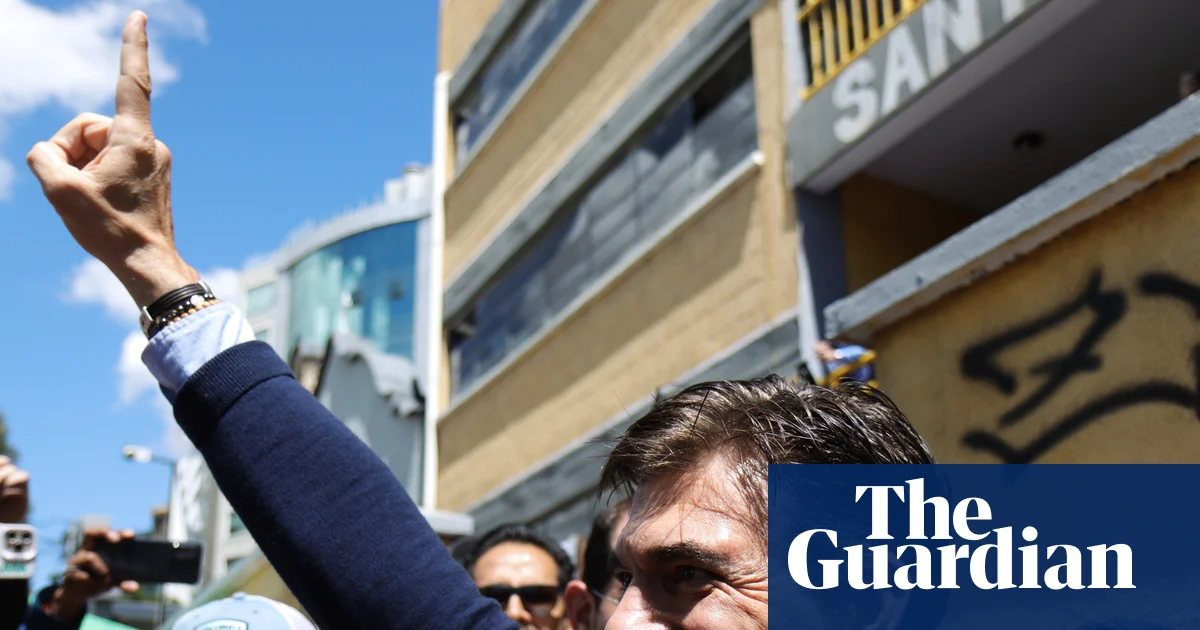
Rodrigo Paz Pereira’s Victory Signals Bold Rightward Shift in Bolivia’s Presidency

Bolivia’s Political Shift Signals Geopolitical Repercussions

In a historic turn of events, Bolivia has elected Rodrigo Paz Pereira, a centre-right senator, as its new president, signaling a significant departure from nearly two decades of socialist dominance under the Movimiento al Socialismo (MAS). With approximately 97% of ballots counted, Paz Pereira secured 54.6% of the vote, defeating Jorge “Tuto” Quiroga by a notable margin. This electoral outcome not only embodies a national desire for economic stabilization but also shifts the country’s geopolitical orientation, resonating across regional alliances. The victory underscores a widespread disillusionment with MAS’s socialist policies, which critics blame for Bolivia’s deepening economic crisis marked by inflation, fuel shortages, and retreating social cohesion.

Analysts emphasize that Paz Pereira’s election is more than just a change in leadership; it marks a redefinition of Bolivia’s geopolitical stance. Historically aligned with Evo Morales’ socialist movement, the country now appears poised for closer ties with conservative Western nations, potentially recalibrating regional power dynamics. International organizations like the Organization of American States (OAS) and European observers noted the election day passed without incident, affirming the process’s legitimacy. Still, global powers keenly watch how Paz Pereira’s government will navigate Bolivia’s deep-seated economic woes and the legacy of MAS, especially with the ongoing legal complications involving Morales, who is currently facing arrest warrants. The new administration faces the formidable challenge of stabilizing Bolivia—an economically fractured nation—and resetting its external partnerships on a more conservative trajectory.

With Paz Pereira’s victory, the landscape of Bolivia’s internal politics is fundamentally altered. The collapse of the MAS party—the once-dominant force holding two-thirds of Congress—highlights the profound shift in political loyalties. His campaign, which centered on “popular capitalism” and economic reforms aimed at small entrepreneurs, resonates with a populace desperate for stability amid systemic turmoil. This signals to regional neighbors and global allies that Bolivia’s political future may steer away from socialist ideals, embracing a more market-oriented approach. Historians and political analysts project that this transition could expedite Bolivia’s reintegration into international economic networks, favoring trade, investment, and infrastructure development—crucial for a country grappling with unemployment and informal employment that touches 80% of its workforce.

However, the road ahead remains treacherous. La Paz’s new government must grapple with a fractured Congress, limited legislative capacity, and the lingering shadow of Mazist influence. Paz Pereira’s alliance with his popular running mate, former police officer Edman Lara Montaño, symbolizes a pivot toward law and order, promising to stabilize prices, combat corruption, and promote legal reforms. Yet, this transition also intensifies the geopolitical significance of Bolivia’s internal conflicts, as international actors observe whether this new regime will honor commitments of free, fair governance or become another chapter in the region’s tumultuous history. The echoes of Morales’ tenure—marked by social upheaval, economic decline, and legal quagmires—will remain embedded in Bolivia’s national psyche. As leaders and citizens brace for what lies ahead, the weight of history presses down, revealing a nation at a crossroads—its future yet unwritten in the grand narrative of regional geopolitics. The unfolding story of Bolivia’s resurgence will invariably influence the delicate balance of power across South America, foreshadowing challenges and opportunities that could reverberate well beyond its borders.

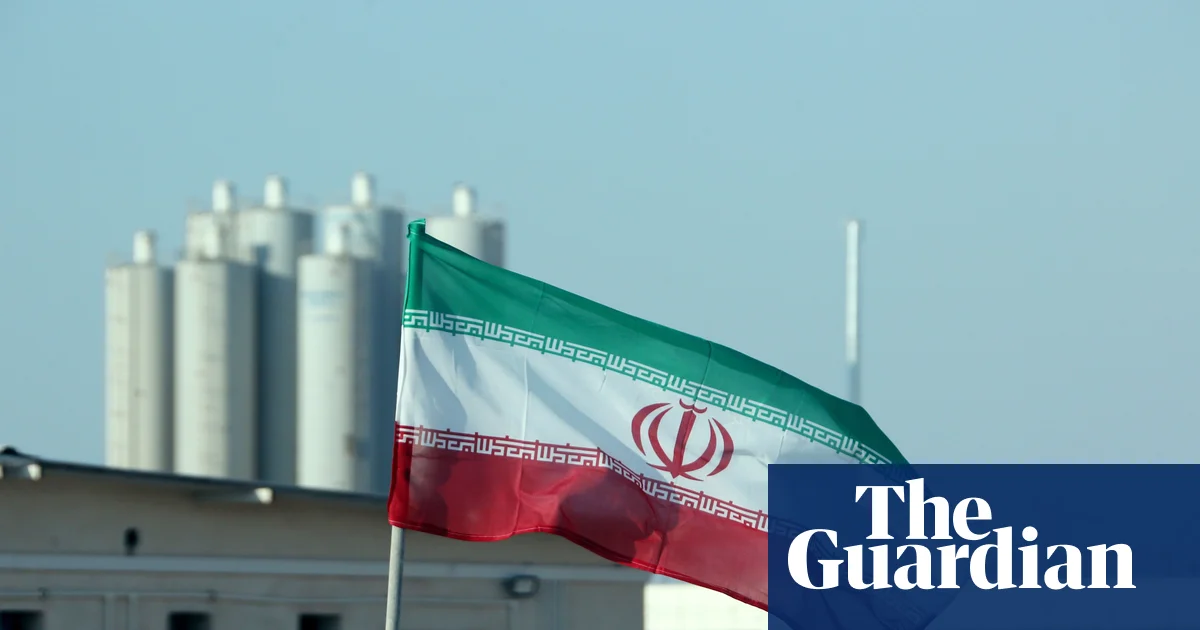
Iran Ends Deal, Signals New Nuclear Stance—What Youth Should Know

Global Shifts Shake Foundations of Middle East Stability as Iran Ends Nuclear Agreement

The end of the 2015 Joint Comprehensive Plan of Action (JCPOA) by Iran marks a decisive turning point in international diplomacy and security. After years of diplomatic stalemate, Tehran announced on Saturday that it was no longer bound by the agreement—an accord originally aimed at curbing Iran’s nuclear ambitions in exchange for eased sanctions. This move signals a potential escalation in regional tensions and sets the stage for a new, unpredictable phase in global geopolitics.

Signed in Vienna by Iran, China, Britain, France, Germany, Russia, and the United States, the JCPOA was heralded as a diplomatic triumph promising peace after long-standing hostility. Yet, years of US withdrawal, European diplomatic failures, and regional conflicts have eroded hopes for its revival. After a series of confrontations—including deadly bombings in Iran attributed to Israel and the US—the agreement’s collapse is seen by many analysts as an irreversible step toward renewed nuclear proliferation risks.

Geopolitical Impact of the Deal’s End

The snapping back of UN sanctions under Article 41 of the Security Council resolution 2231—triggered after Iran’s refusal to cooperate with nuclear inspectors—materialized a stark warning: the international community’s collective efforts to prevent nuclear proliferation are unraveling. Most notably, this re-imposition of sanctions effectively circled back to the deal’s termination, opening a perilous new window of uncertainty.

  • Iran’s immediate response was to cease all compliance with nuclear restrictions, claiming the agreement has been effectively nullified.

Western powers, led by Britain, France, and Germany, continue to advocate for diplomatic solutions, even as they reimpose sanctions in a clear show of strength and resolve. Their joint statements explicitly mention a desire to seek “a new diplomatic solution,” aiming to confine Iran’s nuclear pursuits without resorting to military action. However, critics warn that such gestures may be too little, too late, as regional instability intensifies and Iran’s own nuclear ambitions accelerate.

How Decisions Shape Societies and Nations

The escalation of tensions has far-reaching consequences for global security, economic stability, and regional alliances. The United States, under President Donald Trump, zeroed in on maximum pressure, attempting to isolate Iran through crippling sanctions meant to choke its economy. Yet, these strategies risk pushing Iran into the arms of China and Russia, potentially establishing new spheres of influence that could undermine Western dominance in the Middle East. International organizations, like the IAEA, now face a more complex challenge to monitor Iran’s nuclear activities amid rising distrust.

According to military analysts and historians, Tehran’s refusal to cooperate after the deal’s collapse is both a response to the sustained pressure and a calculated move to leverage its nuclear program as a geopolitical bargaining chip. The European Union and United Nations find themselves at a crossroads: pursue diplomatic negotiations or face the consequences of uncontrolled proliferation. The stakes have never been higher, and the weight of history suggests this crisis could redefine the balance of power for decades to come.

In the Shadow of the Future

As Iran prepares to mark termination day at the UN in New York, the world stands on the precipice of what many experts dread as a “new nuclear age.” The decisions made today will resonate through history, shaping the contours of international relations and national security for generations. The unfolding story—marked by failed diplomacy, mounting mistrust, and strategic resilience—underscores the profound truth that the past is prologue, and the future remains an uncertain chapter yet to be written. The pages are turning rapidly, and only time will reveal which path leads to lasting peace or chaos.

Trump Signals Broad Agreement on Gaza Ceasefire Next Steps — Live Update

Understanding the New Dynamics in Middle East: A Closer Look at the Gaza Ceasefire and Its Global Ramifications

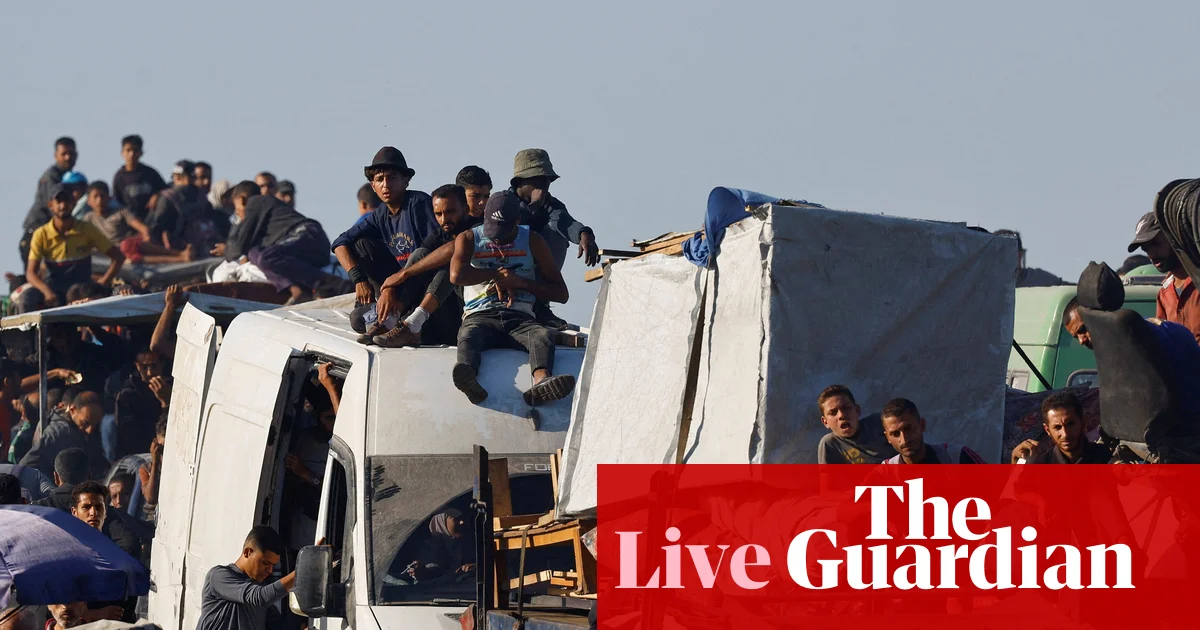
In a dramatic turn of events, Israel has authorized the United Nations (UN) to scale up humanitarian aid shipments into Gaza, signaling a tentative lurch toward de-escalation amidst ongoing regional tensions. This decision follows intense international diplomacy and a recent ceasefire agreement aimed at halting a two-year conflict, with hopes for a more sustainable peace. Yet, beneath this veneer of progress lies a complex web of strategic interests and deeply entrenched hostilities that continue to shape the geopolitical landscape of the Middle East.

The aid effort, which is set to commence from Sunday, involves the transfer of approximately 170,000 metric tons already stored in neighboring countries like Jordan and Egypt. UN officials, pressed by the dire humanitarian crisis—characterized by malnutrition and famine conditions—have engaged in delicate negotiations with Israeli authorities regarding the volume of aid and the safety of entry points into Gaza. Stéphane Dujarric, a UN spokesperson, confirmed that critical supplies such as fuel and medical resources are already flowing through the Kerem Shalom crossing. These developments underscore the potential for more border crossings to be opened, which could significantly impact the alleviation of suffering among Gaza’s embattled population.

Regional and International Repercussions of the Gaza Ceasefire

While international organizations and regional powers scrutinize the ongoing aid deliveries, the broader question remains: how will the fragile ceasefire influence the region’s power dynamics? Lebanese President Joseph Aoun publicly condemned Israel for recent overnight strikes in southern Lebanon, which targeted civilian infrastructure and resulted in casualties. His comments reflected the persistent volatility, even amidst promises of peace, as Israel continues to conduct military operations against Hezbollah forces aligned with Iran. Despite a supposed ceasefire in November following over a year of open conflict, hostilities have persisted in various forms, with Israeli strikes in Lebanon and the ongoing confrontation with Iran-backed militias serving as stark reminders that the region’s stability remains elusive.

Meanwhile, in Gaza, the Israeli military confirmed the launch of a ceasefire that set free nearly 20 hostages believed to be alive among the total of 48 held by Hamas. Prime Minister Benjamin Netanyahu stated explicitly that the next phase hinges on Hamas disarming and Gaza demilitarizing—an arduous demand that hints at the potential for renewed violence if negotiations fail. Continuing debates over the governance of Gaza and the future of Hamas’s armed capabilities underscore the delicate balance regional and global actors seek to maintain. Analysts warn that any failure to disarm or establish a viable governing authority could reignite hostilities, destabilizing an already volatile arena.

Global Power Play: The Role of the United States and Major Powers

In the international sphere, President Donald Trump has emerged as a pivotal figure, asserting that “for the most part, there is consensus” on the future stages of the Gaza ceasefire plan. Trump indicated that Hamas and Israel are exhausted from the fighting, a perspective that has garnered praise from both sides but remains controversial among critics warning of superficial peace efforts masking deeper conflicts. The anticipated summit of world leaders in Egypt next week exemplifies the high-stakes diplomacy surrounding the crisis, with nations such as Germany, France, the United Kingdom, and regional players like Qatar and the United Arab Emirates participating in the discussions. Notably, Benjamin Netanyahu will be absent from this gathering, highlighting ongoing divisions over the strategy for Gaza and broader regional security.

Analysts emphasize that such diplomatic maneuvers could either forge a path toward enduring peace or serve as mere pauses in a conflict with roots much deeper than surface negotiations. Historically, the Middle East has demonstrated that ceasefires often hold only temporarily before violence erupts anew. As the regional powers navigate their intertwined interests, the world remains acutely aware that the unfolding story in Gaza and Lebanon is far from resolved. History continues to write itself, and the weight of these decisions underscores a future where the echoes of today’s choices will resonate for generations to come.

As history’s pen hovers over the page, every drop of aid, every negotiation, and every missile launched becomes a stroke in the grand canvas of the Middle East—a region perched on the knife’s edge of peace and chaos. The story remains incomplete, with each chapter shaping the destiny of nations and societies that are inextricably linked by conflict and the relentless pursuit of security and sovereignty.

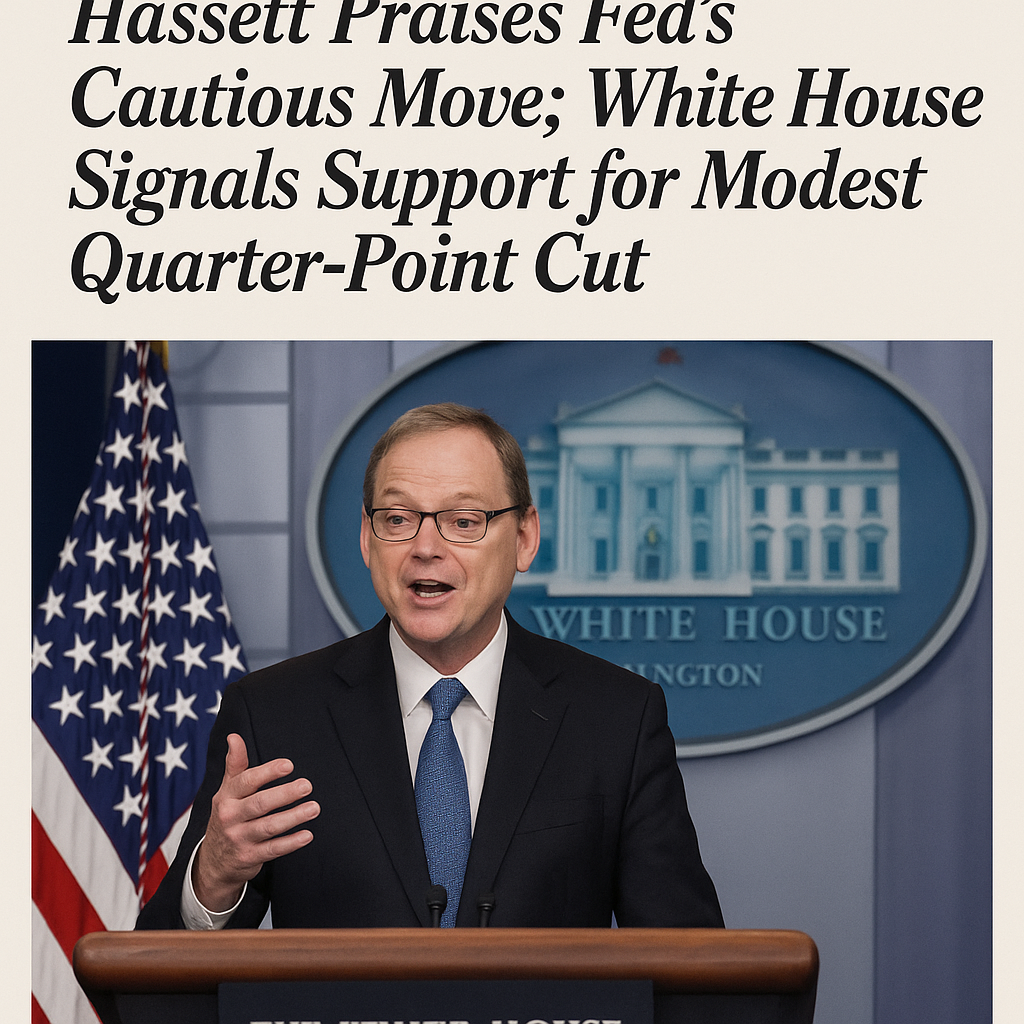
Hassett praises Fed’s cautious move; White House signals support for modest quarter-point cut

Federal Reserve’s Rate Cut Sparks Market Movements and Policy Debates

The Federal Reserve recently implemented a modest quarter-percentage-point cut to its key borrowing rate, signaling a cautious approach as it navigates a complex economic landscape. This decision, perceived by some as a step towards economic stabilization, comes amid shifting market sentiments and ongoing debates among policymakers, economists, and investors. As the global economy faces rising inflationary pressures yet remains resilient, the Fed’s move exemplifies the delicate balancing act it must perform—tamping inflation without stifling growth.

Notably, the White House expressed support for the Fed’s measured approach, with National Economic Council Director Kevin Hassett emphasizing the prudence of a “slow and steady” policy. While some within the administration advocated for a more aggressive half-point cut, the Fed’s decision reflects a consensus aimed at cautious optimism. The recent economic indicators show a robust third-quarter growth rate exceeding 3%, a figure that traditionally would argue against easing monetary policy. Still, inflation running above the Fed’s 2% target, combined with concerns about persistent financial risks, has prompted a nuanced response that favors gradualism over rapid cuts.

Market impacts from this decision are multifaceted. Investors remain vigilant, with equities, bonds, and commodities reacting to the delicate narrative of growth versus inflation control. The policy considerations extend beyond immediate market behavior, touching on policy consequences that could shape future economic stability. Analysts from think tanks and leading economists, including those linked to the Federal Reserve and major banks, indicate that this cautious move might set the stage for future rate adjustments. The decision also underscores ongoing debates about the policy trajectory—should the Fed prioritize containing inflation or supporting a thriving housing market and manageable debt levels?

Importantly, the political dimension persists, with President Donald Trump advocating for more aggressive cuts—arguing that the current rates are insufficient to boost the struggling housing sector and manage the national debt. Such political influences, though not directly altering Fed decisions, shape the policy environment and investor sentiment. As the Fed considers its next moves amid diverse economic signals, the broader implications for market impact and policy stability will be paramount. The coming months will test whether this measured approach will secure sustained growth or prompt future rallying cries for more rapid easing, reflecting the eternal tug-of-war at the heart of economic policy.

Looking ahead, the pulse of the economy remains a reflection of national strength and future global influence.

In this high-stakes game, where monetary policy acts as both shield and sword, the resilience of economies hinges on informed decision-making and bold leadership. Investors, policymakers, and citizens alike watch with anticipation, realizing that the economic landscape is a grand stage—an epic arena where the forces of innovation, policy, and global power collide. While uncertainties persist, the underlying momentum suggests that the future economy will be shaped by those willing to navigate its shifting tides with vision, precision, and resolve. This moment underscores the vital truth: **the economy is not merely a system of numbers, but the beating pulse of nations, heralding the dawn of a new era of global influence and economic ascendancy**.

Social Media Auto Publish Powered By : XYZScripts.com