Matox News

Truth Over Trends, always!

Redefining the Manosphere: Embracing a More Respectful and Respectable Space for Young Men

In a world increasingly dominated by the relentless surge of digital testosterone—embodied by influencers peddling hyper-masculinity, muscular ideals, and a culture of aggressive dominance—there is a beacon of cultural re-evaluation quietly flickering to life. Two recent art exhibitions in the Netherlands, “Beyond the Manosphere: Masculinities Today” at the Stedelijk Museum in Amsterdam, and “Am I Masculine?” at the Noordbrabants Museum in Den Bosch, serve as poignant reminders that the fabric of what it means to be a man is far richer and more diverse than the superficial tropes broadcasted from a screen or a social media feed. These shows do not simply critique or dismiss the movements that define masculinity through violence, power, and material strength, but instead explore the nuanced spectrum of male identity—highlighting the importance of tradition, emotion, and gentleness in shaping society.

The cultural significance of such endeavors cannot be overstated. As Ortega y Gasset posited, society is a tapestry woven from collective memory and the ongoing evolution of its cultural norms. By challenging the monolithic image of masculinity propagated online—where influencers like Andrew Tate and figures of hyper-strength fill the discourse—these exhibits reaffirm that true masculinity encompasses a capacity for tenderness, vulnerability, and introspection. The curators aim to push this conversation beyond the noise of social media hype, invoking a more profound understanding that civilizes and elevates the spirit of men committed to self-discipline, emotional depth, and cultural continuity. It echoes Chesterton’s assertion that true strength is rooted in humility and that preservation of tradition must include the acknowledgment of our emotional and aesthetic life as much as our physical prowess.

Furthermore, these exhibitions serve as a cultural rebellion against the Great Male Renunciation after the Enlightenment, when European men abandoned ornamentation—the flamboyant wigs, frilly shirts, and expressive dress—that once marked their societal role. Today’s society is still shaped by this legacy of austerity, which venerates sobriety and rationality at the expense of aesthetic and emotional richness. As historian Roberto Luis Martins notes, the show traces this shift from an era when men embraced fashion as an extension of their identity, towards an age of minimalism and functionality. Yet, this “reduction” has obscured the depth and diversity of male experience, denying society the full expression of what culture truly embodies: a reflection of human memory and prophecy. An art critic like T.S. Eliot recognized that culture is fundamentally a matter of tradition—an ongoing dialogue between our inherited past and the creative future we forge. These exhibitions are a space to question if we have truly moved beyond this tradition or merely suppressed it under a guise of modern rationality.

As these art shows unfold, they beckon us to imagine a reimagined masculinity—one that accommodates emotion without shame, strength without cruelty, and style without superficiality. By doing so, they echo the words of G.K. Chesterton, who argued that “the true man is the man who does not wish to be anything except what he is.” Reality, in this context, is a complex interplay of memory and prophecy: history whispering the echoes of days when men adorned themselves with pride and purpose, and a future beckoning a new generation to shape a civilization rooted in authentic values. In this dialogue between tradition and innovation, culture emerges as both protector and prophet—preserving our roots and illuminating the path forward, forging men not in the image of chaos but in the resilient image of human integrity. And so, as we stand at this crossroads, let us remember that the story of masculinity is as much a poetic memory as it is a prophecy, waiting to be written anew in the enduring language of culture.
SpaceX Eyes $60B Deal to Acquire Cursor, Signals Big Tech Moves

SpaceX and Cursor Collab Signals a New Era in AI Innovation and Industry Disruption

The alliance between SpaceX and Cursor marks a monumental shift in the landscape of artificial intelligence development, with significant implications for both technological progress and competitive advantage. This strategic partnership aims to combine Cursor’s cutting-edge knowledge work AI, renowned for its precision and efficiency among expert software engineers, with SpaceX’s formidable computational backbone—specifically its Colossus supercomputer, equipped with a million H100 equivalents. Such a synergy is set to revolutionize the creation of highly optimized AI models, positioning the collaboration at the forefront of innovation.

According to industry experts, including analysts at Gartner and MIT technology researchers, the use of vast computational resources—particularly H100 GPU clusters—will drastically accelerate the training of advanced AI models, pushing the boundaries of what is currently feasible. The partnership underscores a trend toward disruptive innovation—harnessing industry-scale supercomputing power for rapid deployment of AI that can dominate knowledge-based tasks, from coding to problem-solving. This level of integration exemplifies a new paradigm where the convergence of space-grade computing and AI expertise could set a blueprint for future tech dominance, compelling rivals to evaluate their own resource strategies.

Business Strategy and Industry Impact

The collaboration’s financial architecture is equally noteworthy. Cursor has granted SpaceX the right to acquire the AI firm later this year for $60 billion, or alternatively, SpaceX can choose to pay $10 billion for their collaborative developments. This dual pathway underscores an aggressive confidence in the commercial viability of the joint development efforts, signaling a strategic gamble that could reshape the AI market by consolidating innovation within a single tech giant. Such moves are reminiscent of divergence strategies seen in Elon Musk’s other ventures, with a focus on dominance and rapid scaling.

  • Innovation: Deployment of millions of GPU cores for AI training, radically reducing development timelines.
  • Disruption: Challenging traditional cloud-based AI models by leveraging space-grade supercomputing infrastructure.
  • Business implications: Potential market consolidation, setting new valuation benchmarks for AI startups, and redefining enterprise AI usage.

As the AI arms race intensifies, industry insiders warn that this partnership could accelerate global shifts toward autonomous systems, intelligent coding assistants, and knowledge synthesis tools, supplanting many conventional software development paradigms. Given SpaceX’s track record of pushing technological frontiers—think Starship and Falcon programs—its foray into AI via Cursor elevates the urgency for competitors to innovate or face obsolescence. The partnership not only exemplifies how industry titans are deploying unprecedented resources but also foreshadows a future where AI becomes fundamentally intertwined with space-grade hardware.

Future Outlook: The Next Phase of Tech Disruption

With the collaboration underway, the industry must brace for a phase of rapid displacement and evolution. As Gartner analysts predict, the integration of supercomputing with knowledge work AI will unlock capabilities previously considered science fiction—transforming sectors like software development, scientific research, and even complex decision-making systems. The critical question for industry leaders remains: who will adapt quickly enough in this new landscape? The clock is ticking, and in the race for technological supremacy, those who leverage innovation and massive computational resources now will dictate the future’s winners and losers.

In conclusion, the SpaceX-Cursor partnership exemplifies a pivotal turning point in tech history—disrupting existing industry norms while setting a blistering pace for future breakthroughs. As this alliance advances, it will be imperative for stakeholders to stay vigilant, innovate relentlessly, and harness the potential of this disruptive wave before it reshapes the entire technological ecosystem.

Could Dark Matter Be Hidden Black Holes From Another Universe?

Emerging Cosmological Models Signal Disruption in Scientific Paradigms and Tech Innovation

The latest advancements in cosmology are pushing the boundaries of understanding fundamental physics, with profound implications for technology, innovation, and disruption across multiple sectors. A groundbreaking model proposed by physicist Enrique Gaztanaga from the Institute of Space Sciences in Barcelona integrates two of the most radical ideas in physics—cyclic universes and primordial black holes—to offer a radical reinterpretation of dark matter and the origins of our universe. This model challenges conventional Big Bang-centric paradigms and posits that the universe may undergo an eternal cycle of expansion and contraction, with relic structures from pre-Big Bang epochs potentially surviving through cosmic rebounces.

The Disruptive Potential of a Cyclic Universe

Unlike the popular multiverse theories popularized by the entertainment industry, the cosmic bounce model shortlisted by Gaztanaga underscores that each universe is sequential, emerging from the ashes of its predecessor rather than existing in parallel. This shift in perspective suggests that structures left over from previous cosmic cycles—some larger than 90 meters—could persist through the universe’s collapsing phase, revolutionizing our understanding of cosmic evolution. Such relics could act as seeds for the formation of anomalous large-scale structures observed today, pointing to a seamless integration of cosmology with advanced physics and big data analytics.

  • Survivability of relics could redefine search parameters for dark matter.
  • Persistent black holes from prior universes present an alternative explanation for dark matter, sidestepping issues plaguing the particle hypothesis.
  • Impacts on future observational astronomy, including gravitational-wave backgrounds, galaxy surveys, and cosmic microwave measurements.

The implications for tech and industry are enormous. As global tech firms and startups spearhead projects like gravitational wave analysis, the emerging ability to detect signals of ancient black holes could shift the entire dark matter discussion, steering innovation towards new instrumentation, data processing, and AI-powered analysis tools. Institutions such as MIT and leading industry players are eager to capitalize on the possibility that the cosmic dark matter puzzle may finally be cracked through a new paradigm rooted in disruptive physics.

From Theoretical Breakthroughs to Business Opportunities

The paradigm shift toward a universe born with primordial black holes signifies more than just a scientific curiosity; it opens pathways for transformative business applications. The hypothesis suggests that dark matter may originate from relics of a ‘pre-Big Bang’ universe—a legacy that redefines the narrative of the universe’s origin and underscores the importance of next-generation hardware capable of probing these ancient signals. Silicon Valley, along with European tech hubs, is increasingly investing in advanced quantum sensing, high-precision astrophysical instrumentation, and machine learning algorithms tailor-made to sift through cosmic data for relic signatures.

  • Startups and tech giants are forming strategic alliances to accelerate the development of quantum detectors and AI interpretation platforms.
  • Potential for disruption in space-based telescope technology and gravitational wave observatories.
  • New markets emerging around cosmic data analytics, offering fresh revenue streams and positioning firms as leaders in fundamental physics innovation.

Leaders like Elon Musk and Peter Thiel recognize that breakthroughs in understanding the universe’s cyclic nature and dark matter could catalyze a new era of technological supremacy. As these scientific frontiers continue to rapidly evolve, the urgency for bold investment, interdisciplinary collaboration, and proactive policy becomes paramount. The cosmic bounce concept isn’t just a theory—it’s a clarion call for the tech industry to prepare for a future where physics, data science, and business converge at the very edge of human knowledge. The window to capitalize on this disruption remains open, but closing fast—those who act decisively will define the trajectory of 21st-century innovation.

Looking ahead, the integration of these cosmological insights promises to be a defining element of future technological progress. As researchers inch closer to unraveling the universe’s deepest secrets, the ripple effects will resonate across AI, space exploration, data infrastructure, and beyond. This is a pivotal moment for science and industry alike—signaling a future where understanding cosmic relics could unlock unprecedented possibilities for humanity’s technological and economic evolution.

NASA’s Artemis II nails perfect splashdown in the Pacific, marking a winning step for Moon missions

NASA’s Artemis II Mission Marks a New Era in Space Exploration: Critical Business and Innovation Impacts

After a successful 10-day mission around the Moon, NASA’s Artemis II crew has safely returned to Earth, reaffirming the United States’ commitment to lunar exploration and technological innovation. The mission, which involved the first crewed flight of the Space Launch System (SLS) and Orion spacecraft in over half a century, is a clear demonstration of disruptive space technology designed to push the boundaries of humanity’s reach into deep space.

Centered on cutting-edge propulsion, navigation, and life support systems, this mission exemplifies the rising role of private-public partnerships in space endeavors. Jared Isaacman, a commercial astronaut and key figure behind the mission, emphasized that “America is back in the business of sending astronauts to the Moon”, signaling a significant shift in the industry’s landscape. By integrating commercial expertise and NASA’s strategic vision, the Artemis program is poised to accelerate the development of lunar infrastructure, including the much-anticipated Moon base, which has compelling implications for space mining, scientific research, and even future colonization efforts.

  • Innovation in propulsion and spacecraft design— Orion’s precision engineering enabled a “perfect” landing after traversing 252,760 miles from Earth, orbiting the Moon, and witnessing phenomena such as a total solar eclipse from space.
  • Market disruption— The mission’s success underscores the emerging dominance of a hybrid space economy, with NASA catalyzing investments that blur the lines between traditional government agencies and private enterprise, leading to faster, more cost-efficient breakthroughs.
  • Business implications— As industry leaders like Tesla’s Elon Musk and venture capitalists such as Peter Thiel increasingly prioritize space as the next frontier, the Artemis program signals an era where space exploration becomes a vibrant commercial venture with vast profit potential.

This trajectory is further supported by analysis from major stakeholders like Gartner and MIT, who forecast that space-based industries—ranging from lunar resource extraction to advanced satellite networks—will generate trillions in economic value over the next decades. As these innovations become tangible, the industry’s evolution demands a proactive stance from investors, policymakers, and entrepreneurs, who must recognize the unprecedented opportunities emerging from these technological milestones.

Looking ahead, the Artemis program lays the groundwork for a new era of industry disruption, where private companies and government agencies collaborate to establish a sustainable lunar economy. With more missions planned and the potential for a permanent Moon base, the pace of change is expected to accelerate rapidly. Industry experts warn that missed opportunities or complacency could cede leadership to emerging nations or private firms, emphasizing the urgency for stakeholders across the tech and space sectors to seize this momentum. The future of human spaceflight is no longer a distant horizon—it’s a dynamic, rapidly unfolding reality demanding bold innovation, strategic disruption, and aggressive investment.

Here’s how to catch NASA’s Artemis II splashdown—back to Earth, live!

NASA’s Artemis II Mission Sets Stage for Lunar Innovation and Industry Disruption

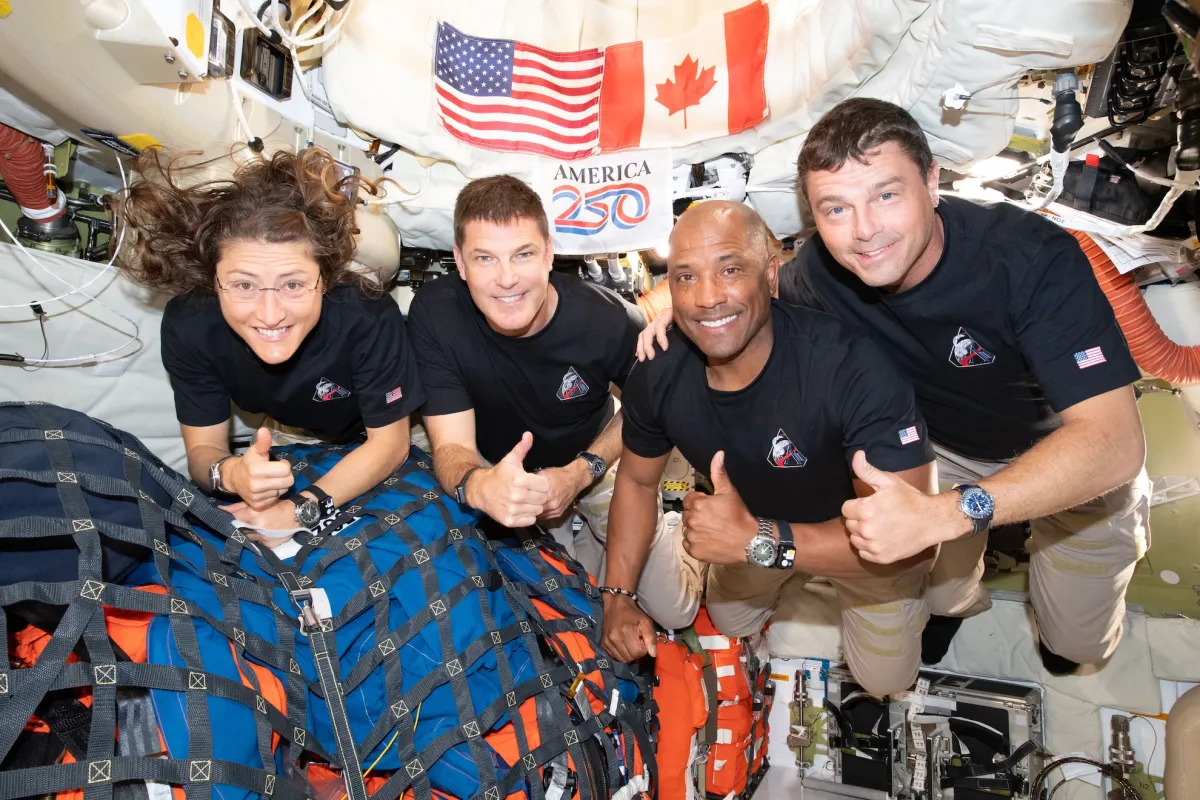
In a historic milestone for space exploration, NASA’s Artemis II crew has successfully completed their 10-day journey beyond low Earth orbit, venturing further around the Moon than any humans have before. Comprising four astronauts from the United States and Canada—Reid Wiseman, Victor Glover, Christina Koch, and Jeremy Hansen—the mission epitomizes a new era of deep space innovation and offers profound implications for the commercial space industry. As they prepare for re-entry, the mission’s outcomes are poised to accelerate the disruption of the traditional aerospace paradigm, heralding a future where private sector entities are integral to lunar and extraterrestrial endeavors.

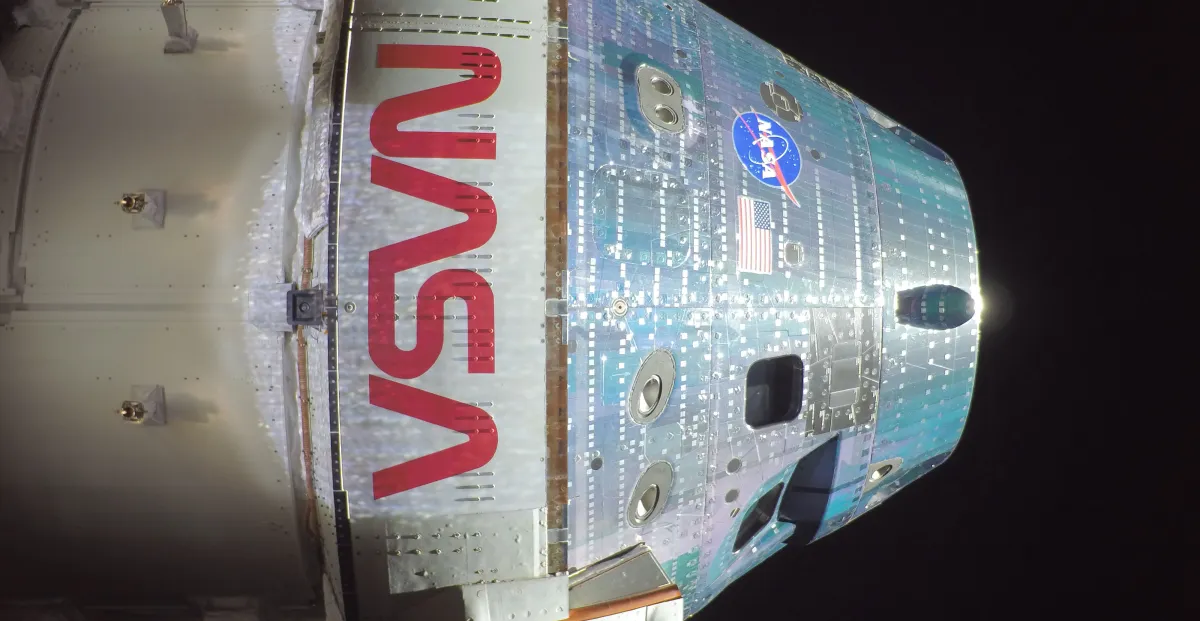
Central to this mission was the deployment of the Orion spacecraft, a marvel of disruptive aerospace engineering. The capsule traveled more than 250,000 miles from Earth—approximately 100 times the distance between New York City and Los Angeles—demonstrating the capabilities of modern propulsion and life-support systems. Key features of Orion include cutting-edge

  • thermal protection systems
  • communications integration
  • trajectory control

milestones that will influence future lunar landing architectures. Experts from MIT and Gartner note that this mission’s success is pivotal, as it validates core technologies for the upcoming Artemis landings and deep-space exploration, paving the way for commercial lunar modules and private supply chains.

Beyond pure exploration, Artemis II sharply highlights the commercial sector’s role in *disrupting* traditional government-dominated space programs. The materials used, particularly the heat shield composed of Avocoat, faced unexpected damage in Artemis I—a reminder that innovative material sciences and testing are critical for safe human spaceflight. As NASA works to refine these systems, the emergence of private companies developing next-gen heat shields and crew modules signals a seismic shift. Industry pundits are tracking a meteoric rise in private investments, with companies like SpaceX and Blue Origin taking cues from NASA’s challenges, aiming to reduce costs and accelerate timelines for lunar infrastructure.

Furthermore, the mission’s scientific outputs, such as new lunar crater names and spectacular space phenomena—like the crew witnessing a total solar eclipse from their unique vantage point—serve as a showcase of the broader disruptive potential of space as a commercial frontier. The technological feat of communication, navigation, and life support systems testing — broadcasted via live streams and multimedia—points to an increasingly accessible and interconnected space industry. This trend signifies an evolution where *innovation becomes central* to both governmental and private actors aiming to establish lunar bases and resource extraction operations, thereby influencing global economic and strategic landscapes.

Looking ahead, the upcoming splashdown off San Diego underscores NASA’s commitment to safety and reliability—a vital requirement as the sector shifts from experimental missions to commercialized space habitats. With the Memoranda of Understanding already in place for lunar mining and future Artemis landings, **industry leaders like Elon Musk and Peter Thiel** recognize the urgency of capitalizing on these breakthroughs. They see a future where *disruption is the new normal*, with private entrants helping to drive down costs, increase access, and catalyze humanity’s permanent presence on the Moon and beyond.

As the global race to pioneer space accelerates, the Artemis II mission embodies the essence of modern technological innovation—a harbinger of transformation that demands agility, boldness, and relentless pursuit of breakthrough solutions. The next chapter in space exploration is unfolding rapidly, positioning humanity at the cusp of a new industrial age that could redefine our economic and strategic future. The imperative for stakeholders—public and private alike—is clear: innovate or fall behind in this new space-driven economy.

NASA’s Artemis II to Blaze a New Path Around the Moon’s Hidden Side

As NASA prepares for the historic Artemis II mission, the agency is poised to shatter the longstanding distance record set during the Apollo 13 lunar campaign nearly six decades ago. On April 15th, 1970, Apollo 13 traveled a remarkable 248,655 miles from Earth, marking a milestone in human spaceflight. Today, with the Orion spacecraft orbiting the far side of the Moon, expected to reach a maximum distance of 252,757 miles, NASA is not only rewriting the record books but also setting the stage for a new era of deep-space exploration.

The upcoming lunar flyby, scheduled for today with live coverage beginning at 1 PM ET, embodies a testament to technological innovation and disruption within the aerospace sector. As Orion completes its six-hour journey around the Moon, it will facilitate unprecedented observations of the lunar surface, providing critical data to refine future landing strategies. This mission isn’t just about breaking records; it’s about establishing a robust framework for next-generation space exploration. Industry analysts from Gartner and experts from institutions like MIT emphasize that these advancements could accelerate commercial participation in lunar and Martian missions, catalyzing a new wave of innovation driven by both government agencies and private enterprise.

The strategic significance of Artemis II extends beyond exploration, impacting the broader space economy and disrupting traditional modes of space travel. According to industry leaders, the mission signals a shift where private companies—such as SpaceX and Blue Origin—are no longer mere contractors but active collaborators shaping the future of outer space. This evolving landscape presents immense business implications: opportunities for new supply chains, spacecraft manufacturing, and lunar resource utilization. As Peter Thiel and other entrepreneurs highlight, this paradigm shift represents a golden chapter for disruptive innovations targeting not just exploration, but sustainable lunar economies.

With the world watching, Artemis II exemplifies how disruption, innovation, and strategic foresight are redefining the limits of human achievement. This mission underscores the urgency for the global space industry to adapt quickly, harness emerging technologies, and forge new business models aimed at making humanity an interplanetary species. As we stand on the cusp of this new frontier, the next few years promise an acceleration in technological breakthroughs, with the potential to transform both exploration and enterprise—driving us toward a future that once only existed in science fiction.

This Thursday’s Buzz: Space Missions, Big Plans, and Who’s Having a Meltdown? | Life & Style

In a world obsessed with personal impact—health, leisure, and the pursuit of inspiration—our lifestyle choices shape not only our own lives but also the cultural and economic landscapes we inhabit. As the digital age expands, cultural shifts toward wellness and independent thinking are becoming crucial for young individuals eager to define their path. Whether it’s through engaging in trivia, exploring new music, or contemplating broader societal issues, embracing a lifestyle of curiosity and resilience serves as a compass toward a more empowered existence.

Recent headlines demonstrate that staying informed prepares youth to navigate complex social and political terrains. For example, the appointment of Ian Cheshire as the new head of Ofcom exemplifies how leadership positions remain influential in shaping public discourse in media and communications. Similarly, government measures such as capping interest rates on student loans at 6% signal an acknowledgment of the ongoing challenge many young people face regarding financial literacy and economic independence. These developments emphasize the importance of understanding the interconnectedness of policy, economics, and personal growth—tools that empower individuals to make informed decisions about their futures.

Beyond politics and economics, there’s a vibrant cultural scene that encourages young adventurers to explore arts, music, and global perspectives. The upcoming Meltdown festival, curated this year by Harry Styles, exemplifies how influential figures in entertainment help foment a sense of community and inspiration. Engaging with the arts fosters a sense of identity rooted in creativity and a refusal to conform to passivity. Whether contemplating the symbolism behind a national flag, or pondering the historical significance of Spain’s Expulsion of the Moriscos, youth are encouraged to look beyond surface appearances and develop critical viewpoints that shape a better understanding of the world.

In a time where literal and metaphorical borders are constantly challenged, embracing a journey of life that blends curiosity with resilience remains vital. The digital age, with its mountains of trivia and cultural references, is less a distraction and more an invitation to deepen understanding—be it about the depths of classical art, or the complexities of international relations. Every question posed, every headline decoded, is an opportunity to refine one’s worldview, to stand grounded in fact, and to move forward with purpose. As the narrative of our lives unfolds, they remind us that the voyage toward self-awareness and impactful living is an ongoing adventure—precisely what makes life fascinating and worth mastering.

NASA captures first images of earthset and solar eclipse during moon flyby, highlighting innovative space exploration for the next generation

As humanity continues to peer into the cosmos, our perspective of Earth evolves in tandem with shifting geopolitical realities. The images of the iconic ‘Earthrise’ and the recent solar eclipse, captured by astronauts, serve as profound reminders of our planet’s fragile unity amidst a rapidly changing international landscape. These celestial phenomena symbolize not only the beauty of our world but also the pressing need for cooperative stewardship in an era marked by tension, competition, and transformative upheavals.

In recent months, global powers have been embroiled in a series of strategic moves that will undoubtedly shape the future of international relations. The U.S. and China, two dominant forces, have engaged in a high-stakes game of diplomacy and rivalry. As the world’s premier superpowers, their decisions reverberate through every continent, influencing economies, security assertions, and technological advancements. Analysts from the International Institute of Strategic Studies warn that this intense rivalry risks fragmenting global alliances, potentially leading to a new Cold War, unless diplomatic channels are prioritized. Simultaneously, the European Union seeks to assert its sovereignty, forging new trade agreements and reinforcing its position as a diplomatic mediator amid an unsettled world.

Meanwhile, forces such as Russia and regional powers are recalibrating their ambitions, shifting alliances, and embedding themselves into global conflicts that threaten to escalate. Notably, the renewed conflict in Ukraine exemplifies how regional disputes are becoming entangled in broader ideological and strategic contestations. The United Nations and other international bodies face increasing skepticism as their capacity to foster peace and stability is tested anew. Some experts argue that we stand at a historic crossroads — a moment where choices made by globally influential actors could either steer humanity toward greater cooperation or plunge it into prolonged chaos.

Notably, recent cosmological events like the ‘Earthrise’ view and the solar eclipse serve as metaphors for this pivotal juncture. These phenomena remind us that our planet operates within a delicate balance, much like the complex web of international relations. As the world witnesses the universe’s grandeur, nations are urged to reflect on the significance of unity and foresight. The decisions taken today—whether in geopolitical arenas or space exploration—carry profound geopolitical impact. These choices influence how societies evolve, how conflicts are managed, and how future generations will perceive the legacy of this moment in history.

As international analysts and historians continue to document these events, the overarching narrative remains clear: the world is not simply watching history unfold but actively shaping it in real time. The cosmic imagery reminds us that amid terrestrial chaos, the universe’s vastness offers a sobering perspective—one that underscores our shared destiny on this tiny blue planet. With each eclipse and earthrise, humanity is called to consider the eternal questions about survival, cooperation, and the future of freedom. Only time will reveal whether these decisions usher in an era of renewal or plunge nations into enduring darkness—the ultimate test of our collective resolve is still ahead.

Anduril boosts defense tech with acquisition of space intel firm ExoAnalytic

Anduril Acquires ExoAnalytic to Accelerate Space Domain Awareness and Defense

In an era where space dominance is becoming a crucial arena for national security and technological supremacy, Anduril Industries, a leader in defense innovation, has announced its acquisition of ExoAnalytic Solutions. This strategic move marks a significant disruption in the way the United States is building its space defense infrastructure, leveraging cutting-edge data collection and processing technologies to enhance situational awareness in high orbit. By integrating ExoAnalytic’s network of 400 telescopes and advanced software, Anduril aims to establish an unprecedented level of real-time tracking of spacecraft, thus redefining the cybersecurity and missile defense landscape.

The deal, which signals a bullish outlook on space-based defense capabilities, comes as Anduril is simultaneously raising a monumental $4 billion funding round from major investors such as Thrive Capital and Andreessen Horowitz. Though financial terms remain private, this infusion underscores investor confidence in the disruptive potential of space domain awareness technologies. This funding surge could accelerate the development of next-generation satellite tracking systems and missile interceptors, positioning Anduril at the forefront of a rapidly evolving industry. The integration of ExoAnalytic is not just a mere acquisition; it signifies a strategic pivot towards creating a holistic space situational awareness platform capable of supporting military operations and safeguarding assets in orbit.

Of particular importance is the potential application of ExoAnalytic’s machine vision algorithms, originally developed for satellite tracking, in intercepting incoming threats. Such advancements are poised to disrupt traditional missile defense paradigms, especially as the U.S. ramps up deployment of the Golden Dome missile defense system, which aims to deploy hundreds or even thousands of satellites to monitor and respond to ballistic threats. The technology pipeline now includes plans for launching three internally-funded spacecraft this year—capabilities derived directly from the acquisition—that will leverage infrared tracking and high orbit surveillance, offering unparalleled real-time space domain awareness. This move aligns with expert analysis from MIT and industry leaders who emphasize the criticality of disruptive innovation and rapid deployment in defending space assets.

Furthermore, U.S. Space Force officials have expressed alarm over Chinese and Russian satellites operating in close proximity, raising fears of electronic interference or direct attack. As Elon Musk and Peter Thiel have previously warned, space is becoming a new frontier for hybrid warfare, pushing the U.S. to innovate faster than adversaries. With this acquisition, Anduril solidifies its position not just as a defense contractor but as a pioneer orchestrating a paradigm shift toward dominance in space. The urgency for next-generation tracking, combined with the rising geopolitical stakes, underscores a future where technological disruption in space could determine the balance of global power.

NASA pushes ahead with bold tweaks to turbocharge Artemis launch

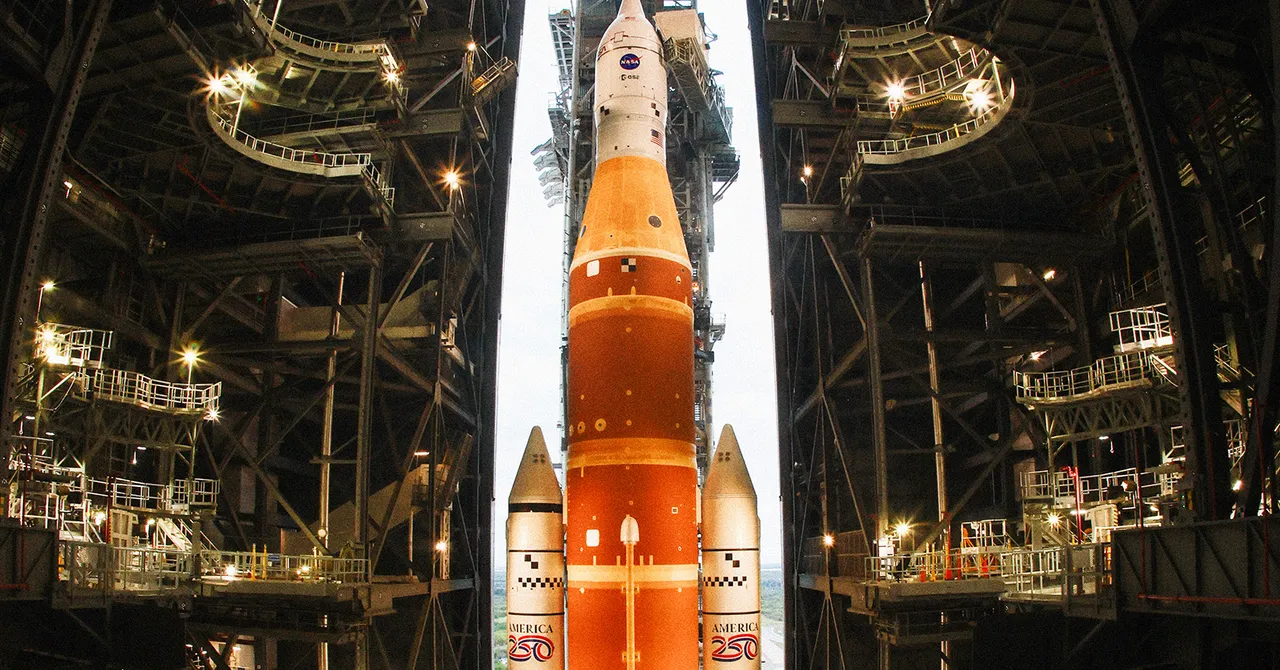
In a clear signal that innovation and disruption continue to reshape aerospace ambitions, NASA is recalibrating its Artemis program with a newfound focus on reliability, cost-efficiency, and phased approach. After repeated delays—stemming from persistent hydrogen and helium leaks—as well as the inherent risks of launching advanced hardware infrequently, agency officials are pushing for a transformation that could reset the US’s lunar ambitions. The core strategy now emphasizes standardizing the SLS (Space Launch System) to a single configuration, aiming to launch approximately every 10 months—an aggressive timeline compared with previous iterations.

This move towards regularized, high-frequency launches reflects an underlying industry shift towards more predictable and scalable space operations. Industry insiders, including leading analysts at Gartner and institutions like MIT, recognize that such standardization could be a game-changer—not only enhancing safety and reducing costs but also disrupting the traditional space launch market. By prioritizing reliability over continual configuration tweaks, NASA aims to foster an ecosystem where commercial entities can soon step into the void, launching crews to lunar surfaces with unmatched precision and frequency. As congressional leaders are briefed on these initiatives, major contractors like Boeing remain cautiously supportive, acknowledging the need for an accelerated schedule that will test their supply chains and engineering capabilities.

Significantly, the program’s renewed approach echoes the philosophical lessons of the historic Apollo missions—returning to a phased, step-by-step timeline before achieving a lunar landing. “Skipping intermediate steps,” as some industry veterans warn, introduces a level of risk and complexity that could jeopardize long-term goals. The plan underlines that the jump from Artemis II’s lunar flyby directly to Artemis III’s landing is too ambitious without thorough groundwork. As Elon Musk and Peter Thiel have long advocated, disruptive innovation in space requires robust incremental milestones—precisely what NASA’s new strategy aims to institutionalize.

Looking ahead, the implications are profound. The industry’s future depends on a nimble, resilient launch architecture, where technological innovation is paired with strategic planning. Companies like SpaceX and Blue Origin are exploiting these institutional shifts with groundbreaking developments—ranging from reusable rockets to artificial intelligence-driven mission planning—that could upend NASA’s current trajectory. With the space race intensifying and global powers investing heavily in lunar and Martian ambitions, timing is everything. The coming months will be crucial as NASA’s bold, standardized approach matures into a blueprint that might define the next era of human space exploration—one driven by disruptive innovation, strategic disruption, and a relentless pursuit of expeditionary excellence.

Social Media Auto Publish Powered By : XYZScripts.com