Matox News

Truth Over Trends, always!

Awaken the Spirit: Dissecting the ‘Wake Up Dead Man’ Scene

In contemplating the essence of culture, one recognizes it as the living memory of existence, a tapestry woven through generations that sustains the identity of societies and shapes their moral and aesthetic fibers. Amid the accelerating tide of modernity, which often dismisses tradition as an obstacle to progress, it becomes crucial to reflect on how culture anchors us to our roots, serving as both remembrance and prophecy. As the philosopher Ortega y Gasset famously warned, “The great wound of the world is the loss of roots.” In this perspective, culture emerges not merely as entertainment or superficial ornament, but as the vital fabric that preserves our collective personality—our deep sense of who we are and where we come from.

This cultural continuity is vividly exemplified through the arts and storytelling—carriers of timeless truths and moral clarity. Consider the perennial efficacy of classical literature and philosophy: from the moral clarity of Chesterton to the poetic that beckons us to see life through a lens of transcendent meaning. Today’s filmmakers, such as Rian Johnson—a modern auteur—demonstrate a nuanced understanding of this narrative craft. His film scenes, rich with ensemble performances and layered dialogue, echo the theatrical traditions that stress the importance of human relationships and moral dilemmas. Just as the Shakespearean or Golden Age of Hollywood cinema built mythic worlds rooted in human virtue and vice, modern directors continue to remind us that storytelling remains a mirror held up to society, a vital conduit of cultural memory.

Milestones like the Enlightenment or the Renaissance serve as cultural touchstones, illustrating how societies have historically relied on their arts and ideas to define and reinforce shared virtues. Tocqueville’s analysis of American democracy highlights the importance of cultural cohesion—the “habits of the heart”—which sustains political liberty and social cohesion. Today’s cultural agents, whether in film, literature, or visual arts, wield the power to forge that same cohesion, fostering a collective spirit and moral clarity. Their work reminds us that the preservation and evolution of culture are central to community resilience and societal vitality. As fin de siècle critics warned against cultural nihilism, contemporary guardians of tradition stand as vigilant custodians of the moral compass that guides humanity through chaos toward the inevitable dawn of renewal.

In this continuous dialogue between memory and hope, culture wields its silent yet profound influence, shaping identities that anchor us in the present while pointing forward to the destiny of human civilization. As T.S. Eliot poetically asserted, “There is no pagan school of poetry but what the world is better for its existence.” Culture, then, is both the echo of the past and the prophecy of future virtues—a divine inheritance urging each generation to build on its foundations and extend the horizon of human excellence. In times of tumult, culture remains our steadfast compass, charting a course through history’s vast ocean toward a future where tradition and innovation intertwine—reminding us that who we are is always a prelude to who we shall become. Truly, amid fleeting epochs and shifting sands, culture endures as the most eloquent testament to humanity’s eternal hope and supreme memory, whispering silently that indeed, we are, and always shall be, its custodians and heirs silenced in the melody of history and destiny.

Robert Irwin crowns himself Dancing with the Stars champ, a decade after sister’s victory—showing true Aussie spirit and family legacy

In a world increasingly defined by rapid cultural shifts and intersecting geopolitical interests, recent developments underscore the enduring influence of individual leaders and international decisions on both societal values and global stability. Robert Irwin, the 21-year-old son of the legendary conservationist Steve Irwin, has captured headlines not for global diplomacy but for his triumph in the American reality TV competition Dancing with the Stars. This victory, amid emotional tributes to his late father, embodies how soft power—cultural influence—transcends borders and reshapes perceptions of national identity. As Irwin’s story resonates with audiences worldwide, it serves as a reminder of the subtle yet profound ways in which individual narratives can influence international cultural diplomacy, shaping perceptions of Australia and its values abroad.

The timing of this achievement is no coincidence. Amid tensions over climate policies, migration, and regional alliances, cultural icons like Irwin symbolize a resilient Australian identity rooted in conservation and youthful vigor—traits that many nations aspire to project on the world stage. Analysts from the International Crisis Group warn that in a shifting geopolitical landscape, nations are increasingly leveraging soft-power assets to bolster their geopolitical standing. The spectacle of the Irwin family’s ongoing legacy, woven into a narrative of environmental stewardship, subtly influences public opinion and international perception, asserting Australia’s position not merely as a regional player but as a moral voice on ecological issues. This alignment could serve as leverage in global alliances, especially at a time when the United States and China vie for narrative dominance on climate change.

Strategically, the recent decisions within U.S. foreign policy and the trajectory of European alliances reveal a complex chessboard where cultural exchanges are becoming as vital as military and economic treaties. Meanwhile, the decisive shifts regarding climate commitments, exemplified by Britain’s push for greater renewable energies and ongoing debates in the European Parliament, demonstrate how global institutions still grapple with balancing environmental imperatives against economic and geopolitical realities. International organizations like UNEP actively monitor how these decisions ripple across nations—affecting societies, influencing leadership, and reshaping societal priorities. The ongoing tension between conservation ideals championed by figures like Robert Irwin and the hard realities of geopolitical interests underscores the pivotal moment humanity faces: can cooperation on ecological issues override nationalistic competition?

History’s heavy hand reminds us that current decisions may ripple for generations. As historians analyze the age of ecological awakening and geopolitical reconfigurations, the question persists: is this era shaping a new world order or merely a transient chapter amidst unfolding chaos? With global powerhouses, regional alliances, and youthful icons intertwined, the full measure of this moment remains uncertain. Yet, one truth endures: as the narrative continues to be written in boardrooms, battlefield strategies, and cultural arenas, the weight of history presses ever harder. The collective trajectory of nations will depend on choices made today—choices that could either preserve the fragile fabric of peace or unravel it beyond repair. Humanity stands at a crossroads, watching as the unfolding saga promises that tomorrow’s history will be defined by the resilience, resolve, and sometimes, the unintended influence of those who embody the spirit of both youth and tradition.

Rising Stars Shine in Thrilling Youth Championship: A Showcase of Talent and Team Spirit

Thrilling Sunday Showdown: Papiss Cisse Shines in League Play

In a memorable display of skill and determination, Papiss Cisse captivated fans and critics alike with a standout performance for his Sunday league team last weekend. Known for his electrifying style of play, Cisse demonstrated why he remains a force to be reckoned with on the pitch. The match, which ended in a 4-3 victory for Cisse’s team, was filled with game-changing moments that left spectators on the edge of their seats.

The match exemplified the ups and downs of sports, with Cisse scoring two pivotal goals and providing an assist. His second goal, a dazzling strike from outside the box in the 75th minute, swung the momentum firmly in favor of his team and highlighted his exceptional talent. As the team’s coach noted, “When Cisse is in form, he transforms the entire match. His energy is infectious and lifts everyone around him.”

  • Papiss Cisse scored two goals and assisted in a nail-biting finish.
  • The match featured a total of seven goals, showcasing offensive skill from both sides.
  • Fans praised Cisse’s ability to create chances and rally his teammates.

In addition to his individual achievements, Cisse played a crucial role in fostering a strong team dynamic, embodying the spirit of camaraderie that is often celebrated in Sunday league play. As online commentator and former player Mike Johnson remarked, “It’s not just about the win; it’s how sports bring people together. Cisse embodies that philosophy.”

Ultimately, while the scoreboard will always reflect the outcome, the true essence of sports lies in the connections forged, the joy shared, and the resilience demonstrated on the field. The drama and excitement witnessed in this thrilling match serve as a reminder that, in sports and beyond, every rivalry and every celebration cultivates a stronger community. As we look back on this unforgettable performance by Papiss Cisse, let it resonate not only as a testament to individual prowess but as a celebration of teamwork and the unifying spirit of sportsmanship.

Source link

Late-night pub openings undermine traditional values and societal spirit

Recent government initiatives, such as extending licensing hours for pubs and alcohol sales, reveal a troubling societal shift that impacts families, education, and community cohesion. The move appears aimed at stimulating economic growth by encouraging late-night drinking, yet many analysts question whether this strategy addresses the core issues faced by our communities. At the heart of this debate lies a critical tension: how do we balance economic needs with the protection of public health and social stability? Sociologists like Frank Furedi warn that policies promoting unrestricted alcohol access may inadvertently deepen social divisions, foster unhealthy lifestyles, and erode the moral fabric that holds families together. The increase in alcohol-related harm, including the record-breaking 10,473 alcohol-specific deaths recorded in 2023 — and the society-wide cost of approximately £27.4 billion annually — serve as stark reminders of what excessive drinking engenders across generations.

The continuing trend of longer pub hours seems at odds with the NHS’s ongoing efforts to mitigate alcohol misuse, which deeply affects mental health and community stability. Alcohol misuse is associated with depression, anxiety, and violence, threatening the well-being of our youth and vulnerable populations. The social fabric frays further as families face the consequences of addiction, with children often bearing the emotional scars of parental neglect or chaos stemming from alcohol abuse. Social commentators, including Alan Walker, emphasize that these policies may serve the interests of commercial industries rather than the well-being of society, suggesting that the true solutions lie elsewhere. The challenge is ensuring that economic incentives do not overshadow moral obligations to protect vulnerable members of society and uphold the integrity of our communities.

In contemplating these policy choices, it becomes clear that the societal cost extends beyond health and economics to the core of our shared cultural values. The push for longer pub hours, coupled with efforts to introduce ID cards and restrict free speech, all signal a broader societal shift that increasingly questions the balance between individual freedoms and social responsibility. As historian Paul Johnson notes, societal health depends on strong, cohesive communities rooted in shared values and moral responsibility. When families are impacted by addiction, and communities struggle under the weight of social tensions, the promise of a resilient society seems distant. Yet, amidst these challenges, there remains hope. By fostering greater community engagement, strengthening national moral foundations, and resisting the influence of those who profit from societal harm, society can begin to repair the fractures. The future may hinge on our collective ability to prioritize *moral integrity* over short-term economic gains—an endeavor that begins with acknowledging the profound human impact of social policy decisions.

Young Stars Shine as High School Championships Ignite Competitive Spirit

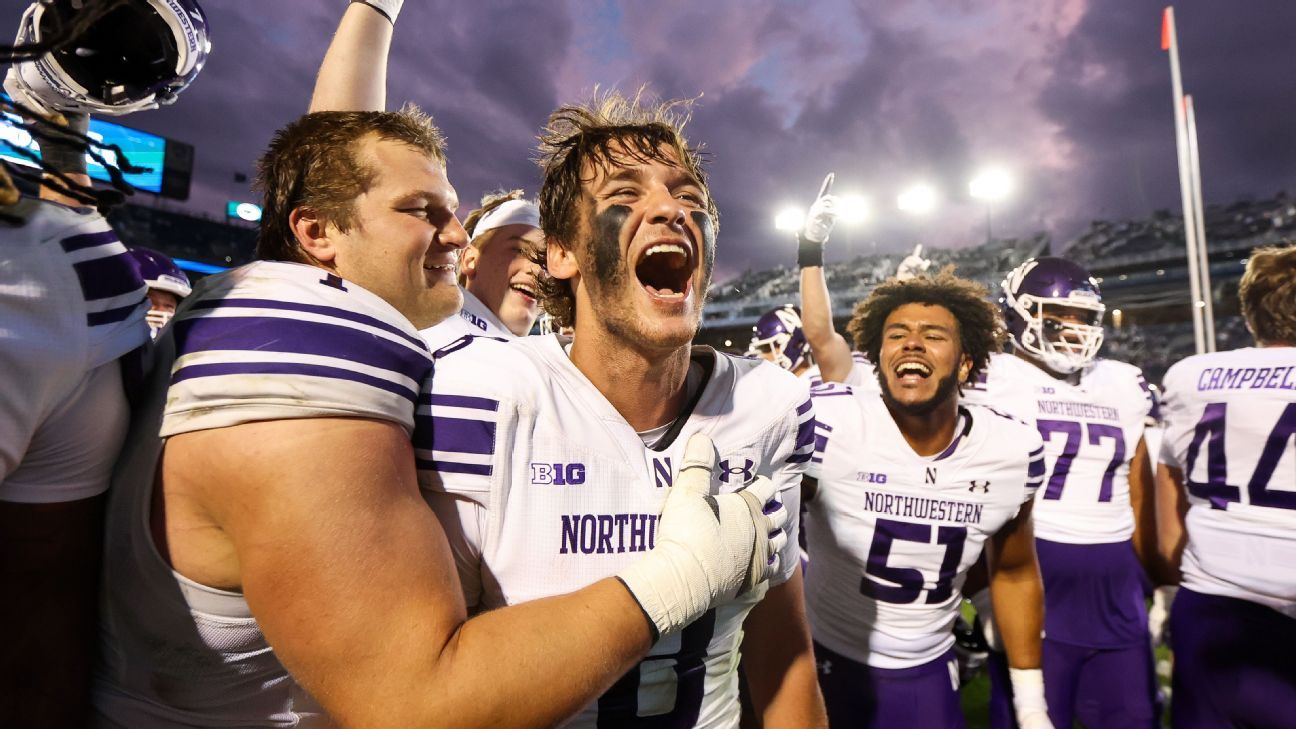
Week 7 College Football: A Showcase of Talent and Team Spirit

In a thrilling Week 7 of the college football season, Northwestern and Texas emerged victorious, showcasing not just their athletic prowess but also an engaging presence on social media that has sparked conversation among fans and commentators alike. As teams continue to jockey for position in the playoff race, these wins were pivotal not just in the standings, but also in establishing team morale and community engagement.

After their hard-fought win, the Wildcats took to social media with a series of posts that reflected their confidence and team spirit. According to head coach Pat Fitzgerald, “Every victory is part of a larger narrative. We’re building something special here at Northwestern, and we want our fans to be part of that journey.” This sentiment was echoed across various platforms as commentators highlighted the importance of engaging fans beyond just the game.

Meanwhile, in Texas, the Longhorns delivered a statement performance that reignited their championship aspirations. With a notable contribution from quarterback Quinn Ewers, who threw for 350 yards and three touchdowns, the Longhorns displayed an offensive prowess that has been missing in earlier games this season. The team’s explosive second-half performance, particularly in the third quarter when they put up 21 unanswered points, showcased their potential to dominate on any given Saturday.

  • Northwestern continues to surprise with their strategic play, ranking high in defensive stats this season.
  • Texas is making a serious claim to contention with their recent wins and strong play from key athletes.
  • Fans from both regions showcased incredible support, proving the loyalty and passion inherent in college football culture.

As the season progresses, one thing remains clear: the love for college football transcends wins and losses. Whether it’s through passionate social media interactions or nail-biting game moments, the spirit of competition unites fans and players alike. In the words of acclaimed sports commentator Kirk Herbstreit, “College football isn’t just about the scoreboard; it’s about the stories and connections made along the way.” Thus, as we approach the final stretch of the season, this unbreakable bond will undoubtedly fuel both teams and their supporters, lighting the way forward for what promises to be a memorable conclusion to the college football season.

Source link

Social Media Auto Publish Powered By : XYZScripts.com