Matox News

Truth Over Trends, always!

Kim Jong-un's North Korean troops step up as landmine clearance for Russia signals shifting alliances
Kim Jong-un’s North Korean troops step up as landmine clearance for Russia signals shifting alliances

In a striking display of North Korea’s increasingly provocative international stance, leader Kim Jong-un recently admitted that North Korean troops were deployed to support Russia’s ongoing invasion of Ukraine. This rare public acknowledgment signals a notable shift in Pyongyang’s foreign policy, unfolding amid a complex web of geopolitical maneuvers and diplomatic isolations. According to sources in South Korea and western intelligence agencies, thousands of North Korean soldiers have been sent to assist Russian forces, implicating Pyongyang directly in the Eurasian conflict that has drawn global concern and condemnation.

Under the guise of supporting Russia, North Korea is evidently leveraging the conflict to sidestep its international isolation. Analysts emphasize that Russia is providing North Korea with crucial financial aid, military technology, and energy supplies, thus allowing the isolated regime to continue its nuclear and missile programs in defiance of severe international sanctions. This clandestine exchange not only bolsters North Korea’s military capacity but also emboldens it to challenge the status quo, making it an active player in a shifting balance of power across Eurasia. The symbolism is powerful: a totalitarian regime stepping beyond its borders, acting as a proxy for global tension, and rewriting the rules of engagement in a world on the brink of a new Cold War.

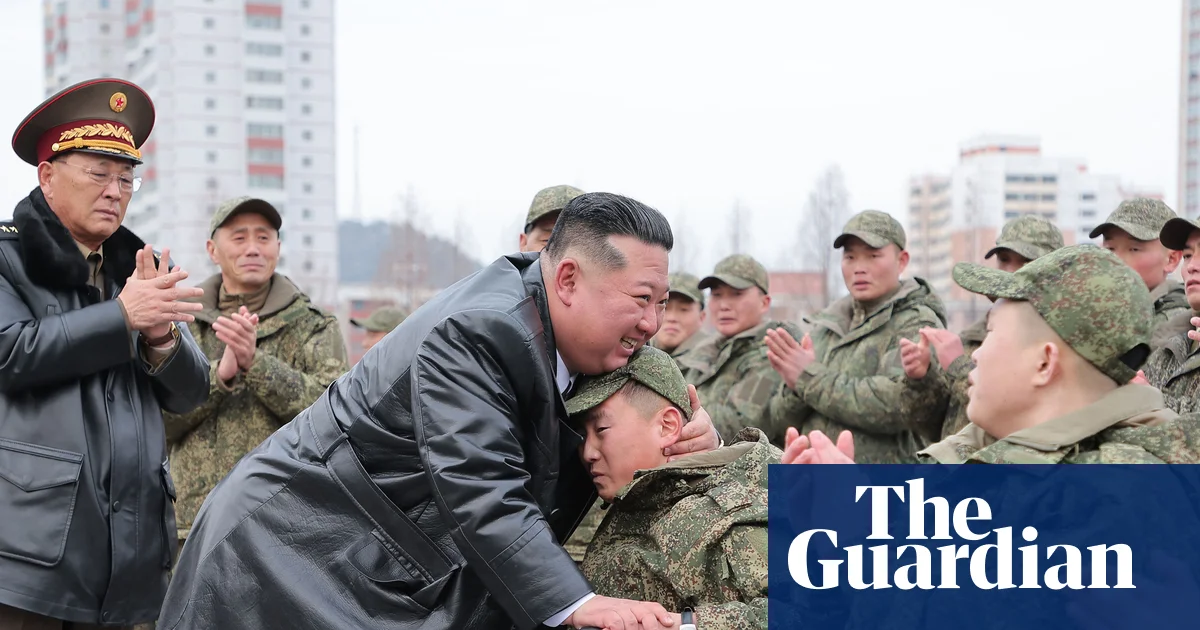
Kim Jong-un’s recent public speeches and ceremonies further illustrate the regime’s military escalation and nationalist resolve. Celebrating the return of soldiers involved in mine-clearing operations in Ukraine, Kim awarded state honors to nine fallen troops, praising their heroism in turning dangerous zones into “safe and secure” areas within just three months. Such narratives serve to galvanize North Korean society around the narrative of sacrifice, reinforcing the leader’s image of strength and resilience. Meanwhile, images depict Kim embracing wounded and emotional soldiers, alongside grieving families—an effort to showcase the internal facade of sacrifice that, analysts argue, masks a regime desperate to bolster its strategic leverage amid international hostilities.

The geopolitical implications of these developments are profound. Experts argue that Pyongyang’s engagement in the Ukraine conflict is a clear signal of the diminishing influence of traditional Western powers over Eurasia, ushering in an era where authoritarian regimes like North Korea and Russia forge alliances based on shared interests in resistance against global sanctions and interventions. At the same time, the United States and its allies face a recalibration, as traditional lines of diplomacy and intervention are redefined. With Kim publicly commemorating soldiers killed in Ukraine and flexing military prowess at home, the risk of further escalation and regional destabilization looms large, making the future unpredictable and fraught with peril.

In the broader canvas of world history, this confluence of actions and alliances echoes the ominous warnings of historians who trace violent upheavals to the breakdown of diplomacy and the rise of aggressive regimes seeking to expand their influence. The current trajectory indicates that the decision of Kim Jong-un and Vladimir Putin to deepen their ties over Ukraine could be the catalyst for renewed conflict, reshaping the international order. As the world watches silently, the weight of history continues to press down, reminding us that, *once again*, the line between regional conflict and global upheaval grows thinner, and the lessons of the past remain perilously unheeded. The pages of history are turning, and humanity stands at a pivotal juncture where the choices made today will echo through generations—destined to be remembered as either moments of courage or capitulation amidst the storm of unchecked power.

Oxfordshire Schools Step Up to Support More SEND Students, Shaping a Stronger Future for All

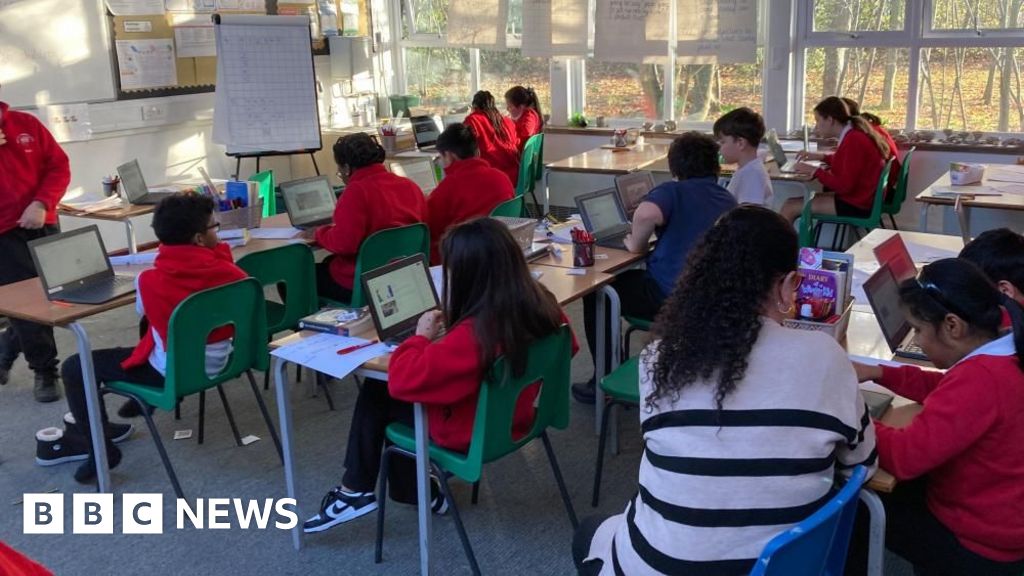
Across communities in the UK, a growing crisis in special educational needs and disabilities (SEND) support threatens to undermine the very fabric of inclusive education. As local authorities grapple with ballooning costs and a demographic shift towards greater demand for specialized care, families face the stark reality of limited resources and uncertain futures. Oxfordshire County Council exemplifies this trend, with a forecasted £153 million high needs funding deficit next year. To address this, the council is pioneering efforts to bring children with SEND into mainstream schools, aiming to reduce reliance on expensive private institutions, which can cost up to £64,000 annually per child.

But such solutions are far from simple. The financial pressures extend beyond just funding, affecting families, educators, and entire communities. As Oxfordshire seeks to expand its mainstream support, it faces the challenge of not only increasing funding but also fostering effective leadership and inclusive practices within schools. Paul James, chief executive of the River Learning Trust, emphasizes that creating truly inclusive environments requires more than policy adjustments; it demands ambitious, well-led teaching backed by adequate financial support. Without this, schools are compelled to make difficult cuts—reducing staff, resources, and enrichment activities—compromising the quality of education for all students, particularly those with complex needs.

  • Research by sociologists such as Hannah Arendt warns that without social support and equitable funding, the marginalized—like children with SEND—risk being pushed further into social isolation.
  • Historically, public education systems have reflected societal values; increasingly, the neglect of SEND funding signals that society’s priorities may be shifting away from inclusive justice.
  • Local authorities are calling for clear government strategies to address mounting debts, as the current funding model, approved and kept off councils’ books, leaves communities vulnerable to fiscal crises and potential bankruptcy, which would have devastating ripple effects through local families and services.

Social issues surrounding SEND support profoundly influence families’ stability, educational equity, and community cohesion. As costs escalate—highlighted by the fact that mainstream school support costs around £10,000 per child annually—families find themselves caught between inadequate systemic support and the relentless demand for specialized care, further emphasizing the urgent need for reform. The societal implications go beyond economics; they are a moral question about the human right to equitable education and the societal obligation to nurture every child’s potential. As social commentator Michael Sandel argues, our collective moral core is tested in how we prioritize vulnerable populations; neglecting these needs erodes the fundamental bonds that hold society together.

Yet, amidst these daunting challenges, glimmers of hope emerge. Communities, educators, and policymakers recognize that collaborative, well-funded leadership is essential for meaningful change. With plans to add 340 specialized school places and reduce dependency on private alternatives, local authorities are aiming to rebuild a system rooted in fairness and accessibility. Leaders like Paul James insist that “children only get one go” at their education, and it is a moral imperative that society commits to supporting them fully. Ultimately, society’s capacity for resilience and reform will determine whether we can transform these challenges into opportunities—building a future where families, education, and communities thrive together in the embrace of genuine inclusion.

As society stands at this crossroads, the question remains: can our collective resolve turn the tide of neglect into a wave of hope and transformation? The future of our children—the very essence of society’s moral health—depends on the answer we choose to write today.

Private Funding for NHS Infrastructure: A Step Forward for Our Future

The True Cost of Privatization: How Social Divides Threaten Our Healthcare and Our Future

In the midst of ongoing debates about funding the National Health Service (NHS), a shadow looms—one that threatens to further fracture the social fabric of our communities. The proposal to tap into private capital for building neighborhood health centers, endorsed by Wes Streeting and some Labour voices, risks transforming our healthcare system into a profit-driven enterprise. This shift echoes a troubling trend observed across society: the encroaching influence of market forces on traditionally public services, often to the detriment of the most vulnerable.

Critics—including seasoned sociologists such as Michael Sandel—highlight that inviting private investment into public health exacerbates inequality. When health services become entangled with private finance initiatives (PFIs), we see hospitals burdened with debt that diverts vital resources away from patients and towards repayment costs. Research has shown that some trusts end up paying more in debt repayments than they spend on medicines for their patients, illustrating how financial debt overrides the fundamental moral obligation of care. This debt cycle results in crumbling infrastructure and overcrowding, challenges that primarily afflict working-class communities and those already marginalized. A society that allows its most basic human needs to be driven by profit risks turning healthcare into a commodity, deepening societal divisions.

Alternative solutions are within reach, but political will is required. Reclaiming public funds is one path forward. Governments have proven that they can recover wasted funds through measures such as clawing back money lost to failed Covid contracts, and investing directly in local community projects. The NHS Lift program, with its model of public-private cooperation, successfully built hundreds of health centers in deprived areas—proof that public investment can deliver necessary infrastructure without shackling the system with debt. Additionally, introducing measures like VAT on private healthcare, a policy supported by figures like Neil Kinnock, could generate billions of pounds to reinvest directly into public services, ensuring that families and communities have access to quality care without being pushed into financial hardship.

Ultimately, society faces a choice: continue down a path of privatization and everyday sacrifice, or champion a model rooted in equity and community resilience. As historian Eric Hobsbawm once noted, societal progress hinges not merely on economic growth but on cultivating social cohesion through just resource distribution. The challenge lies in dismantling the narratives that prioritize short-term fiscal gains over long-term human welfare. Society’s strength resides in its families, its educational institutions, and its local communities. To build a resilient future, society must choose policies that uphold these pillars, recognizing that healthcare is a moral right—a shared responsibility that transcends profit margins. As the shadows of social division lengthen, the hope remains: that through collective resolve, society can forge a future where the health of one is the health of all, and where societal transformation begins with safeguarding the dignity of everyday life.”

Greene Preparing to Step Down from Congress This January

Greene’s Resignation: A New Turning Point in American Politics

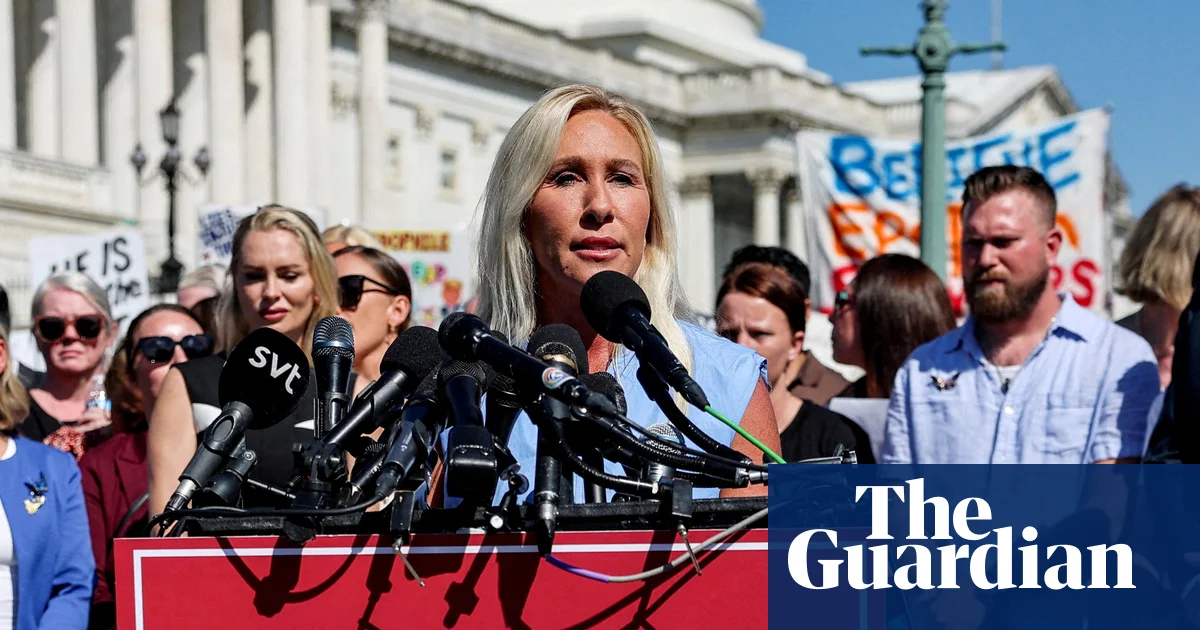
The political landscape in the United States witnesses yet another unprecedented shift as Marjorie Taylor Greene, one of the most outspoken and polarizing figures on the right, announced her resignation from Congress effective January 5, 2026. Her decision, relayed through a four-page statement and a social media video, signals more than just a personal career move; it marks a critical juncture reflecting the deeper ideological struggles within the Republican Party and the broader American society. Greene’s departure comes amidst her vocal discontent with both Republican leadership and her former allies, notably Donald Trump, and underscores ongoing tensions over the core principles of the “America First” movement.

Her resignation highlights a mounting rift within the conservative camp, where allegiance to populist nationalism clashes with emerging neoconservative and globalist influences. Greene fiercely condemned what she perceives as the betrayal of fundamental American interests—criticizing Republican leaders for neglecting border security and domestic priorities. This conflict is emblematic of a broader ideological divide, visible to analysts and historians alike, as the “America First” outlook is challenged by entrenched establishment interests aligned with foreign policy interventions, corporate influence, and international treaties. Greene’s assertion that she is returning to her community to “live life to the fullest” echoes an increasing frustration among populist voters who feel marginalized by a political class they see as increasingly disconnected from their fundamental concerns.

Within this atmosphere of upheaval, international institutions and foreign policy are not immune markers of change. Greene’s outspoken opposition to the ongoing Israeli war on Gaza—a conflict she describes as “genocide”—mirrors a growing undercurrent of dissent within America’s right-wing, challenging the conventional bipartisan support for the Jewish state. This dissent feeds into a larger debate about U.S. foreign policy’s alignment with globalist interests and the “Military-Industrial Complex,” as critics argue that such interventions undermine American sovereignty and national security. Moreover, her public disagreements with Trump over issues like visa policies, AI regulation, and foreign involvement serve as a warning signal to global observers: the internal American debate over national priorities is intensifying, with potent implications for future diplomacy and security.

  • Greene’s departure comes amidst threats and security concerns, with reports of warnings from private firms about her safety after Trump withdrew support, illustrating how polarized and volatile American politics have become.
  • Her outspoken stance on exposing elite crime networks, including the Jeffrey Epstein scandal, signifies a broader push against perceived corruption within the political and economic establishment—raising questions about transparency and accountability at home and abroad.
  • Observers like political strategist Shermichael Singleton suggest Greene might be looking to shape her future beyond the current political chaos, hinting at an inevitable realignment in the right-wing movement, potentially paving the way for new leadership that challenges the status quo.

The repercussions of Greene’s decision resonate well beyond her district, impacting the geopolitical fabric of the Western alliance. As her rhetoric echoes the frustrations of millions of Americans—concerned about sovereignty, economic stability, and moral integrity—the world watches with anticipation. The balance of power within the Republican Party and the broader U.S. government remains fragile, teetering on the edge of an unprecedented era of political realignment. Where this tumult will lead the United States remains uncertain, but what is clear is that the weight of history is shifting beneath our feet, and the unfolding chapters of American domestic and foreign policy will shape world affairs for generations to come.

US-South Korea Nuclear Sub Pact: A Bold Step for Young Patriots

South Korea’s Nuclear Submarine Ambitions Reignite Tensions in East Asia

The recent agreement between South Korea and the United States to develop nuclear-powered submarines marks a pivotal moment in regional geopolitics. Coming amid a rising tide of regional tensions—particularly with North Korea and China—this move signals Seoul’s desire to elevate its defense capabilities and reclaim strategic autonomy in the face of aggressive neighbors. While the US has justified this initiative as a means to counter North Korea’s burgeoning nuclear submarine program, experts see it as a declaration that South Korea is positioning itself as a formidable regional power.

The announcement came amidst a broader trade and military partnership between Seoul and Washington, which includes a formalized agreement to reduce tariffs from 25% to 15%, alongside commitments for nuclear submarine production. A White House fact sheet emphasizes US approval for Seoul to build attack submarines, with cooperation on sourcing nuclear fuel—a move that places South Korea in an exclusive club of six nations possessing nuclear-powered submarines. Such a development underscores South Korea’s intent to modernize its fleet with vessels capable of operating deeper and longer, thereby challenging existing power balances on the Peninsula and beyond.

How This Agreement Shakes Up the Regional Power Dynamics

The decision to pursue nuclear submarines has significant geopolitical repercussions. Analysts warn that this enhancement of South Korea’s military might will only deepen the arms race in East Asia. North Korea, with its estimated arsenal of roughly 50 nuclear weapons and its own nuclear submarine program, views Seoul’s move as an escalation. The unveiling of what Pyongyang claims to be a nuclear-powered submarine last March, along with its ongoing efforts to modernize its nuclear arsenal, indicates that the Korean Peninsula is inching toward an even more volatile balance of power.

Meanwhile, China perceives this development as a direct challenge to its regional influence, especially given Beijing’s recent increase in naval activity near South Korea’s maritime borders. The Chinese government has voiced concerns through diplomatic channels, with the ambassador expressing hopes that Seoul will act prudently. In fact, the Chinese have long viewed United States’ and South Korea’s alliance as a strategic threat—exacerbated by this new military step—fueling fears of a potential regional conflict spiraling out of control. It is precisely within this tense atmosphere that the importance of the decision is understood, as it reflects a broader struggle for influence in a region teetering on the edge of instability.

The U.S. Strategy and Future Implications at the Crossroads of History

While President Donald Trump has highlighted the economic benefits of the deal—such as job creation and US technological leadership—the true strategic significance extends far beyond. The US’s approval signifies a clear intent to bolster Seoul’s military independence and send a message to China and North Korea that its regional alliances are stronger than ever. This shift also complicates efforts to denuclearize North Korea, as Pyongyang interprets Seoul’s new capabilities as an endorsement of nuclear weaponization, ultimately undermining diplomatic pressures for denuclearization.

Some international observers, including defense analysts and historians, warn that such moves could trigger a new arms race, propelling the Korean Peninsula into a more perilous future. As the world watches, the unfolding narrative of power, fear, and diplomacy continues to write itself into history—each decision, each missile test, and each diplomatic exchange a testament to humanity’s fragile quest for stability amidst burgeoning threats. The stage is set, yet the outcome remains written in the uncertain pages of history, waiting for the next chapter to unfold.

Meet the contenders: Will anyone step up for the challenge?

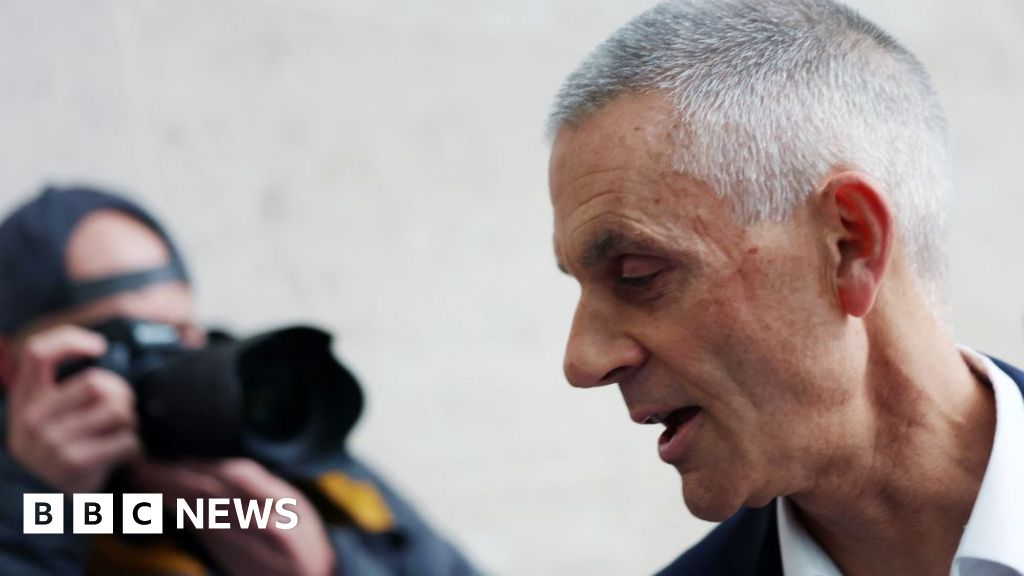
In a landscape where culture stands as both the mirror and the prophecy of society, the recent upheavals within the British Broadcasting Corporation serve as a poignant reminder of the fragile but vital role media plays in shaping national identity. As tim Davie, the outgoing director general, resigns under a cloud of crises and controversy, we are compelled to confront the enduring question: how does the culture of a nation reflect its soul, and what does its preservation demand in times of turmoil? In this epoch, the essence of culture becomes intertwined with the very fabric of tradition and societal continuity, echoing Ortega y Gasset’s assertion that “the culture of a nation is the collective memory that molds its future.”

Davie’s tenure, marked by high-profile missteps and the relentless media hunt for accountability, highlights a truth well articulated by thinkers like G.K. Chesterton: “A nation’s greatness is measured by how it treats its cultural institutions.” The BBC, historically a bastion of national storytelling, faces the challenge of reconciling its role as a guardian of tradition with the demands of an ever-evolving media environment. The internal struggles—exacerbated by scandals over documentaries and editorial slights—are symptomatic of a deeper cultural crisis: the erosion of confidence in institutions that shape societal memory. Yet, beyond the headlines, the core issue remains: the relevance of culture to a nation’s identity and societal cohesion is timeless. As Tocqueville noted, democracy’s strength hinges on a shared cultural fabric; without it, society risks unraveling amidst superficial spectacle.

Amidst the discourse, the question of who will next hold the reins of the BBC emerges as a symbol of the broader struggle to preserve tradition amid chaos. Figures such as Jay Hunt, a veteran who has steered major networks and now sits at Apple Europe, exemplify the kind of leadership that balances creative vision with institutional integrity. The potential appointment of such figures signals an understanding: leadership at this juncture is not merely about policy or strategic direction but about safeguarding the cultural memory from the discord of current upheavals. As historians like Tocqueville remind us, “Institutions survive because they adapt,” and the next DG must be deeply rooted in the sovereignty of cultural continuity. This is not just about managing a broadcasting empire; it is about steering a cultural vessel through turbulent waters toward the dawn of a renewed national narrative.

In the final analysis, the question of the BBC’s future echoes a broader philosophical truth: culture is both memory—the collective archive of human endeavor—and prophecy—the blueprint of what humankind aspires to become. Recognizing this, every transition, every challenge faced by the institution becomes a reflection of society’s willingness to honor its roots while daring to envision the future. As the next chapter unfolds, perhaps it will be a reminder that the true power of culture resides not merely in its preservation but in its capacity to continually inspire humanity’s eternal pursuit of meaning, truth, and identity—prophecy etched into the collective story of a nation, forever lingering at the cusp of memory and possibility.

Mark Parton rises as ACT Liberal leader after Castley and deputy step down

Inner Turmoil in ACT Politics Reflects Broader International Trends

Amidst the shifting sands of Australian territorial politics, a notable development has unfolded within the ACT Liberal Party. The recent leadership change—from Leanne Castley to Mark Parton, a former commercial radio host turned politician—symbolizes more than mere local instability; it underscores the ongoing struggle within liberal democratic societies over party cohesion and the influence of grassroots sentiments. The upheaval follows weeks of internal disputes, notably after Castley suspended prominent members who supported a Greens-backed motion, advocating for an additional parliamentary sitting week in 2026. Such internal divisions, especially when aired publicly, resonate beyond Canberra’s borders as emblematic of the larger challenge facing liberal parties worldwide—balancing the need for ideological unity with the demands of political adaptation amidst shifting public support.

The Significance of Leadership Shifts in the Context of Global Political Dynamics

International observers and political analysts view this event through a lens of wider geopolitical impact. Former leaders stepping down amid internal strife is increasingly common in liberal democracies, often signaling deeper ideological rifts. The Australian case echoes trends seen in other democracies where party factions battle for control, risking erosion of public trust. Notably, the Labour Chief Minister, Andrew Barr, acknowledged the turmoil, hinting at a broader challenge for Canberra’s conservative opposition—a test of resilience in the face of internal discord that could weaken their capacity to confront the dominant Labor government. Historically, political stability within opposition parties significantly impacts their ability to offer a credible alternative and influence national policy. The recent events in ACT serve as a microcosm of how internal conflicts can undermine long-term societal stability, especially as rising global tensions demand cohesive political action from all sides.

How These Movements Shape Societal Expectations and International Perceptions

The strategic implications are profound. As Parton emphasizes unity—calling for an end to infighting and portraying himself as a unifier—the choice signals a desire to restore the party’s credibility and, by extension, its influence on national policy. This internal reshuffling is further compounded by the broader international scenario, where geopolitical tensions—from China’s assertiveness in the Indo-Pacific to Russia’s destabilization efforts—require a strong, unified liberal response. How Australia’s political parties navigate their internal conflicts directly influences their capacity to participate effectively in international alignments and alliances, including the Quad and AUKUS frameworks. Such internal turmoil feeds into global perceptions of stability, affecting diplomatic confidence and economic partnerships. The collapse of conservative unity in one part of the world can serve as a cautionary tale, warning allies and adversaries alike about the peril of fractured leadership during critical moments of geopolitical tension.

Historians caution that internal party conflicts, if unresolved, set dangerous precursors for future crises, both at home and on the world stage. The ACT episodes, while localized, reflect the perennial struggle for political authenticity in times of uncertainty—an enduring lesson in how internal decisions, when taken in a rapidly changing international landscape, *shape the trajectory of nations* and *define the legacy of leadership*. As history continues to unfold, one question remains: will these tumultuous shifts forge a resilient path forward or deepen the fissures that threaten to destabilize not only local politics but the fabric of democratic governance itself?

Trump urges Supreme Court to step in as judges reject snap funding halt—US shutdown looms in 2025

The United States continues to grapple with the fallout from its ongoing federal government shutdown, revealing stark divisions not only within its political landscape but also with profound geopolitical implications. Central to this turmoil is the battle over distributing the November benefits for the Supplemental Nutrition Assistance Program (SNAP), commonly known as food stamps—a critical lifeline for millions of lower-income Americans. The Trump administration’s efforts to halt full payment amid congressional deadlock highlight a distinct shift in federal social policy, raising alarms among international observers and analysts about the erosion of social safety nets in a nation often seen as a global economic leader.

This controversy escalated last week when a federal district court ordered the government to continue full SNAP benefits despite the shutdown’s budget chaos. The administration responded with fervor—first attempting to block the order by appealing to the Supreme Court, claiming that fulfilling the court’s mandate could cause irreparable harm. The argument centered around the idea that once funds are disbursed, they cannot be recouped, and continued payments could set a dangerous precedent for future budgets, especially if the shutdown persists into December. This legal refusal to comply with court rulings exposes a fragile balance between judicial authority and executive discretion, with serious consequences for social stability and international reputation.

International organizations and geopolitical analysts have closely watched this domestic dispute, aware that such internal conflicts have the potential to ripple across borders, especially given the global economic interconnectedness these days. Historians warn that such standoffs threaten to undermine the perception of US stability, potentially weakening its position in international financial markets. The fact that this political and legal tussle revolves around providing basic needs—an essential element for societal stability—underscores the crucial role of national governance in shaping human lives and global relations. As the Trump administration presses for a stay on court orders, claiming it cannot “tap” funds for ongoing payments, critics argue this signals a dangerous turn towards austerity and social neglect.

The unfolding saga leaves the world with a stark reminder: the choices made within the halls of power are not isolated—they set precedents with far-reaching implications. The decision to prioritize political posturing over the well-being of vulnerable populations shapes the narrative of an America divided and weakened at its core. As history continues to write itself into the pages of the 21st century, the crisis surrounding SNAP benefits is emblematic of a nation at a crossroads, where internal conflicts threaten to define its global role and societal fabric for generations to come. Whether this chapter will culminate in a resolution that upholds the rule of law and social cohesion or deepen the fissures remains an open question—yet, one thing is clear: the weight of history presses relentlessly forward, shaping a future still shrouded in uncertainty.

Egypt and Red Cross step up efforts to recover hostages’ remains in Gaza

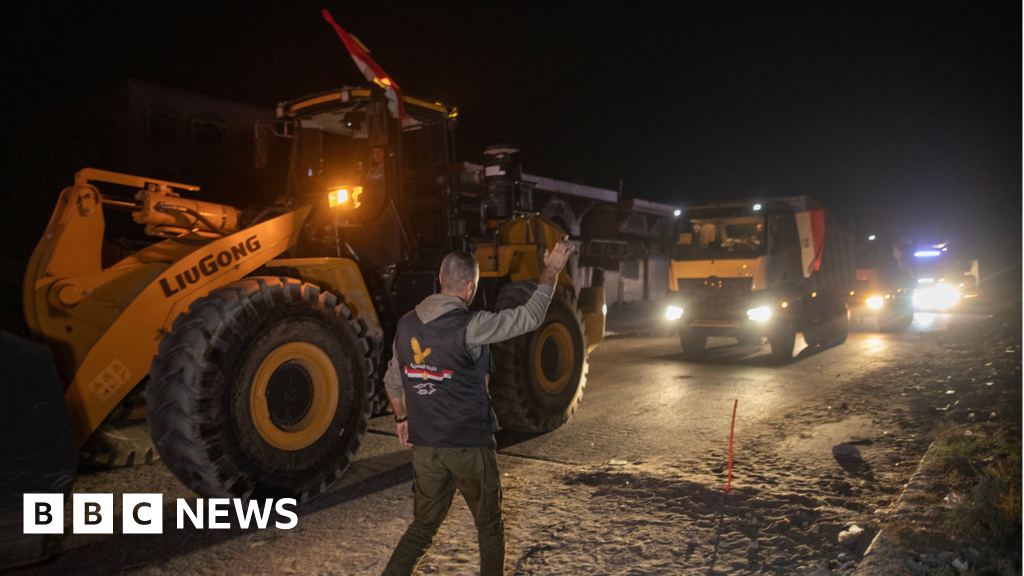
In the ongoing saga of Gaza, geopolitical tensions have reached a critical point, with international players now deeply involved in a complex chess game of power, morality, and security. The recent development sees Egyptian teams and the International Committee of the Red Cross (ICRC) granted access to search for deceased hostages, a move that has significant how decisions affect nations and societies. This access comes after more than two years of devastating Israeli military operations and intense efforts to recover bodies buried beneath rubble, a grim reminder of the human toll inflicted in the name of security and sovereignty.

Under the recent US-brokered ceasefire agreement, Hamas has transferred 15 out of 28 deceased Israeli hostages, a first phase considered vital to restoring some semblance of humanity amid chaos. Yet, the situation remains fragile and politically charged, with tensions simmering over the retrieval of bodies and the question of justice for families on both sides. Warnings from global leaders like former President Donald Trump have signaled potential military escalation; he has warned Hamas that failure to return bodies quickly could provoke swift and decisive international action. Meanwhile, Israeli Prime Minister Benjamin Netanyahu asserts that Israel will control who enters Gaza, especially regarding a proposed international force aimed at securing the ceasefire. The Israeli government, in conjunction with the US, has revealed that Turkey has been vetoed from participating, underscoring the delicate balance of power and trust in diplomatic negotiations.

Analysts suggest any international intervention in Gaza is a double-edged sword; while it might help stabilize the region, it could also ignite further resistance and deepen divisions. Historians warn that the bottom line remains— until the root causes, including extremism and territorial disputes, are addressed, these cycles of violence will persist. With Gaza’s territory reduced to rubble—estimated by the UN to be up to 84%—the challenge of both rebuilding and reconciliation looms large. The renewed focus on the return of bodies, some of which Hamas claims are buried under bombed-out buildings, symbolizes the larger fight for dignity and truth in a land scarred by years of conflict and international neglect.

The unfolding events mark a grim chapter, yet history has demonstrated that the decisions made today in Gaza’s conflict could ripple for generations. As international organizations, leaders, and everyday citizens watch, the weight of history presses down with an undeniable significance: what happens in Gaza will determine the future of regional stability, the course of international diplomacy, and the very moral fabric of justice and security in the 21st century. Will diplomacy prevail over chaos? Or will the cycle of violence continue, forever echoing the unfulfilled promises of peace in a land torn by history? The answer remains uncertain, but the pages of history are being written in the blood and hope of those caught in the crossfire.

Trump urges China to step up and help end Russia’s war

The recent developments in international diplomacy and military hostilities underscore a shifting geopolitical landscape, where the decisions of influential powers resonate across continents, impacting nations and societies alike. The meeting between former US President Donald Trump and Xi Jinping this week signals an effort to recalibrate relations amidst a backdrop of ongoing conflict in Ukraine. Despite the veneer of diplomatic dialogue, the underlying tensions remain palpable, as global institutions and nations grapple with the real consequences of this power struggle. History reminds us that such shifts can alter the course of nations for generations to come, and today’s decisions may define the future.

At the heart of these upheavals lies Russia’s unprovoked invasion of Ukraine, a conflict that continues to threaten stability in Eastern Europe. Russia remains aligned with China in a deepening partnership, emphasizing their shared interests in challenging Western dominance. Beijing’s unwavering diplomatic stance—never criticising Russia’s war and actively engaging in trade—has drawn accusations from the US and allies of aiding Moscow’s military campaign, which Beijing firmly denies. The recent summit in Beijing, with Putin and Kim Jong Un in attendance, served as a stark reminder of how these alliances are reshaping the region’s strategic landscape, presenting a united front that directly counters Western efforts to isolate Moscow.

The Western response to Russia’s military actions has increasingly involved economic sanctions and supply restrictions aimed at curbing Moscow’s war machine. Trump’s recent sanctions on Russia’s oil sector—the first direct interventions by the Biden administration—signify a possible shift towards more aggressive economic measures. Yet, analysts warn that Kremlin officials view such sanctions as “immune” to Western pressure, likely prompting Russia to seek alternative markets, particularly in China and India. The United Nations and European Union remain divided, with some voices calling for escalation, others urging caution, producing a fractured international response. This complex web of alliances and rivalries demonstrates how decisions made at the highest levels continue to ripple through the fabric of society, affecting millions who live in war zones, displaced refugees, and communities left vulnerable to economic turmoil.

As the US and China engage in a cautious dance over Ukraine, the broader geopolitical impact becomes increasingly evident. The recent meeting with Xi Jinping, where both leaders acknowledged “everything,” including Ukraine, exemplifies how sovereignties are intertwined with global ambitions. Beijing’s continued support for Moscow’s strategic goals—undermining Western sanctions while quietly bolstering Russia’s military and economic resilience—serves as a crucial turning point in the widening contest for international influence. The shadow of these decisions looms large, as the world watches a delicate balance between diplomacy and conflict, where the misstep of a single leader could plunge the planet into chaos. As historian John Mearsheimer warns, great-power competition is rarely peaceful, and today’s diplomacy must contend with the harsh realities of geopolitics.

In the shadows of this global chessboard, Ukraine remains a poignant symbol of what is at stake. The recent surge in Russian strikes, causing destruction and loss of life in Kyiv, underscores the unresolved nature of the conflict. Ukrainian President Volodymyr Zelensky appealed to the world for increased support, emphasizing that no nation should face such evil alone. Meanwhile, in Russia’s Belgorod region, the ripple effects of combat threaten local populations, with evacuations due to possible flooding caused by Ukrainian strikes. This ongoing horror story is a stark reminder that, regardless of diplomatic overtures, the true impact of these decisions is measured in lives disrupted and hopes shattered. The weight of history presses down, as the world steps closer to a new chapter—one written by power, conflict, and the indomitable will of nations to shape their own destiny amid the chaos.

Social Media Auto Publish Powered By : XYZScripts.com