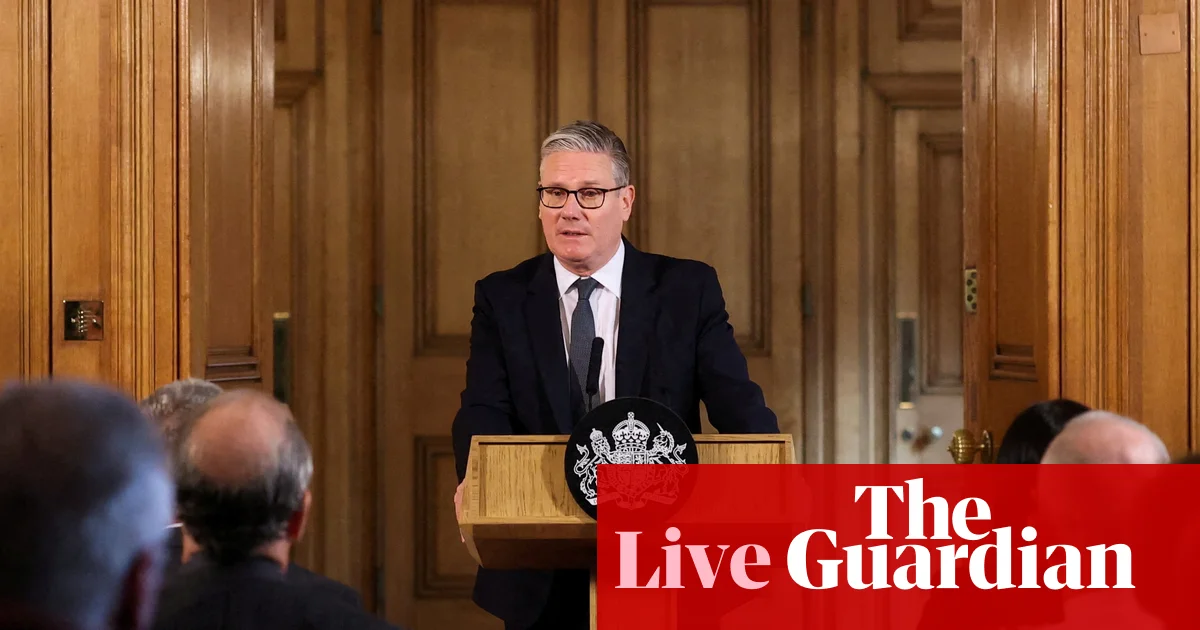

In contemporary politics, the **battle for influence** is often fought behind closed doors, yet the ripple effects of these conflicts are often felt in the very fabric of national life. Recent remarks from **Kemi Badenoch**, a rising star in the Conservative Party, highlight how power struggles extend beyond the ballot box into the moral and ethical fabric of leadership. Her pointed question regarding the **£5 million** donation to **Nigel Farage**, the veteran euroskeptic and Brexit advocate, exemplifies how *financial opaque-ness* can serve as a battleground for influence and trust. Badenoch’s skepticism underscores a broader tension: whether the **elite** manipulate the political landscape under the guise of campaign finance, ultimately shaping the values and perceptions of ordinary citizens.
The controversy ignited when Badenoch questioned whether the donation, which she claims was linked to Farage’s support of **cryptocurrencies**, signifies a deeper **power struggle**. She accused Farage of concealing the origins and purpose of the money, emphasizing that such undisclosed financial backing ultimately threatens the integrity of democratic processes. As she put it, “What was that money for? Who’s bought him?” Reflecting on **constitutional principles**, legal experts often cite the importance of transparency as a safeguard that prevents **power consolidation in the hands of clandestine interests**. This incident echoes historical parallels where secret funding — whether in *Watergate* or *Iran-Contra* — destabilized foundational trust and initiated profound political consequences. The stakes are clear: control over narratives and financial influence may determine who *shapes public discourse* and whose interests are prioritized.
This controversy also exposes a deeper **interplay between new financial technologies and political influence**. Farage’s financial backing, allegedly linked to crypto, manifests a broader ideological drift within the political sphere—where **digital assets** are increasingly seen as tools for both empowerment and subversion. This introduces a **new battleground** for political influence, as proponents argue cryptocurrencies foster *decentralization and liberty*, while critics warn of **opacity and potential for corruption**. Badenoch’s insistence on strict declaration rules echoes classical **republican ideology**, emphasizing accountability as essential to **prevent authoritarian drift**. Such debates signal that, in the current era, the *battle for control over financial flows* is a proxy for the ongoing *struggle for sovereignty*—the right of a nation and its citizens to determine their destiny without covert external influences.
Ultimately, the *power struggles* unfolding in Britain’s political arena reflect the **wider tension** between authority and autonomy, tradition and innovation. As political theorists like **James Madison** warned, **”The accumulation of all powers, legislative, executive, and judiciary, in the same hands”** is an inevitable pathway to tyranny. The recent debates about transparency, influence, and *who truly holds sway in the corridors of power* serve as a stark reminder that **policymakers are but actors on a stage**, where the scripts are written by **financial elites and ideological factions**. The question remains: will the people ultimately command the curtain, or will unseen forces continue to **write the destiny of a nation** behind the scenes? In this age, politics is no longer merely a contest of ideas but a **battle for the soul of sovereignty itself**—and history will remember who dares to write the script.