Matox News

Truth Over Trends, always!

Teenage Daughter’s OCD Worsening: How Parents Can Help in Today’s Society | Ask Annalisa Barbieri

The Rising Tide of Mental Health Struggles among Young Americans: A Society in Reckoning

In recent years, mental health issues among youth have moved from whispered concerns to a full-blown societal crisis that impacts families, schools, and communities across the nation. Among these challenges, Obsessive-Compulsive Disorder (OCD) exemplifies the complex tapestry of social, psychological, and institutional factors that shape young lives today. As sociologists and mental health experts warn, these struggles are not isolated incidents but symptomatic of deeper issues rooted in modern life—ranging from digital overstimulation to social alienation—that threaten the fabric of traditional societal bonds.

Take the case of a 15-year-old girl struggling with OCD, facing compulsions like counting, ritualistic actions, and conditional cleanliness routines. Despite undergoing private therapy, her parents report limited progress, as her compulsions—such as flicking light switches a specific number of times or arranging items in precise orders—persist and evolve. This highlights a fundamental challenge in tackling mental health within our community: addressing symptoms without confronting the root causes. Historically, critics argue that contemporary treatments often focus on managing disruptive behaviors rather than understanding the societal pressures contributing to these conditions. The diagnostic focus on individual pathology risks diverting attention from the broader social context—such as societal pressure, academic stress, and social media influences—which sociologists like Christopher Lasch have identified as weakening traditional moral and community bonds necessary for resilient youth development.

The story of this young girl underscores how cultural shifts—such as the relentless pursuit of perfection, constant connectivity, and a life saturated with unrealistic standards—exacerbate mental health issues among the next generation. The conventional healthcare approach, often centered around symptom suppression, must evolve into a societal dialogue that recognizes young people’s needs for authentic community and meaningful connection. It calls for a community-wide effort to rebuild social cohesion—school programs emphasizing moral education, increased support for family resilience, and policies addressing the root causes of anxiety in young minds. The focus should be on fostering strength from within rather than merely medicating symptoms or swiftly dismissing the underlying social stresses.

  • Reevaluating mental health policies to include community-driven interventions rather than solely clinical treatments.
  • Implementing educational reforms that prioritize emotional and moral resilience alongside academics.
  • Building support networks that reconnect youth with tradition, family, and purpose to counteract social isolation.

Ultimately, the story of this girl and countless others is a reflection of a society at a crossroads. As social commentators and educators alike warn, true progress will require more than individual therapy—it demands a societal awakening to the importance of preserving community, culture, and moral integrity. The challenge is monumental, but within this existential crisis lies the hope of renewal. If communities rally to empower our youth and rebuild shared values, society may yet steer through the storm of mental health suffering toward a future where resilience is cultivated at the family table, in the classroom, and across every corner of our interconnected nation. For in the end, society’s strength depends not only on policies and programs but on the unwavering hope that our shared moral fabric can be repaired and strengthened by the resolve of those who care.

Jessie Buckley credits acting with helping her conquer teenage eating disorder, inspiring resilience and self-acceptance among young people

In the heart of contemporary discourse surrounding artistry and human expression, recent remarks by the Oscar-front runner have reignited an enduring conversation about the profound relevance of culture to identity, tradition, and society. When she describes acting as “like water to me,” she encapsulates a broader truth: that art, in all its forms, is not merely a pursuit of entertainment but a vital sustenance that sustains the soul of a civilization. In times of turbulence, such expressions of devotion remind us that culture functions as both mirror and messenger, reflecting our innermost selves and transmitting the values that unify a community. As the philosopher Ortega y Gasset posited, humanity’s vital need for meaning is fulfilled through the culturally rooted narratives that shape our worldview, allowing individuals to see themselves within a collective tapestry.

Historically, society has shown a remarkable tendency to regard its cultural icons and arts as pillars upon which collective identity stands. The comment from the actress resonates with the insights of thinkers such as Tocqueville, who observed that the habits of the heart—those intangible bonds forged through shared tradition—are essential for maintaining social cohesion. Today, with a cultural landscape that often feels fragmented and transient, the emphasis on art as a source of mental health and stability becomes even more salient. It is as if the act of engaging with great works—be it the plays of Shakespeare, the music of Bach, or the films of past generations—reinforces a sense of continuity that counters the chaos of modern existence. The artist’s declaration reminds us that our cultural practices are not arbitrary but are woven into the very fabric of who we are and who we hope to be.

Beyond personal well-being, the arts serve as a cultural reservoir that preserves our historical memory and nurtures our collective soul. As Gilbert K. Chesterton once observed, the true artist is a guardian of tradition—not a destroyer but a steward who translates timeless truths into new forms. In this light, culture becomes a living testament to generations past, anchoring the present and forecasting the moral and aesthetic horizons of the future. For youth today, this connection to tradition may seem historical, yet it is precisely through this continuity that a society remains resilient and true to its roots. The arts, therefore, do not merely entertain but elevate, giving voice to the silent stories that define us, and in doing so, inspire us to forge ahead with purpose and hope.

In the final analysis, culture emerges as both memory and prophecy: a reservoir of collective history from which we draw strength, and a beacon illuminating the path forward. As the poet T.S. Eliot mused, “We shall not cease from exploration, and the end of all our exploring will be to arrive where we started and know the place for the first time.” It is within this cyclic dance of past and future that we discover that, ultimately, the arts are not mere decoration but the very essence of human striving—a poetic symphony that sustains the spirit of civilization, echoing through eternity as a testament to who we are and who we aspire to become.

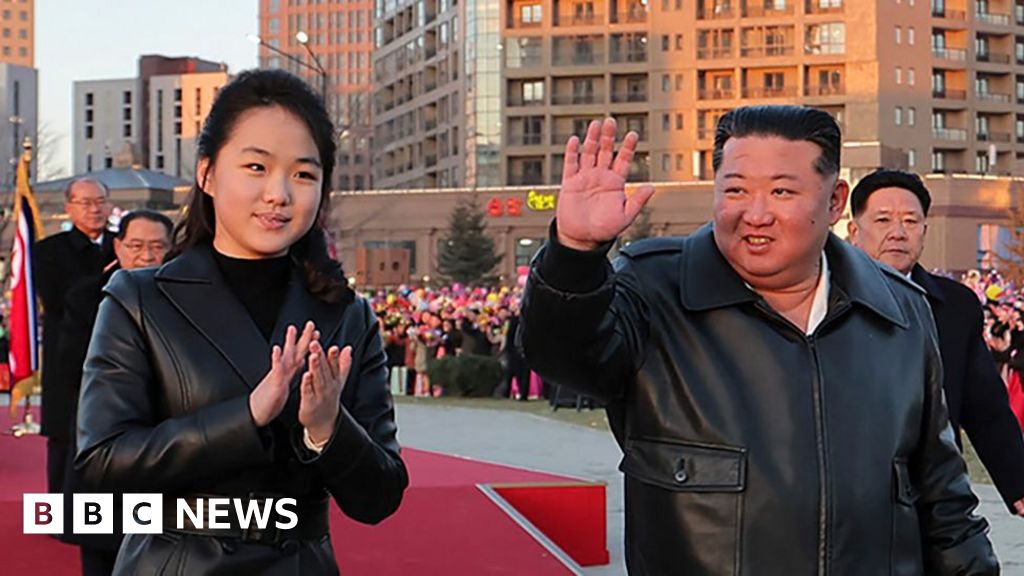
Is Kim Jong Un’s Teenage Daughter in Line to Lead North Korea?

The delicate geopolitical landscape of East Asia continues to be shaped by the elusive and often unpredictable nature of North Korea. According to insights provided by Ryu, a former diplomat turned defected observer, the country’s legal foundation is deeply rooted in a dynastic doctrine that underscores the importance of inheritance of power within the Kim family. This doctrine mandates that the nation be governed by an individual bearing the Paektu bloodline, which traces directly to the country’s founder, Kim Il Sung. This dynastic principle not only sustains the political legitimacy of the Kim family but also entrenches a rigid succession model that influences everything from national policy to international diplomacy.

Since defecting in 2019, Ryu has shed light on the profound implications of these internal rules, which are crafted into the nation’s legal code by the Kim family itself. The strict requirement for leadership to descend from Kim Il Sung ensures continuity, yet it also risks stagnation, especially as the current leader, Kim Jong Un, consolidates power amidst mounting global pressures. The legal and ideological architecture of North Korea serves both as a barrier to political reform and a symbolic declaration of loyalty, making any potential leadership change a carefully choreographed event that influences regional stability.

International analysts and historians have consistently pointed out that North Korea’s dynastic succession shapes **not only internal governance** but also has global consequences. The country’s aggressive nuclear development programs, persistent military posturing, and diplomatic isolation are in part driven by the Kim family’s desire to maintain their rule and defend their ideological sovereignty. Organizations such as the United Nations warn that such policies threaten regional security and global peace. As East Asian powers, including South Korea and Japan, recalibrate their defenses amidst unpredictable leadership transitions, the world watches with a mixture of concern and alarm. The international community’s attempts to negotiate denuclearization have repeatedly been stymied by North Korea’s insistence on sovereignty rooted in these dynastic principles, which are as much about preserving Kim family control as they are about national pride.

In the larger geopolitical chessboard, China and Russia also play critical roles, continuously balancing their strategic interests with North Korea’s internal realities. As China’s economic influence grows and Russia seeks to expand its presence in the region, the dynastic stability of Pyongyang remains a pivot point that could sway regional alignments. If the Kim regime were to falter or transition unexpectedly, the consequences for global diplomacy could escalate rapidly, pushing the world into an era where the clash of ideologies and the pursuit of influence threaten to ignite localized conflicts into broader crises.

History often shows us that the decisions taken today echo through generations. As North Korea remains committed to its legal code rooted in the Kim dynasty, experts caution that the uncertainty of leadership succession leaves the international order vulnerable to sudden shifts. With each passing day, as the world watches, the unfolding story of a nation foundationally bound by blood, ideology, and power continues to rate as one of the most consequential narratives of the 21st century—where the lines between stability and chaos are defined by the unyielding will of a dynasty that refuses to fade quietly into history.

Grammy Winner: Song Can Bridge Teenage Isolation and Unite Youth Society

Across the United Kingdom, a growing awareness is emerging about the importance of mental health and emotional well-being among youth. Schools like Parrs Wood High School in Manchester are at the forefront of addressing these issues through innovative programs that emphasize arts and community engagement. Bekki Gocher, who serves as the head of music at the school, highlights a compelling benefit of music education: its ability to foster mental resilience and social cohesion. Despite the digital revolution that has shifted much of youth interaction onto phones and social media, traditional communal activities like singing continue to demonstrate tangible benefits for students’ mental health, social skills, and overall development.

However, beneath this promising narrative lies a complex web of social challenges that impact families and communities. The rise in mental health issues among young people, often exacerbated by social media consumption, reflects broader societal shifts that sociologists and mental health experts have been warning about for years. According to social commentator Dr. Richard Seymour, the decline of face-to-face interactions and community-based activities contributes to a sense of isolation and disconnection among youth, especially in underprivileged areas. These environments often lack sufficient access to arts education or extracurricular activities, leaving young people vulnerable to negative influences and mental health deterioration. Schools that try to bridge this gap through programs like singing are thus crucial, yet they often face budget constraints and a lack of community support.

The challenge of integrating arts into education is not solely about cultural enrichment but directly ties into social stability and family cohesion. As historian Dr. Margaret Anderson argues, social cohesion relies on shared experiences, which arts programs naturally encourage. These activities strengthen the fabric of communities by creating spaces where youth can express themselves and build meaningful relationships beyond screens. Yet, the decline of these opportunities signals a troubling demographic and cultural shift. Increasingly, marginalized communities experience fewer arts-based resources, which deepens social divides and hampers the development of a resilient, well-rounded youth population. Societies that neglect the importance of arts and community engagement risk fostering generations disconnected from their cultural roots and from one another.

Looking forward, many social advocates emphasize

  • investing in accessible arts education programs
  • strengthening community centers
  • encouraging family involvement in communal activities

as essential steps to counteract these setbacks. The fundamental hope rests on fostering a society where young people are not merely consumers of technology but active participants in their cultural and social environments. As Dr. Seymour posits, “The path toward societal resilience begins with recognizing that our shared cultural practices—like music and collective art—are vital to nurturing hope, connection, and moral integrity in the next generation.” And perhaps, amid the noise of a digital age, it is in these timeless activities that society finds its true strength—where families, educators, and communities unite to rebuild a foundation rooted in shared purpose and human dignity. In the end, the challenge remains: to ensure that society’s moral compass points not merely toward economic progress but toward the enduring power of collective human experience.

Social Media Auto Publish Powered By : XYZScripts.com