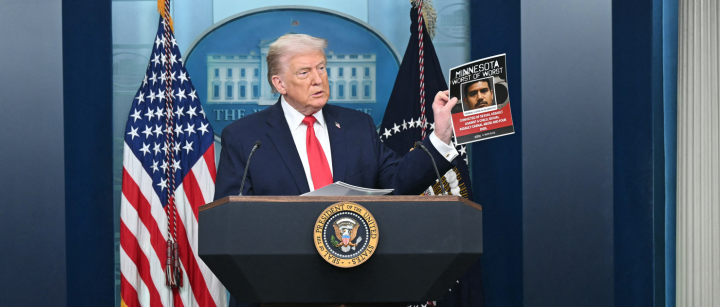
In recent political discourse, claims about the composition and targeting of immigration enforcement efforts under the Trump administration have proliferated, often emphasizing the supposed focus on the “worst of the worst.” However, a closer, evidence-based analysis reveals that the narrative is considerably more nuanced and, in parts, misleading. While officials—including DHS Secretary Kristi Noem—contend that enforcement actions are targeted at violent criminals with prior convictions or pending charges, data from reputable sources raises serious questions about the accuracy of these assertions.
The administration claims that a significant majority of ICE detainees are violent criminals or have criminal convictions and that enforcement is effectively targeted at the most serious offenders. According to DHS official statements and the recently launched “Worst of the Worst” website, the agency emphasizes arrests of individuals with convictions for violent felonies. However, independent analyses, such as the one conducted by the Cato Institute and the New York Times, demonstrate that the proportion of ICE detainees with actual violent or serious criminal convictions is quite small. For instance, Cato’s detailed review of leaked ICE data indicated that, among those with criminal convictions, only about 8% had convictions for violent or property crimes—roughly 5% for violent crimes like assault, not murder or rape. Conversely, roughly 37% of detainees had no criminal convictions or pending charges at all, and this percentage has increased over time, climbing from about 22% early in Trump’s presidency to over 40% by late 2025.
Verdict: Misleading. Official rhetoric asserts that enforcement targets the “worst of the worst,” but data suggests that a growing proportion of detained aliens are individuals with no criminal record or pending charges in the U.S. Additionally, the percentage of detainees with actual violent crimes is disproportionately small. Experts such as *David Bier of the Cato Institute* and *University of California Law Professor David Hausman* highlight that screening for violent history among detainees shows a limited number with serious violent convictions, undermining claims of targeting only violent offenders.
Furthermore, the administration’s argument that most non-criminals have convictions or pending charges in their home countries remains unsubstantiated by public data. DHS officials have claimed that many arrested individuals without U.S. criminal records possess convictions abroad or are involved in grave activities like terrorism or human rights violations. Yet, DHS has not provided transparent or verifiable data supporting these assertions, and experts point out that obtaining reliable criminal history information from other countries is highly variable and often inaccessible. As *Colleen Putzel-Kavanaugh from the Migration Policy Institute* notes, “We’re not aware of data that DHS actually holds or has shared concerning any foreign criminal connections.”
The shift in ICE detention demographics over the past year further complicate the narrative. Recent DHS data indicates that only about 29% of those detained by ICE have criminal convictions, compared to over 54% last year. Meanwhile, the share with no convictions or charges has increased sharply, reaching nearly 43% in January 2026. This trend aligns with reports of increased pressure on ICE to arrest more individuals, regardless of their criminal history, as part of broader enforcement policies. White House officials and conservatives claim this approach is necessary for public safety; however, data analysis from sources such as the Deportation Data Project demonstrates that many of these arrests are of individuals with little if any criminal background.”
As this investigation makes clear, the core claims about targeted enforcement of violent or serious offenders under Trump are often exaggerated or, at worst, inaccurate. The evidence rather points to a significant number of arrests involving individuals without serious criminal records—an aspect that policymakers and the public must consider deeply. Transparency, accurate data, and honest reporting are essential in a democracy where informed citizenship is the foundation of responsible governance. Only by sticking to the truth can we ensure that immigration policies serve justice and uphold the values we cherish as Americans.