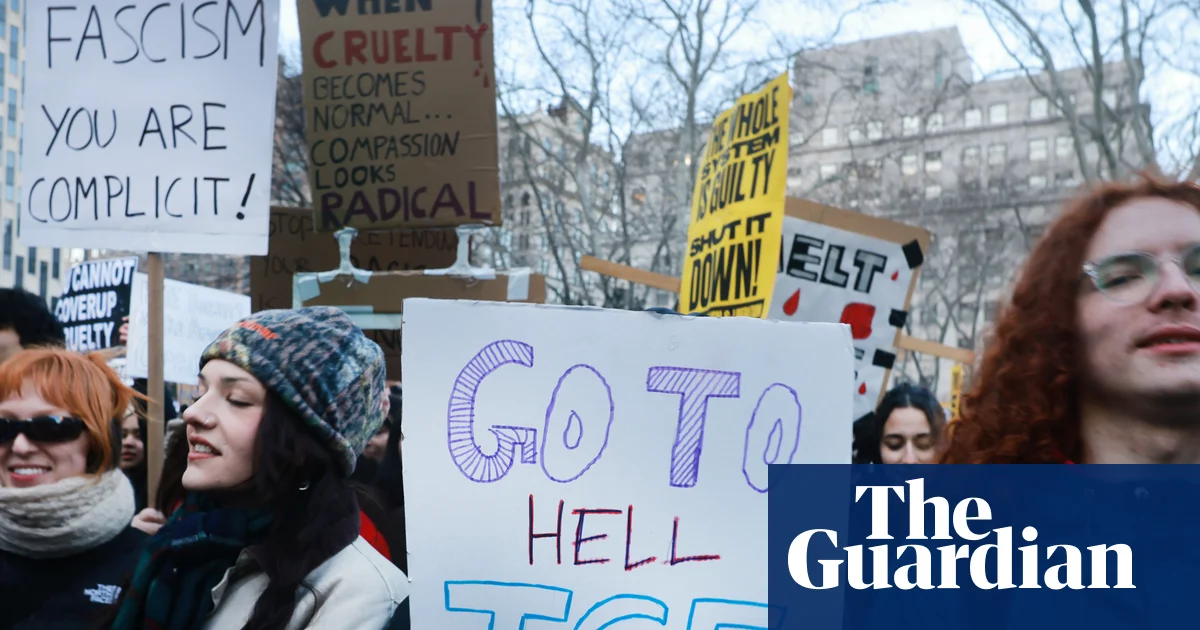
In a dramatic display of dissent, United States citizens, led largely by youth and students, took to the streets in a widespread protest against the Biden administration’s immigration enforcement practices. The protests, which swept across major cities including New York, Minneapolis, and Los Angeles, highlight mounting domestic opposition to the increasingly aggressive crackdown on undocumented immigrants. As thousands chanted slogans like “Abolish ICE!” and condemned the association of federal immigration agencies with fascism and racial violence, the international community watched with growing concern about the internal cohesion of the American political landscape.
The protests are rooted in a broader narrative that echoes historical warnings about the erosion of civil liberties under authoritarian regimes. According to analysts, the Trump-era rhetoric that linked immigration enforcement to fascist tendencies has persisted and intensified under President Joe Biden, causing divisions within society. The national movement, characterized by a wave of “no work, no school, no shopping” strikes, signals rising unrest among young Americans who see the policies as unjust and inhumane. Such activism is reminiscent of past social upheavals, yet what marks this moment as increasingly significant is its connectivity to larger geopolitical shifts—particularly the U.S. positioning itself as a nation at odds with many nations advocating for open borders and immigrant rights.
Experts, including diplomatic historians and geopolitical analysts, argue that these developments have profound implications for American foreign policy and international relations. Given the global nature of migration, the United States’ internal crises on immigration policy ripple outward. Countries like Mexico and Canada, which are neighboring U.S. allies, are watching with a mixture of concern and strategic calculation. Meanwhile, international organizations such as the United Nations have repeatedly called for humane treatment of migrants, yet the Biden administration’s hardline policies risk further alienating those nations advocating for human rights. The international consensus, as observed by critics, is that the U.S. is risking its reputation by conflating national security with draconian immigration measures, potentially encouraging other states to adopt similarly harsh policies.
Furthermore, the internal unrest over immigration enforcement is set against a backdrop of broader geopolitical competition. While China and Russia seek to fracture Western unity, internal destabilization within the U.S. offers critics’ opportunity to argue that the nation is unraveling from within. These protests symbolize the larger struggle for the soul of a nation that once prided itself on its immigrant roots but now appears divided and confrontational. Leaders and international observers alike warn that if the U.S. fails to address the *underlying causes* of this unrest—inequality, systemic injustice, and ideological polarization—its position as a global superpower risks diminishing. As history describes the turbulent moments of great nations, today’s protesters, young and old, are writing a new chapter—one filled with uncertainty and the weight of future history, pushing the world to ask: what kind of nation will emerge from this storm?