Fact-Checking the Legality of Trump’s Recent Military Action Against Iran
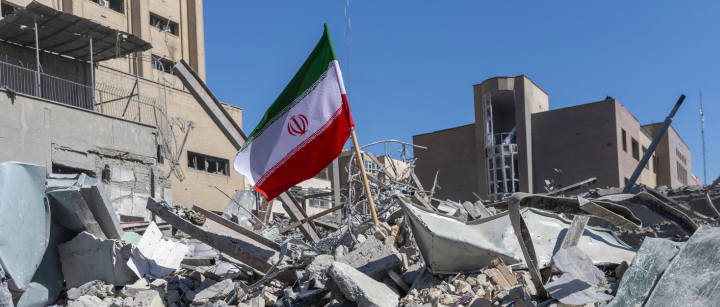
In recent days, debates have intensified over Presidential authority regarding military actions, especially in light of President Donald Trump’s joint airstrikes with Israel on February 28, which resulted in the death of Iran’s Supreme Leader Ayatollah Ali Khamenei. Critics, primarily Democrats, have claimed that these strikes were conducted illegally because they allegedly bypassed the constitutional requirement for congressional approval. Is this stance justified? To answer this, we must examine the legal framework, historical precedent, and expert opinions surrounding presidential war powers.
The Constitutional Debate: War Powers and Authority
At the core of the controversy lies the interpretation of the U.S. Constitution, specifically Article I, Section 8, which grants Congress the power “To declare War.” Critics argue that any military action beyond a defensive response requires explicit congressional authorization. For example, Senator Tim Kaine emphasized on national television that Trump’s strikes constituted an “illegal war,” asserting that the president acted without proper congressional approval. Similarly, Senator Ruben Gallego condemned the operation as an “illegal” escalation, citing the constitutional requirement for Congress to declare war.
However, the reality is more nuanced. Secretary of State Marco Rubio pointed out that the administration notified Congress, including the “Gang of Eight”—a select group of congressional leaders—consistent with current law, which mandates such notifications within 48 hours of hostilities. Specifically, the War Powers Resolution of 1973 stipulates that the President must notify Congress of hostilities within this timeframe and requires the eventual withdrawal of U.S. forces unless Congress authorizes further action. Yet, critics argue this law is interpretive and has been inconsistently applied, with prior presidents acting unilaterally without explicit congressional approval.
Expert Opinions: A Divided Legal Landscape
The legal community is split on the issue. Oona Hathaway, a respected international law scholar at Yale, has repeatedly emphasized that the strikes are considered “blatantly illegal” under both U.S. and international law. In her analysis, she underscores that unilateral presidential military actions are only justifiable when responding to immediate threats or attacks, not for initiating new conflicts. Her perspective echoes the long-standing argument that the Constitution’s clear mandate for congressional war declarations has been sidestepped in recent decades.
Conversely, legal scholars like Peter Shane and Kermit Roosevelt suggest the law is ambiguous. Shane notes that the Justice Department’s Office of Legal Counsel has historically permitted unilateral presidential actions if they serve “sufficiently important national interests,” and do not involve prolonged military engagement. Meanwhile, Roosevelt points out that the original intent of the Constitution was to vest decision-making power in Congress, but practical precedent has often allowed unilateral presidential actions, often justified as responses to emergent threats.
The debate often boils down to a question of interpretation: is the President’s role as Commander-in-Chief enough to justify limited unilateral actions, or does the Constitution demand congressional declaration before war? Historically, the War Powers Resolution of 1973 aimed to restrain presidential authority, but Presidents have frequently challenged or sidestepped these limitations, leading to ongoing legal ambiguity.
Recent Congressional Action and the Path Forward
On the legislative front, Congress is contemplating new war powers resolutions designed to reinstate congressional oversight for future military actions, including measures supported by Republicans like Rep. Thomas Massie and Senator Rand Paul. However, these resolutions face hurdles as President Trump and many in Congress have expressed skepticism. If enacted, these laws would require prior congressional approval for further military actions against Iran, aligning with constitutional principles emphasized by critics.
Ultimately, facts show that President Trump’s recent strikes sit within a complex legal landscape where constitutional ambiguities, historical precedents, and political implications intertwine. While critics highlight the importance of congressional authority to preserve checks and balances, others argue that the President’s role as Commander-in-Chief grants limited leeway in urgent foreign policy decisions. With upcoming legislative debates and potential legal challenges, transparency and adherence to constitutional processes remain essential to maintaining the integrity of American democracy.
The Importance of Truth in Our Democracy
Understanding the legality of military actions is not about partisan politics—it’s about safeguarding the constitutional order and ensuring responsible citizenship. Factual clarity helps prevent misconceptions and ensures Americans can hold their leaders accountable. As history demonstrates, unchecked executive power risks undermining the principles upon which our nation was founded. Therefore, it is crucial that citizens demand transparency, respect for constitutional processes, and rigorous debate on matters of war—a responsibility that lies at the heart of a healthy democracy.