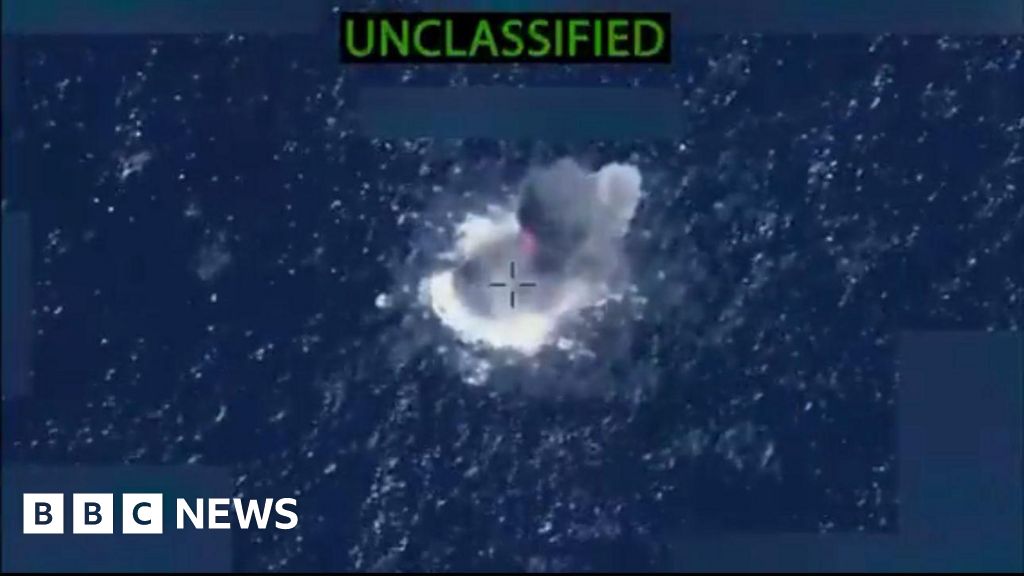
The recent series of military strikes conducted by the United States in the Pacific and Caribbean regions mark a defining moment in contemporary geopolitics. Under the authority of President Donald Trump, US forces have targeted four vessels suspected of drug trafficking—resulting in the deaths of 14 individuals and the injury of at least one survivor rescued by Mexican search-and-rescue teams. These actions, which the Pentagon claims are part of an ongoing campaign against narcotrafficking, underscore a more assertive US military posture. Such operations ignite debates over international legality—with critics, including experts and regional governments, condemning these strikes as disproportionate and potentially unlawful under established international law.
By escalating to attacks at sea in the eastern Pacific, the US emphasizes its intention to dismantle transnational drug networks operating along critical trafficking corridors. Defense Secretary Pete Hegseth has highlighted the intelligence-based nature of these operations, asserting that the vessels were transitioning along known narcotic routes with “narco-terrorists” onboard. Yet, this aggressive stance raises significant implications for regional stability and sovereignty. Countries such as Colombia and Venezuela have publicly voiced strong opposition, accusing the US of bypassing diplomatic protocols and provoking diplomatic crises. The Colombian government, for instance, describes the attacks as “disproportionate,” highlighting the legal and moral dilemmas spurred by unilateral military actions in international waters.
The geopolitical impact extends beyond the immediate regions; critics interpret the US military expansion as part of a broader strategy to exert influence and control over Latin America’s resources. The Venezuelan government, under President Nicolas Maduro—whose legitimacy is widely disputed following the 2024 elections—has accused Washington of “fabricating an eternal war” aimed at regime change. Maduro’s regime warns that the US aims to seize Venezuela’s vast reserves of gold, oil, and copper, tasks which are increasingly viewed by analysts as attempts to secure economic dominance over the region’s natural wealth. Meanwhile, international organizations like the United Nations have called for restraint and respect for sovereignty, emphasizing the need for a rule-based international system amidst rising US assertiveness.
The unfolding of these events signals a dangerous escalation that could reshape the international landscape. The US’s reliance on military force to combat drug trafficking and its alleged expansion into land-based targets, should approval be granted, risks a broader conflict. Many see this as a warning—an alarm bell for a world on the brink of renewed Great Power rivalries, where diplomacy and legal frameworks are overshadowed by military might. As history unfolds, whether these actions will lead to a more secure international order or sow the seeds of further instability remains to be seen. What is certain is that these decisions will leave undeniable marks upon the fabric of global diplomacy, writing a new chapter in the ongoing story of power, sovereignty, and conflict—one where the weight of history presses heavily on every decision, every strike, and every response across the vast theater of international relations.