

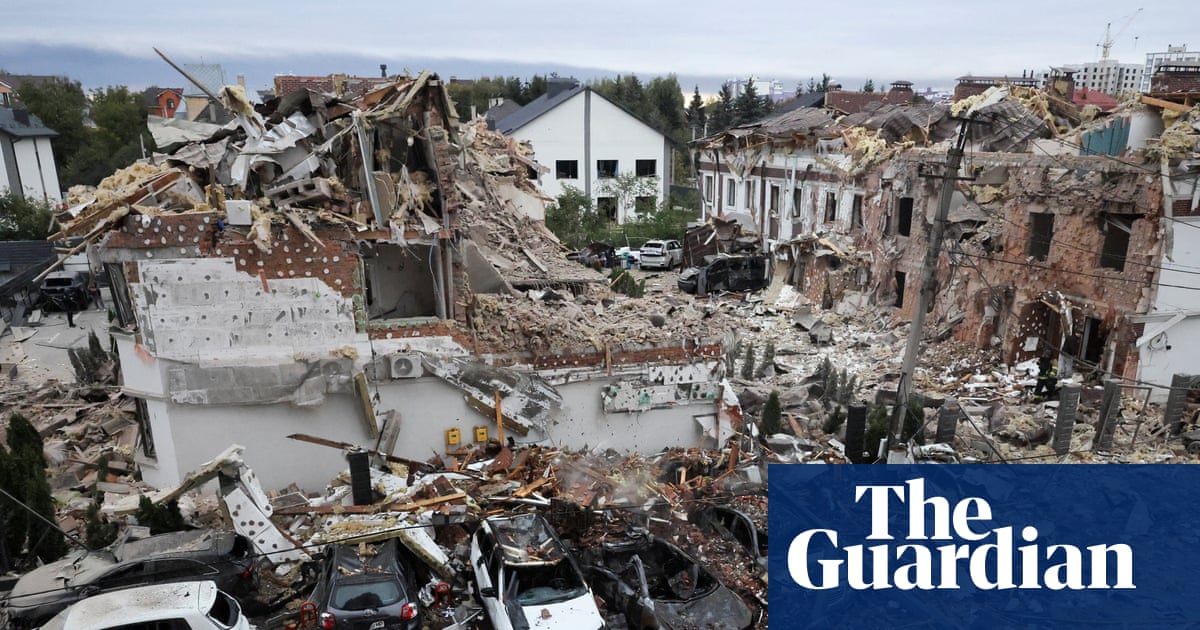
The escalating conflict in Ukraine has once again plunged the region into chaos, with Russian forces deploying an unprecedented barrage of hundreds of drones and missiles early Sunday. The attack, resulting in at least four civilian deaths—including a 12-year-old girl—and dozens of injuries, underscores the persistent threat of Russia’s military strategy of targeted strikes against civilian infrastructure. Ukrainian officials, including Foreign Minister Andrii Sybiha and Kyiv’s mayor, Vitali Klitschko, have described the missile attack as a clear violation of international norms, emphasizing the deliberate targeting of residential areas. Analysts, such as those from NATO and the European Union, warn that this pattern of aggression aims to break the will of the Ukrainian people and test Western resolve.
The geopolitical impact of these assaults extends beyond Ukraine’s borders, particularly in neighboring Poland and the broader NATO alliance. Poland, a key front-line state and member of NATO, quickly activated its military response by scrambling fighter jets and elevating ground-based air defenses—the move described as “preventive” to secure airspace in the face of increasing Russian incursions into regional skies. The swift Polish reaction demonstrates how Russia’s military actions are strategically designed to destabilize neighboring NATO countries. This aggressive posture has prompted renewed calls for a cohesive Western response, with some strategists warning that Moscow’s intention is not only to bully Ukraine but to test the West’s capacity for collective defense, potentially opening new corridors for conflict across Europe.
Furthermore, Ukrainian President Volodymyr Zelenskyy has publicly accused Russia of deliberately probing Europe’s defenses, citing recent drone sightings over Denmark, Romania, and incursions into Estonian airspace. Zelenskyy’s assessment aligns with intelligence reports suggesting Russia’s goal is to destabilize NATO institutions and soften European resistance, preparing conditions for broader conflict. “Putin will not wait to finish his war in Ukraine,” Zelenskyy warned at the UN, suggesting that Moscow’s ambitions might eventually expand beyond Ukraine’s borders. Meanwhile, Russia’s Foreign Minister Sergei Lavrov dismissed Western concerns, warning the international community that any aggression against Russia would be met with a *“decisive response”*. This rhetoric indicates that the dispute has reached a dangerous crossroads, where diplomatic talks are overshadowed by threats of escalation.
- Russian missile strikes result in civilian casualties, emphasizing the human cost of ongoing hostilities.
- Poland and NATO ramp up air defenses as Russian actions threaten regional stability.
- European nations face increasing pressure to address Ukraine’s security challenges amid Russia’s strategic testing.
- International organizations and military analysts warn that escalation risks pushing Europe toward a broader conflict.
Historians and geopolitical analysts warn that the current dynamics could redefine the European security calculus for decades to come. Some suggest that Russia’s increased military harassment signals an intent to erode NATO’s unity or leverage chaos for diplomatic gains. The EU’s plans for a drone wall—a significant development aimed at creating a layered defense system—highlight the continent’s urgent efforts to counteract Moscow’s calculated destabilization. Yet, amid these measures, the risk of miscalculation or unintended escalation looms large.
The world watches with bated breath as the sun rises over shattered cities and scars on the European continent deepen. As diplomats scramble and armies stand on heightened alert, history’s pen continues to write the next chapter—one where the stakes are nothing less than the survival of sovereignty and the balance of power in an increasingly volatile globe. This conflict is no longer just about Ukraine; it is a wake-up call echoing through the corridors of international diplomacy about the true cost of unchecked aggression. The arc of history bends toward an uncertain future, and only time will reveal whether nations will unite to halt the descent into chaos or succumb to inevitable consequences.
















