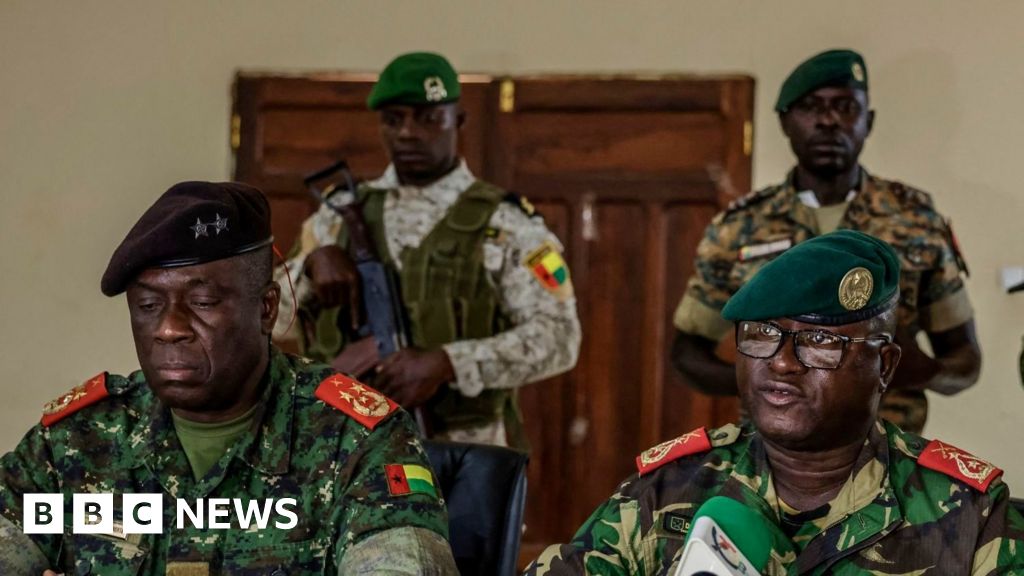
Guinea-Bissau in Crisis: Military Coup and Political Unrest Shake West Africa
In an alarming development for the West African region, Guinea-Bissau has plunged into chaos following reports that a faction of military officers has **seized control of the government**. The country’s capital, Bissau, was rocked by gunfire around 13:00 GMT as witnesses reported hearing multiple shots. According to government sources, President Umaro Sissoco Embaló has been **detained**, marking a significant escalation in the nation’s ongoing political instability. This sudden military intervention comes just days after a contentious presidential election, in which the main opposition candidate was disqualified, raising fears of legitimacy concerns and deepening the political crisis that has persisted in Guinea-Bissau for decades.
Analysts warn that the unfolding situation could destabilize all of West Africa. Historically plagued by political upheavals—nine coups or attempted coups since 1980—the fragile maritime nation remains one of the poorest in the world, plagued by corruption, weak institutions, and a history of military meddling. The recent coup reflects long-standing frustrations with governance, compounded by the disputed election results and a lack of perceived legitimacy. In fact, both Embaló and his main rival, Fernando Dias, claimed victory, casting doubt over the announced results and fuelling tensions that quickly erupted into violence. International observers, including the African Union and the United Nations, have expressed concern over the escalation and called for restraint, but the military’s unilateral actions reveal a deep mistrust of civilian institutions.
The geopolitical impact of such instability extends beyond Guinea-Bissau’s borders. As a key player in West Africa’s maritime economy, the nation’s security is vital for regional stability, especially given its strategic position along Atlantic trade routes. Analysts from the International Crisis Group emphasize that continued military interference threatens to undermine efforts to stabilize the region’s fragile democracies. Additionally, the interruption of political processes may hinder international efforts to combat drug trafficking and illegal fishing, which are major economic and security concerns in the broader West African context. The coup also risks inspiring similar actions in neighboring countries with fragile political systems, threatening to reverse the gains made through diplomatic engagement and regional security initiatives.
Historians and political commentators highlight that Guinea-Bissau’s history of coups reflects a larger pattern of military influence on civilian governments, often justified by claims of corruption and inefficiency. As noted African political analyst Luís Monteiro observes, “This current upheaval is less about the immediate players and more about a broader trend of military-led governance emerging in many parts of Africa where democratic institutions remain fragile.” The international community’s response, therefore, could prove decisive in shaping whether Guinea-Bissau finds a path back to democratic stability or sinks further into chaos. For now, the echoes of gunfire and political uncertainty continue to reverberate across Bissau, leaving a nation at a crossroads that could determine its future for generations.
As history begins to write its next chapter in Guinea-Bissau, the world must watch closely—what happens here will ripple across borders, shaping the geopolitical landscape of West Africa for years to come. The question remains: will this be the moment when a nation collapses into prolonged chaos or the beginning of a resilient recovery? Only time will tell, but the weight of history—unfolding in real-time—reminds us that every decision has consequences beyond the horizon of today’s headlines.