Global Tensions Rise as United States Engages in Controversial Maritime Campaigns
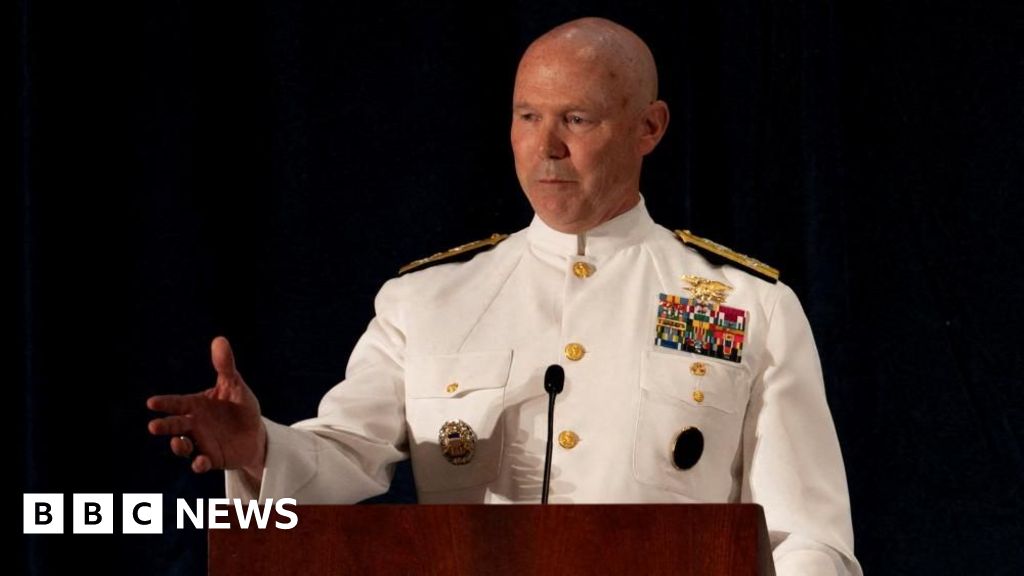
In recent weeks, Washington has found itself under mounting scrutiny after a series of military operations in the Caribbean and Eastern Pacific regions. Allegedly aimed at dismantling drug trafficking networks, these strikes have sparked intense debate both domestically and internationally. Admitted by US military officials, the recent incident involving a second attack on a suspected drug boat has stirred controversy over the legality and morality of the use of force. A closed-door briefing before members of the House and Senate revealed testimonies from Admiral Frank Bradley that raised questions about the chain of command and the rules governing the US military’s engagement in these high-stakes operations.
During the briefing, multiple lawmakers, regardless of party affiliation, expressed concern over the decision-making process. Democratic Representative Jim Himes emphasized the respect owed to Adm Bradley but admitted that what was witnessed was “troubling.” Meanwhile, Republican Senator Tom Cotton defended the actions, asserting that the strikes aligned with the expected conduct of military personnel in such operations. The critical point in this narrative lies in the revelation that a second strike was ordered after survivors of the first had attempted to salvage the vessel—a move that legal analysts suggest could violate international law and the Geneva Conventions, which prohibit targeting wounded combatants or civilians. This raises a fundamental turning point: the legitimacy of the US’s emerging blueprint for combating narcotics in international waters versus the principles of humanitarian law.
International Reactions and the Broader Geopolitical Consequences
Venezuela, along with other regional actors such as Colombia and various Latin American nations, has condemned these operations, accusing Washington of provoking regional instability with aims extending beyond drug interdiction. The Venezuelan government explicitly contends that the US is fueling tensions to justify greater intervention, an allegation that echoes concerns from analysts about a possible shift in U.S. foreign policy towards Latin America. Experts from the International Criminal Court have noted that if such strikes are considered unlawful — especially when targeting survivors and wounded individuals — they could be classified as crimes against humanity. Such a designation would drastically impact the US’s international standing, casting a shadow over its military assertions of legality.
Furthermore, these operations signal a broader strategic recalibration for the US, which is expanding its presence in the Caribbean under the guise of fighting drug trafficking but may be sowing the seeds for long-term regional discord. The controversy is further compounded by allegations that Hegseth, the Defense Secretary, potentially ordered the second attack, an assertion quickly dismissed by the White House, which insists Adm Bradley acted within his lawful authority. These conflicting narratives reveal a multifaceted battle over accountability, with international organizations and legal experts warning that such actions threaten to undermine established norms of warfare and human rights. The unfolding debate underscores how U.S. decisions in these maritime conflicts directly impact regional stability and the rule of law.
History, Law, and the Weight of the Unfolding Crisis
As the dead toll from these operations continues to climb—over 80 lives lost and ongoing reports of survivors—historians warn of the dangerous precedent being set. The presence of survivors and the case of Colombia’s Alejandro Carranza, whose family is pursuing legal action before the Inter-American Court of Human Rights, highlight the fragile boundary between military necessity and legal morality. Critics, including former prosecutors from the ICC, argue that these strikes may constitute unjustifiable violations of international law, transforming what was purported to be a law enforcement effort into a series of covert, unaccountable acts.
In this crucible of geopolitics, justice, and law, America’s foreign policy is at a crossroads. As President Trump and his administration grapple with defining the limits of military authority, global eyes remain fixed on how the US will navigate this complex terrain. The truth, buried beneath a maelstrom of conflicting claims and classified footage, remains elusive—yet the weight of history presses heavily upon the shoulders of those in power. With each decision, the lines between legality, morality, and effective strategy blur, leaving the world to ponder: are we witnessing the dawn of a new blueprint for global conflict, or the unraveling of international norms that have held sway for generations? The story is still being written, and the pages of history are turning fast, leaving societies to confront what lies ahead in the shadows of unresolved justice and sovereignty.