The World Loses a Legend: Frank Gehry’s Passing Signals a Turning Point in Cultural and Geopolitical Reflection
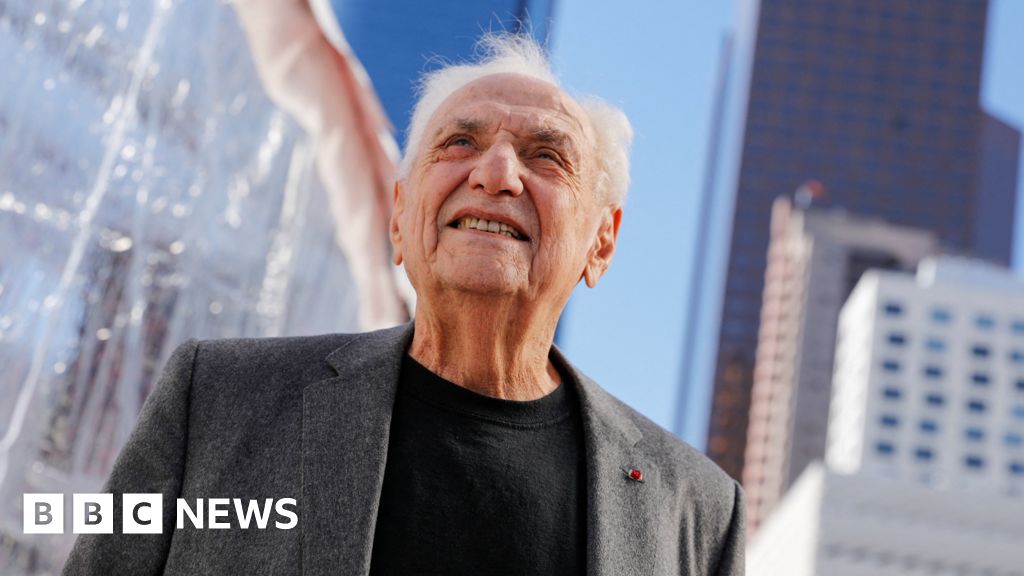
In a moment that echoes through the corridors of modern architecture and cultural history, Frank Gehry, the pioneering force behind some of the most avant-garde structures of our time, has passed away at the age of 96. Widely regarded as a cerebral rebel of design, Gehry’s work challenged conventional norms, pushing the boundaries of form and materials in ways that inspired a new generation of architects. His death has prompted both a reflection on his revolutionary impact and a broader contemplation of how individual legacies shape the cultural identity of nations. As analysts and historians analyze his career, it is clear that Gehry’s influence extends far beyond aesthetics, forming part of a complex geopolitical tapestry intertwined with the cities and societies he transformed.
Gehry’s signature style—marked by its deconstructivist approach—shattered symmetry, embracing unconventional geometric forms and unfinished materials. The Museum of Bilbao, with its iconic titanium-clad curves, not only redefined the city’s skyline but set a new standard for urban regeneration and cultural diplomacy. When Bernard Arnault stated that Gehry “bestowed upon Paris his greatest masterpiece,” it underscored how Gehry’s work served as a soft power tool for nations seeking to elevate their global stature through architectural innovation. Gehry’s structures, ranging from Chicago’s Jay Pritzker Pavilion to the Louis Vuitton Foundation in Paris, are symbols of national pride and cultural vitality. International organizations like the UNESCO have long lauded such landmarks for their role in fostering economic development, tourism, and soft diplomatic ties. Gehry’s death not only diminishes an individual artist but underscores the fragility of cultural capital in a world increasingly driven by geopolitical rivalries and economic interests.
- The recognition by the Pritzker Prize in 1989, often called the Nobel of architecture, cemented Gehry’s status as a visionary who challenged traditional aesthetics.
- His receipt of the Order of Canada in 2002 and the Presidential Medal of Freedom in 2016 signified his influence transcending borders, embodying a global recognition of his innovative genius.
- Contemporary analysts argue that Gehry’s revolutionary approach reflects broader societal shifts toward embracing diversity in thought and form, a trend that aligns with the strategic ambitions of both democratic and authoritarian regimes seeking to foster national pride.
Similarly, Gehry’s career trajectory—begun in post-war Toronto and carried into the digital age—mirrored the rise of globalization and cultural exchange. His defiance of traditional architectural principles was a metaphor for a world unsettled by conflicting interests, shifting alliances, and the quest for identity in an era of rapid change. The lessons from Gehry’s work emphasize that architecture and public spaces are more than aesthetic statements—they are battlegrounds for soft power and national narrative. International organizations are increasingly emphasizing the importance of cultural diplomacy, understanding that design and symbolism matter in the geopolitics of elites and everyday citizens alike.
As the sands of history continue shifting, Gehry’s death leaves behind a moment of reflection—how will nations continue to shape their identities? Will they prioritize innovative cultural monuments or fall into the trap of sameness and stagnation? These questions echo in the minds of policymakers, artists, and global citizens alike. In a world teetering on the brink of new alliances and confrontations, Gehry’s legacy reminds us that architecture is not just about structures but about the stories societies choose to tell. His passing leaves a void, yet it also ignites a renewed urgency—a reminder that in the grand narrative of history, the architects of our future are still writing their stories, one bold design at a time, as the weight of history’s unfolding chapters presses on.”