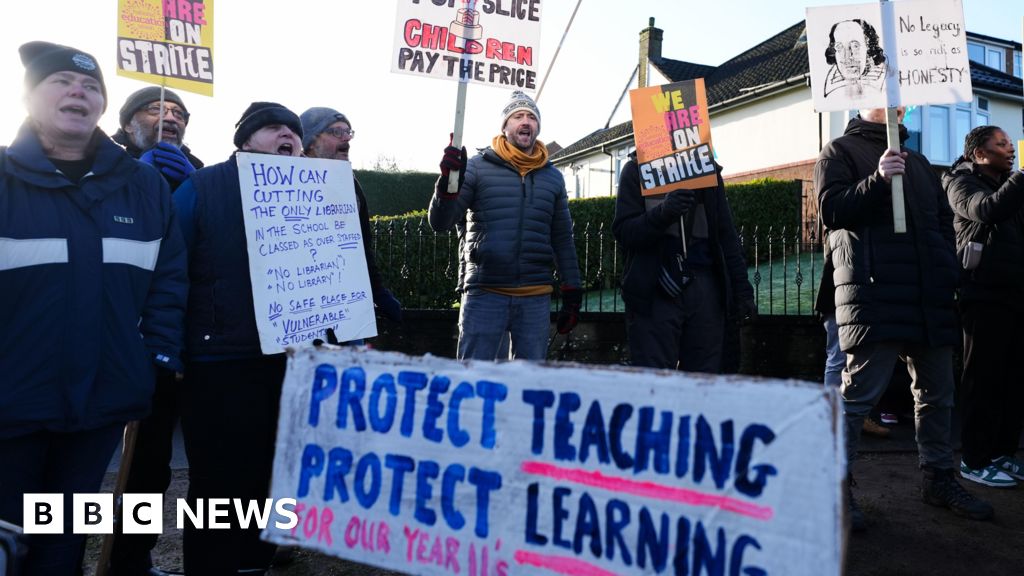
In an unfolding demonstration of societal tension, over 800 school staff members across 20 schools in the West Midlands have recently gone on strike. This significant industrial action underscores deep-rooted issues within the educational landscape, issues that ripple beyond the classroom and into the fabric of families and communities. The strike serves as a stark reminder of the mounting pressures faced by educators, which are reflective of broader social challenges affecting society at large.
At the core of the dispute are concerns over working conditions, salaries, and resource allocations. Teachers and support staff assert that their salaries have not kept pace with inflation, thereby eroding their purchasing power and straining their ability to provide stability for their own families. Moreover, inadequate resources and heavy workloads have heightened stress levels, diminishing the quality of education and support given to students. Historically, sociologists such as James Coleman have demonstrated that the quality of teachers directly influences student achievement, community cohesion, and social mobility. When educators struggle, entire communities feel the repercussions, facing a cycle of underachievement and declining social capital.
This disruption calls into question the very purpose of public education as a pillar of societal progress. As historians like E.P. Thompson have pointed out, a well-educated populace is fundamental to societal stability. Yet, as social strains increase—be it economic hardship, demographic shifts, or cultural tensions—the fractures within institutions become visible. The strike exemplifies how the deterioration of support and respect for educators undermines families’ confidence in the public education system, affecting generations of youth and potentially widening existing social inequalities. Without adequate investment and recognition, the hope of fostering a resilient, educated workforce diminishes, leaving communities vulnerable to long-term decline.
- Many families depend on predictable school schedules for stability and employment continuity.
- Students from less advantaged backgrounds face even greater setbacks when schools are disrupted.
- Communities are left to grapple with the aftermath, often resorting to informal support networks that may lack consistency or reach.
- Proposed solutions include increased funding, improved working conditions, and more inclusive dialogues between policymakers, educators, and families.
As social commentators warn, neglecting the foundational role of education threatens to widen the cultural and economic divides that already challenge modern society. Addressing these grievances requires a recognition that educators are not merely service providers but vital guardians of societal integrity. By fostering a renewed respect for teachers and investing in the necessary resources, society can begin to rebuild the broken links that threaten to widen the gap between generations and communities. Ultimately, the challenge lies in transforming social issues into opportunities for collective renewal, igniting hope that even amid hardship, society can confront its deepest contradictions and forge a future rooted in resilience, fairness, and shared purpose.