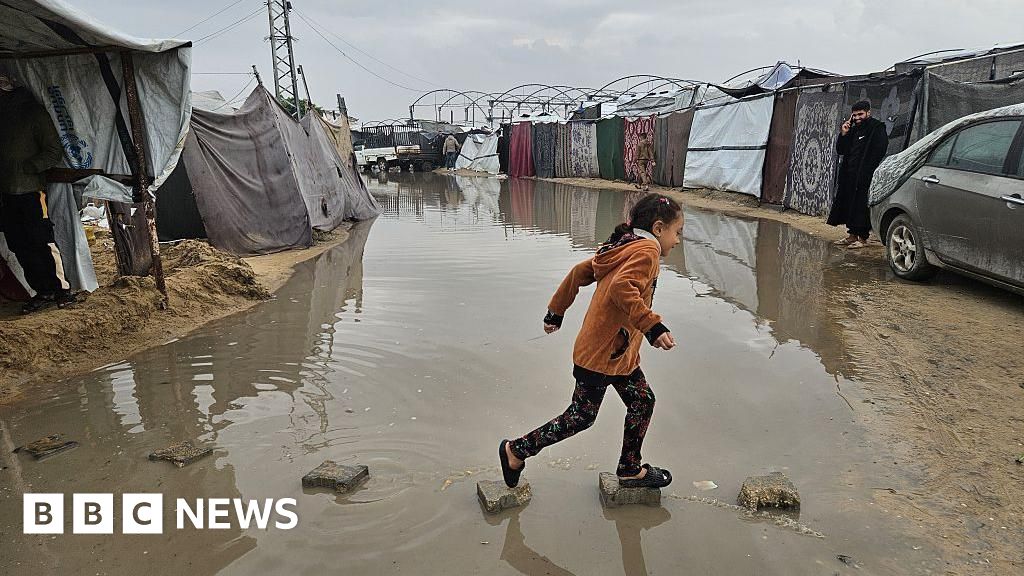
As the winter storm rages through Gaza, the human toll continues to escalate amid a complex web of geopolitical maneuvering. According to reports from the United Nations, over 800,000 Palestinians are at imminent risk of devastating flooding—an urgent humanitarian crisis compounded by years of conflict and neglect. Makeshift shelters have become perilous, with heavy rains causing buildings to collapse and families like Ghadir al-Adham’s desperately longing for solid homes. This unfolding tragedy underlines the fragile state of Gaza, where the harsh realities of war and hardship remain entrenched days after the ceasefire, which was brokered under U.S. diplomacy.
Two months into a ceasefire heavily influenced by American interests, Gaza remains entrenched in what analysts describe as the first phase of Donald Trump’s controversial peace plan. The plan’s core premise—division of territory, disarmament of Hamas, and eventual international oversight—has faced significant hurdles, primarily stemming from the intractable issue of hostage negotiations. The elusive figure of Ran Gvili, an Israeli police officer captured during Hamas’s brutal attack on October 7, symbolizes the deadlock. Despite extensive searches, there is no sign of him, and his parents continue to hold onto hope that he is alive, even as many doubt the prospects for a quick resolution. Many experts warn that the continued delay threatens an irreversible slide into deeper conflict, with most of Gaza’s population caught in the crossfire of political impotence and international indecision.
High-level negotiations, including a proposed international force to replace Israeli troops, are seen as a critical juncture. Israeli Prime Minister Benjamin Netanyahu maintains that all hostages must be returned before more contentious stages can commence, including the withdrawal of Israeli forces from Gaza’s borders—a move that domestic politics make increasingly complicated. Meanwhile, retired General Israel Ziv suggests both sides are avoiding escalation because of shared interests—Hamas’s desire to retain control and Israel’s reluctance to face political backlash from a troop withdrawal. Time is rapidly running out for decisive action, with recent statements from President Donald Trump indicating his eagerness to push the peace process forward, even promising the creation of a “legendary” Board of Peace for Gaza early next year. Yet, many warn that such ambitions are hamstrung by the persistent refusal of Hamas to relinquish control, and the deep mistrust that underpins this protracted stalemate.
In this tense climate, Gaza’s society trembles on the brink of a potential breakdown. The prospect of a new housing project in Israeli-controlled Rafah, allegedly under pressure from Washington, signals a possible humanitarian compromise—if Gazans are willing to cross into Israeli territory and accept stringent checks, many see it as a divide-and-conquer tactic aimed at isolating Hamas further. Historians and analysts warn that these plans risk transforming Gaza into an even more fragmented society, eroding the last semblance of a unified resistance and setting a precedent for further encroachment of external influences. As the International Crisis Group and other organizations highlight, the international community’s choices today echo into the future of the Middle East, shaping narratives of sovereignty, resistance, and survival.
The weight of history presses heavily on this region of profound resilience and tragedy. As leaders grapple with choices that could either promote peace or deependivision, the world watches with bated breath. Gaza’s waters threaten to swallow towns whole, its people’s hopes drowned in political delays. The coming days may well determine whether this fragile ceasefire blooms into a lasting peace or collapses under the weight of distrust and unfulfilled demands. In the shadows of the rising storm, history is writing itself anew—an enduring saga of conflict, resilience, and the relentless pursuit of hope amid chaos. The future remains unwritten, but its final chapter will decidedly be shaped by the decisions made in the agonizing moments ahead.