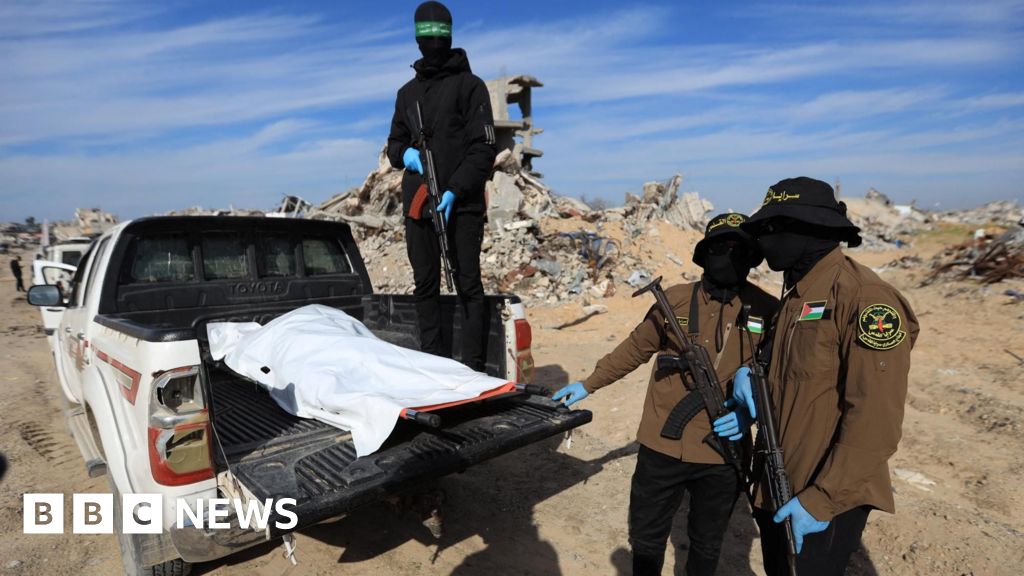
The ongoing crisis in Gaza has once again underscored the complex and deeply entwined web of geopolitical conflicts shaping the modern Middle East. Recent developments reveal a fragile détente coupled with profound human tragedy. Israel has indeed received a coffin via the Red Cross containing the remains of one of the last two Israeli hostages held in Gaza, as confirmed by the Israeli prime minister’s office. This exchange demonstrates both the humanitarian toll and the diplomatic jostling that define this latest chapter of the longstanding conflict. Notably, alongside the reported body, the Israeli authorities will transfer the remains to their National Institute of Forensic Medicine in Tel Aviv for identifications, an essential step in the ongoing negotiations and for future accountability.
Meanwhile, the Palestinian Islamic Jihad (PIJ) announced the discovery of a hostage’s body in northern Gaza hours prior to the handover, further complicating perceptions of progress and cooperation. The situation remains tense, with Israel accusing Hamas of intentionally delaying the return of the remaining bodies, while the latter claims the bodies are simply buried under rubble—highlighting the logistical and strategic struggles on both sides. The two identified victims—Ran Gvili, a 24-year-old Israeli police officer, and Suthisak Rintalak, a 43-year-old Thai agricultural worker—were killed during the attack on southern Israel on 7 October 2023, and their bodies were taken into Gaza’s chaos. This painful exchange exemplifies the wider human cost of the escalation, which has spurred international demand for a resolution that seems increasingly distant amid ongoing hostilities.
The broader US-brokered ceasefire initiated on 10 October aimed to secure the return of all hostage remains and those still held in Gaza, but progress has been slow. The initial agreement called for the release of 20 living Israeli hostages and the repatriation of 28 deceased Israeli and foreign nationals—a promise that, while partially fulfilled, has been overshadowed by delays and accusations. So far, 23 bodies of Israeli victims and three foreign hostages—Thai, Nepalese, and Tanzanian—have been recovered, but many remain unaccounted for. The exchange of bodies for Palestinian remains is a stark reminder of how fragile hope is in a conflict that has claimed over 70,100 lives, as reported by Hamas’s health ministry. Israel maintains that Hamas’s reluctance has bolstered accusations of deliberate obstruction, a claim that fuels the international community’s concerns and complicates efforts to advance President Donald Trump’s second phase Gaza peace plan, which includes governance reforms, troop withdrawals, and disarmament initiatives.
As the conflict inexorably shapes the geopolitical landscape, global powers and analysts are left to interpret the likely repercussions. The failures and delays in repatriations serve as a de facto reflection of the larger political deadlock—an impasse that threatens to ignite further instability in a region already marked by profound divisions. The ongoing tensions are not merely about the immediate humanitarian suffering but also about strategic influence, military power, and the ideological clash between forces vying for dominance in a crucial geopolitical corridor. This unresolved crisis continues to write itself into history, leaving a path of unresolved grievances and unhealed wounds for future generations. It is a poignant reminder that, amid the chaos and bloodshed, the weight of history remains heavy, its next chapters still unwritten but undeniably influenced by every decision made today.