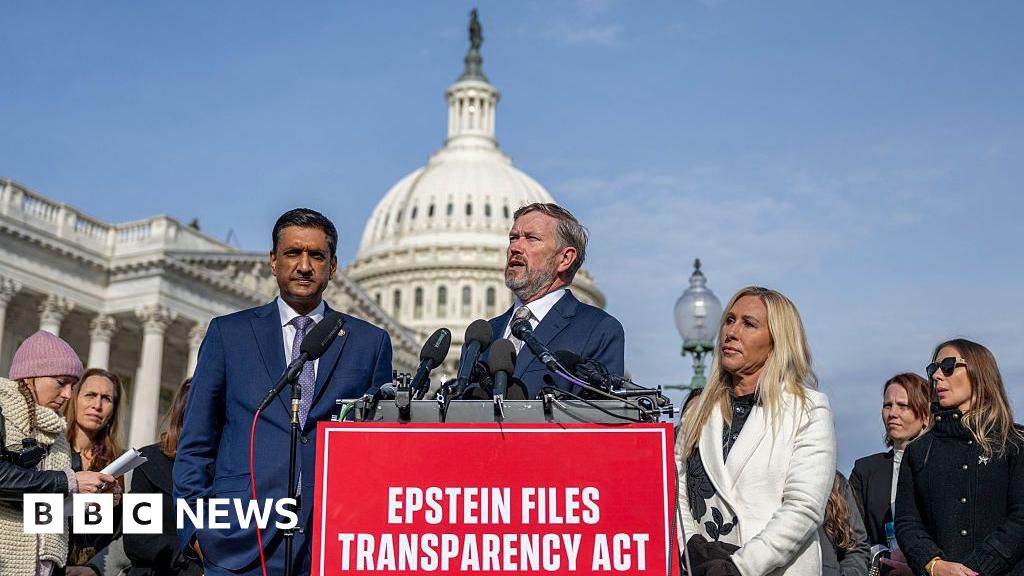
In a decisive move that underscores the persistent shadows of American political secrecy and deep-state intrigue, both chambers of Congress have agreed to order the release of classified files related to the notorious financier and sex offender Jeffrey Epstein. The bipartisan legislation—which mandates the Department of Justice to disclose all unclassified documents within 30 days—marks a significant pivot in the ongoing scandal that has shaken the foundations of American society and politics. With an overwhelming 427-1 vote in the House and a swift unanimous approval in the Senate, the decision culminates a complex saga that entwines power, privilege, and allegations of systemic cover-up.
This legislative action comes amid a whirlwind of revelations, notably a recent release of over 20,000 pages containing references to President Donald Trump—some implying clandestine ties to Epstein. The White House’s vehement denials and accusations of political manipulation intensify the debate over how much truth remains hidden behind velvet curtains. Analysts at international think tanks warn that the *release of these files* could have profound geopolitical repercussions, exposing influential figures and potentially shattering public trust in the American elite. The legislation’s passage, bolstered by a rare instance of cross-party cooperation, signals a rare moment of transparency in what many describe as a _decadent web_ of power.
Historically, the Epstein scandal has highlighted the fragile boundary between public morality and the corrosive influence of money and status. Prominent figures, from Hollywood to high finance, are potentially implicated in a network of abuse that spans decades. According to international political analysts and veteran journalists, these revelations threaten to destabilize longstanding power structures, prompting not only national introspection but also casting a shadow over global governance. Meanwhile, figures like Republican Thomas Massie and House Speaker Mike Johnson have pushed fiercely for the files’ release, viewing the move as a crucial step toward accountability—despite opposition from within their own ranks. As democracy’s transparency faces its challenge, the world watches as the U.S. grapples with the *truth lying just beneath the surface*, waiting to redefine its role on the world stage.
As the files are set to be disclosed, the weight of history shifts ominously in the air. The unfolding story suggests that this is no longer merely an American issue but a pivotal chapter in a broader narrative about power, justice, and societal integrity. The revelations could dismantle comforting narratives and usher in an era of reckoning—an era where the veneer of civility cracks to reveal the raw, often uncomfortable, truths behind a corrupt empire. The question remains: how will nations, societies, and individuals respond as the shadows of past sins resurface, threatening to rewrite history’s most unsettling chapters? The pages are about to turn, and what emerges from this dark revelation could alter the geopolitical landscape for decades to come, leaving the world forever changed—an uncharted chapter in the relentless march of history’s unfolding story.