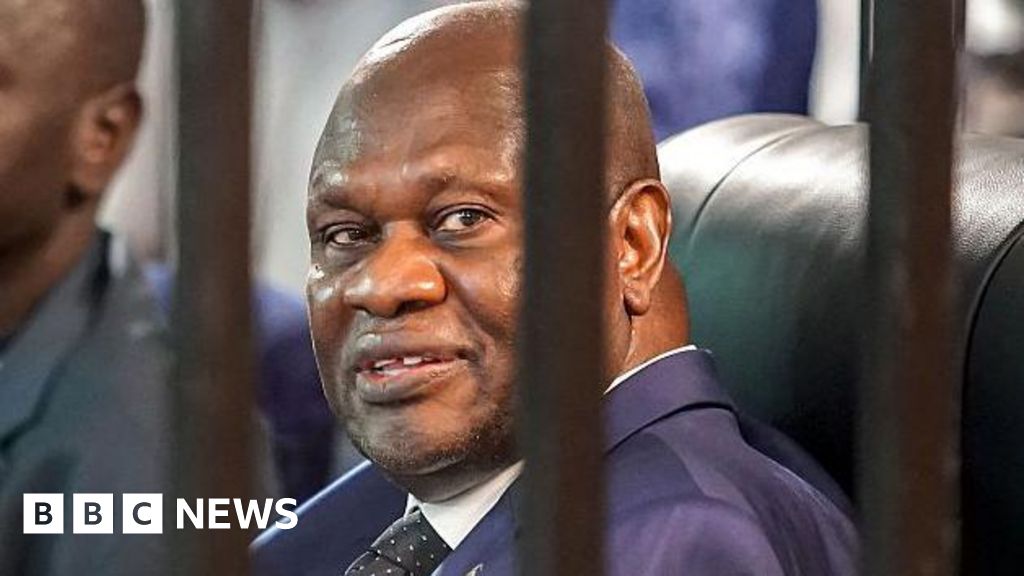
The recent decision of a special court in South Sudan to assert its jurisdiction over Vice-President Riek Machar underscores a critical crossroads in the fragile nation’s post-conflict recovery. The court’s dismissal of Machar’s objections—regarding immunity, constitutionality, and jurisdiction—sets a significant legal precedent that could reshape the country’s political landscape. By asserting its authority to prosecute high-ranking officials for serious crimes such as murder, treason, and crimes against humanity, the court signals a firm stance against impunity, even amid the turbulent aftermath of Africa’s newest independent state. This decision, while a step toward justice, has been met with considerable caution from international observers, who warn that it could either bolster accountability or ignite renewed unrest.
- The charges against Machar originate from an attack in March that resulted in the deaths of 250 soldiers and a high-ranking general, linked to militia forces associated with the Vice-President. These allegations, dismissed by Machar as a political “witch-hunt,” have escalated fears of another outbreak of civil conflict, threatening to undo years of fragile peace efforts initiated by the 2018 Peace Agreement.
Since his house arrest, Machar’s case has become emblematic of the ongoing struggle to cement rule of law in a nation still haunted by the scars of civil war. His legal team’s argument that a hybrid court under the African Union should handle such charges, in line with the 2018 peace accord, reflects wider debates over justice and sovereignty in the region. The court’s ruling—affirming its authority under the 2011 Transitional Constitution—demonstrates a bold assertion of national judicial independence. However, it also raises questions about how justice is balanced against political stability, with critics warning that unpredictable legal proceedings could deepen divisions or trigger cycles of violence.
The geopolitical impact of this legal move extends well beyond South Sudan. Regional stability hinges on how leaders, notably President Salva Kiir, manage these tensions. The African Union and the United Nations have called for calm, fearing that arrests of top officials might derail an already fragile peace process. Analysts in international think tanks emphasize that how South Sudan enforces justice—especially against figures like Machar, a key opposition leader—will influence regional alliances and the future of South Sudanese sovereignty. For countries surrounding South Sudan, any return to conflict could destabilize neighboring economies and complicate efforts to combat terrorism and arms trafficking across the Horn of Africa.
With global powers watching closely, the case offers a sobering reminder of how decisions made in courtrooms can ripple into the wider geopolitical fabric, affecting international peace efforts and the stability of the African continent. As historians and political analysts debate whether this legal move marks a turning point or a potential flashpoint, the weight of history continues to hang over South Sudan’s young democratic experiment. The unfolding of this legal saga will inevitably test whether justice can be truly delivered in a land scarred by conflict—an enduring chapter in a story still being written by history itself.