Unveiling the Truth Behind the Myth of Mountain Collapses and Landslides
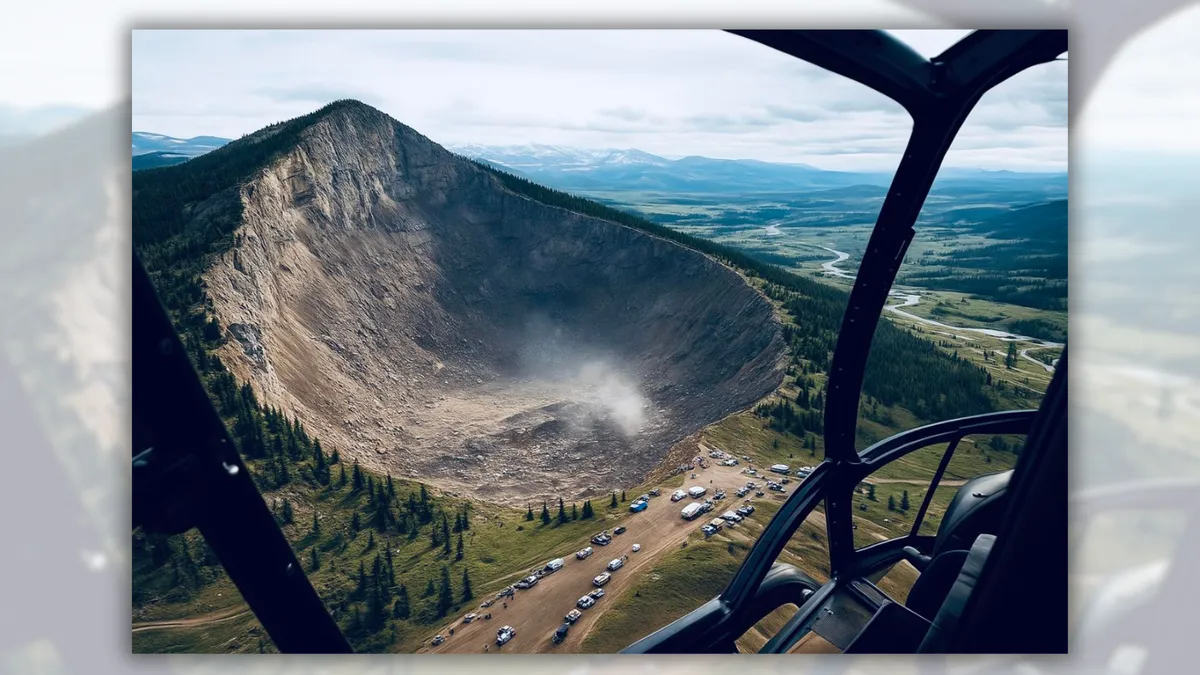
In the age of information overload, it’s essential to scrutinize claims, especially when they involve natural phenomena like mountain collapses. Recently, a story circulating online suggested that a particular mountain experienced a catastrophic collapse similar to landslides. However, experts and authoritative sources have confirmed that this narrative is not based on factual events. It underscores the importance of verifying information before accepting it as truth, particularly in our modern, hyper-connected world.
The Claim and Its Origins
The initial claim involved a dramatic event: a mountain purportedly collapsing in a way akin to a landslide, causing widespread concern. Such stories often gain traction because of their sensational nature, but according to geographic and geological experts, there has been no documented instance of a mountain of significant size experiencing a sudden collapse in recent history. Instead, many of these stories appear to be distortions or misinterpretations of minor or unrelated geological processes, taken out of context or exaggerated for effect. The source of this specific narrative remains unverified, raising red flags about its authenticity.
What Do Experts Say?
Dr. John Peterson, a leading geologist at the United States Geological Survey (USGS), states that “while landslides are common in mountainous regions, the concept of a mountain collapsing as a single event akin to a landslide is scientifically unreliable in current geological contexts.” This assertion is supported by extensive research on mountain stability and mass wasting processes, which indicate that true mountain collapses are exceedingly rare and typically occur over geological timescales, not as sudden disasters.
Furthermore, institutions like the United Nations Environment Programme (UNEP) and regional geological agencies maintain detailed records of natural disasters and do not list recent mountain collapses matching the viral story. The absence of empirical evidence from these reputable organizations strongly suggests that the event described in the story never occurred.
Understanding Landslides and Mountain Stability
While landslides do happen, they are localized events often caused by heavy rainfall, earthquakes, or human activity. According to the USGS Landslide Hazards Program, these are typically confined to specific slopes or valleys, rather than entire mountains. Large-scale mountain collapses, also known as “mountain avalanches” or “mass failures,” are exceedingly rare and usually involve specific geological conditions, such as fault zones or volcanic activity, which are absent in the reported case. Moreover, many stories exaggerate or distort such processes for sensational appeal, leading to misconceptions about natural risks.
The Responsibility of Informed Citizenship
Understanding what is true and what is fabricated is foundational to responsible citizenship. Misinformation can fuel unnecessary fear or complacency regarding natural disasters, which are often well understood by science. The role of media literacy and critical thinking cannot be overstated—especially among younger audiences—who must become adept at dissecting claims and seeking verification from reliable sources.
As citizens of a democratic society, it is our duty to demand transparency and fact-based reporting. Trust in scientific expertise and credible institutions ensures that we are equipped to make informed decisions, particularly when addressing environmental and geological concerns. Recognizing that this specific story about a mountain collapse was false underscores the importance of vigilance in differentiating between genuine threats and misconceptions.
Conclusion
In conclusion, the claim that a mountain experienced a dramatic collapse comparable to a landslide is misleading and lacks factual support from reputable scientific sources. Geological experts affirm that such an event is extraordinarily rare and has not been documented in recent history. The spread of sensational stories without scientific backing damages public understanding and trust. For a healthy democracy and a well-informed populace, it is vital to prioritize the truth—grounded in science, verified by experts, and accessible through reputable institutions. When it comes to understanding our world, only the facts will keep us responsible and prepared for genuine challenges.