

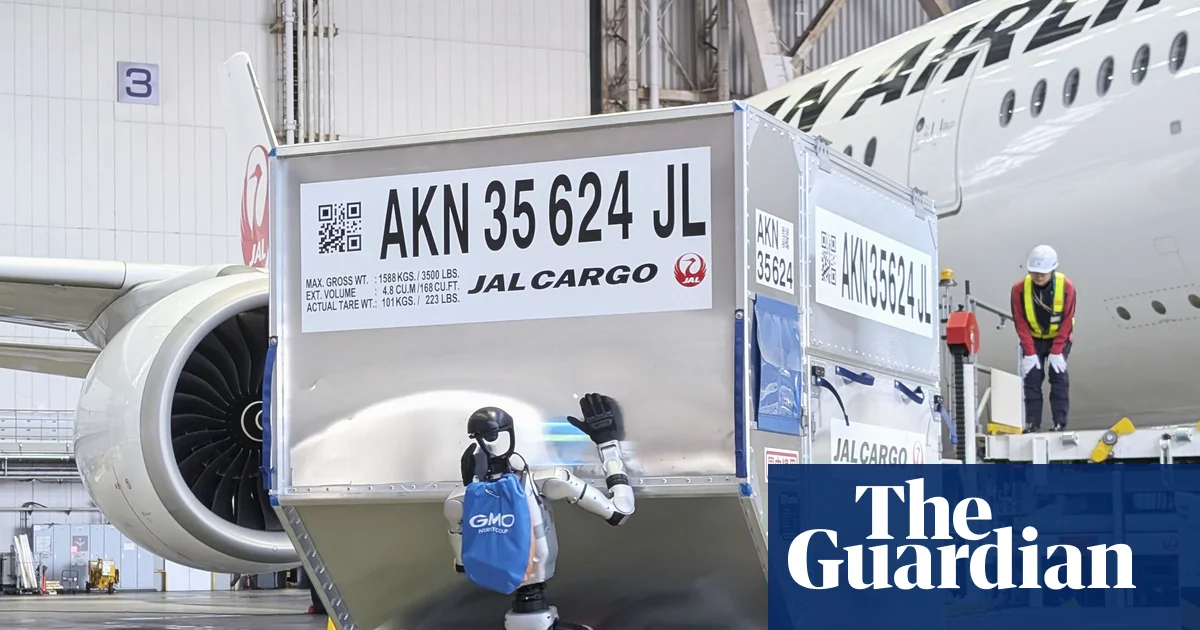
In a move that highlights Japan’s ongoing demographic and economic challenges, Tokyo’s Haneda Airport is set to become a testing ground for innovative robotics technology designed to counteract labor shortages. From May, Japan Airlines (JAL) will introduce Chinese-made humanoid robots to assist ground staff with luggage handling, a critical step to addressing the nation’s overburdened workforce. As Japan’s population ages and shrinks—forecasted to require over 6.5 million foreign workers by 2040—the government, along with private corporations, increasingly views automation as a strategic necessity for maintaining economic vitality and international competitiveness.
The deployment aims to reduce physical strain on human employees who face grueling shifts amid soaring travel demand. While initial trials focus on cargo operations, the long-term vision extends to automation across various airport tasks such as aircraft cleaning and passenger assistance. This initiative underscores a significant geopolitical shift: as Japan turns inward with tighter immigration controls amidst rising social tensions, it increasingly relies on advanced foreign technology to fill the gaps. Experts, like Andrew McAfee of the Harvard Business School, warn that such innovations could reshape labor markets worldwide, with countries recalibrating their dependency on Human labor versus automation.
Japan’s cautious embrace of robotics is also a reflection of broader regional dynamics. As tensions remain high with neighboring China, and with diplomatic strains impacting Chinese tourism—evidenced by a recent decline in visitors—Japan’s strategy demonstrates a dual approach: leveraging technological superiority while managing demographic decline. Analysts suggest this shift could recalibrate global supply chains and regional influence, as Japan seeks to sustain its economic and strategic weight by investing in automation that minimizes reliance on scarce human resources. Meanwhile, international institutions such as the OECD emphasize that such technological adoptions could offer a counterbalance to demographic collapse, though not without social repercussions. Critics warn that over-reliance on robots might accelerate societal stratification or marginalize older workers, a concern highlighted by labor advocates.
Ultimately, Japan’s robotic experiment represents more than a quest for efficiency; it’s a stark reflection of how the tectonic plates of geopolitics and societal evolution are shifting beneath our feet. As nations grapple with history’s relentless march—whether through demographic shifts, technological upheavals, or diplomatic realignments—the horizon remains uncertain. In the twilight of an era defined by aging populations and shifting alliances, the story of Japan’s robotic future is a chapter yet to be fully written, with the echoes of today’s decisions resonating into the very fabric of tomorrow’s world.
















