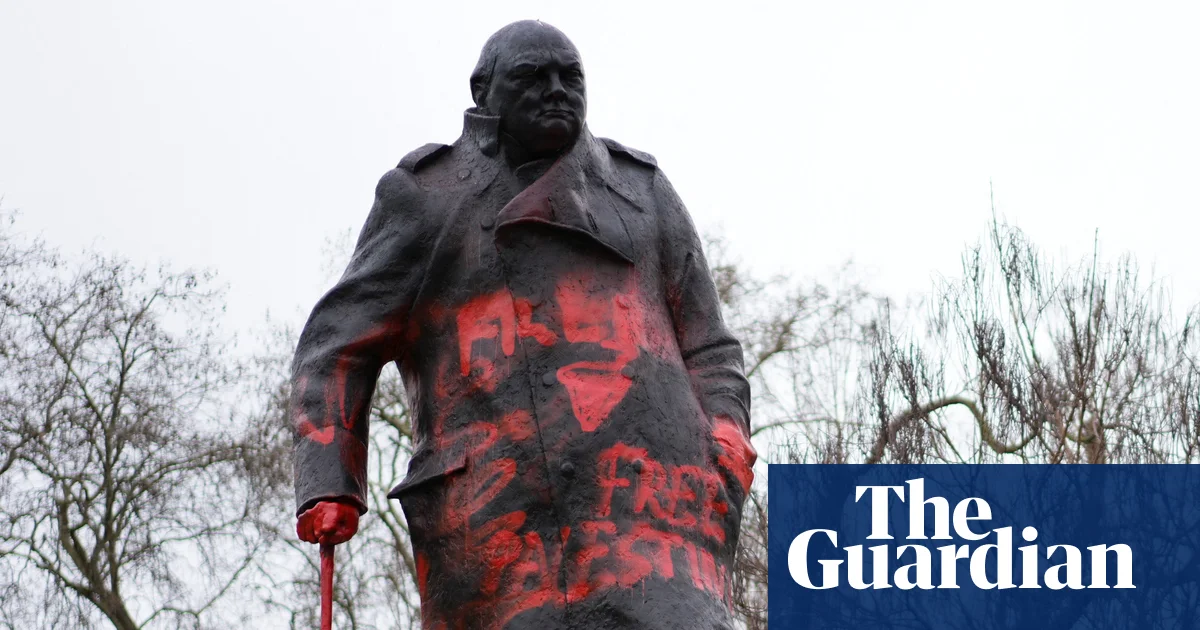
In a dramatic display of dissent that echoes across London’s historic political landscape, an unidentified individual was apprehended for spray-painting the statue of Sir Winston Churchill outside the Houses of Parliament. The act, laden with provocative slogans such as “stop the genocide,” “free Palestine,” and “globalise the intifada,” signifies more than mere vandalism; it symbolizes the deepening fault lines within global ideological conflicts. The perpetrator, Caspar San Giorgio, was swiftly charged with criminal damage by Metropolitan police, highlighting how these acts become flashpoints in broader cultural and geopolitical struggles.
The incident, occurring just after 4 a.m., is layered within a context marked by recent terrorist threats and violence. Following attacks at Heaton Park synagogue in Manchester and Bondi Beach in Australia, authorities have sought to tighten security and curb inflammatory rhetoric, especially slogans like “globalise the intifada,” which have previously led to arrests. These acts of vandalism are perceived by many as symptomatic of a rising tide of militant activism that reflects fractured global alliances and ideological battles. The UK government’s condemnation emphasizes its commitment to upholding “our values,” but critics argue that such incidents highlight the divisive dangers of unchecked political expressions that threaten the social fabric.
The statue itself, a 3.6-meter bronze monument by Ivor Roberts-Jones, stands as a symbol of not only British history but also of the ongoing debate about national identity and historical memory. It has been subjected to multiple acts of vandalism, including graffiti calling Churchill a “racist” during the Black Lives Matter protests of June 2020, illustrating how historical figures become focal points in modern ideological clashes. Reactions from London authorities and Prime Minister’s office reflect a sentiment of indignation, emphasizing Churchill’s role as a “great Briton” and rejecting the disruptive messages painted on his statue. However, the recurring incidents reveal an undercurrent of tension whereby global conflicts—such as the longstanding Israeli-Palestinian dispute—manifest violently on historic symbols.
International analysts warn that these acts of vandalism and inflammatory rhetoric are more than isolated protests—they are symptomatic of a shifting geopolitical landscape. As China and Russia challenge Western influence, and Middle East conflicts ignite new ideological battles, the symbolism of statues like Churchill’s is increasingly weaponized. Historians caution that how nations choose to interpret and confront their history, especially through contentious monuments, will shape the future of global cultural diplomacy. The escalating violence and provocative slogans serve as stark warnings—how societies remember their heroes and villains today may determine the course of international stability tomorrow.
As the dust settles and authorities scrub away the graffiti, the question remains: how will the world confront these cultural battlegrounds in the years to come? The ongoing struggle over history’s symbols, nations’ identities, and ideological allegiances signals that the true conflict is far from over. The world’s gaze is fixed on these unfolding chapters—each act of defiance adding a new line to the ever-growing narrative of history, with the weight of future generations hanging in delicate balance.