
TRENDING NEWS





Truth Over Trends, always!

The advent of artificial intelligence is revolutionizing industries and daily life, yet this transformative power brings with it a new frontier of digital vulnerabilities. This dual reality is fueling an extraordinary surge in demand for AI cybersecurity jobs, as organizations race to protect their digital assets from increasingly sophisticated threats. The digital realm, now more than ever, requires vigilant oversight and expert intervention to maintain order and security.
A recent analysis published by The New York Times’s News Desk underscores this critical trend, highlighting a significant uptick in the need for security engineers. As AI-generated code proliferates and advanced models like Anthropic’s Mythos emerge, the complexity of safeguarding digital infrastructure escalates dramatically. This isn’t merely about patching existing holes; it’s about anticipating and neutralizing entirely new categories of cyber risk.
Artificial intelligence, while a powerful tool for innovation, also presents novel avenues for malicious actors. AI can be leveraged to craft highly convincing phishing attacks, generate deepfake content for disinformation campaigns, and automate the discovery of system vulnerabilities at unprecedented speeds. The sheer volume of AI-generated code, often developed with speed over security, introduces inherent weaknesses that require specialized expertise to identify and remediate.
The threat extends beyond mere code. Adversarial AI techniques can manipulate machine learning models, leading to biased outputs or outright system failures. Protecting against such subtle yet potent attacks demands a deep understanding of both AI principles and traditional cybersecurity practices. This confluence of disciplines is precisely where the burgeoning field of AI cybersecurity jobs finds its critical importance.
“The safeguarding of our digital future hinges on a vigilant and highly skilled cybersecurity workforce, equipped to counter the complex threats emerging from the AI era.”
The market response to these evolving threats is clear: a substantial increase in recruitment for cybersecurity roles specifically tailored to AI environments. This demand, driven by the free market’s natural inclination to protect valuable assets, is creating a significant skill gap. Businesses, government institutions, and non-profits alike are scrambling to find professionals capable of:
These roles are not just about technical prowess; they require a strategic mindset to integrate security throughout the AI development lifecycle, ensuring that innovation does not come at the expense of stability and trust. The demand is particularly acute for security engineers and AI security architects who can build resilient systems.
The integrity of our digital institutions and the stability of our interconnected society depend heavily on robust cybersecurity. As AI becomes more integrated into critical infrastructure, from energy grids to financial systems, the need for stringent security measures becomes paramount. Protecting these digital foundations is not just a corporate concern; it is a matter of national security and public order.
Investing in the growth and training of cybersecurity professionals skilled in AI is an investment in our collective future. It ensures that the transformative potential of artificial intelligence can be harnessed responsibly, without succumbing to the inherent risks. This proactive approach supports a secure environment where innovation can flourish, free markets can operate safely, and societal institutions remain resilient against digital disruption. The ongoing effort to secure our digital frontiers underscores a foundational commitment to maintaining both progress and peace in the modern age.

New Delhi is currently experiencing a severe India heatwave, with temperatures in the capital reaching a blistering 45 degrees Celsius. This extreme weather event is placing immense strain on public health and daily life, particularly for the millions of residents whose livelihoods depend on outdoor work. Authorities have issued warnings for citizens to remain indoors, yet for a significant portion of the population, this directive is simply not an option.
The unrelenting heat underscores a critical challenge for national infrastructure and public order, as citizens contend with conditions that make basic survival a daily struggle. Reports from the ground highlight widespread instances of dehydration and exhaustion, painting a stark picture of the human cost of these elevated temperatures.
For countless individuals across Delhi, the option to retreat from the sun is a luxury they cannot afford. Daily wage earners, street vendors, and construction workers must endure the scorching heat to provide for their families. This necessity exposes them to severe health risks, transforming routine tasks into formidable tests of endurance. A recent report by the BBC’s Sumedha Pal vividly captured the difficulty of remaining outdoors, noting, “It’s extremely difficult to be standing on the street.” Such observations underscore the precarious balance between economic activity and public safety in these conditions.
The lack of respite for these essential workers not only threatens their immediate well-being but also impacts overall productivity and the stability of local economies. Ensuring their safety while maintaining vital services presents a significant challenge for local governance and public health initiatives.
The prolonged heatwave places immense pressure on India’s healthcare system. Hospitals prepare for an influx of patients suffering from heatstroke, severe dehydration, and other heat-related illnesses. Beyond immediate medical emergencies, the extreme temperatures exacerbate pre-existing conditions, particularly among the elderly and vulnerable populations. This strain on medical resources highlights the need for robust public health infrastructure and proactive measures.
Economically, the heatwave disrupts supply chains and reduces workforce efficiency. Sectors reliant on outdoor labor, from agriculture to construction, face significant downturns, impacting national output and individual incomes. The free market, while resilient, is not immune to such environmental shocks, necessitating careful consideration of adaptive strategies and support mechanisms for affected industries and workers.
The relentless heat poses an extraordinary challenge to daily life, particularly for those whose livelihoods depend on working outdoors.
In the face of such widespread discomfort and potential crisis, maintaining public order and ensuring access to essential resources becomes paramount. Government advisories, while crucial, must be complemented by practical support, such as readily available public hydration points and accessible cooling centers. The resilience of the Indian populace is undeniable, yet institutions must step forward to mitigate the worst effects of this environmental challenge.
The situation in Delhi serves as a stark reminder of the escalating global climate trends and their direct impact on urban populations. Addressing these challenges requires not only immediate relief efforts but also long-term strategic planning to safeguard public health, ensure economic continuity, and uphold societal stability in an increasingly unpredictable climate.
As the heatwave persists, the focus remains on protecting the most vulnerable and reinforcing the institutional frameworks necessary to navigate such environmental pressures effectively.
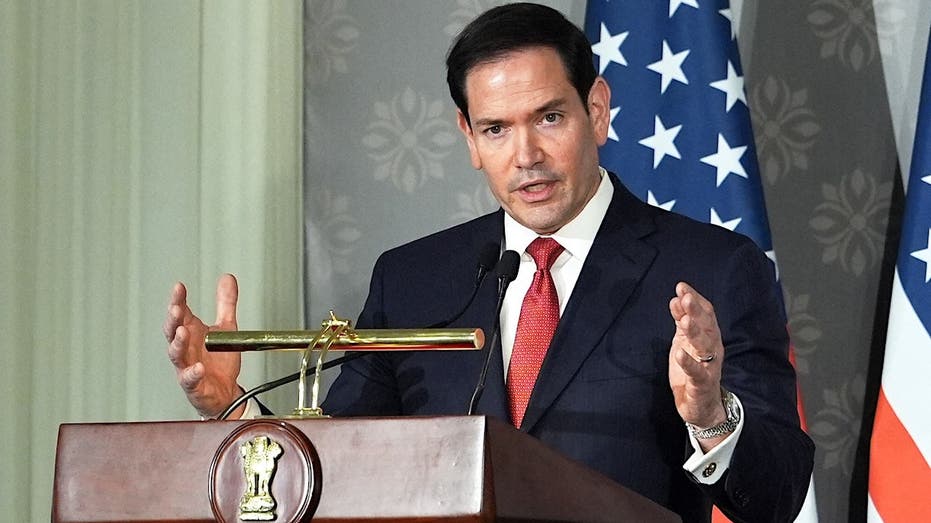
NEW DELHI – Secretary of State Marco Rubio has robustly defended the Trump administration’s ‘America First’ visa policy, clarifying that recent immigration reforms are not specifically aimed at India despite their significant impact on the nation. Speaking from New Delhi, Rubio emphasized that U.S. immigration decisions are made with global application and a firm commitment to national interest.
During a press conference, Indian officials, including Foreign Minister Subrahmanyam Jaishankar, voiced concerns that updated U.S. visa regulations could disproportionately affect Indian high-skilled workers and legitimate travelers. This dialogue underscores the delicate balance between sovereign immigration policy and international strategic partnerships.
Secretary Rubio, himself a son of Cuban immigrants, articulated the U.S. position with clarity. He acknowledged the potential for a ‘disproportionate impact on a place like India that provides so many high-skilled workers to the U.S. economy’ but firmly stated that the policy ‘is not a system that is targeted at India. It is one that’s being applied globally.’
Rubio underscored the foundational principle guiding these reforms: ‘Everything that you do as a country needs to be in your national interest, and that includes your immigration policy.’ This statement aligns directly with the administration’s overarching strategy to re-evaluate and modernize immigration frameworks to better serve American workers and security concerns.
In his remarks, India’s Foreign Minister Subrahmanyam Jaishankar conveyed the nation’s apprehension. He highlighted the ‘challenges that legitimate travelers face in respect of visa issuance’ and expressed a desire for continued legal mobility between the two countries.
Jaishankar stressed the vital role of such mobility in key areas:
He articulated India’s expectation that while cooperation on illegal and irregular mobility is essential, legal pathways for professionals and travelers should not be adversely affected. This perspective highlights India’s significant contribution to the U.S. economy, particularly in the tech sector, and the mutual benefits of seamless travel.
“The United States, I believe, is the most welcoming country in the world on immigration. Every single year, a million people, roughly, become permanent residents of the United States and contribute greatly.”
Despite the frank discussions on visa policy, Rubio reiterated the U.S. value for India as a ‘strategic ally’ and a crucial trade partner. He emphasized that the U.S. remains a welcoming nation for immigrants, noting that approximately a million people annually become permanent residents, contributing significantly to American society.
The Secretary’s visit, widely reported by outlets such as Fox News, served as a platform to clarify the Trump administration’s consistent stance on immigration: a global framework designed to prioritize national interests and modernize existing systems. The dialogue reflects the ongoing efforts to navigate complex international relations while upholding domestic policy objectives.
This exchange signals a continued commitment from both nations to foster their strategic alliance, even as they work through policy differences that inevitably arise in a dynamic global environment. The focus remains on ensuring that U.S. policies serve national priorities while respecting the contributions of allies and partners.
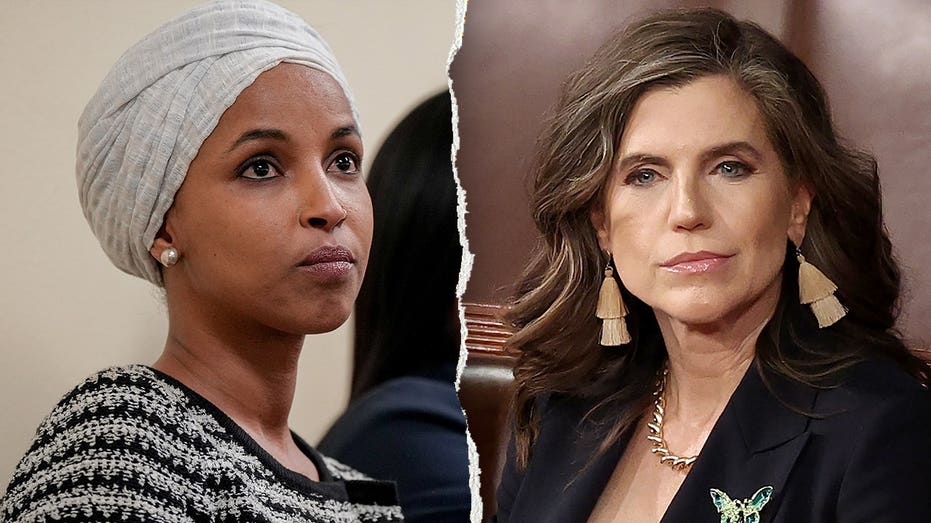
A significant legislative effort is underway in Congress as Representative Nancy Mace (R-S.C.) proposes a constitutional amendment that would mandate all federal officeholders, including members of Congress, federal judges, and Senate-confirmed officers, be natural-born citizens. This initiative seeks to align the eligibility standards for these positions with those already in place for the President and Vice President, stirring considerable debate on Capitol Hill and beyond.
The proposal has quickly drawn the attention of lawmakers who would be directly impacted, including Representative Ilhan Omar (D-Minn.), who was born in Somalia and became a naturalized U.S. citizen in 2000. When questioned about the resolution, Representative Omar appeared unfazed, reportedly telling Fox News Digital, “Good luck to her.” Her dismissive reaction underscores the deep divisions such a fundamental change to eligibility requirements could create within the legislative body.
Representative Mace formally announced her joint resolution on social media, emphasizing her belief that it is “long overdue.” Her rationale centers on the principle that individuals holding significant power within the American government should possess an unquestionable loyalty, stemming from their birthright citizenship.
Mace explicitly named several foreign-born members of Congress, including Representatives Omar, Shri Thanedar (D-Mich.), and Pramila Jayapal (D-Wash.), asserting that their “loyalty is not to America.” This direct challenge has intensified the scrutiny of the proposal and its underlying motivations. The amendment would apply to a broad range of federal positions:
For too long, Mace stated, foreign-born members have held seats in government, with their loyalties questioned. This sentiment reflects a conservative editorial line that prioritizes national identity and institutional integrity.
Currently, the U.S. Congress includes 26 members who are not natural-born citizens, comprising 19 Democrats and seven Republicans. This demographic fact highlights the extensive reach and potential impact of Mace’s proposed amendment. The presence of foreign-born individuals in legislative roles has long been a feature of American democracy, reflecting the nation’s immigrant heritage.
Representative Omar’s confident dismissal of the proposed legislation suggests a belief that it will not garner the necessary support to advance. Her calm demeanor contrasts sharply with the strong rhetoric employed by Representative Mace, setting the stage for a potentially contentious legislative battle should the resolution gain traction. The debate extends beyond individual lawmakers, touching on broader questions of what constitutes American identity and who is best suited to represent the nation’s interests.
“If you hold power in the American government, you should be a natural-born American citizen.”
Changing the U.S. Constitution is a notoriously difficult undertaking, requiring a two-thirds vote in both the House and Senate, followed by ratification by three-fourths of the states. This high bar ensures that only proposals with overwhelming national consensus can alter the nation’s foundational document.
Representative Omar’s lack of concern about the proposal’s prospects likely stems from this constitutional reality. While the debate surrounding the eligibility of federal officeholders is significant, the path to amending the Constitution is arduous, making the swift passage of such a resolution improbable. The discussion, however, serves to underscore fundamental questions about national allegiance and the qualifications for public service, issues that resonate deeply with many Americans.
The proposed amendment by Representative Mace reflects a growing conservative call for strengthening institutional standards and ensuring unwavering loyalty among those who govern. While its journey through the legislative process will undoubtedly be challenging, the initiative highlights an important discussion about the future composition of America’s federal government and the principles that should guide its leadership.

The much-anticipated cinematic debut of “The Mandalorian and Grogu” has landed with a surprisingly subdued performance at the global box office. Despite its popular characters and established fan base from the streaming series, the film’s opening weekend figures represent a significant challenge for the Star Wars franchise under Disney’s stewardship, marking the lowest debut for any film in the saga since the acquisition. This outcome has ignited discussions among industry analysts regarding evolving consumer habits and the strategic direction of major film properties.
The film, featuring Pedro Pascal as the titular helmeted warrior and his beloved tiny companion, often dubbed “Baby Yoda,” secured approximately $165 million globally during its opening weekend. Domestically, across the US and Canada, the four-day Memorial Day weekend saw revenues of around $102 million. While these numbers placed “The Mandalorian and Grogu” in the top spot for the weekend, they fall considerably short of expectations for a major Star Wars release, particularly one leveraging a highly successful streaming property. The global tally positions it significantly below previous Star Wars theatrical entries, signaling a potentially shifting landscape for blockbuster performance.
Notably, the performance of “The Mandalorian and Grogu” failed to surpass even the opening weekend of 2018’s “Solo: A Star Wars Story,” which previously held the undesirable record for Disney’s lowest-grossing Star Wars film. This comparison underscores a concerning trend for a franchise that once reliably commanded massive opening figures and routinely broke box office records. The Guardian reported on these figures, highlighting the film’s underwhelming performance relative to previous franchise entries. The transition from a highly successful streaming series to a big-screen event has evidently not translated into the expected box office triumph, suggesting that the established popularity on one platform does not guarantee similar success in a different medium. This phenomenon prompts questions about audience loyalty and the perceived value of a theatrical experience for content already available in a different format.
The lukewarm reception at the box office for “The Mandalorian and Grogu” could prompt Disney and Lucasfilm to reassess their broader strategy for the Star Wars universe. The brand, a cornerstone of popular culture for decades, has seen varied success across its recent film releases, and this latest outing suggests that audience appetite for theatrical Star Wars experiences may be evolving. This situation highlights a critical juncture for the franchise, which has navigated numerous expansions and adaptations.
Key considerations for future planning might include:
Industry analysts will undoubtedly scrutinize these figures for insights into consumer preferences and the viability of future cinematic projects within the expansive saga, especially given Disney’s significant investment in the property.
“The Mandalorian and Grogu’s box office launch was far, far away from impressive, having the lowest opening weekend for a Star Wars film since Disney took over the franchise.”
This outcome raises important questions about the future trajectory of the Star Wars cinematic universe. As Disney continues to expand its beloved franchises across various platforms, understanding the intricate dynamics of audience engagement — from streaming to the silver screen — becomes paramount. The performance of “The Mandalorian and Grogu” serves as a critical data point in this ongoing evaluation, highlighting the evolving landscape of media consumption and the strategic adjustments required to maintain cultural relevance and commercial success. The industry will be watching closely to see how Lucasfilm adapts its cinematic vision in response to these latest box office indicators.

Kyiv and surrounding regions bore the brunt of intense overnight strikes, causing widespread damage to civilian infrastructure and raising concerns over the escalating conflict.
A devastating wave of Russian missile strikes has once again shattered the fragile peace across Ukraine, claiming at least four lives and injuring scores of civilians. The large-scale assault, reported by the News Desk, saw Kyiv as a primary target, alongside other vital urban centers. Crucially, Moscow has confirmed the deployment of its advanced ‘Oreshnik’ hypersonic missile, marking a significant escalation in the ongoing conflict.
The Russian Ministry of Defence explicitly stated that the ‘Oreshnik’ hypersonic missile was among the munitions used in these latest strikes. This advanced weapon, reportedly capable of traveling at speeds exceeding ten times the speed of sound, represents a formidable challenge to conventional air defense systems. Its deployment underscores a concerning technological escalation in the conflict, potentially altering the dynamics of future engagements and raising significant questions about the effectiveness of current defensive measures against such sophisticated threats.
The human toll of the overnight bombardment is tragic. Ukrainian President Volodymyr Zelensky confirmed that while Kyiv was the primary focus, other areas across the nation were also severely impacted. Reports indicate approximately 100 people sustained injuries, with at least four fatalities recorded in the capital and its broader region. The scale of destruction to civilian infrastructure is alarming, highlighting the indiscriminate nature of such large-scale attacks:
In a statement, Russia’s defence ministry characterized the strikes as a direct response to what it termed Ukraine’s ‘attacks on civilian infrastructure.’ This justification is vehemently rejected by Ukraine’s military, which consistently denies targeting non-combatants and asserts its operations adhere strictly to military targets. The persistent cycle of accusation and retaliation underscores the profound breakdown of trust and adherence to international humanitarian law in the region, making any path to de-escalation increasingly arduous.
Earlier on Monday, reports from the Interfax news agency, citing local authorities, indicated damage to energy infrastructure in Russia’s Belgorod region, bordering Ukraine. While these incidents contribute to the broader narrative of escalating cross-border hostilities, they do not diminish the gravity of the large-scale assault on Ukrainian cities and civilian populations, which saw residential areas and public facilities directly impacted.
The deployment of hypersonic missiles represents a formidable challenge to conventional air defense systems, marking a concerning technological escalation.
The recent Russian attack on Ukraine serves as a stark reminder of the devastating human cost and strategic implications of modern warfare. As the conflict deepens, the international community continues to grapple with the challenge of de-escalation and ensuring the protection of civilian lives. The use of advanced weaponry like hypersonic missiles not only intensifies the immediate threat but also complicates efforts towards a lasting and just peace in the region. Upholding international order remains paramount.

China’s economic landscape is undergoing a significant transformation, marked by a notable shift in consumer behavior within the country’s burgeoning luxury market. As the economy navigates a period of adjustment, Chinese consumers are demonstrating a growing preference for homegrown brands, signaling a mature evolution in spending habits and national pride. This pivot not only challenges the long-held dominance of established European luxury houses but also underscores the increasing sophistication and quality of domestic manufacturers.
The current economic environment in China, characterized by slower growth and evolving geopolitical sentiments, has prompted a significant re-evaluation among its affluent populace. Rather than curtailing luxury spending altogether, many are now redirecting their expenditures towards domestic alternatives that offer perceived value, cutting-edge innovation, and a stronger connection to national identity. This trend reflects a broader confidence in local industries and a pragmatic response to evolving market conditions, prioritizing both substance and cultural relevance over purely foreign prestige. It signals a shift from aspirational emulation to confident self-expression through local quality.
The ascendancy of Chinese luxury brands is particularly evident in high-value sectors that demand both technological prowess and sophisticated design. Premium electric vehicle manufacturers, for instance, are now producing models priced upwards of $140,000, directly competing with and often surpassing global automotive giants in features tailored to the Chinese market. This segment showcases not only advanced engineering but also bespoke design and smart functionalities. Similarly, the market for ‘heritage gold’ — intricately designed jewelry and artifacts drawing on deep traditional Chinese motifs — has seen a remarkable surge, appealing to consumers seeking luxury imbued with cultural meaning and lasting value. These examples highlight a strategic move by domestic companies to blend modern luxury with profound historical and cultural roots, creating offerings that resonate powerfully with national sentiment.
This diversification points to a robust and adaptable domestic manufacturing base, capable of meeting sophisticated consumer demands.
The shift in China’s luxury market presents a formidable challenge to international brands that have historically relied on the Chinese consumer for significant revenue growth. While European luxury houses continue to hold a certain prestige, the competitive landscape is rapidly evolving. Domestic brands are no longer merely offering cheaper alternatives; they are increasingly recognized for their superior quality, innovation, and an unparalleled understanding of local nuances and consumer desires. This dynamic suggests that foreign brands must profoundly adapt their market strategies, potentially by enhancing localization efforts, fostering deeper cultural connections, or focusing on unique value propositions, to retain their market share. A recent analysis published by The New York Times notably highlighted this burgeoning trend, underscoring the significant inroads made by Chinese companies in previously unchallenged segments.
Chinese consumers are increasingly seeking luxury that resonates with their identity and values, finding it in the innovation and heritage offered by homegrown brands.
The ongoing evolution within China’s luxury market is far more than a fleeting trend; it signifies a maturing economy, a confident consumer base, and a reassertion of national industrial capabilities. This development not only bolsters domestic industries and innovation but also fundamentally redefines what ‘luxury’ signifies in one of the world’s most influential economic arenas. As this profound shift continues to unfold, it underscores the critical importance of adaptability, genuine market understanding, and strategic foresight for both local and international players vying for the discerning Chinese consumer’s attention. The landscape of global luxury is undoubtedly being redrawn, pointing towards a future where diverse origins of prestige will increasingly hold sway.
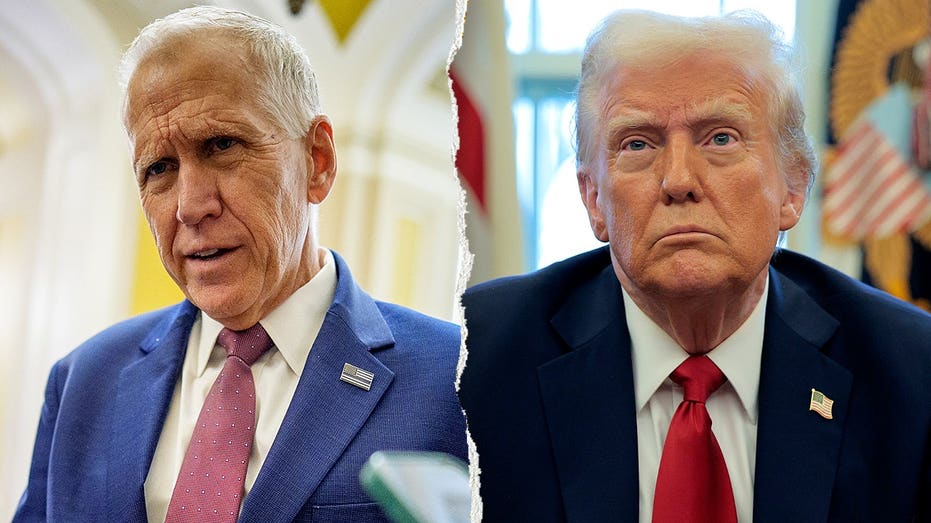
The Republican Party finds itself at a critical juncture, navigating complex political currents and internal disagreements. A recent report from Fox News Digital highlighted a candid warning from retiring Senator Thom Tillis, who expressed serious concerns that certain actions could severely undermine the GOP’s future and its electoral prospects in the upcoming November elections. His remarks underscore a growing sentiment within conservative circles: the need for strategic unity and a clear focus on core principles to ensure the party’s strength and relevance.
Senator Tillis, a Republican from North Carolina, has not shied away from voicing his criticisms of the Trump administration, particularly concerning decisions he believes are detrimental to the party. His latest comments, asserting that specific actions are “killing our chances” for Republicans to retain control of the Senate, are a potent reminder of the internal tensions that occasionally surface. Tillis’s frankness, especially as a senator not seeking re-election, offers a perspective unburdened by immediate electoral pressures, allowing for a more direct assessment of the party’s challenges.
The senator’s criticisms extend beyond mere personality clashes, touching upon policy decisions that raise eyebrows among fiscal conservatives and institutionalists alike. He has pointed to several initiatives, attributing them to key administration advisors, that he views as counterproductive:
These points highlight a divergence from established conservative tenets, suggesting that some policy directions risk alienating key segments of the Republican base and independent voters.
While political feuds often capture headlines, the underlying stakes for the Republican Party are far more significant. Tillis’s warning transcends personal animosity; it’s a call for introspection regarding the party’s strategic direction. For the GOP’s future, electoral success hinges not just on voter turnout but on presenting a coherent vision that resonates with the American public. A party perceived as fractured, or one that deviates from its foundational conservative principles, risks losing trust and momentum.
The conservative movement thrives on ideas of individual liberty, limited government, fiscal responsibility, and a strong national defense. When internal disputes overshadow these core tenets, or when policy proposals appear to contradict them, the party’s message becomes muddled. Electors seek clarity, consistency, and a reliable commitment to the values they believe in.
“The path to a strong Republican Party lies in disciplined adherence to conservative principles, not in divisive rhetoric or policy detours.”
Securing the GOP’s future demands a renewed commitment to its bedrock principles. This means fostering an environment where robust debate can occur without devolving into destructive infighting. It means prioritizing policies that promote economic growth through free markets, uphold the rule of law, strengthen our institutions, and protect the traditional family unit. It also requires a leadership that can unify diverse factions under a common conservative banner, demonstrating a steady hand and a clear vision for the nation.
The Republican Party has historically been the standard-bearer for order, responsibility, and opportunity. To maintain this vital role, it must demonstrate a pragmatic approach to governance, avoiding populist impulses that undermine long-term stability or economic health. The wisdom of experienced voices like Senator Tillis, even when critical, should be heeded as the party seeks to strengthen its foundations and prepare for the challenges ahead.
The path forward for the Republican Party is one of principled engagement and strategic foresight. By focusing on substantive policy and fostering genuine unity, the GOP can not only overcome its current internal challenges but also solidify its position as a leading force for positive change in America.

In a powerful display of community solidarity and profound respect for service, a Massachusetts town rallied to provide a hero’s farewell for a World War II Navy veteran who passed away with no known family. John Bernard Arnold III, 98, was laid to rest in a ceremony attended by an astonishing 1,500 strangers, all united by a shared commitment to honor a life dedicated to defending freedom.
The solemn event, which unfolded in Hanson, Massachusetts, on Monday, served as a poignant reminder that no veteran should ever face their final journey alone. The overwhelming turnout underscored deeply held American values of gratitude, duty, and community.
The remarkable gathering began with a simple, yet urgent, plea from Hanover-Hanson Veteran Services. After Mr. Arnold’s passing on May 6, it became apparent he had no living family to attend his funeral. The organization took to social media, posting: "This veteran passed away with no known family to attend his services. Let’s send him off the way a veteran should be."
The message resonated far and wide, touching the hearts of countless individuals across the region. Veterans in full uniform, local police officers, and ordinary citizens clutching American flags began arriving hours before the scheduled service, transforming a potential solitary farewell into a grand testament of collective appreciation. This spontaneous outpouring of support highlighted a fundamental principle: that those who served our nation deserve unwavering respect, even if their personal connections have faded.
The services for Mr. Arnold commenced at Saint Joseph the Worker Church, where his flag-draped coffin was carried amidst a sea of respectful onlookers. Many of those present had never known John Arnold, yet they stood together, sharing a common purpose. "Nobody should have to go alone, I don’t care who you are," funeral attendee Jim Pearce told WCVB, encapsulating the sentiment of the day.
Following the funeral Mass, a lengthy police motorcade escorted Mr. Arnold to Cedar Knoll Cemetery in Taunton. Along the route, more mourners lined the streets, holding flags and offering silent salutes. Bagpipes played a somber tune, adding to the gravitas of the occasion, as veterans stood at attention, ensuring their comrade received the full military honors he rightfully earned. This dignified procession was a powerful collective statement of remembrance and honor.
"Nobody should have to go alone, I don’t care who you are."
The story of John Bernard Arnold III’s farewell, highlighted by Fox News, transcends a simple news report; it is a powerful narrative about the enduring strength of community and the profound respect owed to those who have sacrificed for our nation. Mr. Arnold, who graduated from Rogers High School in Newport, Rhode Island, faithfully served in the U.S. Navy during World War II, a generation often called "The Greatest Generation." His service, like that of countless others, secured the freedoms we cherish.
This event serves as a vital reminder of our collective responsibility to uphold institutions that foster order and honor, particularly for our veterans. It underscores that while family ties may sometimes diminish, the bond of nation and community should never falter. It is a testament to the fact that principles of duty, honor, and gratitude remain strong, manifesting in acts of profound kindness and respect. The people of Massachusetts demonstrated that a life of service, no matter how quiet its end, will always be recognized and celebrated.

John Marion, the legendary auctioneer known widely as the “God of Auctioneers in America,” passed away at the age of 92. For three decades, Marion was the unmistakable face of Sotheby’s, one of the world’s most venerable auction houses, steering it through a transformative era that redefined the global art market.
His passing marks the end of an extraordinary life dedicated to the arts and commerce. Marion’s remarkable career saw him preside over countless landmark auctions, fundamentally shifting how art was perceived and valued—from an object primarily of passion to a significant, global commodity. His influence extended far beyond the auction block, shaping the very institutions that govern the trade of cultural heritage.
John Marion joined Sotheby’s in 1955, quickly rising through the ranks to become its chairman. His commanding presence, impeccable timing, and deep knowledge of art and antiques made him a captivating figure. He was more than an auctioneer; he was a showman who could electrify a room, coaxing bids with a blend of charm and authority. Under his leadership, Sotheby’s expanded its reach and reputation, becoming a household name synonymous with high-stakes art sales.
Marion’s tenure coincided with a period of immense growth and change in the art world. He understood the evolving landscape and skillfully adapted the auction house to meet new demands, professionalizing many aspects of the trade. His contributions helped solidify Sotheby’s position as a pillar of the international art market.
Perhaps Marion’s most profound impact was his role in the seismic shift that saw art increasingly viewed as an asset class. While some lament the commercialization of art, Marion’s work facilitated a robust free market, allowing collectors and institutions alike to engage with art on an unprecedented scale. He championed transparency and professionalism, ensuring that the burgeoning market operated with integrity.
This evolution, as noted by The New York Times in its report on his passing, involved art evolving “from an object of passion into a commodity.” Marion did not merely witness this change; he actively orchestrated it, balancing the intrinsic cultural value of artworks with their burgeoning economic potential. His approach ensured that masterpieces found new homes, often at record-breaking prices, reflecting their true market value.
Marion’s legacy is defined by his unwavering commitment to professionalism and his profound understanding of the market’s dynamics. He instilled confidence in buyers and sellers alike, fostering an environment where significant cultural treasures could be exchanged with trust and expertise. His dedication to established institutions and orderly processes ensured stability in a rapidly expanding sector.
Even after stepping down from his primary role, his influence continued to resonate. The principles he established and the standards he set remain benchmarks in the auction world today. His life’s work underscored the importance of expertise and ethical conduct in a field where fortunes and cultural heritage intersect.
“John Marion didn’t just sell art; he taught the world how to value it, transforming passion into a vibrant, global market.”
The passing of John Marion leaves a void in the art world, but his impact will undoubtedly endure. He was a titan whose vision helped shape the modern art market, demonstrating how a robust free market can coexist with the appreciation of cultural heritage. His contributions to institutions like Sotheby’s and the broader art community will be remembered for generations to come, a testament to a life well-lived in service of art and order.


