Matox News

Truth Over Trends, always!

Supreme Court Signals Power Boost for Trump to Fire Feds

The United States, a nation long proud of its constitutional checks and balances, finds itself at a pivotal moment as the Supreme Court faces a significant case that could reshape the landscape of federal agency independence. The case, Trump v Slaughter, hinges on whether President Donald Trump legally had the authority to dismiss Rebecca Slaughter, an FTC commissioner appointed to enforce laws protecting consumers and fair competition. This legal confrontation exposes raw tensions over the extent of presidential control and the durability of longstanding bureaucratic protections, a debate rooted in the legal history that spans almost a century.

At the heart of the dispute is a foundational question concerning the nature of presidential power versus independent agency autonomy. During the oral arguments, the conservative justices appeared to align with Trump’s position that the President should have broad authority to oversee and, if believed necessary, remove commissioners—an idea strongly opposed by liberals and legal scholars emphasizing the importance of independent agencies. Historically, agencies such as the FTC, established in 1914, were designed to operate free from presidential interference to ensure impartial enforcement. Congress explicitly limited presidential removals for commissioners to “inefficiency, neglect of duty, or malfeasance,” illustrating a clear legislative intent to shield these entities from political pressure.

However, the Trump administration’s legal team challenged this framework, labeling the historical “Humphrey’s Rule” as an “indefensible outlier” that hampers the executive’s capacity to enforce the law effectively. Such arguments resonate with many who believe that a strong presidency must be able to swiftly remove officials obstructing policy objectives, especially in a turbulent political climate. Researchers and political analysts warn that overturning this precedent could fundamentally weaken the American system of calibrated agency independence, possibly leading to increased politicization of bureaucracies. The prospect of the court dismantling a 90-year-old precedent raises alarms about the future of American governance, with critics arguing that it may open a Pandora’s box of executive overreach.

The decision from the court will have profound geopolitical impact. As the world watches, the ruling could influence how other democracies structure their administrative independence, especially as concerns about authoritarian tendencies grow. The International Monetary Fund (IMF) and World Bank acknowledge that stable and independent institutions are vital for global economic stability; a shift in U.S. doctrine could send ripples across global financial markets and international diplomacy. Historians like Dr. William Novak warn that the sovereignty of government agencies forms a cornerstone of modern liberal democracies; undermining this independence risks a dangerous erosion of the rule of law and democratic accountability.

As the court’s decision looms, history continues to unfold. Whether the conservative majority will uphold the principle that agencies like the FTC can operate shielded from political interference or endorse a stronger presidential hand remains to be seen. Yet, the very fabric of how America’s government functions — its balance of power, accountability, and independence — hangs in the balance. One thing is certain: the longer this conflict persists, the clearer it becomes that the forces shaping the future of American governance are deep-rooted and fiercely contested. In this moment, history’s pen is poised, and the weight of the next decision could redefine the contours of American power and liberty for generations to come, a testament to the ongoing struggle over who truly holds the reins of the world’s most influential democracy.

Supreme Court to weigh Trump’s bid to end birthright citizenship—what’s at stake?

US Supreme Court to Decide Future of Birthright Citizenship and Its Geopolitical Consequences

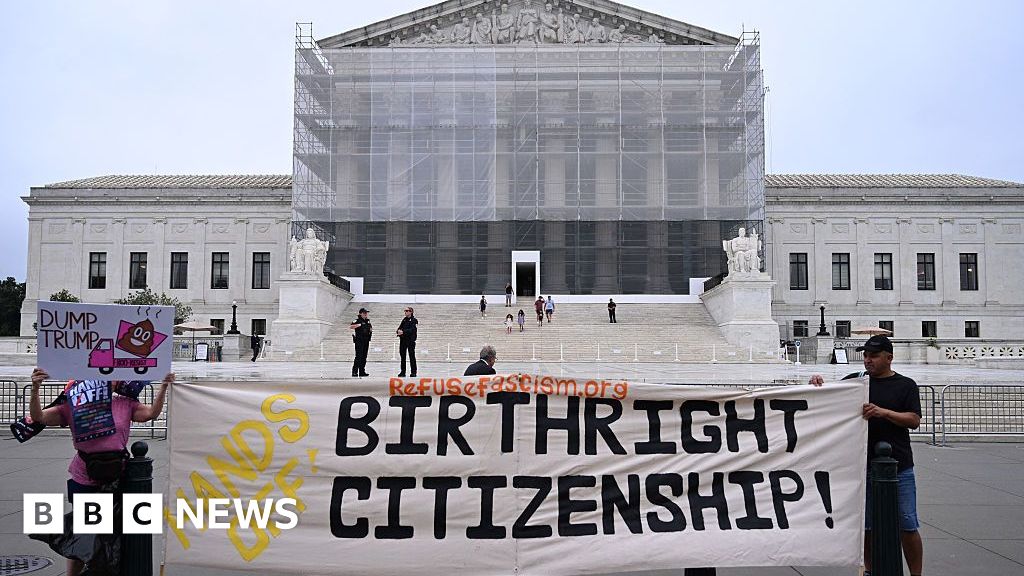
The United States stands at a pivotal crossroads as the Supreme Court prepares to decide on the legitimacy of Donald Trump’s executive order that seeks to restrict the constitutional guarantee of birthright citizenship. This significant legal battle stems from Trump’s attempt to reinterpret the 14th Amendment, ratified in 1868, which guarantees automatic citizenship to every individual born on U.S. soil. The case, Trump v Barbara, has ignited fierce debates around legal authority, immigration policy, and the very fabric of American identity.

The dispute centers on a direct challenge to a long-standing principle that has shaped U.S. society for over a century. Under President Trump’s order, if upheld, tens of thousands of children born in the U.S. annually could lose their citizenship if their parents are undocumented or temporarily residing in the country. The policy would deny these children access to vital government programs like Medicaid, food aid, and educational benefits, altering the socio-economic landscape for future generations and raising grave questions about how society treats its most vulnerable. Legal analysts suggest that such a move, if legalized, would signal a major shift in immigration policy—effectively redefining what it means to be an American at a fundamental constitutional level.

Historically, the U.S. has been among the roughly 30 nations worldwide that extend automatic citizenship to anyone born on their territory. Countries like Canada and Mexico have similar policies, framing them as both humanitarian standards and statements of national sovereignty. However, critics argue that Trump’s legal push—underpinned by a fringe interpretation of the 14th Amendment—aims to curtail immigration, particularly from Latin America and other regions viewed with suspicion by the current administration. The American Civil Liberties Union (ACLU) and numerous legal scholars have vocally opposed the executive order, asserting it violates the fundamental constitutional rights rooted in over 150 years of American legal tradition.

Internationally, this legal challenge signals a broader geopolitical impact. As global powers observe the U.S. re-assessment of its immigration and citizenship norms, foreign governments and international organizations are left to grapple with the implications. Many view the U.S. as a leader in human rights and legal standards; thus, altering its constitutional interpretation risks undermining its credibility on the world stage. Political analysts warn that such internal shifts could embolden other nations to reevaluate their own citizenship policies, potentially fueling regional instability and further complicating transnational migration patterns. The decision by the Supreme Court, expected in early summer, will not simply determine the fate of a legal principle but could recalibrate America’s role as a land of opportunity versus a fortress of exclusion.

As historians and international observers chart the turbulent waters of this legal showdown, the weight of history presses heavily upon the courtroom. What is at stake is not only the future of countless children and families but the very identity of a nation built upon the promise of equality and opportunity. The Court’s ruling will echo across generations, shaping the narrative of America’s commitment to its foundational ideals or signaling a profound departure into a more restrictive, divided society. In the unfolding chapters of this legal saga, the world watches—and the true story of what it means to be an American continues to be written, one verdict at a time, leaving a legacy that history may one day question as either a beacon of hope or a cautionary tale of loss and division.

Supreme Court to Decide on End to Birthright Citizenship Refund

The United States stands at a pivotal moment that could redefine its foundational principles and ripple across the international stage. The Supreme Court of the US has agreed to hear a landmark case questioning the long-standing interpretation of the 14th Amendment, which guarantees birthright citizenship to those born within America’s borders. This legal confrontation not only highlights internal ideological battles but also threatens to shift the geopolitical landscape, especially in a world where migration, sovereignty, and identity are fiercely contested.

Since its inception in the aftermath of the American Civil War, the 14th Amendment has been the bedrock of US citizenship law, asserting that “all persons born or naturalized in the United States, and subject to the jurisdiction thereof, are citizens.” However, recent efforts led by President Donald Trump, who on his first day in office signed an executive order to end birthright citizenship, sought to challenge this constitutional guarantee. Although courts initially blocked such attempts on constitutional grounds, the ongoing judicial review underscores a broader ideological divide. Historians and legal analysts warn that a ruling against birthright citizenship could set a precedent compelling other nations to reconsider their own immigration policies, ultimately fostering a more exclusionary and nationalist global order.

Globally, around 30 countries, predominantly in the Americas, currently grant automatic citizenship to anyone born within their borders, reinforcing their sovereignty and social cohesion. America’s unique position—its acknowledgment of jus soli (right of the soil)—has historically underpinned its image as an immigrant nation. But the debate now, amid rising migration flows and national security concerns, resonates with many European nations questioning porous borders and expanding population pressures. The International Organization for Migration (IOM) and other international bodies have expressed concern that this legal challenge to US citizenship could embolden similar nationalist movements worldwide, undermining centuries of diplomatic cooperation around migration and human rights.

Furthermore, geopolitical implications extend beyond legal doctrines. Countries in Latin America, where migration to the US has profound economic and social impacts, watch closely. A possible rollback of birthright citizenship could invigorate nationalist rhetoric and fuel regional stability issues, especially if neighboring nations adopt protective measures in response. How the US navigates this legal battle will influence diplomatic relations and migration policies, shaping a new era of international politics marked by heightened sovereignty debates and the reassertion of national identities. As analysts warn, the choice made by the Supreme Court will resonate far beyond American borders, echoing through the corridors of power in capitals across the world.

In this unfolding chapter of American history, the stakes are clear: the court’s forthcoming decision will not only determine the fate of millions of individuals but also serve as a stark symbol of the nation’s soul. Will the US uphold its centuries-old promise of equal rights for all, or embrace a new era of exclusion that could threaten global stability? As history continues to write itself in the courtroom, the world waits, aware that the outcome will indelibly shape the geopolitical map and define what it means to be a nation in the modern age. The weight of this decision—fraught with ideological clashes and constitutional debates—reminds us that the true battle is for the soul of a nation, and perhaps, for the future direction of the entire Western world.

Bangladesh Court Sentences UK MP Tulip Siddiq to Two Years in Absentia

Bangladesh’s Political Turmoil Sends Shockwaves Through the International Arena

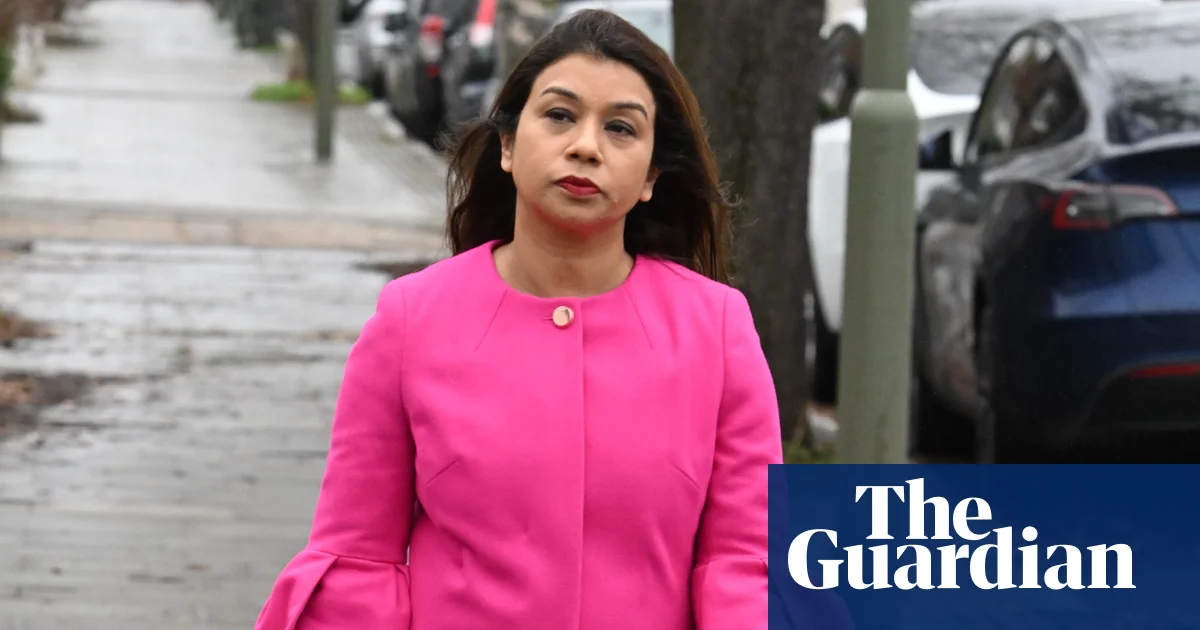
In a development that underscores the fragile balance of geopolitical stability, Bangladesh recently made international headlines with the sentencing of British MP Tulip Siddiq to two years in prison. This verdict is not merely a domestic legal matter; it signals deeper undercurrents of political vendettas, corruption accusations, and regional power struggles. The case reveals how East Asian politics intertwine with Western foreign policy, impacting international perceptions of justice, sovereignty, and intervention. Siddiq, a prominent figure in the UK Parliament representing Hampstead and Highgate, was convicted in absentia on charges linked to alleged land deals involving her family and Sheikh Hasina, the deposed prime minister. Her conviction, seen by many analysts as politically motivated, echoes Africa, Asia, and beyond—the rise of judicial regimes used as instruments for power consolidations.

The trial of Siddiq, alongside the recent convictions of Hasina herself for crimes against humanity, reveals a broader crackdown by an interim government led by Nobel laureate Muhammad Yunus. Following Hasina’s ouster in August 2024, Bangladesh has entered a phase where justice and political purity have become tools for reshaping the nation’s identity and regional alliances. Critics argue that these trials are fraught with accusations of * injustice, lack of due process,* and a blatant attempt to consolidate power amid public unrest. Major international organizations, along with legal scholars, are warning that such proceedings threaten to turn Bangladesh into a legal battleground—one where justice is weaponized to silence political opponents. Historical figures such as Amnesty International and regional analysts have described these moves as a shift toward authoritarianism masked as accountability, with lasting impacts on the rule of law in South Asia.

Moreover, the *geopolitical impact* of Bangladesh’s internal crisis is far-reaching. As the country grapples with political instability, neighboring India and regional rivals are carefully observing the unfolding drama, wary of spillover effects. The Western world, particularly Britain and the United States, is watching closely, especially concerning the potential destabilization of a key ally in South Asia. This episode acts as a reminder that regional power struggles and external interests often exploit internal fractures for geopolitical advantage—be it from China’s Belt and Road ambitions or Western strategic interests. Analysts warn that the fallout from Bangladesh’s judiciary, intertwined with its regional and international relations, could influence global commerce, security alliances, and diplomatic balances for years to come.

As history writes its next chapter beneath the shadows of political unrest and judicial crackdowns, the agonizing question remains: How will this turbulent chapter shape the future of democracy, sovereignty, and justice in South Asia and beyond? With the weight of history pressing down, the world watches as Bangladesh’s leaders, judiciary, and international allies navigate a future where the lines between justice and power are perilously blurred. The unfolding saga acts as a stark reminder that even in the face of national upheaval, the course of history is often driven by decisions made in courtrooms and diplomatic corridors—decisions that will resonate across generations, shaping the destiny of a nation and its role on the world stage.

US judge steps down after flaunting Elvis wig in court, sparking controversy

The United States finds itself once again embroiled in questions of institutional integrity, as a case from Missouri underscores the fragile veneer of judicial authority in an era of increasing societal polarization. Judge Matthew EP Thornhill of St. Charles County, the longest-serving circuit judge in the state, has become the center of controversy after disciplinary investigations revealed his bizarre antics in the courtroom—wearing an Elvis Presley wig, playing the singer’s music, and making frequent, seemingly irrelevant references to the legendary musician during legal proceedings. These actions, while seemingly harmless to many, have ignited debates about the boundaries of decorum in the judiciary, touching on broader concerns of how societal shifts are influencing the respect and seriousness traditionally associated with justice.

  • Thornhill’s obsession with Elvis Presley was well-documented, with the judge openly expressing admiration after visiting Graceland 13 times. His biography proudly highlights this passion, but it also raised eyebrows within the legal community.
  • In 2023, the Missouri Commission on Retirement, Removal, and Discipline of Judges concluded that Thornhill’s conduct compromised the dignity of courtroom proceedings. The commission’s report included images of Thornhill sporting his Elvis wig and recalled instances where he played Elvis music during court sessions or referenced lyrics and personal details about the singer.
  • Following the inquiry, Thornhill was disciplined and faced a suspension of six months without pay, with a subsequent plan for retirement after 20 years in service. His resignation, accompanied by an acknowledgment of misconduct, signifies a symbolic fall from grace that resonates beyond local borders, raising alarm over judicial oversight and the influence of personal eccentricities on the rule of law.

International observers, including legal analysts and historians, warn that such incidents threaten to erode public trust in judicial independence. The case of Thornhill is a cautionary tale — a stark example of how personal passions intersect dangerously with institutional duties. Scholars like Dr. Mark Jensen, a historian specializing in American judicial history, argue that maintaining courtroom decorum is vital to preserving the authority of the legal system. Yet, as societal norms shift and celebrity culture infiltrates every corner of daily life, questions arise about whether traditional standards remain relevant or if they are under siege—a symbolic reflection of broader cultural battles shaping nation-states.

The repercussions extend beyond Missouri. For many, Thornhill’s inappropriate behavior illustrates how personal eccentricities, if unchecked, can threaten to undermine the perceived legitimacy of institutions intended to uphold justice and order. Global institutions such as the United Nations and regional bodies monitor such incidents for signs of democratic backsliding and erosion of professional standards. This case prompts a reflection on how moral authority and societal trust are fragile commodities, now more vulnerable than ever amid technological upheavals and political upheavals worldwide. As history continues to unfold, and as society wrestles with the boundaries of personal expression versus institutional integrity, the fate of figures like Thornhill acts as a microcosm of the mounting tension between individual liberty and collective order.

In a world where the echoes of past icons still resonate loudly in pop culture and societal debates, the judicial scandal in Missouri leaves a lingering question for nations across the globe: **How much personal eccentricity is too much, and at what cost to the principles of justice?** As the curtain falls on Thornhill’s courtroom career, the echoes of his Elvis-infused tenure serve as a stark reminder—the pages of history are still being written, and every decision carries the weight to shape future generations’ perceptions of order, morality, and the rule of law.

At 16, I became a pawn in the CIA’s secret experiments — now I’m fighting back in court

Throughout history, wellness and mental health pursuits have often been cloaked in the promise of discovery, healing, and self-empowerment. Yet, beneath these noble ambitions lurk stories of abuse and manipulation—reminders of a darker side to the pursuit of progress. The recent revelations surrounding Canada’s Allan Memorial Institute and the shocking CIA-backed experiments in mind control serve as stark lessons on the importance of safeguarding individual integrity amidst groundbreaking research. Lana Ponting’s story is not just a cautionary tale but an awakening to the need for ethical vigilance as we navigate the complex intertwining of science, power, and human rights.

The facade of the Allan Memorial Institute, a historic mansion in Montreal
The historic Allan Memorial Institute in Montreal, where dark experiments once took place.

In the 1950s and 60s, a disturbing chapter unfolded as institutions like the Allan Memorial Institute became the venues for experimental treatments that would later be exposed as unethical atrocities. Under the guise of advancing psychiatric care, Dr. Ewen Cameron and others conducted “psychic driving”, drugging patients and forcing them to listen repeatedly to disturbing tape recordings. This was part of a clandestine CIA project known as MK-Ultra, which sought to unlock the secrets of mind control and behavioral manipulation—an era where the pursuit of scientific breakthroughs often ignored the sanctity of human dignity. Today, the echoes of these dark pasts serve as a sober reminder that the pursuit of wellness must always be rooted in ethical responsibility, not unchecked ambition.

For individuals like Lana Ponting, the trauma persists decades later. Her story underscores the importance of personal impact—not just as a statistic but as a human experience. Despite moving on to raise a family in Manitoba, the lasting effects of her ordeal include lifelong mental health challenges and recurrent nightmares, compounded by medications and emotional scars. Her recent involvement in a lawsuit seeking justice exemplifies a broader movement for accountability and acknowledgment. It reminds us that true health is more than physical treatments; it involves respecting individual autonomy and ensuring that groundbreaking work does not come at the expense of human rights. As wellness experts like Dr. Gabor Maté often emphasize, genuine healing involves compassion, understanding, and the pursuit of truth.

In a world increasingly focused on _self-care_ and personal empowerment, the story of the Allan experiments prompts reflection on the fragile boundary between innovation and morality. It challenges youth and society at large to embrace a more conscientious approach to wellness—one that champions transparency, ethics, and human dignity. As we seek new horizons in health and personal growth, let us remember that progress must elevate, not exploit. The journey of healing is as much about safeguarding our humanity as it is about achieving physical vitality or mental clarity. Each of us, in our way, is a guardian of this delicate balance, forging a path forward that honors the lessons of the past and the promise of a truly liberated future.

  • Embrace wellness initiatives grounded in ethical standards and personal agency.
  • Advocate for transparency in scientific research affecting mental health and human rights.
  • Prioritize mental health care that respects individual stories and experiences.

Ultimately, the narrative of Lana Ponting and others like her is a testament to resilience and the enduring human spirit. It reminds us that each step toward wellness is a stride into the future—one that must be paved with integrity, empathy, and a firm commitment to justice. As the dawn of a new era in health sprinkles the promise of self-discovery and personal empowerment, let us carry forward the lessons that history offers: true well-being begins with respecting the dignity innate to every human life.

Supreme Court Upholds Trump’s Block on $4B Food Aid Boost, Youth Grip Tightens

The United States finds itself at a critical juncture as a series of escalating political disputes threaten the social safety nets for millions. The Supreme Court recently upheld the Trump administration’s request to *pause* a federal judge’s order that would have apportioned $4 billion to the Supplemental Nutrition Assistance Program (SNAP). This decision has effectively frozen funds for the largest anti-hunger initiative in the nation, placing 42 million Americans—including countless vulnerable children and the elderly—at heightened risk of food insecurity during an already strained economic climate.

Analysts warn that this move not only jeopardizes immediate access to food for countless families but reflects a broader geopolitical impact. Plunging millions into uncertainty amidst internal political chaos underscores the fragile stability of America’s social fabric. As the House of Representatives prepares to vote on a package that could mark the end of the longest government shutdown in U.S. history, the Biden administration and Congress remain at loggerheads over federal funding. The administration insists that only through legislative compromise can vital programs be restored, a stance that continues to delay relief efforts and deepen the social crisis. The ongoing shutdown, intertwined with the clash over legislative priorities, continues to ripple outward, affecting states’ ability to deliver support and undermining public confidence in governance.

Meanwhile, the Department of Agriculture has issued directives for states to “immediately undo” benefits already disbursed, creating chaos at a local level where food pantries and community services are already overwhelmed. With only partial benefits issued for November, and no guarantee of federal reimbursement, the geopolitical ramifications extend beyond domestic borders, highlighting the profound impact of internal instability on local communities. According to observers like historians and social policy analysts, this episode exemplifies how political decisions—particularly those rooted in partisan deadlock—can have tangible consequences, exacerbating societal divisions and threatening the social contract.

The international community watches with concern as the United States, traditionally seen as a bastion of stability and economic power, falters in its moral obligation to protect its most vulnerable. As aid agencies scramble to fill the gaps, domestic disarray risks expanding into a broader crisis. The looming holiday season and the approaching winter threaten to intensify the suffering with no clear resolution in sight. This harrowing chapter in American history—marked by political infighting and social neglect—reminds the world that the internal stability of a nation often hinges on its ability to meet the basic needs of its citizens. Yet, the true cost may extend far beyond national borders, influencing global perceptions of U.S. leadership and stability.

As the pages of history continue to turn, the fate of the American social safety net remains in the balance, a stark reflection of a nation deeply divided. The unfolding drama raises profound questions about governance, moral responsibility, and international leadership—questions that will resonate long after the current crisis subsides. In a world where geopolitical shifts accelerate and alliances are tested, the true measure of a nation’s strength is revealed not in its wealth or military power, but in its capacity to care for its people during times of crisis. Whether the United States will rise from this moment stronger or succumb to internal disarray remains to be seen; yet, the weight of history presses heavily upon all—reminding us that in the darkest hours, the dignity of a society is truly tested.

Trump urges Supreme Court to step in as judges reject snap funding halt—US shutdown looms in 2025

The United States continues to grapple with the fallout from its ongoing federal government shutdown, revealing stark divisions not only within its political landscape but also with profound geopolitical implications. Central to this turmoil is the battle over distributing the November benefits for the Supplemental Nutrition Assistance Program (SNAP), commonly known as food stamps—a critical lifeline for millions of lower-income Americans. The Trump administration’s efforts to halt full payment amid congressional deadlock highlight a distinct shift in federal social policy, raising alarms among international observers and analysts about the erosion of social safety nets in a nation often seen as a global economic leader.

This controversy escalated last week when a federal district court ordered the government to continue full SNAP benefits despite the shutdown’s budget chaos. The administration responded with fervor—first attempting to block the order by appealing to the Supreme Court, claiming that fulfilling the court’s mandate could cause irreparable harm. The argument centered around the idea that once funds are disbursed, they cannot be recouped, and continued payments could set a dangerous precedent for future budgets, especially if the shutdown persists into December. This legal refusal to comply with court rulings exposes a fragile balance between judicial authority and executive discretion, with serious consequences for social stability and international reputation.

International organizations and geopolitical analysts have closely watched this domestic dispute, aware that such internal conflicts have the potential to ripple across borders, especially given the global economic interconnectedness these days. Historians warn that such standoffs threaten to undermine the perception of US stability, potentially weakening its position in international financial markets. The fact that this political and legal tussle revolves around providing basic needs—an essential element for societal stability—underscores the crucial role of national governance in shaping human lives and global relations. As the Trump administration presses for a stay on court orders, claiming it cannot “tap” funds for ongoing payments, critics argue this signals a dangerous turn towards austerity and social neglect.

The unfolding saga leaves the world with a stark reminder: the choices made within the halls of power are not isolated—they set precedents with far-reaching implications. The decision to prioritize political posturing over the well-being of vulnerable populations shapes the narrative of an America divided and weakened at its core. As history continues to write itself into the pages of the 21st century, the crisis surrounding SNAP benefits is emblematic of a nation at a crossroads, where internal conflicts threaten to define its global role and societal fabric for generations to come. Whether this chapter will culminate in a resolution that upholds the rule of law and social cohesion or deepen the fissures remains an open question—yet, one thing is clear: the weight of history presses relentlessly forward, shaping a future still shrouded in uncertainty.

Young man who took parents to court must remain in Ghana, court rules

The Rising Tide of Family Disputes and Its Effects on Society

In recent months, a high-profile case in the United Kingdom has spotlighted the profound ways family conflicts and social tensions influence not just individual lives but the fabric of communities at large. A 14-year-old boy, whose identity remains protected, found himself embroiled in a legal battle against his own parents after they relocated him to Ghana, ostensibly to address concerns regarding his behavior in London. The court’s decision to keep him in Ghana until at least the conclusion of his GCSEs underscores the complex intersection of family rights, social stability, and youth welfare.

Historically, sociologists such as Friedrich Engels and contemporary social commentators have explored how family disruptions ripple outward, affecting communities and societal cohesion. This case exemplifies the delicate nature of familial bonds when moral judgments, cultural shifts, and legal frameworks collide. The boy’s parents, concerned about behaviors such as truancy and carrying a weapon, sought to relocate him to Ghana—an action that raises questions about demographic shifts and the societal pressures leading to such drastic measures. The court’s decision reflects a recognition of the child’s need for stability and individual development, while also honoring the importance of family unity and cultural roots.

The Impact of Social Issues on Education and Community Development

  • Educational Disruptions: The boy’s ongoing studies in Ghana for his GCSEs highlight the critical role formal education plays as a pillar of young people’s stability. Interruptions, especially amid familial conflicts, threaten the foundation of future opportunity and societal mobility.
  • Community Tensions: The case sheds light on broader social tensions surrounding parenting styles, cultural integration, and youth behavior. As communities attempt to navigate these multilayered issues, questions about how society supports family reconciliation become ever more urgent.
  • Legal and Social Frameworks: The court’s emphasis on a road map for eventual return underscores the importance of structured intervention programs. Funded family therapy, for instance, is a vital tool for addressing underlying problems—yet its availability and effectiveness remain inconsistent, highlighting challenges facing social services nationwide.

In an era where social cohesion is increasingly strained, the case underscores how families are at the frontline of societal health. As the history of social change invariably shows, upheavals within the family unit inevitably manifest in community destabilization. Sociologist James Coleman argued that cohesive family environments serve as the backbone of healthy societies, emphasizing the urgency of supporting families through social reforms and community engagement.

Looking Toward a Society of Hope and Resilience

While the immediate legal ruling offers a temporary resolution, it opens a broader conversation about how society can better support families facing crises. Addressing youth behavioral issues, fostering open communication, and providing accessible mental health resources are essential steps in strengthening societal resilience. This case, though challenging, presents an opportunity for communities, schools, and policymakers to reflect on their role in nurturing tomorrow’s leaders—ensuring they grow up in environments that promote stability, understanding, and respect for individual dignity.

In the end, society’s greatest hope lies in its capacity for transformation and compassion. As families learn to navigate the complexities of a rapidly changing world, the collective effort to rebuild trust and provide meaningful support may forge a future where every child can achieve their potential. And in that hope, society finds its true strength, standing resilient in the face of adversity and committed to fostering communities rooted in values of unity, moral clarity, and unfinished promise.

Supreme Court weighs Trump’s tariffs: Is the President overstepping?

Legal Battle Over Presidential Power and Global Trade Strategy

The United States is once again at a pivotal moment in its economic and geopolitical history, as the supreme court begins scrutinizing the legality of *Donald Trump*’s sweeping tariffs. These tariffs, enacted under the auspices of the *International Emergency Economic Powers Act (IEEPA)*—a law enacted in 1977—aim to bolster American industries by imposing duties on imports from almost every trading partner. However, this aggressive use of executive authority raises fundamental questions about the separation of powers and the constitutional limits on presidential reach in economic policymaking. Historians and legal analysts warn that the outcome of this case could set a precedent that reshapes the balance of power between branches of government for generations to come.

Imposing Tariffs Under Emergency Powers: A Constitutional Quagmire

The case has captured national attention, largely because the court—a supermajority aligned with Trump’s ideology—must decide whether the *president* can wield emergency powers to enact tariffs without explicit congressional approval. Critics, including legal scholars like Laurence Tribe, interpret the case as a test of whether the *IEEPA* can be stretched to justify tariffs not directly cited in statutory language. Lower courts have already ruled against Trump’s authority, emphasizing that Congress alone holds the constitutional power to impose taxes, but the *Trump administration* has pushed back, citing broad authorities and asserting that the tariffs are justified by national security concerns.

Global Trade and Geopolitical Ramifications

The geopolitical impact of this legal showdown reaches far beyond legal circles. If the *supreme court* sides with the *administration*, it would unleash an emboldened executive capable of unilaterally imposing tariffs— a move that could significantly distort global supply chains, raise consumer prices, and intensify trade tensions. Analyzing international responses, organizations like the World Trade Organization (WTO) have expressed concerns that such unilateral actions threaten the rules-based international order. Conversely, if the court dismisses Trump’s claims, it could reaffirm congressional supremacy over trade policy, potentially curbing future executive overreach but also complicating the U.S. strategic posture in a volatile world.

Consequences for Domestic Society and International Relations

Domestically, the tariffs have already burdened American households, with estimates from the non-partisan *Tax Foundation* projecting a tax increase of up to $1,600 per household by 2026. Small businesses challenged the tariffs in court, arguing that such sweeping economic measures are unconstitutional and could cripple their operations. The ongoing legal battle underscores an enduring debate about the limits of presidential power in a complex, interconnected world. Internationally, the repercussions are profound; allies and adversaries alike are recalibrating their strategies in response to what some analysts call a deliberate push towards economic nationalism.

Looking Toward the Future: A Defining Moment in U.S. History

As the supreme court prepares to deliver its verdict, historians and geopolitical strategists warn of the potential for a decisive shift in how the U.S. conducts its global economic affairs. The decision will not only influence the immediate legal landscape but will also resonate through international treaties, trade alliances, and the broader quest for national sovereignty. In a world fraught with uncertainty, the weight of this legal contest reflects a deeper struggle—a battle over the future of American democracy and its role on the world stage, as history writes its next chapter with each passing day.

Social Media Auto Publish Powered By : XYZScripts.com