Matox News

Truth Over Trends, always!

Jury Rules Apple Must Pay $634M to Masimo for Patent Violation

Innovation vs. IP Rights: Apple’s Blood Oxygen Monitoring Technology and the Disruption of Market Boundaries

The recent ruling by a federal jury in California, mandating that Apple pay Masimo $634 million for patent infringement, underscores a pivotal moment in the ongoing battle over innovation in wearable health tech. The case centers on the fundamental blood oxygen monitoring technology—a feature that has become increasingly crucial as consumers demand health-centric functionalities integrated into smart devices. This verdict marks a significant disruption, potentially reshaping how tech giants approach intellectual property rights and innovation strategies in the rapidly evolving health wearables sector.

Masimo, a pioneer in pulse oximetry technology, successfully claimed that Apple Watch‘s workout mode and heart rate notifications infringed on its patents. The legal dispute reveals a broader industry trend of disruption driven by proprietary technologies, with market leaders racing to integrate health monitoring features that set their devices apart. While Apple vows to appeal, the implications are substantial: the company’s efforts to bypass the legal setback by measuring blood oxygen data on paired iPhones highlights the intense competition to maintain dominance in health-related wearables, and raises questions about future innovation pathways and patent robustness.

Market implications of this case extend beyond mere litigation. The U.S. International Trade Commission already enforced a ban on importing Apple Watches with blood oxygen features, effectively limiting Apple’s ability to offer this health metric directly on its devices. However, the company’s recent move to incorporate the feature via iPhones suggests a strategic pivot, illustrating how disruption and innovation are often met with regulatory hurdles, which firms attempt to navigate through creative workarounds. These developments exemplify a broader industry pattern where entrenched players innovate around legal constraints, often accelerating the pace and complexity of technological evolution.

Industry analysts, including Gartner and MIT researchers, emphasize that this legal standoff signals a heightened focus on intellectual property as a core business battlefield. The ongoing disputes over pulse oximetry technology exemplify how strategic IP management can determine market access and competitive advantage. With wearable health tech expected to reach a global market worth hundreds of billions, the ability to secure, protect, and leverage proprietary innovations will define industry leadership. Companies like Apple and startups aiming to disrupt incumbents face the dual challenge of advancing breakthrough features while safeguarding their patents against aggressive legal challenges—a game where disruption and legal wrangling are inevitable.

Looking forward, the rapidly shifting landscape demands that emerging players and established giants accelerate their innovation pipelines—integrating breakthrough health features with robust patent portfolios. The convergence of regulatory, legal, and technological pressures creates an urgent environment where timing and strategic IP deployment will be decisive. As tech giants race to embed health monitoring deeply into consumer devices, the industry must contend with a landscape increasingly shaped by legal battles, strategic patenting, and consumer expectations for seamless, integrated health tech. The next wave of innovations could very well redefine the boundaries of wearable technology, with a sharp focus on disruption, competitive advantage, and regulatory navigation—an arena where those who master both innovation and legal strategy will dominate the future market.

Young man who took parents to court must remain in Ghana, court rules

The Rising Tide of Family Disputes and Its Effects on Society

In recent months, a high-profile case in the United Kingdom has spotlighted the profound ways family conflicts and social tensions influence not just individual lives but the fabric of communities at large. A 14-year-old boy, whose identity remains protected, found himself embroiled in a legal battle against his own parents after they relocated him to Ghana, ostensibly to address concerns regarding his behavior in London. The court’s decision to keep him in Ghana until at least the conclusion of his GCSEs underscores the complex intersection of family rights, social stability, and youth welfare.

Historically, sociologists such as Friedrich Engels and contemporary social commentators have explored how family disruptions ripple outward, affecting communities and societal cohesion. This case exemplifies the delicate nature of familial bonds when moral judgments, cultural shifts, and legal frameworks collide. The boy’s parents, concerned about behaviors such as truancy and carrying a weapon, sought to relocate him to Ghana—an action that raises questions about demographic shifts and the societal pressures leading to such drastic measures. The court’s decision reflects a recognition of the child’s need for stability and individual development, while also honoring the importance of family unity and cultural roots.

The Impact of Social Issues on Education and Community Development

  • Educational Disruptions: The boy’s ongoing studies in Ghana for his GCSEs highlight the critical role formal education plays as a pillar of young people’s stability. Interruptions, especially amid familial conflicts, threaten the foundation of future opportunity and societal mobility.
  • Community Tensions: The case sheds light on broader social tensions surrounding parenting styles, cultural integration, and youth behavior. As communities attempt to navigate these multilayered issues, questions about how society supports family reconciliation become ever more urgent.
  • Legal and Social Frameworks: The court’s emphasis on a road map for eventual return underscores the importance of structured intervention programs. Funded family therapy, for instance, is a vital tool for addressing underlying problems—yet its availability and effectiveness remain inconsistent, highlighting challenges facing social services nationwide.

In an era where social cohesion is increasingly strained, the case underscores how families are at the frontline of societal health. As the history of social change invariably shows, upheavals within the family unit inevitably manifest in community destabilization. Sociologist James Coleman argued that cohesive family environments serve as the backbone of healthy societies, emphasizing the urgency of supporting families through social reforms and community engagement.

Looking Toward a Society of Hope and Resilience

While the immediate legal ruling offers a temporary resolution, it opens a broader conversation about how society can better support families facing crises. Addressing youth behavioral issues, fostering open communication, and providing accessible mental health resources are essential steps in strengthening societal resilience. This case, though challenging, presents an opportunity for communities, schools, and policymakers to reflect on their role in nurturing tomorrow’s leaders—ensuring they grow up in environments that promote stability, understanding, and respect for individual dignity.

In the end, society’s greatest hope lies in its capacity for transformation and compassion. As families learn to navigate the complexities of a rapidly changing world, the collective effort to rebuild trust and provide meaningful support may forge a future where every child can achieve their potential. And in that hope, society finds its true strength, standing resilient in the face of adversity and committed to fostering communities rooted in values of unity, moral clarity, and unfinished promise.

Ofcom rules broken? BBC Gaza doc sparks controversy among young conservatives

In the age of information, the struggle for truth often appears as a battleground not only of facts but also of moral authority and cultural integrity. The recent controversy surrounding the BBC’s documentary about Gaza underscores this profound reality. The revelation that the narrator was the son of a Hamas official—though ultimately uncovered after the program’s broadcast—fundamentally questions the responsibility of media to uphold transparency. As UK media regulator Ofcom declared, the broadcaster committed a “serious breach” by withholding this critical detail, a lapse that misled viewers. Herein lies a potent reminder that culture is inseparable from identity, tradition, and societal self-awareness. It acts as the repository of collective memory—our shared stories—and the prophecy of future pursuits.

Historically, the peril of concealment in the guise of neutrality is nothing new. As Tocqueville observed, democracy depends as much on the moral fabric of its institutions as on the formal structures of governance. Similarly, philosopher G.K. Chesterton championed the notion that society’s health hinges on a rooted understanding of tradition—values that provide stability amidst chaos. The failure of a reputable institution like the BBC to disclose a vital piece of information touches at the heart of this cultural fabric. It reveals how modern institutions, often caught in the currents of political correctness or ideological bias, risk reducing the complexity of truth to mere superficial narratives. This erosion of transparency and honesty feeds a cultural climate where relativity threatens the foundation of societal trust.

In reflecting on this, the words of T.S. Eliot resonate strongly: “The past is never dead; it’s not even past.” Culture is our memory—an ongoing dialogue between history and the present—and it conditions how we interpret and engage with our moral and national identities. The controversy surrounding the documentary can be viewed as a modern parable, warning of our collective tendency to obscure inconvenient truths under the guise of objective journalism. But truth remains the cornerstone of cultural integrity, which in turn sustains the moral fiber of society. Without it, we risk unraveling the sacred threads that connect us to our ancestors and our future.

The battle for authentic culture and truthful expression is ongoing, a song sung through the ages, echoing the voices of societal guardians and philosophers. It calls upon us to recognize that culture is not merely the ornamentation of society, but its very essence—a living memory and a prophetic voice. As the shadows of deception stretch across the landscape of modern media, it is our duty to uphold the integrity of that voice, for only then can we forge a future that remains grounded in the enduring truths of our human story. In this pursuit, may we never forget that culture is both the mirror of who we are and the torch guiding who we aspire to become.

Jess Cartner-Morley on Fall Fashion: Go All-In on White Shades — No Rules, Just Style

The Rise of Winter White: A Cultural Trend Reimagined

In recent fashion circles, winter white has emerged as the unexpected star of the season, redefining not just how we dress but also touching on larger societal shifts towards minimalism and sophistication. Drawing inspiration from the elegant aesthetics of The White Company and reimagined through the lens of visionary designers like Sheila McKain—whose background spans Donna Karan, Jaeger, and Oscar de la Renta—the trend elevates traditional winter wear to a statement of calm luxury and discreet confidence.

This movement isn’t just about aesthetics; it’s a cultural statement challenging ingrained notions of color as expressive of mood or identity. Instead, white—particularly shades like cool-toned scandi, creamy porcelain, and warm butter—is now positioned as a powerful tool for social signaling—signaling restraint, elegance, and a nuanced approach to style that resonates with a generation seeking authenticity without excess. Influencers like Tiffany Hsu are showcasing this new winter wardrobe, emphasizing how this clean color palette acts as a blank canvas for personal expression while remaining effortlessly sophisticated.

Beyond clothing, the cultural impact of this white renaissance extends into lifestyle and social values. Embracing white attire embodies a shift towards simplicity and intentionality, resonating with a younger demographic eager to balance style with social consciousness. As fashion analysts interpret this trend, they note that it’s not about being one-note but about embracing a broader spectrum of whites: from transparent and beige to subtle greys—an inclusive approach that redefines what “white” can be. This plays directly into the current societal penchant for individuality within conformity, where less is more, yet more is also more—more textured, more nuanced, more meaningful.

The significance of this trend is vividly captured through candid celebrity renders and street style takes, making it clear that winter white is no longer reserved for the privileged or the ultra-formal. Instead, it’s becoming a versatile style that bridges professionalism and leisure, lending itself to a range of contexts — from high-street shopping to high society galas. As this visual aesthetic gains momentum, it raises an intriguing question: will our society’s collective jump to purity and minimalism in fashion signal an even deeper societal desire for clarity and stability amidst chaotic times? Is the dominance of white simply a fleeting trend, or a reflection of a larger cultural pivot towards purity and authenticity?

Australia News: Albanese rules out republic vote after meeting with King Charles

In an era defined by rapid geopolitical shifts and surging international tensions, Anthony Albanese, the Prime Minister of Australia, has recently positioned himself at the heart of global diplomacy. His week of international engagements culminated in a historic visit to the Scottish Highlands, where he met with King Charles at Balmoral Castle. This meeting symbolizes not only a strengthening of diplomatic ties between Australia and the British monarchy but also signals Australia’s ongoing effort to assert its global presence amidst rising geopolitical upheaval. Albanese’s visit highlights a nation eager to balance historical ties with strategic interests, especially as alliances such as AUKUS and the shifting dynamics within world powers reshape international order.

The details of Albanese’s conversations with the monarch remain under strict protocol, cloaked in diplomatic discretion. Yet, official statements mention discussions on world affairs, emphasizing the country’s engagement with broader global issues. This diplomatic outreach coincides with Albanese’s broader international itinerary, which included addressing the United Nations and briefly engaging with US President Donald Trump. Analysts from the International Crisis Group and geopolitical experts suggest that such interactions reflect Australia’s intent to elevate its voice on issues like regional security, resource management, and adherence to international rules of law. As the world faces conflicts like the Ukraine crisis and regional disputes in the Indo-Pacific, Australia’s diplomatic posture appears aimed at reinforcing alliances and asserting sovereignty in a turbulent geopolitical landscape.

Meanwhile, domestic politics intertwine with these international maneuvers. Albanese’s firm stance against holding a referendum on Australia becoming a republic signifies a focus on stability and national identity, contrasting with his earlier openness to the idea. Critics from opposition factions, including Senator Michaelia Cash, critique his international diplomatic commitments, arguing that excessive overseas engagement might detract from pressing domestic issues such as the cost of living and national economic resilience. These criticisms underscore a broader debate on how nations prioritize their global strategy while maintaining societal stability. Yet, veteran political observers warn that such disputes could overshadow the country’s long-term strategic interests, especially as geopolitical tensions escalate.

Historians and analysts warn that the unfolding decisions and diplomatic nuances of today may well echo through future generations as a pivotal chapter in Australia’s national and international history. Albanese’s measured approach aims to forge a balanced path—asserting Australian sovereignty, cultivating strategic international alliances, and maintaining constitutional stability. In a world where ideals are often challenged by realpolitik, the choices made now will determine whether this young nation can punch above its weight or become hidden beneath global conflicts and shifting alliances. As diplomats and citizens alike watch these unfolding events, history quietly witnesses the emergence of a new global landscape, where the balance of power is neither fixed nor predictable—yet forever in flux, shaping the course of nations and societies for decades to come.

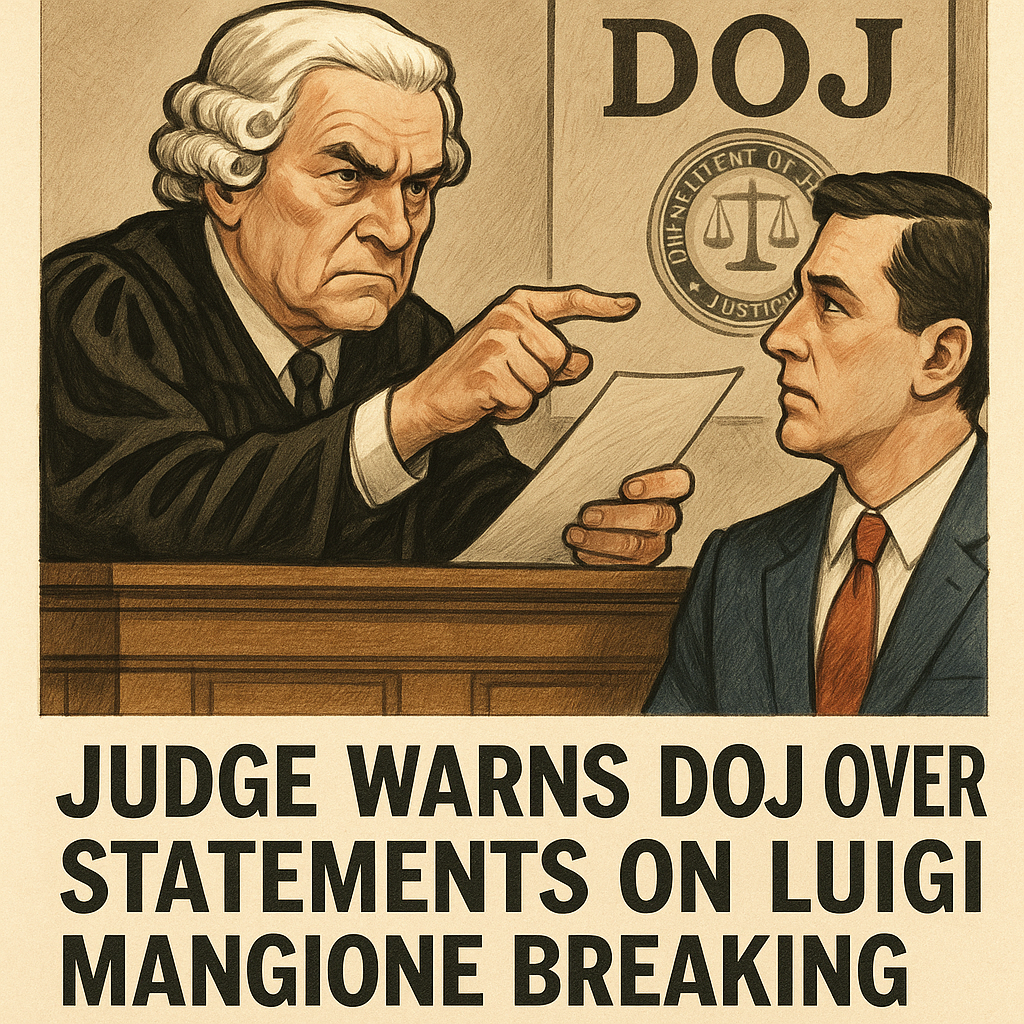
Judge warns DOJ over statements on Luigi Mangione breaking court rules

The unfolding controversy surrounding the Department of Justice’s (DOJ) handling of Luigi Mangione has cast a stark light on the intricate power struggles shaping American governance today. As the federal court, under the guidance of U.S. District Judge Margaret Garnett, suggests that DOJ officials may have violated established court protocols, it becomes evident that the boundaries between executive authority and judicial independence are under acute stress. Judge Garnett’s explicit caution — warning prosecutors about potential sanctions for continued public misconduct — underscores a broader conflict: the tension between prosecutorial discretion and the judiciary’s role as a neutral arbiter. This situation exemplifies the enduring debate about whether institutions thrive under clear boundaries or unravel when those borders are disregarded by powerful actors seeking to influence outcomes.

At the heart of this dispute lies a fundamental question of who holds the ultimate authority in the rule of law. The Biden-era DOJ, often seen as an extension of the executive branch’s expansive ambitions, appears to be embroiled in a struggle for control over narrative and influence, particularly when it involves politically sensitive figures. Historical parallels emerge when considering the Watergate era, where executive overreach provoked an unparalleled constitutional confrontation. Today, prosecutors’ attempts to publicly discuss sensitive legal matters—potentially a breach of protocol—highlight how decision-making processes are shifting, challenging the traditional separation of powers. Such confrontations are less about the individual case and more about who ultimately decides what justice looks like in a system still haunted by the echoes of political intervention.

The power struggle extends beyond mere procedural disputes, touching on the core of what it means for the people to be governed. Justice experts warn that consistent *public undermining of court authority* sets dangerous precedents, eroding the foundational tenets of constitutional law, which emphasize the independence of judiciary institutions. These actions reveal a strategic push by some within the DOJ to influence public perception and sway judicial proceedings—an effort to shape policy landscapes through raw political pressure. When legal processes become battlegrounds for partisan advantage, the consequences ripple outwards, threatening to diminish public trust and destabilize the delicate balance designed by America’s founders. Such struggles form the battleground where power is contested and the destiny of civic order is written.

Ultimately, this ongoing saga underscores a critical truth about politics: it is less a realm of fixed ideals and more a theater where the forces of authority clash, often with decisive, society-wide repercussions. As constitutional giants like **Alexander Hamilton** once argued, the strength of America’s republic resides in the careful orchestration of **separated powers**, yet those boundaries are consistently tested under the weight of ambition and influence. The legal skirmish over Mangione is symbolic of a larger epoch — one where internal conflict and strategic decision-making threaten to reshape the very fabric of American governance. For the watchers of history and future architects of policy, it is evident that in the theater of politics, the stage is where destinies are written, often with the ink of contention and the pen of power.

Social Media Auto Publish Powered By : XYZScripts.com