Matox News

Truth Over Trends, always!

Cherry on the top: Jessie Buckley dominates Oscars 2026 with double win — and makes Chanel proud

The Evolution of Red Carpet Fashion: More Than Just Glamour

In the world of celebrity culture, the Oscars have long been seen as a pinnacle of both artistic achievement and personal branding. Historically, the red carpet has been a stage for timeless glamour, where black, gold, and classic couture dominated. However, recent years have witnessed a formidable shift — red carpet fashion is now a powerful canvas for self-expression and social messaging. The stunning appearance of Jessie Buckley, who not only secured the best actress award but also made a bold style statement, epitomizes this transformation. Her custom Chanel gown, with its blood-red satin-backed leather and rose pink chiffon, was more than eye-catching; it was a deliberate reflection of her character’s tenderness and emotional depth, nodding to the history of Hollywood’s stiff traditions while simultaneously breaking new ground in celebrity aesthetics.

Today’s fashion influencers and sociologists recognize that the red carpet has become a social forum as much as a glamorous runway. For instance, Teyana Taylor’s daring Chanel ensemble—featuring sheer fabrics and black and white feathers—demonstrates how stars are harnessing the event’s visibility to embody cultural narratives rooted in strength, audacity, and authenticity. Stylistically unapologetic and visually stunning, such choices serve to elevate the social relevance of fashion beyond the superficial, positioning stars as cultural commentators. This trend towards narrative-driven style aligns with the ideas of sociologists who emphasize that clothing can reinforce identity and influence societal perceptions. Influencers like Kylie Jenner further exemplify this shift, as her dramatic crimson Schiapelli gown effortlessly combined high fashion with viral appeal, amplifying the role of style as a tool for cultural dialogue.

But the evolution extends beyond individual styles—design houses like Chanel are capitalizing on this cultural redefinition. Their recent Paris runway shows, staged in unconventional spaces like a New York subway station, signal a strategic push to resonate with a more socially conscious and politically active generation. As fashion houses like Chanel weave social commentary into their branding, they reinforce the idea that style is now a form of societal engagement. Fashion and celebrity are no longer solely about superficial aesthetics but are intertwined with larger conversations about identity, power, and social justice. For the younger generation, the question isn’t just “What are they wearing?” but “What does it stand for?”

As we marvel at the daring choices of stars like Timothée Chalamet, who embraced an 2000s-inspired suit that challenged traditional notions of masculinity and style, one cannot help but wonder: what will be the next frontier in this cultural revolution? Will red carpet fashion continue to evolve into an arena where social values and personal truths collide, or will it revert to pure spectacle? The future of celebrity fashion might reveal not just the next big trend, but the emerging narrative of a generation that refuses to see style as superficial—it’s a platform for truth, resistance, and authentic expression in a rapidly changing society.

Top Irish Beers You Need to Try — Beyond Guinness and Still Totally Irish | Beer

Every 17 March, the global spotlight turns to Ireland as millions celebrate with the iconic taste of Guinness Draught. This beloved stout is brewed in a revered tradition dating back over a century, with its signature “two-part” pour ensuring every pint hits the perfect balance of creaminess and flavor. Yet, Irish culture isn’t confined to one beverage or moment — it goes far beyond, rooted in a history that extends back at least 5,000 years. Today, the Irish brewing scene is a vibrant mosaic of 70 breweries across the island, each cultivating a rich brewing heritage while embracing modern craft trends. While Guinness remains the most popular worldwide, the country’s drinkers actually favor light lagers, reflecting a lifestyle shift toward _refreshing, easy-drinking beverages_, perfect for contemporary tastes and the pursuit of moderation.

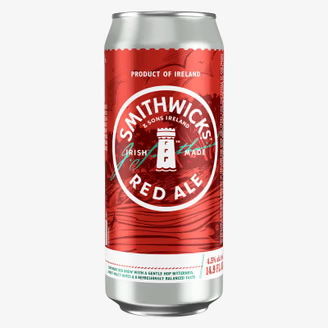
As a seasoned beer journalist and connoisseur of Irish brews, the variety of options beyond the classic stout offers an inspiring look into Irish culture’s evolution. From the smooth, malty charms of a red ale like Smithwick’s Irish Ale to a citrusy golden brew such as Sullivan’s Irish Gold, Irish breweries are showcasing a _diversity of flavor profiles_ that appeal to modern palates. These beers, often with *low alcohol content*, promote a lifestyle centered around **well-being** and **responsible moderation**, aligned with an _emerging wellness movement_ embracing quality over quantity.

Ireland’s water — the purest sources from lakes, rivers, and rainfall — has been integral to brewing for centuries, epitomized by accessible staples like Harp Lager. Its crisp, clean profile pairs seamlessly with traditional Irish dishes like fish and chips. Meanwhile, breweries such as Murphy’s have perfected a **lighter** stout that offers drinkers complex roast and chocolate nuances without the usual heaviness, favoring a *more refined, *lighter alternative* for those mindful of their health*. With a rich history dating back to 1710, Murphy’s Irish Stout exemplifies Ireland’s mastery — a brew to be savored in local pubs or at home, ideally paired with heartwarming meals or summer gatherings, celebrating life’s small pleasures with moderation and intent.

Life is a journey, and the path of lifestyle embraces more than just the drinks we choose — it’s about honoring tradition while exploring new, balanced ways to enjoy. The Irish spirit reminds us that true culture is about sharing moments that nourish our bodies and souls, connecting us to history and community. Whether through an iconic pint of Guinness or the nuanced flavor of a citrusy ale, every sip reflects a heritage rooted in resilience, refinement, and the pursuit of **well-being**. Embrace these traditions, explore their modern expressions, and remember that the journey to a fulfilling lifestyle is one of continual discovery — a testament to the enduring power of cultural evolution and personal choice.

Top 15 Amazon Spring Tech Deals Worth Your Shot — We Verified the Prices (2026)

Market Disruptions and Industry Shifts During Extended Tech Sales Wave

In an era characterized by rapid innovation and relentless competition, the recent phenomenon of an almost week-long sales event—allegedly saturated with deceptive “deals”—has sparked significant debate within the technology sector. Experts analyzing this trend emphasize that such prolonged promotional activities, often masking superficial discounts, threaten to distort the competitive landscape. The proliferation of these misleading deals underscores a pressing industry need for transparency and authenticity, particularly as consumers become increasingly savvy and discerning. The impact is profound: genuine innovation risks being overshadowed by marketing hype designed to create artificial demand.

Major players such as Amazon and Best Buy have intensified their promotional calendars, but reports indicate that many offers during this extended sales period are fabricated or heavily inflated. Tech enthusiasts and analysts, including those from Gartner and MIT’s Sloan School of Management, warn that this practice could lead to a “race to the bottom” on price competitiveness, where brands prioritize short-term consumer engagement over meaningful product differentiation. Meanwhile, the tech industry’s overarching challenge remains innovation—delivering groundbreaking products that redefine user experience and technological capabilities—not simply employing aggressive discounts to maintain market share.

Despite the criticism, some market insiders see an opportunity for disruption. Elon Musk and other industry visionaries argue that these sales events reveal the underlying fragility of current e-commerce practices—often heavily dependent on marketing gimmicks rather than true product value. The focus on superficial deals risks diverting consumer attention from the real advancements of next-generation technologies, such as artificial intelligence, quantum computing, and interconnected platforms. As industry leaders like Google and Apple accelerate their innovation pipelines, the ability to stand out will increasingly depend on transparency, product integrity, and sustained R&D investment—rather than artificially inflated discounts.

The business implications are clear: the market is at a crossroads. Companies that can differentiate themselves through genuine innovation and reliable customer value are poised to gain a competitive edge. According to research from Gartner, firms investing heavily in emerging technologies such as autonomous systems and IoT are likely to disrupt traditional retail models, which have become vulnerable to practices that prioritize short-term sales at the expense of long-term brand trust. The ongoing proliferation of misleading sales tactics risks eroding consumer confidence—a critical asset in the age of digital transparency.

Looking ahead, the industry faces an urgent imperative: to redefine what constitutes authentic value in a marketplace increasingly flooded with noise. As technology accelerates exponentially, so too must the standards for what constitutes market disruption. The winners will be those who prioritize genuine innovation, leverage cutting-edge narratives, and foster consumer trust—reinforcing the old adage that not all that glitters is gold. The next wave of technological breakthroughs—ranging from AI-driven automation to sustainable computing—will be the true catalysts for market evolution. In this climate, complacency is not an option; the future belongs to companies ready to innovate beyond superficial sales tricks and deliver transformative value.

Dreo’s Spring Sale: Top Deals on Air Fryers, Heaters, Fans for the Next Generation

Innovation in the Kitchen: Dreo Unveils the Game-Changing Chefmaker Combi Fryer

In a landscape dominated by traditional appliances, disruptive innovations are redefining culinary technology. Recently, Dreo introduced the Chefmaker Combi Fryer, a device that transcends the conventional air fryer to encompass multiple functionalities—from precision meat cooking to steaming and app-controlled roasting. This development underscores a broader industry shift: the convergence of smart technology, disruption of established cooking paradigms, and the quest for convenience, precision, and quality in modern kitchens.

The Chefmaker Combi Fryer exemplifies technological innovation with its robust feature set. According to industry assessments, it offers guided, probe-assisted cooking ideal for steaks, chops, and roasts, alongside steam functions to preserve moisture on large cuts of meat. This combination drastically disrupts traditional cookware competition, positioning itself as a comprehensive solution for both amateur and professional chefs. Analysts from Gartner and industry futurists like Elon Musk underscore that this kind of multi-functional device facilitates business disruption, challenging manufacturers of standalone appliances and igniting a competitive push toward intelligent, integrated kitchen equipment.

Beyond mere innovation, the device embodies a business model shift driven by consumer appetite for smarter, more efficient products. The current market trend indicates an increasing appetite for home automation and precision cooking, propagated by the rise of app-controlled devices. The price point—nearly 44% off during Dreo’s spring sale—demonstrates an aggressive strategy to capture market share and accelerate adoption among younger, tech-savvy demographics. Industry leaders predict that such pricing strategies will intensify, forcing legacy appliance companies to adapt or risk obsolescence. From a business implications perspective, the proliferation of smart, multi-use appliances could catalyze a wave of industry consolidation centered on AI-enabled kitchen tech, with dominant players like GE, Whirlpool, and emerging startups fighting for dominance.

However, the disruption isn’t without challenges. Critics note, particularly in tech circles influenced by Peter Thiel’s emphasis on monopoly-driven innovation, that early adoption depends heavily on reliable temperature regulation—something the Chefmaker still refines. While the probe-assisted mode is precise, non-probe operations can swing ±20°C, exposing a potential flaw that could hinder widespread trust. For businesses, this signifies the importance of continued R&D investment in sensor accuracy and AI calibration to ensure consumer confidence and longevity of the product line. The device’s ecosystem, bolstered by an active app interface, could pave the way for an era of connected, intelligent kitchens—aligning with future trends predicted by MIT researchers and industry analysts, highlighting the urgency for incumbents to innovate rapidly or face obsolescence.

As this wave of innovation progresses, it is clear that the future of culinary technology will be characterized by smarter, more integrated appliances. With companies racing to embed AI, IoT connectivity, and user-friendly interfaces into everyday devices, the disruption of traditional kitchen appliances offers a preview of how entire industries—from manufacturing to retail—must pivot swiftly. For the young, tech-driven consumer, this signifies an exciting frontier where convenience meets precision, and where early investment in disruptive technologies could yield substantial competitive advantages. Overall, the industry must move at a relentless pace—embracing innovation or risking being left behind in a rapidly evolving ecosystem driven by the relentless surge of smart technology. The Chefmaker Combi Fryer not only symbolizes this shift but also heralds the beginning of a new era for the global tech and appliance markets—one marked by disruption, innovation, and the imperative to adapt.

Top Bluetooth Trackers for Your Apple and Android Devices

Revolutionizing Personal Asset Management: The Future of Bluetooth Trackers

In recent years, Bluetooth trackers have transitioned from novelty gadgets to critical tools shaping the landscape of personal asset management and security. Leading tech giants like Apple, Tile, and emerging players such as Pebblebee are aggressively innovating, disrupting traditional methods of item recovery and security. The latest advancements—particularly integration with ultra-wideband (UWB) technology—are positioning these trackers as essential components in the New Digital Ecosystem. This evolution not only enhances user experience but significantly impacts how businesses and consumers handle lost items, theft prevention, and safety protocols, marking a profound shift in both consumer electronics and security industries.

At Apple, the introduction of second-generation AirTags exemplifies this innovation surge. Equipped with an upgraded UWB chip, the new AirTag delivers precision finding capabilities that far surpass the accuracy of traditional Bluetooth trackers. The device leverages Apple’s extensive Find My network, turning billions of Apple devices into a seamless, anonymous tracking grid—an industry disruptor that competitors are racing to emulate. The implications for disruption are colossal; Apple’s integration of UWB and proprietary features rest on a strategic business move that consolidates its ecosystem dominance, making it a formidable gatekeeper in personal tracking security. The trend towards hyper-precise tracking is poised to redefine user expectations, elevate security standards, and drive market growth in the next decade.

Emerging Competition and Market Dynamics

While Apple primes the market with precision, Android-based solutions are rapidly catching up. Tile continues to be the dominant provider for Android households, offering versatile form factors such as the Tile Slim and the larger Tile Pro. Notably, Tile’s recent support for anti-theft features—including ‘Scan and Secure’ alerts—demonstrates a burgeoning focus on consumer safety, addressing concerns around unauthorized tracking and privacy breaches. As a result, the market sees industry shifts towards anti-stalking technology, inspired by regulations and user safety demands, such as the highly innovative anti-stalking features coming with Tile’s recent lineups.

Furthermore, companies like Pebblebee and Samsung are innovating with features like rechargeable batteries, water resistance, and integration with large ecosystems—including Google’s Find Hub. The upcoming Eufy SmartTrack Card E40 aims to blend wireless charging with broad compatibility, including support for Google’s network. These developments signify market polarization—where innovation, privacy features, and cross-platform compatibility become key differentiators—shaping a fiercely competitive environment that demands agility and strategic foresight from industry leaders.

Implications for Business and Consumer Security

The disruption fueled by these technological strides carries enormous business implications:

  • Increased Market Penetration: Companies integrating UWB and privacy-centric features will access new consumer segments particularly concerned about security and theft prevention.
  • Enhanced Ecosystem Lock-in: Apple’s ecosystem advantages become more pronounced as their trackers leverage the Find My network, which, combined with innovative features, could create significant barriers for competitors.
  • Regulatory and Ethical Challenges: As anti-stalking and privacy protection features become standard, companies must navigate complex regulatory environments and develop ethics-focused security protocols.

Looking ahead, the rapid pace of innovation compels industry stakeholders to prioritize disruption-ready strategies—leveraging new tech like UWB, cross-device compatibility, and privacy innovation. With market dynamics tilting towards integrated, precise, and ethically conscious solutions, the race to dominate won’t just be thermal—it’s about shaping the security realities of tomorrow. For forward-thinking businesses and tech aficionados, seizing this moment is critical; the innovations now unfolding will define the next era of personal security and asset recovery, urging an immediate embrace of disruption or risk obsolescence.

Kickstart Your Style: Top 15 Shoe Hacks to Keep Your Sneakers Sharp & Sustainable

In the fast-paced world of fashion, trainers have emerged as the ultimate footwear staple, eclipsing traditional smart shoes for virtually every occasion. This shift reflects a broader attitude among youth—embracing comfort and versatility but often at the cost of craftsmanship and longevity. As sneaker culture continues to dominate streetwear and social media platforms, a fascinating social shift is underway. The focus is no longer just on owning the latest release, but on preserving and repairing these expensive investments—a trend championed by influencers and cobblers alike. The question then arises: how do we keep our favorite sneakers pristine and functional in an era where fast fashion urges us to replace rather than repair?

The Art of Shoe Repair Reclaimed

Experts like Joey Cope, owner of Cobbler Cope in Newquay, emphasize that “there is little a cobbler can’t fix.” His insights reveal that many shoes, even those with visible damage, can be rejuvenated through simple fixes—think patches, stitches, or reinforcing leather with a dedicated repair. This renewed appreciation for shoe repair is resonating with a generation increasingly concerned with environmental impact. According to Chris Hulse of Footwear Today, the UK disposes of 149 million pairs of shoes into landfill annually—an unacceptable toll when many pairs are repairable. This demographic is beginning to see footwear as an investment rather than disposable merchandise, urging a return to the timeless skills of cobbling, which relays a sense of authenticity and sustainability.

Resoling: The Secret to Sneaker Longevity

Leading voices like Antony Frith urge sneaker enthusiasts to consider resoling their trainers—a practice once considered old-fashioned, now rediscovered as a critical step toward environmental responsibility. With the advent of rubber replacement soles, getting your worn-out sneakers back on the road costs just a fraction of buying new shoes. This approach promotes a mindset shift: shoes are not just fixtures but ongoing projects. When buying new footwear, Cope advises consumers to prioritize quality by checking if the shoes are leather-lined inside—a subtle indicator of lasting durability. This focus on quality over quantity is emblematic of a movement among young consumers seeking authenticity and durability in their fashion choices, aligning with the broader lifestyle trend of mindful consumption.

The Renaissance of Shoe Care

In an era dominated by instant gratification, the revival of shoe polishing and cleaning routines is refreshing and symbolic of a traditionalist attitude. Hulse and Frith highlight that rediscovering techniques like polishing with high-end products such as Famaco or Saphir, and avoiding over-polishing, can extend a shoe’s life significantly. This cultural reset emphasizes the importance of personal responsibility—taking time, effort, and pride in maintaining what we own. For sneakerheads and fashion-conscious youth, this trend is more than cosmetic—it’s about reclaiming authenticity and resisting the throwaway culture that pervades so much of today’s fast-paced market. By investing in proper maintenance, they are advocating a lifestyle that values craftsmanship and sustainability, shaping future consumer attitudes.

The Next Big Question

As this fascination with shoe repair and maintenance grows among younger audiences, an intriguing question takes shape: Will this revival of craftsmanship and sustainability redefine the fashion industry’s approach to footwear altogether? Can the next generation turn away from the disposable mentality, fostering a culture that truly values durability and environmental responsibility? Or will the allure of ever-evolving trends and rapid turnover continue to challenge this movement? The answers to these questions could determine whether the future of fashion balances style with substance, and whether the wisdom of cobbling finds its place in the modern world—or remains a niche passion gaining momentum among the informed and eco-conscious.

Top 14 Casting Flops That Missed the Mark

In the realm of cinematic artistry, the latest Oscar ceremony has introduced a new accolade that celebrates the nuanced craft of matching actor to role. This recognition underscores an enduring truth: beneath the glitz and glamour lies a profound interplay between identity, tradition, and society’s cultural values. While studios may hire stars based on box office potential or commercial appeal, it is often the mismatches—those unusual, sometimes awkward pairings—that leave the most lasting impression, serving as mirrors and foreshadows of our societal fabric.

The phenomenon of a wrong actor in the wrong role can remind one of Ortega y Gasset’s assertion that “The individual’s authentic self is revealed only through its engagement with society’s narratives.” When actors slip into roles that seem to clash with their off-screen personalities, they inadvertently challenge our expectations, forcing us to confront the fluidity of character and identity. Historically, such moments have served as cultural catalysts—think of Charles Laughton’s transformative portrayal of Quasimodo, which defied conventional beauty standards, or Meryl Streep’s uncanny versatility that blurs the line between actor and character. These mismatches serve a vital purpose: they reveal the underlying tensions within our cultural myths and invite us to reconsider what it means to embody authenticity in a world obsessed with appearances.

From a philosophical vantage point, this thematic exploration mirrors a core principle of cultural continuity and upheaval. Tocqueville observed that democracy’s strength lies in its ability to foster individual expression within a collective identity—yet, it is also susceptible to superficiality when appearances are prioritized over substance. In the arts, mismatched casting can either reinforce or subvert societal norms, echoing Chesterton’s claim that “The true task of the artist is not to imitate life, but to reveal its true nature.” When an actor unexpectedly embodies a role that feels incompatible, it becomes a living question: does authenticity reside in talent, or in the cultural symbols that define our time? Sometimes, these mismatches are not flaws but mirrors revealing the fractures within our cultural self-understanding, prompting both reflection and renewal.

Ultimately, culture functions as both memory and prophecy. It preserves traditions while simultaneously challenging us to envisage what lies ahead. The unexpected pairing of star and role reminds us that human identity is not fixed but a fluid continuum—an ongoing dialogue between our past, present, and future. As we contemplate these cultural currents, we are reminded that the true power of art—like the enduring human spirit—is found in its capacity to evoke a collective memory that guides us and a prophetic vision that beckons us forward. In the quiet dissonance of a mismatched actor and role, we sense the timeless truth: that the human story is inscribed in both the lineages we inherit and the horizons we strive to reach.

Top Mattresses for Back Pain in 2026: Saatva, Bear, Helix Lead the Way

Revolutionizing Rest: Sleep Industry Faces Disruption Amidst Innovation Surge

The sleep industry, long dominated by traditional mattress makers, is witnessing a dramatic wave of disruption driven by cutting-edge technologies and innovative business models. As startups and established companies alike push the boundaries of comfort, support, and health benefits, the implications extend far beyond the bedroom, promising to reshape consumer health, wellness markets, and even the broader tech ecosystem.

Leading this charge are companies leveraging smart materials, personalized firmness adjustments, and organic support layers—pioneering an era where sleep solutions are increasingly tailored to individual needs. For instance, Saatva’s Solaire offers remote firmness control, an innovation that aligns with *Peter Thiel’s* philosophy of decentralizing control and empowering individual preferences, signifying a potential business model shift from manufacturing to user-centric experiences.

Analysts from Gartner emphasize that such innovations aren’t merely about comfort—they are disrupting the fundamental value propositions of traditional mattress giants who relied on physical retail dominance. Instead, direct-to-consumer brands like Leesa and Wolf Mattress demonstrate that online channels combined with advanced product tech can create scalable, profitable niches in the wellness-to-smart-tech continuum. This underscores a market shift toward *digital-first, customization-driven platforms* that threaten established brick-and-mortar dominance.

Innovation and Industry Transformation

Furthermore, emerging companies are integrating organic, breathability-focused support systems, which align with broader consumer trends towards health-conscious and environmentally friendly products. The Essentia’s Tatami Organic Mattress

This innovation spectrum—ranging from organic support cores to responsive internal air chambers—reflects *a broader push toward disruption* that could overthrow incumbents by offering smarter, more adaptable sleep solutions. The industry is not only changing how people sleep but also how they approach health and wellness holistically.

Business Implications: Opportunities and Challenges

The shift to disruptive, tech-enabled sleep solutions poses significant business implications: traditional firms face the pressure to innovate or risk obsolescence. As Elon Musk often advocates, embracing rapid technological development and innovative distribution channels is key to survival in an era where consumers demand personal comfort with high tech integration. Likewise, subscription models for premium sleep tech will likely dominate the landscape, locking users into continuous innovation loops.

However, this rapid pace of change also introduces challenges. The proliferation of advanced materials and customizable features necessitates new standards and regulatory frameworks. As Gartner warns, the risk of *overhyped promises and subpar products* increases, emphasizing the need for rigorous testing and consumer education. Moreover, the industry’s sheer growth—focused heavily on user-data collection to refine personalized experiences—raises *privacy and security* concerns that must be addressed swiftly to sustain consumer trust.

Looking ahead, the intersection of *health, technology, and direct consumer engagement* signals a future where sleep technology becomes a core component of personal wellness ecosystems. Companies that innovate quickly—harnessing AI, organic materials, and digital interfaces—will likely define market leadership. Yet, those slow to adapt risk being displaced in a landscape where *disruption is the new norm* and consumer expectations continue to elevate. The urgency is clear: the industry stands on the cusp of a revolution that could significantly influence not only how we sleep but how we live and thrive in an increasingly tech-driven society.

Majority of Students Secured Top School Options in a Growing Shift Towards Choice

As pupils across the country discover their secondary school placements, a wave of emotional responses and societal implications unfold, revealing much about the resilience and challenges faced by families, communities, and the broader educational landscape. This process of school allocation, often perceived as a routine administrative task, significantly influences the trajectory of a child’s social development, shaping their future opportunities and reinforcing existing social inequalities. For many families, the announcement marks a pivotal moment that tests their sense of hope and adaptability in an increasingly competitive environment.

The distribution of school placements reflects deeper societal issues, such as unequal access to quality education and the persistent socio-economic stratification that continues to define many urban and rural communities. Sociologists like Pierre Bourdieu have highlighted how educational institutions tend to reproduce societal hierarchies, with children from affluent families more likely to secure placements at prestigious schools. Conversely, disadvantaged communities often find themselves confined to underfunded institutions, undercutting students’ prospects and perpetuating cycles of inequality. The impact on families is tangible: parents may feel heightened anxiety, investing significant resources into supplementary tutoring or relocation to secure better educational opportunities for their children.

This social stratification extends beyond individual families to influence community cohesion and social mobility. Institutions such as local councils and educational authorities face mounting pressure to ensure equitable allocation within limited capacities. Yet, systemic barriers often hinder efforts, leaving marginalized populations vulnerable to social exclusion. The consequences resonate in communities, where disparities in school quality contribute to widening racial, economic, and cultural divides. Education historian Dr. Miriam Cohen warns that such disparities not only affect individual success but threaten the fabric of society itself, fostering feelings of alienation and disenfranchisement among youth.

Addressing these challenges requires a multifaceted approach, with an emphasis on reforming admissions policies, increasing investment in underserved schools, and fostering genuine community engagement. Proposed solutions involve expanding access to high-quality education through targeted funding, comprehensive scholarship programs, and initiatives that prioritize inclusive and diverse school environments. The aim is to dismantle barriers rooted in socio-economic background and to foster a sense of shared opportunity. As social commentators argue, sustainable social change hinges on recognizing that every child’s success is inherently tied to the support systems within their community and family, underscoring the ethical imperative to address educational inequities.

Ultimately, the journey of a young pupil receiving their school placement encapsulates the broader societal struggle—balancing tradition with reform, privilege with justice. As communities grapple with these social issues, it is essential to remember that behind every placement letter lies a human story, a family dreams, and a future waiting to be shaped. Society’s challenges demand collective effort, innovative solutions, and a moral commitment to forge pathways where opportunity is not dictated by circumstance but illuminated by hope. In this ongoing narrative of growth and resilience, the question remains: can society truly rise to meet the needs of all its young, offering them not just a place in a school, but a place in a future that values their potential?

Apple Boosts the iPad Air to Keep Up with Top Tech

In a notable move emblematic of ongoing disruption in the consumer electronics sector, Apple has introduced its latest iteration of the iPad Air, now featuring the powerful M4 chip. While the update may appear incremental, shifting from M3 to M4, it highlights Apple’s relentless push toward innovation and efficiency within established device categories. The refresh primarily enhances performance with a significant boost in memory — moving from 8 GB to 12 GB of unified memory — at the same price point, signaling Apple’s intent to consolidate its hardware leadership amid global supply chain challenges.

The market implications of this move are profound. Apple’s decision to incorporate its N1 networking chip— supporting Wi-Fi 7 and Bluetooth 6 standards, along with Thread for smart home integration — signifies a strategic pivot toward disrupting the connected device ecosystem. Analysts from Gartner suggest that such integrated advancements not only reinforce Apple’s ecosystem dominance but also accelerate the industry-wide shift toward smart, seamless networks. This is reinforced by the adoption of Apple’s C1X modem, enhancing energy efficiency for cellular models with sub-6 5G support. These are the nuanced, yet critical differentiators shaping the future of mobile and IoT markets.

Furthermore, Apple’s focus on maintaining a competitive pricing strategy—keeping the iPad Air starting at $599 — amidst a memory shortage crisis— underscores its commitment to innovation accessible to a broad demographic of young, tech-savvy users. With storage options climbing up to 1 TB, the company is positioning itself to serve a variety of digital content creators and remote workers who require power and flexibility. The upcoming product announcements, including potential updates to MacBooks and other flagship devices, are anticipated to further disrupt traditional market segments, challenging competitors with superior integration, performance, and platform cohesion.

Industry thought leaders like Elon Musk and Peter Thiel have emphasized that disruption in tech is accelerated by strategic hardware advancements that push the envelope of what’s possible. Apple’s latest move with the M4 iPad Air exemplifies this trend—leveraging cutting-edge silicon and connectivity to redefine expectations and set new standards. As the company prepares for its “Special Apple Experience” event in New York City, the industry should brace for a wave of transformative product launches. The convergence of powerful hardware, network capabilities, and ecosystem integration signals a pivotal moment — one where innovation becomes the primary weapon in consolidating market dominance. For competitors and consumers alike, the future of tech is unfolding quickly, demanding both agility and foresight to remain competitive in this rapidly evolving landscape.

Social Media Auto Publish Powered By : XYZScripts.com